| Item | Specification |
|---|---|
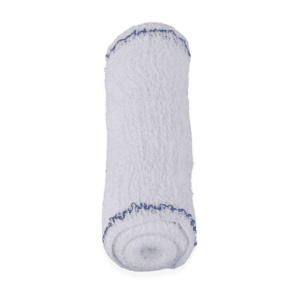
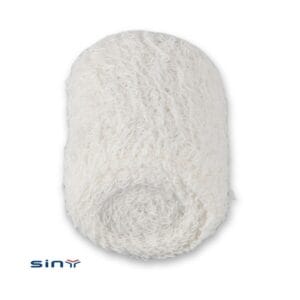
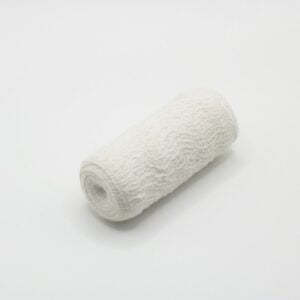
| Product Name | Siny Medical Bandage Wrap |
| Product Type | Medical Bandage Wrap |
| Material | Textile Fabric |
| Structure | Flexible Fabric Wrap |
| Main Function | Dressing Retention and Support |
| Application | Medical Dressing Fixation and General Bandaging |
| Usage | External Use |
Siny Medical Bandage Wrap is a general-purpose medical wrapping product used to secure wound dressings, cover selected body areas, and support routine bandaging procedures. Its roll format allows healthcare professionals to adjust the amount of material used during application.
Medical roller bandages are common in hospitals, outpatient clinics, first-aid facilities, and other healthcare environments. They help keep suitable primary dressings in place, particularly around body areas where flat adhesive fixation may be less convenient.
Unlike specialized compression wraps or orthopedic casting materials, a general medical bandage mainly provides external wrapping and dressing retention. Its exact handling characteristics depend on the selected fabric and construction.
Siny Medical supplies medical bandage wraps for healthcare purchasing projects. Buyers can select suitable configurations according to their material, size, fastening, and packaging requirements.
A medical roller bandage should be easy to handle during routine wrapping procedures. Its construction affects how the material follows body contours, covers dressings, and stays in position.
The roll format allows users to unwind the bandage gradually. This makes it easier to control coverage and arrange the material around the intended area.
Users can also adjust the number of wrapping turns according to the procedure. However, the required overlap depends on the body area and clinical application.
General medical wraps use textile constructions that allow the material to follow different body contours.
The degree of flexibility depends on the fabric structure. Some products use relatively non-elastic materials, while others include stretchable components.
Therefore, buyers should not assume that every medical roller bandage has the same elasticity.
A medical wrap can help maintain the position of a suitable primary wound dressing.
This function is particularly useful around limbs and curved surfaces. The bandage provides external coverage while the underlying dressing performs its intended wound-care function.
However, ordinary wrapping material should not replace a dedicated wound-contact dressing.
Bandage width and roll length influence the amount of coverage available.
Narrower rolls may suit smaller body areas. Meanwhile, wider bandages can cover larger surfaces with fewer wrapping turns.
The appropriate dimensions depend on the intended procedure.
General medical wraps support several everyday healthcare tasks. Their main role is to provide external coverage and hold suitable materials in position.
Healthcare professionals may use a roller bandage to secure gauze pads or other primary dressings.
The wrap helps keep the dressing positioned over the intended area. This can be useful when movement makes adhesive fixation difficult.
Unless the product is specifically intended for direct wound contact, place it over an appropriate primary dressing.
Medical wraps are common components of first-aid supplies.
They can secure dressings during the initial management of minor injuries. In addition, they offer a practical way to cover selected body areas temporarily.
However, significant bleeding, suspected fractures, and serious injuries require appropriate emergency care.
Hands, arms, and legs often require bandaging around curved surfaces.
A roller bandage allows the user to build coverage gradually. The material should follow the body contour without creating excessive folds or pressure.
Hospitals and outpatient clinics use bandages during routine dressing changes.
A suitable wrap helps maintain dressing placement while allowing healthcare professionals to adjust the arrangement.
The product should match the dressing type, skin condition, and expected duration of use.
A bandage may provide an additional external layer over an appropriate dressing.
This can help reduce direct contact between the dressing and clothing during ordinary activity.
However, the wrap should not be described as a waterproof or protective barrier unless its construction supports that claim.
Selecting a medical wrap begins with the intended application. Buyers should compare the required dimensions, material, and fastening method before ordering.
Width affects the coverage provided by each turn.
Narrower bandages may be convenient for hands and wrists. Wider products may suit larger limbs or dressings.
However, the best width depends on the procedure rather than body size alone.
Roll length determines how much material is available.
Procedures involving larger areas or additional wrapping turns may require longer rolls.
Buyers should confirm both width and length when preparing a purchasing specification.
Medical wraps may use cotton, gauze-like textiles, synthetic fibers, or blended materials.
Each construction has different handling characteristics. For example, fabric density can influence thickness, flexibility, and surface texture.
The exact composition should be confirmed for the selected product.
Some roller bandages provide little stretch. Others use elastic components to accommodate movement.
For general dressing retention, a non-elastic construction may be suitable. Applications requiring adjustable support may call for an elastic product.
Elasticity should not be confused with a verified medical compression level.
The final bandage layer needs an appropriate fastening method.
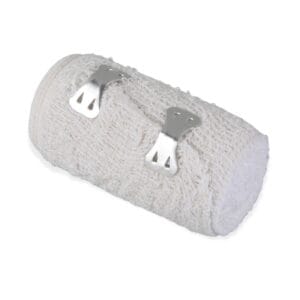
Depending on the product, this may involve medical tape, clips, or a built-in fixation mechanism.
Buyers should confirm the fastening arrangement rather than assuming the bandage is self-adhesive.
Sterile and non-sterile configurations serve different purposes.
Where sterility is required, buyers should verify the specific product and packaging status.
Packaging quantity, labeling, and storage requirements should also match the purchasing project.
General medical roller bandages share some applications with other wrapping products. However, their primary functions differ.
| Bandage Type | Main Characteristic | Typical Purpose |
|---|---|---|
| General Medical Bandage Wrap | Roll-format external wrapping | Dressing retention and basic bandaging |
| Elastic Medical Wrap | Stretchable construction | Flexible wrapping and temporary support |
| Self-Adhesive Bandage | Built-in adhesive or cohesive fixation | Securing overlapping layers |
| High-Elastic Bandage | Greater emphasis on stretch | Adjustable external support |
| Plaster Bandage | Water-activated rigid setting | Orthopedic casting and splinting |
A general medical wrap does not automatically provide self-adhesion, waterproof protection, or controlled compression.
For example, an elastic wrap may be preferable when adjustable support is required. A plaster bandage serves a different purpose because it hardens into a rigid structure.
Therefore, buyers should match the product to the intended procedure instead of relying only on a broad bandage name.
Correct application helps maintain dressing placement and patient comfort.
Before wrapping, select a suitable bandage and inspect its condition. If the procedure involves an open wound, apply an appropriate primary dressing according to the relevant wound-care instructions.
Position the body area comfortably. Then, unwind the bandage gradually and arrange the material over the intended area.
Keep the layers smooth and use the overlap required for the procedure.
Avoid excessive tension. A bandage that is too tight may cause discomfort or interfere with circulation.
After application, check the area beyond the bandage for normal color, warmth, sensation, and movement.
If numbness, tingling, increasing pain, coldness, or discoloration develops, loosen or remove the wrap. Seek medical advice when appropriate.
Secure the final end using the method recommended for the selected product.
During removal, unwind the bandage carefully. This helps avoid disturbing the underlying dressing or sensitive skin.
Store unused medical bandages in a clean, dry environment.
Protect them from excessive moisture, heat, direct sunlight, and contamination. Keep the original packaging intact until use whenever possible.
Before application, inspect the material for visible damage or changes in its condition.
Healthcare facilities should clearly identify different bandage types during storage. This helps prevent confusion between ordinary roller bandages, elastic wraps, and specialized products.
Reusability depends on the specific product instructions. Do not assume that every textile bandage can be washed or reused.
A medical bandage wrap is commonly used to secure primary dressings, provide external coverage, and support general bandaging procedures.
Not necessarily. Roller bandages describe a product format, while elastic bandages have stretchable construction. Some roller bandages are non-elastic.
A general wrapping bandage is usually applied over a suitable primary dressing. Direct wound contact requires a product specifically intended for that purpose.
Not all of them. Some require clips or medical tape, while other products use cohesive or adhesive fixation.
Wrapping can create pressure, but a general medical bandage does not automatically provide controlled therapeutic compression.
Common options include cotton-based textiles, gauze-like fabrics, synthetic fibers, and blended constructions. The exact material depends on the selected product.
Sterility varies by product. Buyers should confirm the specific configuration and packaging before ordering.
Medical bandage wraps come in different widths and roll lengths. Exact dimensions depend on the available product configuration.
Siny Medical supplies Medical Bandage Wrap products for dressing fixation, first aid, and general healthcare applications.
Different material constructions, widths, lengths, and packaging configurations may be available according to confirmed specifications.
Contact Siny Medical with your required bandage material, dimensions, fastening method, packaging preferences, and purchasing quantity to discuss suitable products, samples, and bulk-order pricing.
Copyright © 2026 | Ningbo Siny Medical Technology Co., Ltd