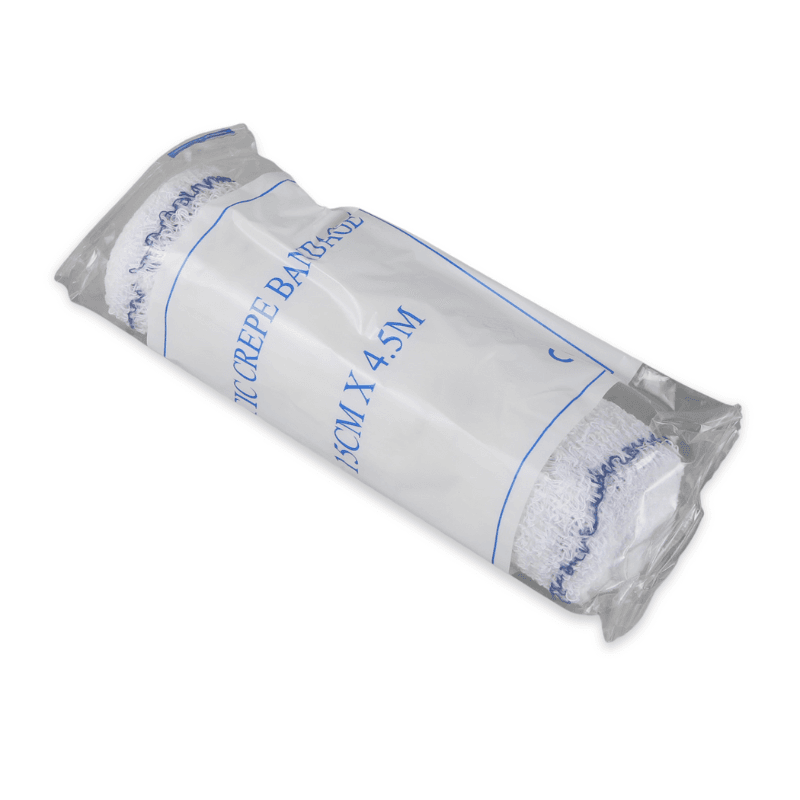
| Item | Specification |
|---|---|
| Product Name | Surgical Cotton Bandage |
| Product Type | Medical Cotton Bandage |
| Material | Cotton |
| Bandage Structure | Woven Fabric |
| Texture | Soft and Flexible |
| Main Function | Dressing Retention and Bandage Fixation |
| Application | Surgical Dressing and General Wound Care |
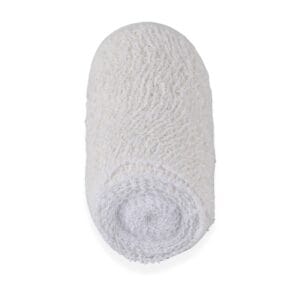
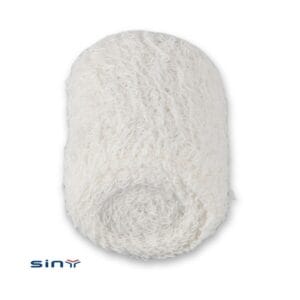
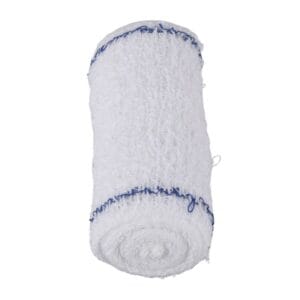
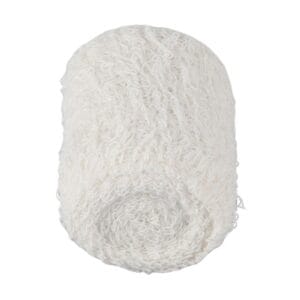
Surgical Cotton Bandage is a medical wrapping material designed for dressing fixation, protective bandaging, and routine surgical care. Its cotton-based textile construction provides a soft, flexible surface for wrapping different body areas.
In clinical settings, surgical bandages often serve as a secondary layer over a suitable wound dressing. They help keep the dressing in position while allowing healthcare professionals to adjust the coverage and wrapping arrangement.
Cotton bandages are used in hospitals, surgical departments, outpatient clinics, and first-aid facilities. They are particularly useful when a textile wrap is needed around a curved or moving body area.
Siny Medical supplies surgical cotton bandages for medical consumable purchasing projects. Product dimensions, fabric construction, and packaging should be selected according to the intended application.
Cotton is widely used in medical textiles because of its soft texture and moisture-absorbing characteristics.
In surgical bandages, the fabric construction affects how the material feels, handles, and conforms during wrapping.
A cotton-based surface provides a comfortable material for external wrapping.
This is important when the bandage is applied around sensitive areas or over an existing dressing.
However, patient comfort also depends on wrapping tension, fabric thickness, and the duration of use.
Many cotton surgical bandages use woven or gauze-like textile structures.
These constructions allow air to move through the fabric to varying degrees.
Actual breathability depends on the weave, fabric density, and number of applied layers.
A breathable bandage should not be confused with a wound dressing specifically designed to manage moisture or wound exudate.
Cotton fibers can absorb moisture.
This characteristic may be useful during general medical handling. However, the bandage’s role in wound care depends on its construction and intended use.
A cotton wrapping bandage should not automatically replace an absorbent primary wound dressing.
Cotton fabric can conform to different body contours.
This allows healthcare professionals to adjust the wrapping arrangement around arms, legs, hands, and other areas.
Some cotton bandages also contain elastic fibers. In these products, the amount of stretch depends on the material composition and fabric construction.
Surgical cotton bandages support several routine medical procedures.
Their primary function is usually external wrapping or securing another medical material.
After surgery, healthcare professionals may use a cotton bandage to secure a suitable wound dressing.
The wrap helps maintain the dressing’s position during routine movement and handling.
The underlying dressing should be selected according to the wound condition and clinical requirements.
A general cotton bandage should not be placed directly against an open surgical wound unless the specific product is intended for wound contact.
Cotton bandages are commonly used to hold gauze pads or other dressings in position.
They can provide an external layer around the treated area without relying on adhesive contact with the skin.
This may be useful when a dressing needs to remain in place around a curved body surface.
Cotton bandages can be wrapped around arms and legs for dressing retention and general support.
The material should follow the limb contour without creating excessive pressure.
For applications requiring defined compression, a specialized compression bandage may be more appropriate.
Cotton bandages can form part of general first-aid supplies.
They are useful for securing appropriate dressings and providing temporary protective wrapping.
However, serious bleeding, suspected fractures, or significant injuries require suitable emergency treatment.
Soft cotton-based wrapping materials may be selected when fabric texture and handling are important.
Nevertheless, cotton content alone does not guarantee that a product will be suitable for every patient.
Healthcare professionals should consider skin condition, allergies, pressure, and the intended duration of use.
Cotton surgical bandages are available in different textile constructions.
Some use predominantly cotton fabric, while others combine cotton with elastic fibers to provide additional stretch.
The material composition affects the bandage’s handling and mechanical properties.
A non-elastic cotton bandage generally provides basic wrapping and dressing retention.
Its structure allows the material to be positioned around the intended area without significant stretch.
These products are commonly associated with general-purpose bandaging.
An elastic cotton bandage includes a stretchable component in its construction.
This allows the material to extend during application and accommodate selected body movements.
However, elasticity does not automatically establish a particular compression level.
The amount of pressure depends on the bandage’s characteristics, wrapping technique, tension, and overlap.
The intended application should determine whether an elastic or non-elastic product is suitable.
For basic dressing fixation, a non-elastic construction may meet the requirement.
For applications involving movement or adjustable support, an elastic configuration may be considered.
Buyers should confirm the material composition and stretch characteristics of the selected product rather than assuming that every cotton surgical bandage performs the same way.
Bandage dimensions influence both application and handling.
A suitable width helps the user cover the intended area without excessive folding or unnecessary overlap.
Narrower bandages may be convenient for smaller body areas, including hands and wrists.
Wider products can provide more coverage around larger limbs or dressings.
The appropriate width depends on the intended procedure and wrapping technique.
Roll length determines the amount of material available for application.
A longer bandage may be useful when the procedure requires several turns or greater coverage.
However, length should be considered together with width and material construction.
Different textile constructions can vary in thickness, flexibility, and surface feel.
These characteristics affect how the bandage handles during wrapping.
When a purchasing project requires a particular fabric structure, buyers should provide the relevant specification.
Surgical bandages may be supplied in different packaging and sterility configurations.
The correct option depends on the intended use.
A non-sterile bandage should not be treated as a sterile wound-contact product.
Where sterility is required, the selected product’s status and packaging should be confirmed before ordering.
Surgical cotton bandages share some applications with other medical wraps. However, their defining characteristics are different.
A surgical cotton bandage emphasizes cotton-based textile construction and medical wrapping.
A high-elastic bandage emphasizes stretch and adjustable support. It may contain cotton, synthetic fibers, or a combination of materials.
A cohesive bandage is designed to hold to itself without relying on a separate fastening method.
A gauze bandage generally uses an open woven structure and is commonly selected for dressing retention.
These categories can overlap. For example, a cotton-based bandage may also contain elastic fibers.
Therefore, product selection should focus on the intended function, material requirements, and fastening method.
For general surgical dressing retention, a cotton wrap may be suitable.
For defined compression, immobilization, or specialized wound-contact applications, a different product may be required.
Correct bandaging technique is important for comfort and safe use.
Before application, confirm that the selected bandage is appropriate for the procedure.
If an open wound is present, apply a suitable primary dressing according to the relevant wound-care instructions.
Position the body area comfortably and begin wrapping with controlled tension.
Keep the material smooth and use the overlap required for the intended coverage.
Avoid pulling the bandage excessively tight.
Unnecessary pressure may cause discomfort or interfere with circulation, particularly when wrapping a limb.
After application, check the area beyond the bandage for normal color, warmth, sensation, and movement.
If numbness, tingling, increasing pain, coldness, or skin discoloration occurs, loosen or remove the wrap and seek appropriate medical advice.
Secure the bandage using the fastening method suitable for the selected product.
When removing it, unwind the material carefully to avoid disturbing the underlying dressing.
Store unused cotton surgical bandages in a clean and dry environment.
Protect the material from excessive heat, moisture, direct sunlight, and contamination.
Where possible, keep the original packaging intact until the product is needed.
Before use, inspect the bandage for visible damage, contamination, or changes in its condition.
For healthcare facilities that use several bandage types, clear labeling can help prevent confusion.
Cotton surgical bandages should be distinguishable from elastic compression wraps, cohesive bandages, and plaster bandages.
Reusability depends on the specific product construction and instructions.
Do not assume that every cotton bandage can be washed, sterilized, or reused.
For clinical applications, follow the product’s intended-use instructions and the facility’s infection-control procedures.
It is commonly used for surgical dressing fixation, general wound-care wrapping, and selected first-aid applications.
A general wrapping bandage is usually placed over a suitable primary dressing. Direct wound contact should only occur when the specific product is intended for that purpose.
Cotton fibers can absorb moisture. However, the absorbency of a finished bandage depends on its construction, and it should not automatically replace a dedicated absorbent wound dressing.
No. Some cotton bandages use non-elastic woven fabric, while others contain elastic fibers. The selected product’s stretch characteristics should be confirmed.
Sterile and non-sterile configurations may be available. Buyers should verify the status of the specific product before ordering.
Cotton surgical bandages are produced in different widths and lengths. Available dimensions depend on the selected configuration.
Reusability depends on the product instructions. Some textile bandages may be designed for reuse, while others are intended for single use.
Keep unused bandages clean and dry. Protect them from moisture, excessive heat, direct sunlight, and contamination.
Siny Medical supplies Surgical Cotton Bandages for dressing fixation, surgical care, and general medical wrapping applications.
Product configurations may differ in material composition, fabric structure, elasticity, dimensions, and packaging.
Before ordering, buyers should confirm the intended application, required bandage specifications, sterility requirements, and purchasing quantity.
Contact Siny Medical with your surgical cotton bandage requirements to discuss available specifications, samples, packaging options, and bulk-order pricing.
Copyright © 2026 | Ningbo Siny Medical Technology Co., Ltd