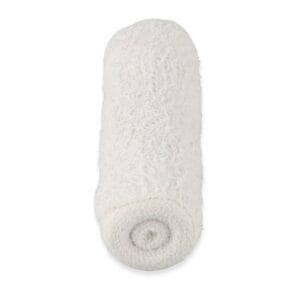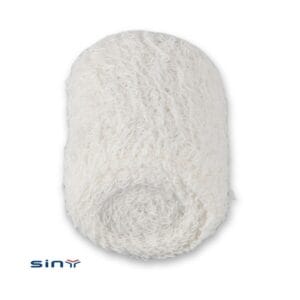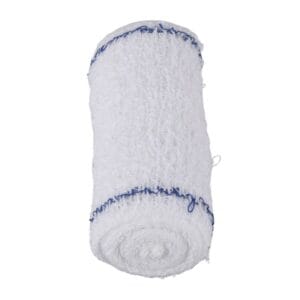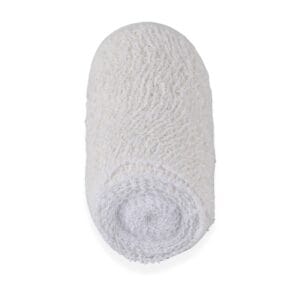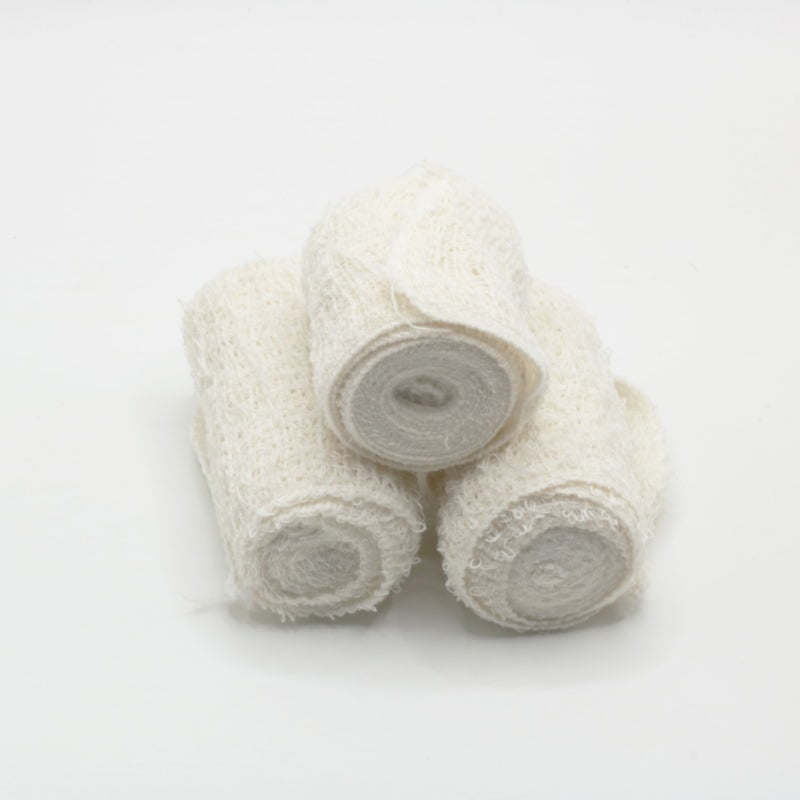

| Item | Specification |
|---|---|
| Product Name | Medical Plaster Bandage |
| Product Type | Plaster of Paris Bandage |
| Base Material | Cotton Gauze |
| Coating Material | Plaster of Paris (Calcium Sulfate Hemihydrate) |
| Setting Mechanism | Hardens After Water Activation |
| Main Function | Rigid Immobilization and Support |
| Application | Orthopedic Casting and Fracture Immobilization |
Medical Plaster Bandage is an orthopedic casting material used to create rigid external support for injured bones and joints. It consists of a fabric bandage impregnated with plaster of Paris, which begins to harden after contact with water.
Healthcare professionals use plaster bandages to form orthopedic casts, immobilization devices, and custom-shaped supports. The material remains moldable during its initial working period, allowing the user to shape it around the intended body area.
As the plaster sets, the bandage develops a rigid structure that helps maintain the selected position.
Siny Medical supplies plaster bandages for hospitals, orthopedic departments, clinics, and other healthcare applications.
The appropriate product specification depends on the intended casting procedure, required dimensions, working characteristics, and clinical requirements.
The main characteristic of a plaster bandage is its water-activated setting material.
Traditional plaster of Paris bandages use calcium sulfate hemihydrate distributed throughout a suitable fabric backing.
When the material comes into contact with water, a chemical reaction begins. The plaster gradually sets and forms a rigid structure.
The fabric provides a flexible carrier for the plaster material before application.
It allows healthcare professionals to wrap the product around the intended area and build the required cast shape.
The finished casting performance depends on the fabric construction, plaster distribution, and application technique.
The plaster remains workable for a limited period after wetting.
During this stage, the user can position and shape the bandage according to the casting procedure.
As the setting reaction continues, the material becomes progressively firmer.
The actual working and setting times depend on the product formulation, water conditions, and application method.
Before hardening, the wet bandage can conform to different body contours.
This allows trained healthcare professionals to create an external support structure suited to the patient’s anatomy.
However, proper padding and application technique remain essential. Incorrect molding or excessive pressure may cause discomfort or tissue injury.
Once the plaster has set, the resulting structure provides mechanical support.
This makes plaster bandages different from elastic or cohesive medical wraps, which remain flexible after application.
The cast must be applied and maintained according to the clinical treatment plan.
Plaster casting materials are used in several orthopedic procedures.
Their primary purpose is to create external immobilization or support when clinically indicated.
Plaster casts may be used to help maintain the position of selected fractures during treatment.
The required cast design depends on the fracture location, stability, swelling, and other clinical factors.
A qualified healthcare professional must determine whether plaster immobilization is appropriate.
Some orthopedic conditions require temporary restriction of joint movement.
A plaster bandage can form part of a rigid support that limits movement around the selected area.
The position and extent of immobilization depend on the treatment plan.
Plaster bandages can also be used to create splints.
Unlike a fully circumferential cast, a splint may cover only part of the limb and be secured using a separate wrapping system.
Splints are often considered when swelling or the clinical situation makes a complete cast less appropriate.
Selected orthopedic procedures may require external immobilization during recovery.
Plaster casting materials can be used when the treating clinician considers them suitable.
However, the bandage does not replace internal fixation, rehabilitation, or other prescribed treatment.
The moldable nature of wet plaster makes it useful for forming certain custom orthopedic supports.
The required dimensions, layer arrangement, and shape depend on the intended application.
These procedures require appropriate training and equipment.
Several performance characteristics influence how a plaster bandage behaves during casting.
These characteristics should be evaluated according to the intended procedure.
Working time refers to the period during which the wetted plaster remains sufficiently moldable.
This allows the user to wrap and shape the material before it becomes too firm.
A suitable working period helps healthcare professionals complete the intended casting arrangement.
However, working time is not identical for every plaster bandage.
Initial setting occurs as the plaster begins to develop a rigid structure.
During this stage, unnecessary movement can disturb the cast shape.
The exact setting behavior depends on the product and application conditions.
Initial hardening does not mean that the cast has completely dried or reached its final strength.
Residual moisture may remain after the plaster feels firm.
The drying period depends on cast thickness, environmental conditions, and the product construction.
Therefore, a newly applied cast should not be subjected to weight-bearing or other loads unless the treating healthcare professional has confirmed that it is appropriate.
The number of layers influences the thickness and mechanical characteristics of a plaster cast.
More layers can increase the structure’s thickness, but they also affect weight, drying, and heat generated during setting.
The correct construction should follow the relevant clinical procedure.
Plaster bandages and fiberglass casting tapes are both used for orthopedic immobilization.
However, their materials and handling characteristics differ.
| Feature | Plaster Bandage | Fiberglass Casting Tape |
|---|---|---|
| Main Construction | Plaster of Paris on fabric | Resin-impregnated fiberglass |
| Setting Process | Water-activated plaster reaction | Moisture-activated resin curing |
| Molding | Traditionally offers good contour molding | Depends on product and application technique |
| Finished Weight | Generally heavier | Generally lighter |
| Rigidity | Develops a rigid plaster structure | Develops a rigid composite structure |
| Handling | Requires attention to setting and drying | Requires attention to resin curing and handling |
Plaster remains a practical option for applications where detailed molding is important.
Fiberglass products may be preferred in situations where lower weight or different mechanical properties are required.
Neither material is suitable for every patient or orthopedic condition.
The choice should follow the clinical requirements, application technique, and product instructions.
Product selection should begin with the intended orthopedic procedure.
Different casting applications may require different bandage dimensions and handling characteristics.
Width affects how easily the material wraps around the selected body area.
Narrower bandages may be useful for smaller anatomical areas, while wider products can cover larger surfaces more efficiently.
The appropriate width depends on the cast design and clinical technique.
Roll length determines how much casting material is available.
The amount required depends on the body area, number of layers, and intended support structure.
Buyers should confirm the available roll dimensions before ordering.
Working time and setting behavior affect the casting procedure.
When these characteristics are important, buyers should request the product-specific technical information.
The fabric should support practical handling during application.
Consistent plaster distribution is also important for the intended casting performance.
The exact construction may differ between available products.
Because plaster reacts with moisture, packaging should protect the unused material from environmental exposure.
Buyers should confirm the packaging configuration and storage instructions for the selected product.
Plaster casting should be performed by appropriately trained healthcare professionals.
Before application, the clinician should assess the injury, skin condition, circulation, swelling, and need for immobilization.
Suitable protective padding is normally required between the skin and the casting material.
The bandage is then wetted and applied according to the product instructions and clinical procedure.
During application, the material should be positioned and molded carefully.
Excessive pressure, tight wrapping, or incorrect positioning can cause complications.
The setting reaction also generates heat. Water temperature, cast thickness, and application conditions can influence the amount of heat produced.
For this reason, users should follow the product’s recommended wetting and handling instructions rather than choosing an arbitrary water temperature.
After application, the cast should be supported while it sets and dries.
The patient should receive appropriate instructions on cast care and warning signs.
Increasing pain, numbness, tingling, unusual swelling, cold or discolored fingers or toes, burning sensations, or other concerning symptoms require prompt medical assessment.
Cast removal should use suitable equipment and professional technique.
Unused plaster bandages should be kept in a clean, dry environment.
Protect them from moisture, excessive humidity, and unsuitable storage conditions.
Keep the packaging closed until the material is needed.
Before use, inspect the packaging and product for signs of damage or premature hardening.
A bandage that has absorbed moisture during storage may not perform as intended.
Healthcare facilities should also follow the product’s stated shelf-life and storage instructions.
For purchasing projects involving several roll sizes, clear labeling helps users identify the correct specification.
Do not assume that plaster bandages can be reused after wetting or setting.
Once the setting reaction has progressed, the material is not intended to be returned to its original unused condition.
It is used to create rigid orthopedic casts, splints, and external immobilization structures when clinically indicated.
Water activates the plaster of Paris. The material begins a setting reaction and gradually becomes rigid.
No. An elastic bandage remains flexible during use, while a plaster bandage hardens to form a rigid support.
Setting time depends on the specific product, water conditions, and application method. Buyers should refer to the selected product’s technical instructions.
Not necessarily. Initial setting and complete drying are different processes. A cast may retain moisture after it feels firm.
Yes. Trained healthcare professionals may use plaster bandages to create suitable splints according to the clinical procedure.
Plaster bandages are produced in different widths and roll lengths. Exact availability should be confirmed for the selected product.
No. Once the plaster has been wetted and the setting reaction has begun, it cannot be restored to an unused bandage.
Siny Medical supplies Medical Plaster Bandages for orthopedic casting, splint preparation, and related immobilization procedures.
The appropriate specification depends on the intended application, roll dimensions, working characteristics, and packaging requirements.
Different product configurations and purchasing quantities can be discussed according to confirmed availability.
Contact Siny Medical with your required plaster bandage dimensions, technical requirements, and order quantity to discuss product information, samples, packaging options, and bulk-order pricing.
Copyright © 2026 | Ningbo Siny Medical Technology Co., Ltd