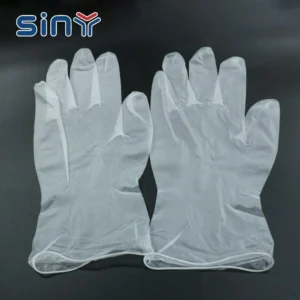
| Item | Specification |
|---|---|
| Product Name | Medical Latex Surgical Gloves Various Sizes Doctor Gloves |
| Product Type | Surgical Gloves |
| Material | Latex |
| Size Options | Various Sizes — Exact Range to Be Confirmed |
| Intended Users | Surgical and Healthcare Personnel |
| Primary Function | Protective Barrier During Appropriate Medical Procedures |
| Applications | Surgical Procedures and Clinical Tasks Requiring Surgical Gloves |
Siny Medical Medical Latex Surgical Gloves are designed for healthcare professionals who require hand protection and suitable dexterity during surgical procedures. Made from latex and offered in various sizes, these gloves provide a practical option for hospitals, surgical departments, and medical supply distributors.
Surgical gloves are an important part of infection prevention practices in healthcare. They provide a physical barrier between the wearer’s hands and materials encountered during a procedure. The effectiveness of that barrier depends on glove integrity, appropriate fit, intended use, and correct handling.
Latex is known for its elasticity and ability to conform to the shape of the hand. These characteristics support flexibility and tactile sensitivity during tasks requiring controlled finger movement. However, natural rubber latex contains proteins that may cause allergic reactions in susceptible individuals.
At Siny Medical, we supply medical gloves and other disposable healthcare consumables for hospitals, clinics, and distributors. Our latex surgical glove range offers multiple size options to accommodate different hand dimensions and clinical requirements.
Choosing surgical gloves requires attention to material properties, fit, barrier performance, and procedural requirements. Latex offers several useful characteristics, making it a familiar material in surgical hand protection.
Natural rubber latex is valued for its flexibility and elastic recovery. The material stretches as the wearer moves and returns toward its original shape.
This behavior helps latex gloves conform to the hand. A suitable fit supports finger movement during tasks that require precision.
Glove performance also depends on manufacturing quality, dimensions, thickness, and product design. These factors influence comfort and handling during extended procedures.
Healthcare facilities must also consider latex allergies. Individuals with natural rubber latex allergy should use an appropriate latex-free alternative.
Surgical procedures often require controlled hand movements and careful handling of instruments.
A properly fitted glove supports dexterity without excessive looseness or tension. By contrast, an unsuitable size may interfere with grip, movement, or comfort.
Gloves that are too tight can restrict movement and place unnecessary stress on the material. Oversized gloves may create excess material around the fingers and palm.
Our latex surgical gloves are available in various sizes to accommodate different hand dimensions and provide a comfortable, secure fit.
Surgical gloves provide a protective barrier during appropriate medical procedures.
However, no glove offers complete protection under every condition. Damage, punctures, incorrect use, and exposure to incompatible substances can compromise barrier integrity.
Healthcare professionals should inspect gloves for visible damage before use and replace them whenever integrity is in doubt.
For procedures involving chemical exposure, glove suitability depends on the specific chemical and exposure conditions.
The wrist area affects how the glove fits around the hand and interacts with surgical clothing.
An appropriate cuff helps maintain coverage during movement. A comfortable wrist fit also supports practical handling throughout a procedure.
Cuff length, shape, and retention characteristics vary between glove designs. Healthcare buyers should consider these details alongside the intended surgical application.
Hand dimensions vary between healthcare professionals, making size availability an important purchasing consideration.
Siny Medical offers latex surgical gloves in various sizes to support different users and clinical settings.
Selecting an appropriate size helps reduce unnecessary tension and excess material while supporting controlled hand movement.
For hospitals, maintaining a suitable range of sizes also helps ensure that surgical teams have access to gloves that fit their needs.
Surgical gloves are used in medical procedures where appropriate hand protection and controlled instrument handling are important.
Different departments may have specific requirements for glove fit, barrier performance, and handling characteristics.
Operating rooms require carefully selected surgical consumables, including gloves.
Latex surgical gloves support procedures where suitable hand protection, flexibility, and tactile sensitivity are important.
Surgical teams must also follow established infection prevention practices, including surgical hand preparation and aseptic technique.
For procedures requiring sterile gloves, the selected product must have the appropriate verified sterile status.
General surgery involves handling instruments, tissue, and other materials during medical procedures.
Glove fit and dexterity influence how comfortably personnel perform these tasks.
Latex elasticity can support hand movement and controlled instrument handling.
The glove must also meet the barrier and cleanliness requirements of the procedure.
Different surgical departments may have different preferences concerning glove fit, tactile sensitivity, and material characteristics.
Procedures involving delicate instruments often place particular importance on fingertip control.
Latex gloves can offer a close-fitting feel that supports precise movements.
However, the final selection should reflect the clinical requirements of each department.
Medical training environments use surgical gloves during supervised practical activities.
Correct sizing helps trainees become familiar with glove application and hand movement.
Training should also address proper donning and removal, contamination prevention, and recognition of damaged gloves.
When sterile technique is being taught, the gloves must meet the relevant sterility requirements.
Hospitals and medical distributors purchase surgical gloves in multiple sizes to accommodate different users.
A suitable size range helps purchasing teams plan inventory around actual demand.
Other important factors include packaging, shelf life, product performance, and delivery requirements.
Reliable inventory planning helps healthcare facilities maintain an appropriate supply of surgical consumables.
Medical gloves are available in different materials and designs.
Understanding these differences helps healthcare buyers select products for their intended procedures.
Latex gloves are known for elasticity and a close-fitting feel.
Nitrile gloves are made from synthetic rubber and provide a latex-free material option.
This distinction is particularly important for facilities managing natural rubber latex allergies.
Glove performance varies by formulation and product design. Chemical resistance, puncture performance, and tactile sensitivity should be evaluated according to the intended application.
Neither material is universally superior for every medical procedure.
Vinyl gloves are generally made from polyvinyl chloride-based materials.
They may be suitable for selected healthcare tasks where their characteristics meet the intended requirements.
However, vinyl examination gloves should not be treated as direct substitutes for surgical gloves.
The appropriate choice depends on the procedure and required level of protection.
They serve different medical purposes.
Surgical gloves are intended for surgical procedures and generally involve specific requirements for fit, barrier performance, and sterility.
Examination gloves are commonly used during patient examinations and related clinical activities.
Healthcare facilities should select gloves according to their intended use rather than treating all medical gloves as interchangeable.
Powder status is another important consideration when purchasing medical gloves.
Powder-free configurations avoid the use of donning powder and are widely preferred in modern healthcare settings.
In the United States, powdered surgeon’s gloves and certain other powdered medical gloves are prohibited by the FDA.
Healthcare buyers should select the appropriate glove configuration according to the requirements of their destination market.
| Glove Type | Main Characteristic | Important Consideration |
|---|---|---|
| Latex Surgical Gloves | Natural rubber latex material | Fit, surgical use, and latex allergy |
| Nitrile Gloves | Synthetic rubber material | Latex-free material option |
| Vinyl Gloves | PVC-based material | Procedure suitability |
| Surgical Gloves | Intended for surgical procedures | Surgical performance requirements |
| Examination Gloves | Intended for clinical examinations | Routine examination applications |
The selection should reflect the healthcare procedure, user requirements, and product specifications.
Hospitals and distributors should evaluate surgical gloves through a practical purchasing process.
Material, size, intended use, packaging, and product performance all affect the decision.
Begin by identifying the procedures for which the gloves will be used.
Surgical departments may require specific characteristics concerning sterility, barrier integrity, dimensions, and packaging.
The selected glove must be appropriate for its intended application.
For procedures requiring sterile gloves, healthcare facilities should use products with verified sterile status.
Surgical glove sizing should support a close but comfortable fit.
Purchasing teams should consider the hand measurements of intended users and the manufacturer’s sizing guidance.
When introducing a new supplier, sample evaluation can help staff assess fit and movement.
Hospitals should also review consumption by size to plan inventory efficiently.
A suitable size distribution helps reduce shortages and unnecessary stock accumulation.
Natural rubber latex can cause allergic reactions in susceptible individuals.
Healthcare facilities should consider their policies for protecting personnel and patients with known or suspected latex allergies.
Where latex exposure is unsuitable, an appropriate latex-free alternative should be selected.
The comfort and elasticity of latex do not remove this allergy concern.
Glove performance involves several characteristics, including dimensions, physical strength, and barrier integrity.
Hospitals may require technical information covering these properties.
Buyers should compare the documented product characteristics with the requirements of their healthcare facility.
Thickness, tensile strength, elongation, and acceptable quality level (AQL) are among the factors that may be considered during procurement.
Packaging influences how gloves are stored, distributed, and handled.
Surgical departments may have specific requirements for package integrity and presentation.
Hospitals should also consider shelf life, storage conditions, and inventory rotation.
Appropriate packaging and storage help maintain product quality before use.
Hospitals need an appropriate range of glove sizes to support different users.
Distributors may also consider packaging quantity, order volume, delivery planning, and market requirements.
However, procurement efficiency should not replace product suitability.
The selected surgical glove must meet the requirements of its intended application.
Correct glove handling supports infection prevention practices and helps maintain product integrity.
Before use, select the appropriate size and inspect the gloves or packaging as required.
Follow the healthcare facility’s hand hygiene and glove-donning procedures.
For sterile procedures, use verified sterile gloves and maintain the required aseptic technique.
Avoid unnecessary contact with surfaces that could contaminate the gloves.
During use, replace gloves when they become damaged or when the procedure requires a change.
Gloves should never replace appropriate hand hygiene.
After use, remove them carefully to reduce contact with potentially contaminated surfaces and dispose of them according to the facility’s waste procedures.
Keep unused gloves in their original packaging.
Store them according to the product labeling and protect them from excessive heat, direct sunlight, and conditions that may affect material integrity.
Natural rubber latex can deteriorate under unsuitable storage conditions.
Follow the stated shelf life and storage requirements to maintain product suitability.
Before use, check for visible damage or other signs of deterioration.
They are surgical gloves made from natural rubber latex and intended for appropriate medical procedures.
Latex offers elasticity and a close-fitting feel, which can support dexterity and controlled hand movement.
No. Natural rubber latex may cause allergic reactions in susceptible individuals.
Siny Medical offers latex surgical gloves in various sizes to accommodate different hand dimensions and surgical requirements.
Surgical procedures requiring sterile gloves must use products with verified sterile status. Sterility is an important consideration when selecting surgical consumables.
Surgical gloves are intended for surgical procedures, while examination gloves are intended for clinical examinations and related tasks.
Neither material is best for every application. Latex offers elasticity, while nitrile provides a synthetic, latex-free material option.
Surgical gloves intended for single use should not be reused. Follow the product labeling and the healthcare facility’s infection prevention procedures.
Keep gloves in their original packaging and follow the labeled storage conditions, avoiding excessive heat and direct sunlight.
Siny Medical supplies medical latex surgical gloves in various sizes for hospitals, surgical departments, and medical supply distributors. Our medical glove range supports healthcare facilities seeking suitable hand protection products for their clinical requirements. Explore our medical glove products or contact Siny Medical to discuss available sizes, product configurations, packaging options, and bulk purchasing requirements.
Copyright © 2026 | Ningbo Siny Medical Technology Co., Ltd