| Item | Specification |
|---|---|
| Product Name | Disposable Nitrile Examination Safety Protective Gloves |
| Product Type | Disposable Examination and Protective Gloves |
| Material | Synthetic Nitrile Rubber |
| Usage | Single Use |
| Natural Latex Content | No Natural Rubber Latex Proteins |
| Main Characteristics | Flexible Fit, Physical Liquid Barrier, Disposable Hand Protection |
| Potential Applications | Appropriate Clinical Examinations, Patient Care and Laboratory Tasks |
| Target Buyers | Hospitals, Clinics, Laboratories and Medical Distributors |
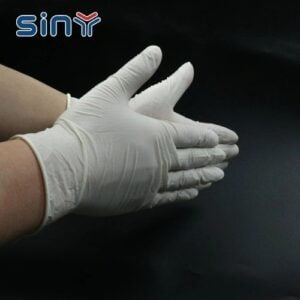
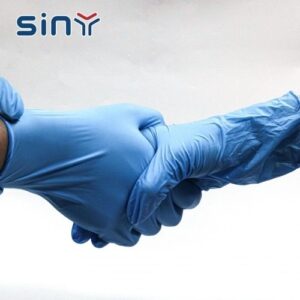
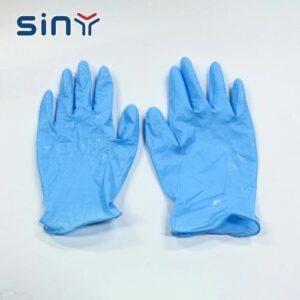
Siny Medical Disposable Nitrile Examination Safety Protective Gloves provide single-use hand protection for appropriate medical examinations, patient care activities, and selected healthcare support tasks. Made from synthetic nitrile rubber, these gloves offer flexible hand coverage and a physical barrier against potentially contaminated materials.
Disposable Nitrile Protective Gloves are commonly selected for healthcare environments where hand protection, practical fit, and convenient glove replacement are important. Their synthetic rubber material generally offers better elasticity and elastic recovery than conventional PVC gloves, allowing properly sized products to conform more closely to the hand.
Nitrile does not contain natural rubber latex proteins. Therefore, it provides an alternative for healthcare facilities seeking to reduce natural latex exposure. However, certain ingredients used in glove manufacturing may still cause sensitivity in some individuals.
Protective performance depends on the specific glove, expected exposure, and working conditions. Although intact nitrile gloves provide a barrier against water and certain water-based liquids, they are not puncture-proof or universally resistant to chemicals. Healthcare personnel should always select gloves according to the task.
Siny Medical supplies disposable medical gloves and healthcare consumables for hospitals, clinics, laboratories, and medical distributors. Our nitrile examination glove range supports customers seeking practical single-use hand protection for suitable clinical applications.
Disposable nitrile gloves combine synthetic rubber material with flexible hand coverage and convenient single-use construction. Their protective characteristics depend on the finished product’s design, integrity, and intended application.
Nitrile is a synthetic rubber widely used in disposable medical examination gloves.
Its elastic properties allow the material to stretch during normal hand movements. Compared with conventional PVC or vinyl gloves, nitrile generally provides better elastic recovery and a closer fit.
This can support routine clinical activities involving examination instruments, medical containers, and selected healthcare supplies.
However, material characteristics vary according to the glove’s formulation and construction. Buyers should evaluate the actual product rather than assuming identical performance across all nitrile gloves.
Intact nitrile examination gloves provide a physical barrier against water, certain water-based liquids, and potentially contaminated materials.
This barrier helps reduce direct skin contact during appropriate clinical tasks.
However, barrier protection can be compromised by punctures, tears, improper glove removal, or unsuitable exposure conditions.
In addition, nitrile does not provide universal resistance to chemical substances.
Chemical compatibility depends on the specific glove formulation, chemical concentration, contact duration, and exposure conditions.
For hazardous chemicals, users should select gloves based on appropriate compatibility information.
Medical personnel often perform tasks requiring controlled finger movements.
Nitrile’s elastic properties can help gloves conform to the fingers and palm when correctly sized.
This may support practical handling during routine examinations and clinical support activities.
However, fit depends on glove size and design.
A glove that is too tight may restrict movement and create discomfort. Meanwhile, an oversized glove can leave loose material around the fingertips.
Selecting the correct size helps support comfortable hand movement.
Nitrile is manufactured from synthetic rubber rather than natural rubber latex.
As a result, nitrile gloves do not contain natural rubber latex proteins.
This makes them an alternative for healthcare facilities seeking to avoid natural latex exposure.
However, latex-free does not mean completely free from the possibility of skin sensitivity.
Some users may react to other ingredients in glove formulations. Healthcare facilities should consider known material sensitivities when selecting protective gloves.
Disposable nitrile examination gloves are designed for one-time use.
During healthcare activities, glove surfaces may contact biological materials or contaminated equipment.
Changing gloves between patients and whenever required by the procedure helps reduce unintended contamination transfer.
Disposable gloves should not be washed, disinfected, or reused as a substitute for fresh gloves.
Furthermore, glove use does not replace hand hygiene.
Healthcare personnel should follow appropriate hand hygiene procedures before and after glove use.
Disposable nitrile gloves are used in many environments where a temporary hand barrier is required.
However, no single glove is appropriate for every hazard.
Nitrile examination gloves should not be considered cut-resistant, puncture-proof, or suitable for high-temperature handling.
Likewise, general examination gloves should not replace sterile surgical gloves during procedures requiring surgical hand protection.
The selected glove must match the intended task and expected exposure.
Nitrile gloves are used in healthcare and laboratory environments where suitable single-use hand protection is required.
Their suitability depends on the specific procedure, product characteristics, and expected exposure.
Healthcare professionals use examination gloves when patient assessments involve an indication for hand protection.
Suitable nitrile examination gloves provide a physical barrier during appropriate clinical procedures.
Their flexible material can support routine hand movements and the handling of selected instruments.
However, gloves are not required for every patient interaction.
Healthcare personnel should follow applicable clinical indications and infection prevention procedures.
Some patient care activities involve potential contact with bodily fluids, mucous membranes, non-intact skin, or contaminated surfaces.
Appropriate nitrile examination gloves can help reduce direct hand exposure.
However, the expected contact and procedure requirements should determine glove selection.
Gloves should be changed between patients and between tasks when required.
Hand hygiene remains essential before and after glove use.
Laboratory personnel may wear nitrile gloves when handling selected specimens, containers, and equipment.
The synthetic material provides a practical physical barrier for suitable laboratory activities.
However, laboratories may use chemicals that require specific glove resistance characteristics.
For this reason, personnel should review chemical compatibility before handling hazardous substances.
Nitrile material alone does not establish suitability for every laboratory chemical.
Healthcare facilities regularly handle examination instruments, containers, and medical supplies.
Disposable nitrile gloves may be appropriate for selected tasks requiring a physical barrier.
Their flexible construction can support controlled hand movements.
However, gloves do not eliminate the risk of injury from needles, blades, or other sharp instruments.
Appropriate sharps handling procedures remain necessary.
Outpatient clinics perform routine examinations and minor clinical activities throughout the working day.
Healthcare personnel may need to change gloves frequently between patients and procedures.
Suitable nitrile examination gloves can support these workflows when their protective characteristics match the task.
Maintaining appropriate sizes and sufficient stock also helps support daily clinical operations.
Medical training programs teach students how to select and use examination gloves correctly.
Nitrile gloves may be used during suitable practical exercises.
Students can practice glove replacement, safe removal, and contamination prevention.
Training should also explain the limitations of disposable examination gloves and the importance of selecting protection according to the task.
Hospitals and medical distributors often compare nitrile, PVC, and natural latex gloves before purchasing.
Each material offers different physical characteristics that influence fit, elasticity, and suitability for specific tasks.
Nitrile is a synthetic rubber with good elastic recovery.
It generally provides a closer fit than conventional PVC gloves.
Suitable nitrile examination gloves are widely used in healthcare because they combine flexible hand coverage with disposable barrier protection.
However, performance varies by product, and chemical resistance must be assessed for the specific exposure.
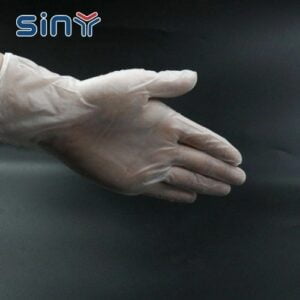
PVC, also known as vinyl, is a synthetic polymer used in disposable gloves.
PVC generally offers lower elasticity than nitrile.
Vinyl gloves may be suitable for selected short-duration, lower-demand activities where their barrier properties are sufficient.
However, a looser fit can make them less suitable for tasks requiring precise fingertip control.
Natural rubber latex is known for its elasticity and close-fitting characteristics.
It can support controlled hand movement during appropriate clinical tasks.
However, natural latex proteins may cause allergic reactions in susceptible individuals.
For facilities seeking to avoid natural latex exposure, suitable synthetic alternatives may be preferable.
| Feature | Nitrile Gloves | PVC / Vinyl Gloves | Latex Gloves |
|---|---|---|---|
| Main Material | Synthetic Nitrile Rubber | Polyvinyl Chloride | Natural Rubber Latex |
| Natural Latex Proteins | Absent | Absent | Present |
| Elasticity | Good | Generally Lower | High |
| Typical Fit | Close-Fitting | Often Looser | Close-Fitting |
| Liquid Barrier | When Intact | When Intact | When Intact |
| Chemical Resistance | Substance-Dependent | Substance-Dependent | Substance-Dependent |
| Puncture Protection | Not Puncture-Proof | Not Puncture-Proof | Not Puncture-Proof |
| Main Consideration | Fit and Task Suitability | Suitable Routine Tasks | Elasticity and Latex Allergy |
The correct glove depends on the intended application, expected exposure, and specific product performance.
Hospitals, clinics, laboratories, and distributors should evaluate disposable protective gloves according to application requirements, material performance, fit, and purchasing needs.
A structured selection process helps ensure that the selected gloves are appropriate for their intended use.
First, determine the hazards involved in the task.
Routine medical examinations, patient care, and laboratory activities may involve different exposure conditions.
For example, contact with water-based liquids differs from exposure to hazardous chemicals or sharp instruments.
Suitable nitrile examination gloves may provide the required protection for selected tasks.
However, more demanding activities may require specialized protective equipment.
Not every disposable nitrile glove is intended for medical examination.
Healthcare buyers should confirm that the selected product is suitable for the relevant clinical application.
In addition, disposable does not automatically mean sterile.
Routine examination gloves should not replace sterile surgical gloves during procedures requiring surgical hand protection.
Product labeling and intended use should guide selection.
Correct sizing supports comfortable hand movement and practical handling.
A suitable glove should cover the hand securely without excessive tightness or loose material.
Healthcare facilities should consider the hand sizes of personnel across different departments.
Where practical, evaluating samples during representative tasks can help identify suitable fit.
Purchasing teams should also plan inventory according to the sizes most frequently used.
Barrier integrity is an important consideration for protective gloves.
Hospitals should assess the expected contact with biological materials, liquids, and potentially contaminated surfaces.
Even a suitable glove may lose its protective function if torn or punctured.
For chemical exposure, buyers should review compatibility information for the actual glove and substance.
Nitrile material alone does not guarantee protection against every chemical.
Nitrile does not contain natural rubber latex proteins.
Therefore, it can be considered when healthcare facilities seek to reduce natural latex exposure.
However, some users may react to other glove ingredients.
Facilities should consider known sensitivities and available product information when selecting gloves.
Powder status and sterility are separate product characteristics.
A nitrile glove is not automatically powder-free simply because it is made from synthetic rubber.
Likewise, a disposable examination glove is not automatically sterile.
Buyers should confirm the selected product’s configuration and intended use before purchasing.
Disposable examination gloves are regularly consumed in healthcare environments.
Purchasing teams should estimate demand according to patient volume, departmental activities, and glove replacement practices.
They should also consider size distribution, packaging preferences, and available storage space.
For distributors, customer requirements and delivery planning may influence order quantities.
Maintaining suitable inventory helps healthcare facilities support daily operations.
Correct handling helps maintain glove integrity and supports infection prevention.
Before use, select the appropriate glove type and size.
Inspect the gloves for visible damage.
Perform hand hygiene according to the healthcare facility’s procedures.
Put on gloves before beginning the task for which they are required.
During use, replace gloves if they become torn, punctured, or otherwise unsuitable.
Change gloves between patients and whenever required by the clinical workflow.
Disposable gloves should not be washed, disinfected, or reused.
After completing the activity, remove the gloves carefully to reduce contact with potentially contaminated outer surfaces.
Dispose of used gloves according to the facility’s waste management procedures.
Finally, perform hand hygiene.
Keep unused nitrile gloves in their original packaging.
Store them away from excessive heat, direct sunlight, and conditions that may affect material integrity.
Avoid crushing cartons or exposing packaging to unnecessary moisture.
Follow the product’s labeled storage conditions and shelf life.
Appropriate inventory rotation helps maintain product quality before use.
They are single-use gloves made from synthetic nitrile rubber that provide a physical hand barrier during appropriate medical and protective tasks.
Nitrile gloves specifically intended for medical examination may be suitable for appropriate clinical procedures and patient care activities.
Nitrile does not contain natural rubber latex proteins. However, other glove ingredients may cause sensitivity in some users.
Intact nitrile gloves provide a barrier against water and certain water-based liquids. However, they are not universally resistant to chemicals.
No. Nitrile gloves can be punctured or torn by sharp objects and mechanical stress.
They offer resistance to certain chemicals, but compatibility depends on the specific glove, substance, concentration, and contact duration.
Not necessarily. Sterile status depends on the specific product and should be confirmed before use.
No. Powder status depends on the product configuration and should be confirmed before purchasing.
Nitrile generally offers better elasticity and a closer fit than conventional PVC gloves. However, the correct material depends on the task.
No. Single-use nitrile gloves should be discarded after the intended activity.
Keep them in their original packaging and follow the labeled storage instructions, avoiding excessive heat, sunlight, and physical damage.
Siny Medical supplies disposable nitrile protective gloves for hospitals, outpatient clinics, laboratories, healthcare facilities, and medical supply distributors. Our examination glove range supports buyers seeking flexible, natural latex-free hand protection for appropriate clinical and protective activities. Explore our medical glove products or contact Siny Medical to discuss available sizes, product configurations, packaging options, and bulk purchasing requirements.
Copyright © 2026 | Ningbo Siny Medical Technology Co., Ltd