| Item | Specification |
|---|---|
| Product Name | High Elastic Bandage |
| Product Type | Elastic Compression Bandage |
| Material | Cotton and Elastic Fibers |
| Elasticity | High Elasticity |
| Bandage Structure | Woven Fabric |
| Main Function | Compression and Support |
| Application | First Aid, Sprain Support and Bandage Fixation |
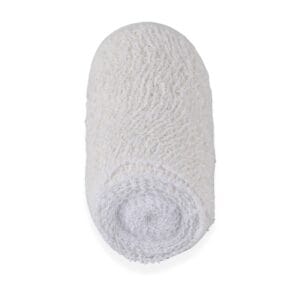
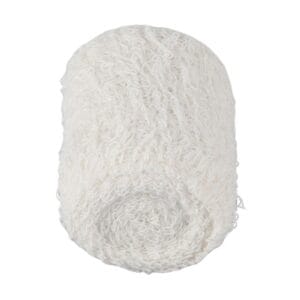
High Elastic Bandage First Aid Elastic Bandage is a stretchable medical wrap designed for adjustable support, first-aid bandaging, and dressing retention. Its high-elastic construction allows the material to extend during application and follow the contours of different body areas.
Unlike a rigid bandage, an elastic wrap can accommodate movement while maintaining contact with the wrapped area. Users can adjust the wrapping tension and overlap according to the intended application.
This makes high-elastic bandages a practical option for first-aid kits, sports medicine, clinics, and general healthcare settings.
Siny Medical supplies elastic bandages for customers who need flexible wrapping materials for routine support and first-aid applications.
The appropriate bandage width, length, and wrapping technique depend on the body area and intended level of support.
The main feature of this product is its stretchable construction.
A high-elastic bandage extends as it is applied, allowing users to wrap curved body areas such as ankles, knees, wrists, and elbows.
The amount of pressure depends on how the bandage is applied. Stretch, tension, overlap, and the number of layers all influence the final result.
The elastic structure allows the material to follow body contours.
This is particularly useful around joints, where a conventional non-elastic wrap may be less adaptable.
However, flexibility does not mean the bandage should be stretched to its maximum length during application.
Excessive tension can create uncomfortable pressure and may affect circulation.
Users can change the wrapping tension to suit the intended support technique.
For example, a wrap used to retain a dressing may require less tension than one used for selected joint-support applications.
The correct amount of pressure depends on the clinical situation and the user’s needs.
A general-purpose elastic bandage should not automatically replace a specialized medical compression system.
Elastic recovery describes how a bandage responds after stretching.
Suitable recovery helps the material maintain its intended wrapping arrangement during normal use.
Actual recovery performance depends on the product’s fiber composition and construction. Therefore, buyers should confirm specific stretch or recovery requirements when these characteristics are important.
High-elastic bandages are used in several common wrapping situations.
Their flexibility makes them suitable for applications that require external support or adjustable pressure.
An elastic wrap may provide temporary external support around an ankle, wrist, or other affected area.
It can form part of first-aid management for selected minor soft-tissue injuries.
However, a bandage does not diagnose or treat the underlying injury. Significant pain, swelling, deformity, or difficulty bearing weight requires appropriate medical assessment.
Elastic bandages can be wrapped around knees, elbows, ankles, and wrists.
The material follows the shape of the joint while allowing the user to adjust the wrapping arrangement.
The level of support depends on the technique and the bandage’s mechanical properties.
A flexible wrap does not provide the same immobilization as a rigid splint or orthopedic support.
Elastic wraps can help hold a separate wound dressing in position.
This is useful when a dressing needs to remain secure around a curved or moving body area.
The bandage should generally be applied over an appropriate dressing rather than directly onto an open wound.
Athletic trainers may use elastic wraps for temporary support during selected activities.
The wrap can provide an adjustable external layer around the intended area.
Nevertheless, bandaging does not guarantee injury prevention. Appropriate equipment, rehabilitation, and professional guidance remain important.
Elastic bandages are practical components of first-aid supplies.
They can be used for temporary support and dressing fixation when suitable for the situation.
For more serious injuries, emergency care and appropriate stabilization take priority over routine elastic wrapping.
Bandage dimensions affect both handling and application.
A product that works well around a wrist may be less convenient for wrapping a larger area.
Therefore, buyers should consider the intended body area before selecting a specification.
Narrower bandages offer more control around smaller body areas.
Wider bandages cover larger areas with fewer turns and may be more convenient for certain limb applications.
The correct width depends on the wrapping technique and intended purpose.
Roll length determines how much material is available for wrapping.
Longer rolls may be useful when several layers or a larger coverage area are required.
However, the bandage should not be selected by length alone.
Elastic bandages can use different combinations of textile fibers and elastic components.
These materials influence stretch, texture, handling, and recovery.
Because material compositions vary, buyers should confirm any specific cotton content, synthetic fiber requirement, or latex-free claim before ordering.
Elastic bandages may use clips, hook-and-loop fasteners, tape, or other securing methods.
The fastening arrangement depends on the product configuration.
A high-elastic bandage should not automatically be described as self-adhesive.
If self-holding performance is required, buyers should confirm whether the selected product has a cohesive or adhesive construction.
Packaging requirements depend on the purchasing project.
Buyers should confirm the number of rolls, individual packaging arrangements, and labeling details before finalizing an order.
High-elastic bandages and self-adhesive bandages can serve similar wrapping purposes, but their defining characteristics differ.
A high-elastic bandage is primarily identified by its stretchable structure.
The user adjusts the tension during application and secures the wrap using the fastening method provided for that configuration.
A self-adhesive or cohesive bandage is designed to hold to itself.
This can reduce the need for separate fastening accessories, depending on the product.
Some cohesive bandages are also elastic. Therefore, the two descriptions are not necessarily mutually exclusive.
The important distinction is whether the purchasing requirement focuses on stretch, self-holding fixation, or both.
For general first-aid wrapping, buyers should check the intended application before choosing between these options.
For more specialized compression applications, the required pressure characteristics should be evaluated separately.
Correct application helps the bandage provide support without creating unnecessary pressure.
Before wrapping, inspect the affected area and confirm that an elastic bandage is appropriate for the situation.
If a wound is present, apply a suitable dressing first when indicated.
Position the body part comfortably before starting.
Unroll the bandage gradually and apply it with controlled tension. Keep the wrapping arrangement even and avoid unnecessary folds.
Around joints, a figure-eight technique may be appropriate when recommended by a qualified professional.
Do not stretch the material excessively.
After application, check the area beyond the bandage for normal color, warmth, sensation, and movement.
If numbness, tingling, increasing pain, unusual swelling, coldness, or skin discoloration occurs, loosen or remove the wrap and seek medical advice when appropriate.
Bandages used for compression should follow the relevant clinical instructions. General first-aid wraps should not be used as substitutes for prescribed compression therapy.
When removing the bandage, release the fastening arrangement and unwind the material carefully.
Avoid pulling sharply or disturbing an underlying wound dressing.
Keep unused elastic bandages in a clean and dry environment.
Protect them from excessive heat, moisture, direct sunlight, and contamination.
Where possible, retain the original packaging until the bandage is needed.
Before use, inspect the material for visible damage, unusual stretching, or contamination.
If a bandage is intended for reuse, follow the product-specific cleaning instructions.
Do not assume that every elastic bandage is washable or reusable. Some configurations are intended for single use.
For healthcare facilities that store several types of wraps, clear labeling can help distinguish high-elastic bandages from cohesive wraps, gauze bandages, and other support materials.
It is used for adjustable wrapping, temporary joint support, dressing retention, and selected first-aid applications.
It may provide temporary external support around the ankle when applied appropriately. However, significant injuries require medical assessment, and the wrap does not replace a rigid brace when immobilization is needed.
Not necessarily. High elasticity describes the material’s stretch, while self-adhesion describes how the bandage holds in place. The fastening method should be confirmed for the selected configuration.
Appropriately applied compression may help manage swelling in selected situations. However, pressure must be suitable for the condition, and a general-purpose wrap is not a substitute for prescribed compression treatment.
Elastic bandages are produced in different widths and lengths. Buyers should confirm the available configurations for the specific product before ordering.
Reusability depends on the material and product instructions. Some elastic bandages are reusable, while others are intended for single use.
Warning signs include numbness, tingling, increasing pain, coldness, swelling, or changes in skin color beyond the wrapped area. Loosen or remove the bandage if these symptoms occur.
Packaging and labeling requirements can be discussed with Siny Medical. Available options depend on the confirmed product specification and purchasing quantity.
Siny Medical supplies High Elastic First Aid Bandages for general first-aid wrapping, joint support, and selected medical applications.
The appropriate configuration depends on the required width, length, material characteristics, fastening method, and intended use.
Different specifications, packaging arrangements, labeling requirements, and purchasing quantities can be discussed according to the project.
Contact Siny Medical with your required bandage specifications and order quantity to discuss available products, samples, packaging options, and bulk-order pricing.
Copyright © 2026 | Ningbo Siny Medical Technology Co., Ltd