| Item | Specification |
|---|---|
| Product Name | Medical Bandage |
| Product Type | Medical Support Bandage |
| Material | Textile Fabric |
| Structure | Flexible Fabric Bandage |
| Main Function | Dressing Retention and Support |
| Application | General Medical Care and Wound Dressing Fixation |
| Usage | External Use |
Medical Bandage Suppliers provide hospitals, clinics, and distributors with products for dressing fixation, first aid, and orthopedic support. These products include elastic wraps, cohesive bandages, cotton surgical bandages, and plaster casting materials.
Each bandage type serves a different purpose. Some secure wound dressings, while others provide temporary support or rigid immobilization. As a result, buyers need to consider the intended application before choosing a product.
Siny Medical supplies a range of medical bandages for healthcare purchasing projects. Buyers can select suitable products based on material, dimensions, fastening methods, and packaging requirements.
This product range helps purchasing teams compare different bandage categories and prepare orders with clear specifications.
Medical bandages come in several constructions. Each offers different handling properties and applications.
Elastic bandages contain stretchable materials that follow body contours. They are commonly used for dressing retention, temporary joint support, and first-aid wrapping.
However, the level of stretch varies between products. Buyers should confirm the required elasticity when selecting a bandage for a specific application.
Self-adhesive bandages help secure a wrapping arrangement without separate fasteners in suitable applications.
Some products use cohesive materials that mainly adhere to themselves. Others use different adhesive systems.
Therefore, buyers should confirm the fastening method and intended skin-contact properties before ordering.
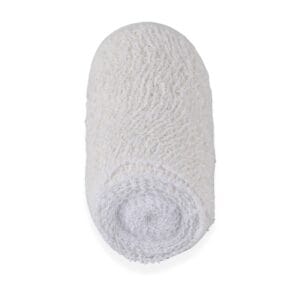
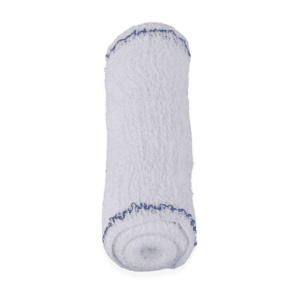
Cotton-based surgical bandages offer a soft textile option for medical wrapping and dressing fixation.
Their fabric structure affects flexibility, surface texture, and moisture absorption. In addition, some products contain elastic fibers to improve stretch.
Material composition should be confirmed for each selected configuration.
Plaster bandages contain plaster of Paris on a suitable fabric backing.
When exposed to water, the plaster begins to set. It then forms a rigid structure for orthopedic casting or splint preparation.
Unlike ordinary elastic wraps, plaster bandages require specialized application techniques. Trained healthcare professionals should perform these procedures.
General-purpose bandages help secure dressings and provide external wrapping.
Depending on their construction, these products may be elastic or non-elastic. The correct option depends on the required coverage, flexibility, and fixation method.
Medical facilities use different bandages for different procedures. Therefore, product selection should begin with the intended use.
General medical wraps and selected cotton bandages help hold wound dressings in place.
They are particularly useful around limbs and curved body areas. However, a wrapping bandage should not replace a suitable primary wound dressing.
Elastic and general-purpose bandages are common components of first-aid kits.
They may provide temporary support or secure an appropriate dressing. Nevertheless, serious injuries require professional medical assessment.
Healthcare professionals use selected bandages during routine surgical dressing procedures.
The product must match the required material, application, and sterility status.
For example, a non-sterile wrapping bandage should not be treated as a sterile wound-contact dressing.
Orthopedic departments use plaster bandages and selected support wraps.
However, these products serve different functions. Plaster forms a rigid structure, while an elastic wrap remains flexible.
The treating clinician should determine the appropriate immobilization method.
Certain elastic bandages provide external support during selected recovery activities.
Their suitability depends on the patient’s condition and the required level of support. Specialized compression or immobilization may require another product.
Bandage materials influence flexibility, comfort, and handling.
Common constructions use cotton, synthetic fibers, elastic components, or plaster-based materials.
Cotton-based bandages are widely used for general medical wrapping.
Fabric thickness, weave, and composition affect how the material handles during application.
However, cotton-based does not always mean 100% cotton. Some products contain additional fibers.
Elastic bandages combine textile materials with stretchable components.
These materials help the wrap follow body contours. However, different constructions provide different levels of stretch.
Elasticity alone does not establish a controlled medical compression level.
Cohesive bandages mainly adhere to themselves. This feature can reduce the need for clips or separate tape.
Other adhesive products may have different skin-contact properties.
Therefore, buyers should confirm the construction, especially for applications involving fragile or sensitive skin.
Orthopedic plaster bandages contain a water-activated setting material.
Their performance depends on the plaster formulation, fabric backing, and application technique.
Working time and setting characteristics should be confirmed for the selected product.
Choosing suitable products requires clear specifications. Medical Bandage Suppliers may offer several categories, but their performance and applications can differ significantly.
First, determine the intended function.
For example, dressing fixation, temporary joint support, self-adhesive wrapping, and orthopedic casting require different products.
This step helps prevent purchasing errors.
Bandage dimensions affect coverage and handling.
Narrower rolls may suit smaller body areas. Meanwhile, wider rolls can cover larger surfaces with fewer turns.
Buyers should confirm the required width and length for each product.
Material requirements may include cotton, synthetic fibers, or elastic components.
Buyers should confirm the composition instead of assuming that products in the same category use identical materials.
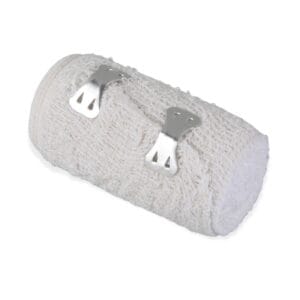
Some bandages require clips or medical tape. Others use self-adhesive fixation.
The correct option depends on the intended procedure and handling requirements.
Medical bandages may be sterile or non-sterile.
Buyers should verify the status of each product and its packaging. A medical or surgical product name does not automatically indicate sterility.
Packaging affects storage, inventory management, and distribution.
Therefore, buyers should confirm the packaging format, quantity, and labeling requirements before ordering.
Clear purchasing information helps reduce confusion between similar products.
This is especially important when an order contains several bandage types.
Start by preparing a list of required products.
Include the bandage type, dimensions, material, and any special performance requirements.
For example, an elastic bandage inquiry should clarify whether self-adhesive fixation is also required.
Samples allow buyers to assess practical product characteristics before larger purchases.
Depending on the product, buyers may examine fabric texture, flexibility, wrapping behavior, or packaging.
However, technical performance should be evaluated using appropriate product information.
Distributors often need several bandage categories within one purchasing project.
In this case, each item should have its own specifications and quantity.
Clear product identification helps prevent order and inventory errors.
Packaging requirements vary between purchasing projects.
Buyers should specify relevant details, such as product identification, dimensions, and package quantity.
Any special packaging arrangement should be confirmed before order placement.
Bulk purchasing requires coordination between product availability, packaging, and shipping.
Therefore, buyers should confirm the expected lead time for each selected item.
Different bandage categories may have different supply conditions.
Medical bandages should be stored according to their material and product instructions.
In general, keep unused products in a clean, dry environment. Protect them from excessive heat, moisture, direct sunlight, and contamination.
Plaster bandages need particular protection from moisture because early exposure may affect their setting properties.
Similarly, adhesive and cohesive bandages may have specific storage requirements.
Healthcare facilities should also keep different bandage categories clearly identified.
For example, plaster bandages should not be confused with elastic wraps or general dressing bandages.
Before use, inspect the product and packaging. If sterility is required, check that the sterile packaging remains intact.
Finally, follow the specific instructions for reuse or disposal. Do not assume that every textile bandage is washable or reusable.
Common types include elastic bandages, cohesive wraps, cotton surgical bandages, general medical wraps, and plaster bandages.
Elastic bandages stretch during application. Cohesive bandages mainly adhere to themselves. Some products combine both features.
No. Medical bandages may contain cotton, synthetic fibers, elastic components, plaster-based materials, or blended constructions.
Sterility depends on the specific product. Buyers should confirm the required configuration and packaging before ordering.
Only products intended for direct wound contact should be used that way. General wrapping bandages usually secure a suitable primary dressing.
Buyers should provide the bandage type, material, width, length, required features, packaging, and order quantity.
Mixed-product purchasing may be possible, depending on availability. Each item should have clearly confirmed specifications and quantities.
Buyers should review product suitability, specification consistency, sample quality, packaging, availability, and delivery arrangements.
Siny Medical supplies medical bandages for hospitals, clinics, distributors, and healthcare purchasing projects.
The range includes products for dressing fixation, first aid, surgical care, and selected orthopedic applications. Available configurations depend on the required bandage type, material, dimensions, and packaging.
Contact Siny Medical with your medical bandage purchasing list, specifications, and order quantities to discuss suitable products, samples, packaging arrangements, and bulk supply.
Copyright © 2026 | Ningbo Siny Medical Technology Co., Ltd