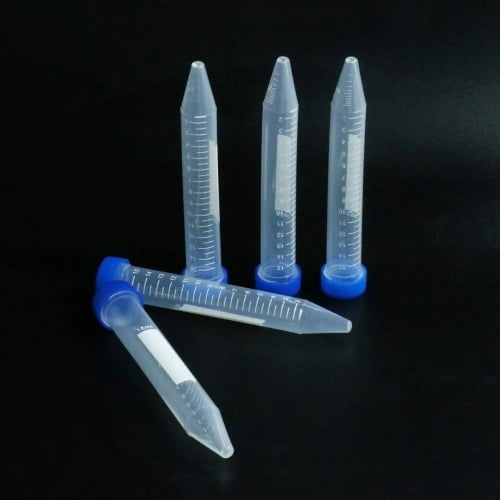
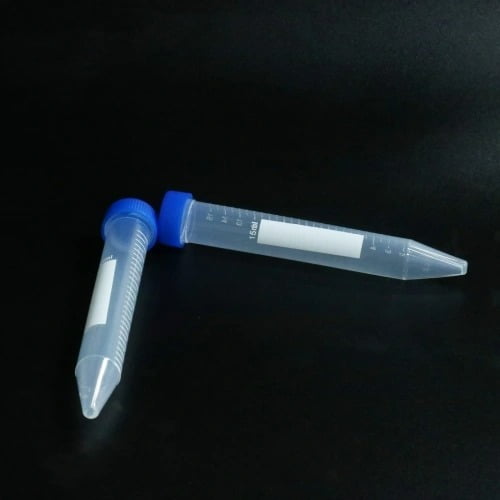


| Specification | Description |
|---|---|
| Product Name | High Speed Centrifuge Tube |
| Product Category | Laboratory Centrifuge Consumables |
| Product Type | Centrifuge Tube |
| Intended Use | Laboratory Sample Centrifugation |
| Applications | Laboratory Sample Preparation and Separation |
Centrifugation plays an important role in laboratory sample preparation, separation, and analysis. Whether technicians process biological specimens, prepare research samples, or separate suspended particles, they need suitable containers that can withstand the mechanical conditions of their centrifugation procedures.
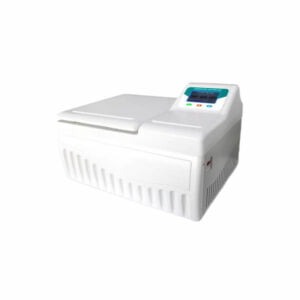
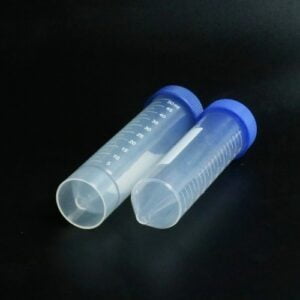
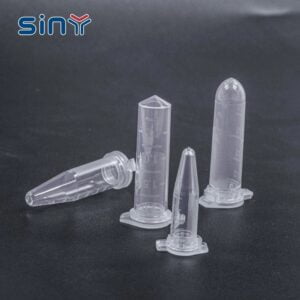
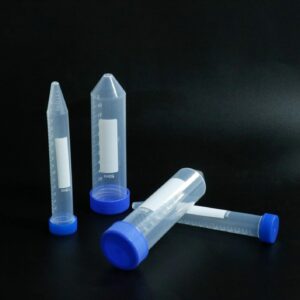
Siny Medical offers High Speed Centrifuge Tubes for laboratories, research facilities, diagnostic centers, and medical consumable distributors. These tubes belong to the laboratory centrifuge consumables category and are intended for sample processing workflows that use compatible centrifugation equipment.
High-speed centrifugation places significant mechanical demands on sample containers. Therefore, laboratories must select tubes according to the required relative centrifugal force (RCF), rotor configuration, sample volume, and chemical compatibility. A tube that fits a rotor does not necessarily have the mechanical strength required for every centrifugation procedure.
In addition, buyers should distinguish centrifuge speed from the force acting on the sample. Revolutions per minute (RPM) describe rotational speed, while RCF describes the centrifugal acceleration experienced by the contents. Since rotor radius affects RCF, the same RPM can produce different forces in different centrifuges.
For purchasing teams, reliable tube selection involves more than finding a suitable capacity. Laboratories should review tube construction, closure compatibility, equipment requirements, and the intended sample type before placing an order.
This product guide explains the essential considerations for selecting high-speed centrifuge consumables and how laboratories can improve consistency in their sample processing workflows.
Centrifuge tubes serve as sample containers during centrifugal separation. However, their suitability for high-speed operation depends on the finished product’s design, materials, and validated operating limits.
A centrifuge tube holds a sample while a compatible centrifuge generates centrifugal acceleration.
During operation, particles or components with different sedimentation characteristics may separate according to the procedure and sample properties.
However, the required centrifugal force varies significantly between applications.
Therefore, technicians should select tubes according to the actual operating conditions rather than rely only on the description “high speed.”
Centrifugation generates forces that act on the tube body, base, and closure.
These forces become more significant as operating conditions change.
Consequently, the tube must have sufficient mechanical integrity for the selected centrifugation procedure.
A suitable tube should maintain its intended structure under the manufacturer’s specified operating conditions.
However, buyers should not assume that all tubes labeled high speed share the same maximum RCF.
The applicable rating must come from the actual product specifications.
Centrifuge rotors use specific tube positions, adapters, and support arrangements.
Therefore, tube dimensions and shape must match the centrifuge manufacturer’s instructions.
For example, a tube may physically fit into a rotor cavity but still require a suitable adapter or different operating limit.
In addition, improper tube support can create localized stress during centrifugation.
Laboratories should review rotor compatibility before introducing a new tube into routine use.
A centrifuge tube must hold the sample during loading, centrifugation, and removal.
However, the required containment level depends on the specimen and laboratory procedure.
Some workflows require additional measures to reduce aerosol exposure or sample leakage.
Therefore, buyers should assess the tube and closure as a complete system.
A cap’s presence alone does not establish leakproof or aerosol-tight performance.
Laboratories use different reagents, buffers, and sample preparation solutions.
However, tube materials do not react identically to every chemical.
Some reagents may affect a plastic tube’s strength, transparency, or dimensional stability.
Consequently, purchasing teams should evaluate material compatibility for the intended contents.
They should also consider the operating temperature and contact duration when assessing suitability.
Centrifuge tubes support multiple laboratory activities, including sample preparation, transfer, separation, and temporary holding.
A suitable tube format can help technicians organize these tasks.
For example, personnel may prepare labeled samples before loading them into a centrifuge.
However, the tube must remain compatible with the planned centrifugation conditions.
Convenient handling should never replace proper equipment and sample compatibility checks.
Laboratories use centrifugation for many analytical and preparative procedures. However, each application requires an appropriate combination of sample container, rotor, and operating conditions.
Clinical laboratories use centrifugation in selected specimen preparation workflows.
For example, certain procedures separate liquid components or sediment particles before further analysis.
However, the appropriate tube depends on the specimen, test method, and centrifuge system.
Therefore, laboratories should follow the validated procedure rather than substitute a different tube solely because it has a similar appearance.
Molecular biology laboratories use centrifugation during nucleic acid preparation, protein processing, and other sample handling procedures.
These workflows may involve different reagents and centrifugal forces.
Consequently, technicians should select tubes that suit both the sample chemistry and the centrifugation conditions.
In addition, they should consider whether the procedure requires specific temperature control or contamination management.
Cell biology workflows often use centrifugal separation to collect or concentrate cellular material.
The appropriate force depends on the cells and experimental objective.
For example, excessive centrifugal force can affect sensitive samples.
Therefore, technicians should select the operating conditions according to their laboratory protocol.
The centrifuge tube must also support the selected rotor and sample volume.
Biochemical laboratories may use centrifugation to separate precipitates, clarify solutions, or prepare samples for further analysis.
Different procedures can require substantially different forces and processing times.
As a result, tube selection should consider the reagent system, rotor configuration, and operating conditions.
Chemical compatibility is especially important when the sample contains solvents or other reactive substances.
Universities and research institutions use centrifuge tubes in teaching and experimental workflows.
A consistent selection of suitable consumables can help laboratories organize routine sample processing.
However, users should receive appropriate equipment training.
In addition, laboratory supervisors should establish procedures for loading, balancing, and inspecting centrifuge tubes.
Medical and laboratory distributors supply centrifuge consumables to research facilities, hospitals, and diagnostic centers.
Their customers may use different centrifuge models and protocols.
Therefore, distributors should identify the required tube dimensions, operating force, and material characteristics before selecting products.
Clear technical information also helps buyers compare compatible alternatives.
Laboratories often distinguish centrifuge tubes according to their intended operating conditions.
However, the terms “standard” and “high speed” do not represent universal performance categories.
A tube’s actual operating limit depends on its design and the manufacturer’s specifications.
Standard laboratory centrifuge tubes support procedures within their specified operating limits.
They may suit routine sample preparation, mixing, and centrifugal separation.
However, their maximum permitted force varies between products.
Therefore, buyers should not assume that a tube intended for routine laboratory use can withstand every centrifuge setting.
High-speed tubes target applications that require greater centrifugal force than some routine laboratory procedures.
However, the description does not establish a universal maximum RPM or RCF.
The finished product must have a documented operating limit appropriate for the intended procedure.
In addition, laboratories must confirm compatibility with the selected rotor and any required adapters.
| Selection Factor | Standard Centrifuge Tubes | High-Speed Centrifuge Tubes |
|---|---|---|
| Typical Positioning | Routine Laboratory Centrifugation | Higher-Force Centrifugation Applications |
| Maximum RCF | Product-Specific | Product-Specific |
| Maximum RPM | Depends on Rotor and Tube Limits | Depends on Rotor and Tube Limits |
| Mechanical Requirements | Must Match Operating Conditions | Must Match Higher-Force Operating Conditions |
| Rotor Compatibility | Requires Verification | Requires Verification |
| Chemical Compatibility | Material-Dependent | Material-Dependent |
| Main Purchasing Priority | Routine Workflow Compatibility | Force Rating and Equipment Compatibility |
The most important distinction is the verified operating capability of the individual product.
Therefore, buyers should compare documented RCF ratings rather than rely only on product names.
Selecting the correct centrifuge tube requires a clear understanding of the laboratory procedure and equipment.
The following factors help purchasing teams evaluate suitable products.
First, identify the centrifugal force specified by the laboratory procedure.
RCF describes the acceleration acting on the sample relative to Earth’s gravitational acceleration.
Manufacturers commonly express it as multiples of g.
For example, a procedure may specify a particular RCF rather than an RPM value.
This distinction matters because different rotor radii produce different centrifugal forces at the same rotational speed.
Therefore, buyers should prioritize the required RCF when evaluating tube suitability.
RPM measures how many revolutions the rotor completes each minute.
However, it does not directly describe the centrifugal force applied to the sample.
RCF depends on both rotational speed and rotor radius.
The relationship is commonly expressed as:
RCF = 1.118 × 10⁻⁵ × r × RPM²
Here, r represents the rotor radius in centimeters, measured according to the relevant centrifuge or rotor instructions.
For example, a rotor with a 10 cm radius operating at 10,000 RPM produces approximately 11,180 × g at that radius.
However, this is a mathematical example, not a performance rating for Siny Medical’s centrifuge tubes.
Therefore, laboratories should use the centrifuge manufacturer’s rotor data and the tube’s specified limits when determining operating settings.
Next, identify the centrifuge model and rotor type.
Common rotor arrangements include fixed-angle and swinging-bucket designs.
However, not every tube suits every rotor.
Buyers should check the tube dimensions, support requirements, and any necessary adapters.
In addition, they should verify the permitted operating force for the complete tube-and-rotor combination.
Centrifuge tubes come in different capacities, but the correct size depends on the procedure.
A suitable tube should accommodate the intended sample volume while respecting its filling limits.
However, filling requirements can differ according to tube design, rotor type, and operating conditions.
Therefore, laboratories should follow the relevant instructions rather than apply a universal filling percentage.
Tube material affects chemical resistance, mechanical behavior, and temperature suitability.
For example, some plastics may be incompatible with particular organic solvents.
Consequently, buyers should identify the reagents used in their procedures before selecting a tube.
They should also consider whether the tube must operate under refrigerated or elevated-temperature conditions.
The actual product’s material specification should guide this assessment.
Different centrifugation procedures may require different closure characteristics.
Some applications prioritize routine sample containment, while others require additional aerosol protection.
However, a standard screw cap or snap cap does not automatically provide aerosol-tight performance.
Therefore, laboratories should review the complete tube-and-closure specifications.
Some samples are sensitive to temperature, excessive force, or prolonged centrifugation.
For example, certain cellular materials may experience damage under unsuitable conditions.
Therefore, the centrifugation protocol should determine the operating parameters.
The tube must then support those conditions.
Hospitals, research facilities, and distributors often purchase centrifuge consumables in recurring quantities.
Purchasing teams should estimate demand according to sample volume and laboratory workload.
In addition, they should consider equipment compatibility and storage requirements.
For distributors, clear specifications help customers select the correct products and reduce ordering errors.
Correct handling is essential for reliable centrifugation.
Before use, inspect each tube for visible cracks, deformation, or damage.
Next, confirm that the tube and closure suit the intended sample and operating conditions.
Check the centrifuge manufacturer’s instructions for rotor compatibility.
Then, load the tubes according to the applicable balancing procedure.
Improperly balanced loads can create excessive vibration and affect centrifuge operation.
In addition, technicians should not exceed the specified operating limits of the tube, rotor, or centrifuge.
The lowest applicable limit governs the permitted operating conditions.
After centrifugation, allow the rotor to stop completely before opening the centrifuge.
If a tube breaks or leaks, follow the laboratory’s established spill response and equipment decontamination procedures.
Finally, inspect reusable components and dispose of single-use consumables according to the relevant laboratory procedures.
Store unused centrifuge tubes in a clean, dry location.
Keep them in their original packaging and protect them from physical damage.
In addition, follow the manufacturer’s labeled storage conditions.
Laboratories should also keep different tube types clearly identified to reduce the risk of selecting an unsuitable product.
They are laboratory sample containers intended for centrifugation procedures that require suitable mechanical performance under higher centrifugal forces.
They support sample separation and preparation in compatible laboratory centrifugation workflows.
RPM describes rotational speed, while RCF describes the centrifugal acceleration acting on the sample.
No. Each tube has operating limits determined by its construction and the manufacturer’s specifications.
The tube’s design, material, closure, rotor compatibility, and validated operating limits all affect its suitability.
They may support appropriate clinical laboratory procedures when the tube, equipment, and workflow requirements are compatible.
Suitability depends on the tube’s specified temperature range, rotor compatibility, and intended operating conditions.
Chemical resistance depends on the tube material and the specific reagents involved.
Reuse depends on the product’s intended use and manufacturer instructions. Buyers should not assume that disposable tubes are reusable.
Laboratories should follow the centrifuge manufacturer’s balancing instructions and use compatible tubes and adapters.
Distributors should review the required RCF, tube dimensions, capacity, material, closure, rotor compatibility, and customer applications.
Siny Medical supplies high speed centrifuge tubes and other laboratory consumables for clinical laboratories, research facilities, diagnostic centers, and medical distributors. Our centrifuge tube product supports buyers seeking suitable sample containers for compatible centrifugation workflows. Explore our laboratory consumable range or contact Siny Medical to discuss available specifications, equipment compatibility, product configurations, and bulk purchasing requirements.
Copyright © 2026 | Ningbo Siny Medical Technology Co., Ltd