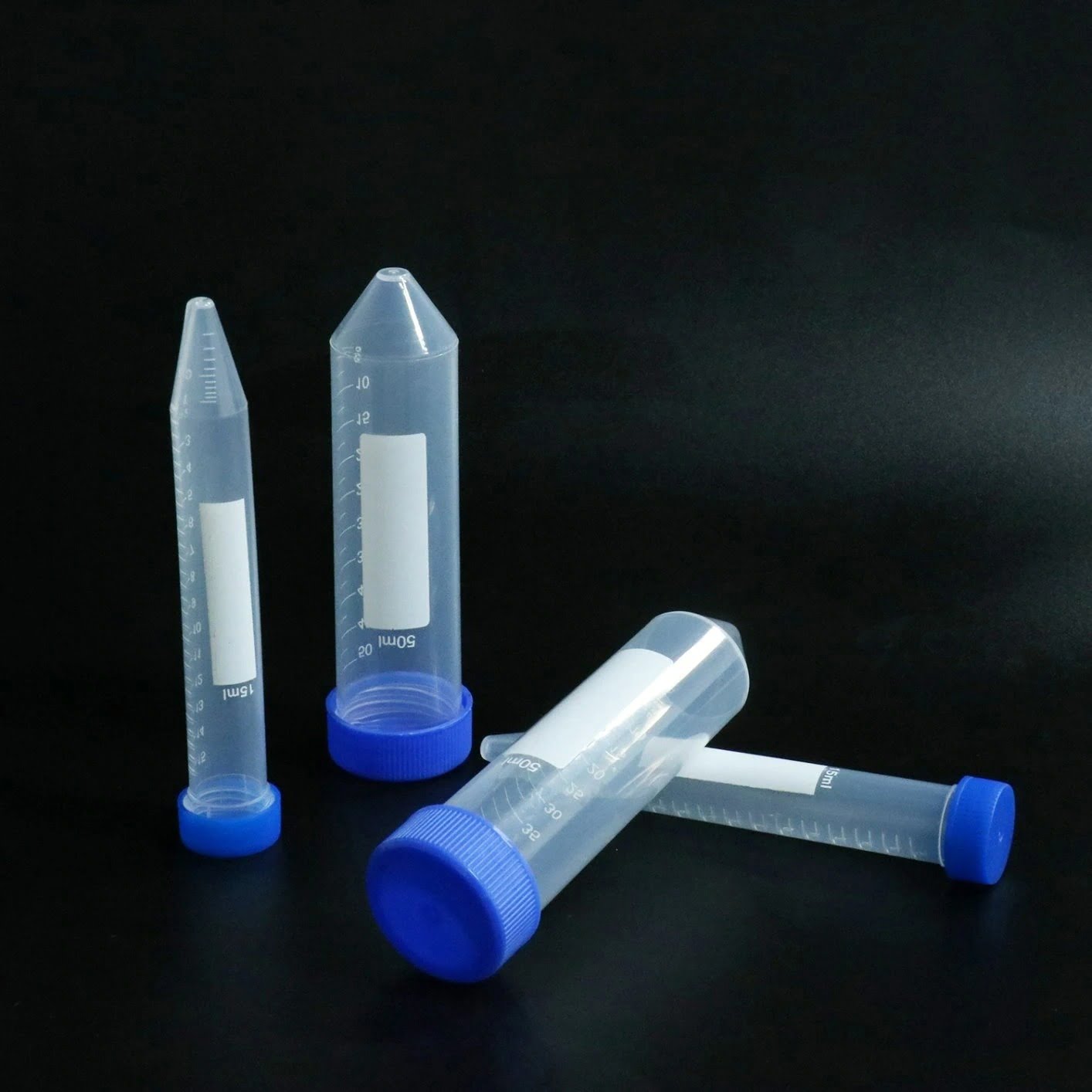


| Specification | Details |
|---|---|
| Product Name | Lab Consumables Plastic Centrifuge Tube |
| Product Type | Centrifuge Tube |
| Material | Polypropylene (PP) |
| Capacity | 10ml / 15ml / 50ml |
| Bottom Design | Conical / Free-Standing |
| Graduation | Printed Graduation |
| Sterilization | EO (Sterile Configurations) |
| Packaging | Bulk Pack / Individual Pack |
| OEM/ODM | Available |
The Lab Consumables Plastic Centrifuge Tube from Siny Medical is a polypropylene (PP) laboratory container designed for sample preparation, liquid separation, and compatible centrifugation procedures. Available in 10ml, 15ml, and 50ml capacities, these tubes support routine workflows in research laboratories, hospitals, diagnostic facilities, and biotechnology laboratories.
Plastic centrifuge tubes provide a practical solution for handling liquid samples during laboratory processing. Their lightweight construction, convenient capacity options, and compatibility with many common laboratory reagents make them useful for a wide range of applications.
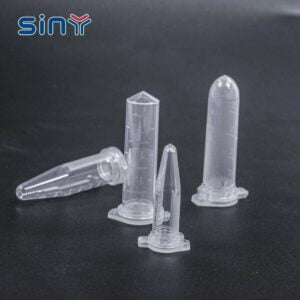
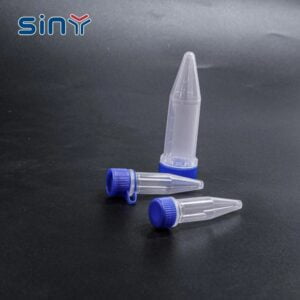
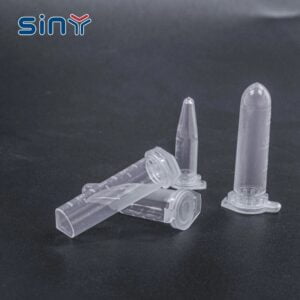
Siny Medical offers different tube configurations, including conical-bottom designs and free-standing 50ml options. Selected configurations also feature printed graduation markings and sterile packaging.
The appropriate tube depends on the sample volume, separation procedure, centrifuge equipment, and contamination-control requirements. Therefore, laboratories should choose the configuration that matches their workflow rather than rely on capacity alone.
As a laboratory consumables supplier, Siny Medical supports medical distributors, research institutions, and laboratory purchasing teams with centrifuge tube solutions for routine sample processing.
These centrifuge tubes are made from polypropylene, a material widely used in laboratory consumables.
PP combines low weight with useful mechanical properties and resistance to many common laboratory reagents. As a result, it is suitable for various sample-handling procedures.
However, chemical compatibility depends on the reagent, concentration, temperature, and exposure time. Laboratories should verify compatibility before using aggressive chemicals or specialized solvents.
Siny Medical offers three listed capacities: 10ml, 15ml, and 50ml.
The 10ml and 15ml formats support moderate-volume sample preparation. Meanwhile, the 50ml format provides additional capacity for larger liquid quantities.
Choosing an appropriate capacity can help laboratories manage samples more efficiently.
However, nominal capacity does not automatically represent the maximum recommended working volume during centrifugation.
The listed range includes conical-bottom centrifuge tubes.
During compatible centrifugation, suspended particles may sediment toward the narrow bottom of the tube. This geometry helps collect material in a concentrated area.
After centrifugation, laboratory personnel can remove the supernatant or recover the pellet according to their procedures.
Nevertheless, separation performance depends on the sample, centrifugal force, processing time, and handling technique.
The product range also includes free-standing 50ml centrifuge tubes.
A free-standing base allows a compatible tube to remain upright on a level laboratory surface without a separate rack.
This feature can be convenient during sample preparation, temporary bench placement, and reagent handling.
However, free-standing tubes and conical-bottom tubes have different base geometries. Laboratories should select the design that matches their equipment and workflow.
Selected centrifuge tube configurations include printed graduation markings.
These markings provide a convenient visual reference for estimating liquid volume.
They may help technicians monitor approximate sample quantities during preparation and transfer.
However, graduation markings do not replace calibrated pipettes or other volumetric instruments when accurate measurement is required.
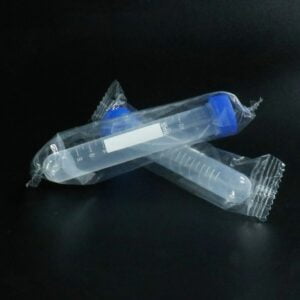
The listed range includes bulk-packed products and selected individually packed, EO-sterilized configurations.
Sterile tubes may be useful for procedures that require sterile containers. Meanwhile, bulk-packed options can support routine laboratory workflows according to their documented sterile status.
Because packaging and sterilization differ between configurations, laboratories should select the appropriate version for their intended use.
Laboratories frequently process biological samples before analysis.
For example, technicians may transfer compatible liquid specimens into centrifuge tubes for mixing, dilution, or separation.
The available capacities help accommodate different sample volumes.
However, clinical laboratories must follow their validated procedures and confirm that the selected tube is suitable for the specimen and analytical method.
Centrifuge tubes are commonly used during cell suspension preparation.
In compatible procedures, centrifugation may help separate cells from surrounding liquid.
After processing, technicians can remove the supernatant or resuspend the collected material.
The appropriate tube depends on the sample, rotor, and required centrifugal force.
Research laboratories use centrifuge tubes to prepare buffers, reagent mixtures, and compatible chemical solutions.
The 10ml, 15ml, and 50ml capacity options support different preparation volumes.
In addition, selected graduation markings can help technicians estimate liquid quantities during routine handling.
Nevertheless, laboratories should use calibrated equipment when precise volume measurement is required.
Aliquoting involves dividing a larger sample into smaller portions for separate processing steps.
Plastic centrifuge tubes provide practical containers for compatible liquid samples.
Proper labeling and careful handling help maintain sample identification and reduce unnecessary contamination risks.
When sterility is required, laboratories should use the appropriate sterile configuration and follow aseptic procedures.
Centrifugation separates sample components according to their behavior under centrifugal force.
For example, suspended particles may collect near the bottom of a compatible tube during processing.
Conical-bottom tubes can help concentrate sedimented material in a narrow area.
However, users must verify rotor compatibility and the maximum permitted relative centrifugal force (RCF) for the selected model.
Hospitals, diagnostic laboratories, and research institutions use centrifuge tubes in many preparation procedures.
The appropriate configuration depends on sample volume, contamination-control requirements, and equipment compatibility.
Therefore, laboratories should evaluate the complete product specification before selecting a tube for a particular procedure.
Selecting the correct capacity is an important part of laboratory purchasing.
The 10ml format is suitable for compatible procedures involving moderate liquid quantities.
The listed configuration includes printed graduation markings and a conical bottom.
This design may support sample preparation, reagent handling, and selected separation procedures.
The 15ml format is widely used in laboratory workflows involving cell suspensions, sample preparation, and liquid separation.
Siny Medical lists conical-bottom 15ml configurations with printed graduations.
Both bulk-packed and individually packed EO-sterilized versions appear in the product range.
The 50ml format accommodates larger liquid quantities.
The listed range includes conical-bottom and free-standing configurations.
These options support different laboratory handling preferences. For example, a free-standing tube may be convenient for bench preparation, while a conical-bottom design may help concentrate sedimented material.
Selected 50ml configurations are also listed with individual EO-sterile packaging.
| Feature | 10ml | 15ml | 50ml |
|---|---|---|---|
| Material | PP | PP | PP |
| Listed Bottom Design | Conical | Conical | Conical or Free-Standing |
| Printed Graduations | Listed | Listed | Listed on Selected Configuration |
| Individually Packed EO-Sterile Option | Not Listed | Listed | Listed |
| Bulk Packaging Option | Listed | Listed | Listed |
This comparison reflects the configurations identified in the product listing. Sterile status, closure design, and operating limits should be checked for the selected model.
First, determine the sample volume and any additional reagents required.
Choose a tube that provides sufficient space for the intended procedure.
Also, consider the recommended working volume during centrifugation.
Conical-bottom tubes help collect sedimented particles near the narrow end.
In contrast, free-standing tubes offer convenient upright placement during bench handling.
The best option depends on the workflow and centrifuge equipment.
Before centrifugation, confirm that the selected tube fits the rotor or adapter.
Tube dimensions, bottom geometry, and closure design can affect compatibility.
Furthermore, users must follow the documented maximum RCF for the selected model.
Do not assume that every polypropylene centrifuge tube supports the same centrifugal force.
PP is suitable for many routine laboratory reagents.
However, some chemicals or operating conditions may affect the material.
Therefore, laboratories should review compatibility information before using specialized solutions.
Some procedures require sterile containers to help control microbial contamination.
For these applications, select a product with verified sterile status and appropriate packaging.
The listed range includes individually packed EO-sterilized configurations.
However, buyers should not assume that every bulk-packed configuration has the same sterile status.
The closure should suit the sample and intended handling procedure.
For example, some workflows require additional protection against leakage or aerosol exposure.
These properties must be verified for the selected model.
A screw cap or other closure design does not automatically establish leakproof or aerosol-tight performance.
Packaging affects storage, inventory management, and daily laboratory operations.
Bulk packaging may be convenient for routine consumption. Meanwhile, individual sterile packaging may be more suitable for procedures requiring sterile containers.
Procurement teams should also review packaging integrity, storage conditions, and expected consumption.
Laboratory distributors should consider product consistency, available configurations, and purchasing requirements.
Siny Medical offers OEM/ODM services for its laboratory consumables range.
When selecting a product, buyers should confirm the required capacity, bottom design, sterile status, packaging, and documented operating specifications.
They are used for compatible laboratory sample preparation, liquid handling, centrifugation, and separation procedures.
The listed tubes are made from polypropylene (PP), a plastic commonly used in laboratory consumables.
Siny Medical lists 10ml, 15ml, and 50ml configurations for this product range.
Conical-bottom tubes help collect sedimented material in a narrow area. Free-standing tubes have a base that allows upright placement on a suitable surface.
Selected configurations are listed as individually packed and EO-sterilized. Other configurations use bulk packaging, so buyers should check the sterile status of the selected product.
Only when the selected model is rated for the required RCF and is compatible with the intended rotor.
Some PP centrifuge tubes can tolerate validated autoclave conditions. However, the selected model’s temperature and processing limits must be confirmed before autoclaving.
Important factors include capacity, material, bottom design, graduation markings, packaging, sterile status, centrifuge compatibility, and purchasing requirements.
Siny Medical supplies laboratory consumables for hospitals, research institutions, diagnostic facilities, and medical distributors. Our Lab Consumables Plastic Centrifuge Tube range includes polypropylene tubes in 10ml, 15ml, and 50ml capacities, with conical-bottom and selected free-standing configurations for different laboratory workflows. Contact Siny Medical to discuss product configurations, OEM/ODM requirements, bulk orders, and quotation details.
Copyright © 2026 | Ningbo Siny Medical Technology Co., Ltd