| Specification | Details |
|---|---|
| Product Name | Autoclavable Sterile Microcentrifuge Tube Vial |
| Product Type | Microcentrifuge Tube |
| Material | Polypropylene (PP) |
| Capacity | 1ml / 1.5ml / 2ml / 5ml |
| Sterility | Sterile |
| Autoclavable | Yes |
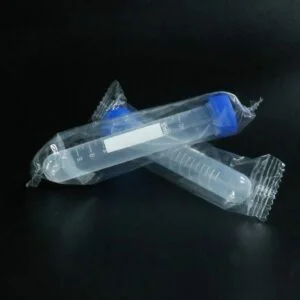
| Packaging | 200 PCS/Rack, 4,000 PCS/CTN |
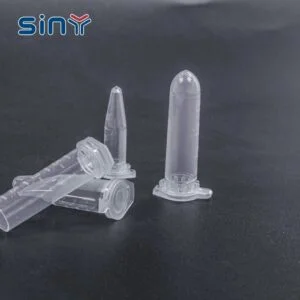
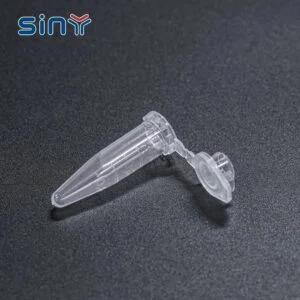
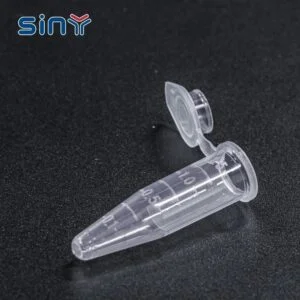
The Autoclavable Sterile Microcentrifuge Tube Vial from Siny Medical is a polypropylene (PP) laboratory container designed for small-volume sample preparation, liquid handling, and compatible centrifugation procedures. It combines sterile supply with autoclavable construction, making it a practical option for laboratories that require controlled sample handling and suitable steam-sterilization compatibility.
Autoclavable sterile microcentrifuge tubes are useful in research laboratories, diagnostic facilities, and other environments where contamination control is important. They provide compact containers for preparing reagents, transferring biological samples, and processing small quantities of liquid.
Autoclavability and sterility serve different purposes. A sterile tube is supplied in a sterile condition, while an autoclavable tube is designed to tolerate specified steam-sterilization conditions. Therefore, laboratories should consider both characteristics when selecting consumables.
Siny Medical offers this product in listed capacities of 1ml, 1.5ml, 2ml, and 5ml. These options help laboratories select an appropriate container for different sample volumes and handling requirements.
As a medical and laboratory consumables supplier, Siny Medical serves hospitals, research institutions, diagnostic laboratories, and distributors seeking practical products for routine laboratory operations.
The tubes are made from polypropylene, a material widely used in laboratory consumables.
Polypropylene offers useful mechanical properties and resistance to many routine laboratory reagents. Certain PP formulations and tube designs can also withstand steam sterilization.
This product is identified as autoclavable, making that characteristic a key part of its laboratory application.
However, autoclavability depends on the complete tube construction, including the body and closure. The selected model’s validated temperature, exposure time, and processing conditions must guide actual sterilization procedures.
Furthermore, laboratories should not assume that autoclavable construction permits unlimited sterilization cycles.
Sterility is another important characteristic of this product.
Sterile microcentrifuge vials help reduce the risk of introducing microorganisms through the sample container during appropriate laboratory procedures.
For example, they may support selected aseptic preparation steps involving biological specimens or laboratory reagents.
However, users must preserve the sterile condition during storage and handling. Damaged packaging, improper opening techniques, or contact with contaminated surfaces can compromise sterility.
The listed capacities include 1ml, 1.5ml, 2ml, and 5ml.
Different capacities support different liquid-handling requirements.
Smaller formats are useful when processing limited sample quantities. Meanwhile, larger formats provide additional space for compatible sample preparation and mixing procedures.
The correct capacity depends on the procedure, centrifuge compatibility, and recommended working volume.
Importantly, nominal capacity does not automatically establish the maximum permitted fill volume during centrifugation.
Microcentrifuge tubes provide a convenient format for handling small liquid quantities.
Laboratory personnel can use compatible tubes during sample transfers, reagent preparation, and aliquoting.
In addition, compact containers help technicians organize multiple samples within a laboratory workflow.
However, tube dimensions and rotor compatibility may vary between capacities. Users should verify the selected model before introducing it into centrifugation equipment.
PP is lightweight and widely used for laboratory containers.
It is suitable for many common laboratory solutions when the operating conditions are compatible with the material.
Nevertheless, chemical resistance depends on reagent composition, concentration, temperature, and exposure time.
For this reason, laboratories should check material compatibility before handling aggressive chemicals or specialized reagents.
Some laboratory procedures require sterile containers to help control microbial contamination.
Sterile microcentrifuge vials provide suitable containers for selected preparation steps when their specifications meet the procedure’s requirements.
For example, laboratory personnel may transfer compatible biological samples or reagents into sterile tubes before further processing.
However, the sterile condition must be maintained throughout handling.
Therefore, users should follow appropriate aseptic techniques and avoid unnecessary contact with sample-contact surfaces.
Research laboratories frequently prepare small volumes of buffers, reagents, and other solutions.
Microcentrifuge tubes offer a practical format for these tasks.
The available capacities allow laboratories to select containers according to the required liquid quantity.
In addition, the product’s autoclavable construction may be relevant when a validated steam-sterilization process forms part of the laboratory workflow.
Nevertheless, users must verify that the complete tube assembly is suitable for the intended cycle.
Aliquoting involves dividing a larger sample into smaller portions.
This approach helps laboratories organize samples for separate preparation or analytical steps.
Sterile tubes may be useful when the procedure requires a sterile container.
However, sample integrity also depends on appropriate labeling, liquid-handling equipment, and contamination-control practices.
Microcentrifuge tubes are commonly used for separating suspended particles from liquid samples.
During centrifugation, denser material may collect near the bottom of the tube.
Laboratory personnel can then recover the pellet or transfer the supernatant according to their procedures.
However, the tube must fit the intended centrifuge rotor and support the required relative centrifugal force (RCF).
Autoclavable construction does not automatically establish high-speed centrifugation compatibility.
Research and diagnostic laboratories use small-volume containers throughout sample preparation workflows.
Autoclavable sterile vials may support selected procedures involving biological specimens, analytical reagents, and compatible laboratory solutions.
However, suitability for a specific clinical or analytical method depends on the validated procedure.
Laboratories should also review any additional requirements for molecular biology purity, temperature exposure, or sample containment.
Autoclavable and sterile are related laboratory product characteristics, but they are not interchangeable.
Understanding the distinction helps purchasing teams choose suitable consumables.
Autoclavable means that a product is designed to tolerate specified steam-sterilization conditions.
Autoclaves use saturated steam under controlled conditions to achieve sterilization.
However, the effectiveness of a cycle depends on temperature, exposure time, load configuration, steam penetration, and the validated process.
Not every plastic tube is suitable for autoclaving.
Even among polypropylene products, allowable conditions may differ according to the tube design and closure.
Sterile describes the condition of a product following an appropriate sterilization process.
Sterile laboratory consumables are intended for procedures that require a sterile container.
However, sterility must be preserved through suitable packaging, storage, and handling.
Once the sterile barrier is compromised, the product should no longer be treated as sterile.
A product that is both sterile and autoclavable offers two distinct features.
First, it is supplied sterile for laboratory workflows that require sterile consumables.
Second, its autoclavable construction allows consideration for validated steam-sterilization procedures.
However, users should not assume that a previously sterilized disposable tube can be repeatedly processed and reused.
Any additional sterilization must follow the manufacturer’s validated instructions and the laboratory’s applicable procedures.
| Feature | Autoclavable | Sterile |
|---|---|---|
| Main Meaning | Compatible with specified steam-sterilization conditions | Supplied in a sterile condition |
| Primary Consideration | Material and structural resistance to a validated cycle | Microbial contamination control |
| Key Verification | Temperature, exposure time, and tube compatibility | Sterilization and sterile-barrier information |
| Handling Requirement | Follow validated processing instructions | Preserve sterile condition before use |
| Repeated Processing | Requires specific validation | Does not imply reusability |
| DNase/RNase-Free | Separate characteristic | Separate characteristic |
The Siny Medical product combines autoclavable and sterile characteristics. Nevertheless, laboratories must follow the operating requirements of the selected configuration.
Selecting the right laboratory tubes involves evaluating sterilization requirements, sample volume, material compatibility, and equipment performance.
First, determine whether the laboratory needs a tube supplied sterile, a tube suitable for autoclaving, or both.
For procedures involving steam sterilization, review the selected model’s validated processing conditions.
These should include the permitted temperature, exposure time, and any restrictions on closure position or load configuration.
Do not apply a general autoclave cycle without checking product compatibility.
Choose a tube that accommodates the required sample volume and any additional reagents.
The listed product range includes 1ml, 1.5ml, 2ml, and 5ml capacities.
However, different sizes may require different centrifuge rotors or adapters.
Therefore, capacity selection should consider both the liquid volume and the equipment.
Polypropylene is widely used in laboratory consumables because of its practical mechanical and chemical properties.
However, compatibility varies with the chemical, concentration, and operating conditions.
For specialized reagents, laboratories should review the relevant material information before use.
Before centrifugation, confirm the selected tube’s dimensions and rotor requirements.
The maximum permitted RCF is also important.
Therefore, users should follow documented operating limits rather than assume that all microcentrifuge tubes can withstand the same centrifugal force.
Closure performance affects sample handling and equipment compatibility.
Different laboratory procedures may require different levels of containment.
For example, procedures involving aerosol-generating risks may require a tube and closure with verified containment performance.
Buyers should review the selected model’s closure specifications when these requirements apply.
Sterile consumables require appropriate storage and handling.
Before use, inspect the packaging for visible damage.
Also, follow the manufacturer’s instructions for storage and any applicable expiry information.
If the sterile barrier is compromised, the tube should not be treated as sterile.
Sterility does not automatically establish DNase-free, RNase-free, or endotoxin-free status.
Sensitive molecular biology applications may require these characteristics.
Therefore, laboratories should verify the relevant purity specifications separately.
Packaging influences storage, handling, and inventory management.
The listed product packaging is 200 pieces per rack and 4,000 pieces per carton.
Procurement teams should consider expected consumption, storage space, and distribution requirements when planning purchases.
For sterile products, they should also maintain appropriate inventory practices to protect packaging integrity.
They are small-volume laboratory containers that combine sterile supply with construction designed to tolerate specified steam-sterilization conditions.
Autoclavable refers to compatibility with a validated steam-sterilization process. Sterile refers to the condition of a product supplied following an appropriate sterilization process.
The listed product uses polypropylene (PP), a material commonly used in laboratory consumables.
The product page lists 1ml, 1.5ml, 2ml, and 5ml capacities.
The product is identified as autoclavable. However, the specific validated temperature and exposure time must be checked for the selected configuration before processing.
Autoclavable construction does not automatically mean that a tube is suitable for repeated use. Reprocessing requires specific manufacturer validation and an appropriate laboratory procedure.
Only when the selected model supports the required RCF and fits the intended rotor. Autoclavability and sterility do not determine centrifugation performance.
Important factors include capacity, polypropylene material, sterile status, validated autoclave conditions, closure design, packaging, centrifuge compatibility, and any required purity characteristics.
Siny Medical supplies laboratory consumables for hospitals, research institutions, diagnostic facilities, and medical distributors. Our Autoclavable Sterile Microcentrifuge Tube Vial combines polypropylene construction, sterile supply, and autoclavable design for compatible small-volume laboratory workflows. Contact Siny Medical to discuss available capacities, packaging requirements, bulk orders, and quotation details.
Copyright © 2026 | Ningbo Siny Medical Technology Co., Ltd