| Specification | Description |
|---|---|
| Product Name | Disposable Laboratory Supply Free Standing Centrifuge Tube |
| Product Category | Laboratory Centrifuge Consumables |
| Product Type | Free Standing Centrifuge Tube |
| Base Design | Free-Standing Base |
| Usage | Disposable |
| Intended Use | Laboratory Sample Preparation and Compatible Centrifugation |
Laboratory sample preparation often involves several steps before centrifugation begins. Technicians may need to measure liquids, add reagents, label containers, and organize samples on a workbench. During these activities, a tube that can stand upright without a separate rack offers a practical handling advantage.
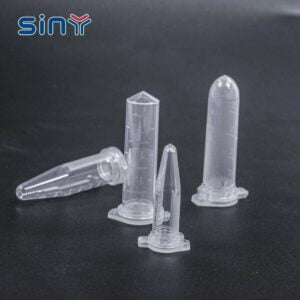
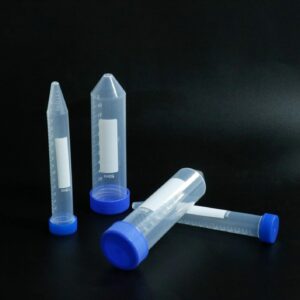
Siny Medical offers Disposable Free Standing Centrifuge Tubes for clinical laboratories, research facilities, diagnostic centers, and laboratory consumable distributors. These tubes feature a self-supporting base designed to help them remain upright on a suitable flat surface.
Unlike conventional conical-bottom tubes, which generally require a rack for upright positioning, Free Standing Centrifuge Tubes can support convenient bench-top sample preparation. This makes the design particularly relevant to workflows involving repeated liquid additions, sample identification, and temporary positioning between processing steps.
However, a free-standing base does not automatically make a tube compatible with every centrifuge rotor. Laboratories must still evaluate the tube’s dimensions, mechanical performance, and required operating conditions before centrifugation.
For hospitals and laboratory buyers, choosing a suitable centrifuge tube involves balancing bench-top convenience with equipment compatibility, sample volume, and chemical resistance.
This guide explains the characteristics of free-standing centrifuge tubes, their laboratory applications, and the factors purchasing teams should consider when selecting disposable sample containers.
The defining feature of a free-standing tube is its ability to remain upright on a suitable level surface without a separate tube rack.
This design can simplify certain laboratory preparation tasks. However, its overall suitability depends on the intended sample and operating conditions.
A free-standing centrifuge tube has a base designed to support the container in an upright position.
This distinguishes it from conventional pointed-bottom tubes that usually require external support.
For example, technicians may place a suitable self-standing tube on a laboratory bench while preparing a sample.
As a result, the tube can remain accessible during liquid handling or labeling.
However, stability depends on the tube’s geometry, filling level, surface conditions, and surrounding activity.
Personnel should still use appropriate racks or holders when the procedure requires additional stability.
Laboratory technicians often perform several preparation steps before loading samples into a centrifuge.
These steps may include measuring liquids, adding reagents, and mixing materials according to established protocols.
A self-standing tube can provide a convenient container format during these operations.
In addition, the upright position may make it easier to access the tube opening during controlled liquid transfer.
However, the tube should remain on a stable surface, and personnel should avoid unnecessary contact that could overturn it.
Disposable tubes support laboratory workflows that use a new container for each intended application.
This can simplify consumable management and eliminate the need to establish cleaning procedures for tube reuse.
However, disposable does not automatically mean sterile, DNase-free, RNase-free, or suitable for every biological sample.
These characteristics require product-specific supporting information.
Therefore, laboratories should select consumables according to their contamination-control requirements.
Accurate identification is essential during laboratory sample preparation.
Technicians may need to label containers, verify sample information, and organize tubes before processing.
A self-standing design can help personnel position containers upright during these tasks.
For example, a technician may prepare several individually labeled samples on a suitable work surface.
However, laboratories should use racks when they provide better stability or support the required workflow.
In addition, labeling must remain legible and compatible with the laboratory’s tracking procedures.
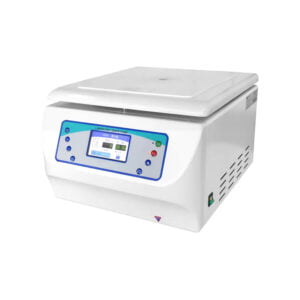
Free-standing centrifuge tubes are intended for laboratory processing, but their base design can affect equipment compatibility.
Different centrifuge rotors accommodate different tube shapes and dimensions.
Consequently, a tube that stands conveniently on a workbench may not fit a conventional conical-tube rotor position.
Some applications may require a suitable adapter or a specifically designed rotor cavity.
Therefore, laboratories should confirm equipment compatibility before use.
Laboratory samples may contain buffers, biological materials, or chemical reagents.
However, tube materials differ in their resistance to chemicals and temperature changes.
Some substances can affect plastic strength or dimensional stability.
Therefore, buyers should review the actual tube material and compare it with the intended sample composition.
The selected tube must also meet the mechanical requirements of the planned centrifugation procedure.
Self-standing laboratory tubes can be useful in workflows that combine bench-top preparation with compatible centrifugation.
Their practical value comes from the ability to position a sample container upright during appropriate handling steps.
Clinical laboratories regularly prepare samples for diagnostic testing.
Depending on the procedure, technicians may transfer specimens, add reagents, or prepare aliquots before analysis.
A free-standing tube can support these activities when its capacity and material suit the sample.
For example, personnel may position a tube upright while preparing material for a laboratory procedure.
However, a general laboratory centrifuge tube should not automatically replace a specialized specimen collection tube.
The selected container must meet the requirements of the test method.
Molecular biology laboratories handle samples during nucleic acid extraction, protein preparation, and related procedures.
Some workflows involve several reagent additions and mixing steps.
A self-standing tube may provide convenient bench-top positioning during appropriate preparation stages.
However, molecular biology applications can require specific cleanliness characteristics.
Therefore, laboratories should verify the relevant product specifications before selecting a tube for contamination-sensitive work.
Biochemistry laboratories frequently prepare solutions, combine reagents, and process samples before analysis.
During these tasks, upright containers can help technicians organize their work.
For example, a self-standing tube may hold a prepared sample while the technician completes the next processing step.
However, chemical compatibility remains essential.
Buyers should consider the reagents, contact time, and temperature conditions associated with the intended procedure.
Cell biology laboratories use tubes for sample handling, preparation, and selected centrifugation procedures.
A self-standing design may be convenient during sample transfer or reagent addition.
However, sensitive biological samples may require carefully controlled handling conditions.
In addition, the appropriate centrifugal force depends on the cells and experimental objective.
Therefore, laboratories should follow validated protocols and select tubes that meet the relevant operating requirements.
University laboratories use centrifuge consumables in teaching and research activities.
A free-standing tube can offer convenient upright positioning during supervised bench-top preparation.
This may be useful when students perform controlled liquid handling or organize experimental samples.
However, proper training remains necessary.
Personnel should understand tube stability, sample labeling, centrifuge compatibility, and safe disposal procedures.
Medical and laboratory distributors supply centrifuge tubes to research institutions, hospitals, and diagnostic facilities.
Customers may prioritize different tube characteristics according to their workflows.
For example, some laboratories may prefer a self-standing base for frequent bench-top preparation.
Others may require conventional conical-bottom tubes for existing rotor systems.
Therefore, distributors should identify the customer’s equipment and application before recommending a product.
One of the most useful distinctions between laboratory centrifuge tubes is their bottom design.
Free-standing tubes prioritize upright positioning on suitable flat surfaces. Conventional conical-bottom tubes have a tapered lower section that can help concentrate sediment into a smaller area.
However, neither design is universally better.
A self-standing tube uses a base that supports upright positioning.
This design can be useful when technicians frequently place samples on a laboratory bench during preparation.
For example, the tube may remain upright while personnel add reagents or check sample identification.
However, the base shape may affect compatibility with certain rotor cavities.
Therefore, buyers should review the complete tube geometry before selecting the product.
Conical-bottom tubes have a tapered lower section.
During suitable centrifugation procedures, this shape can help collect sediment or a pellet near the bottom of the tube.
However, pointed-bottom tubes generally require a rack or another support to remain upright on a workbench.
Their suitability also depends on rotor compatibility and the intended separation procedure.
| Feature | Free Standing Centrifuge Tubes | Conical Bottom Centrifuge Tubes |
|---|---|---|
| Bottom Design | Self-Supporting Base | Tapered or Pointed Bottom |
| Upright Bench Positioning | Designed to Stand Independently | Generally Requires a Rack |
| Liquid Handling | Convenient for Appropriate Bench-Top Preparation | Often Uses a Rack for Support |
| Pellet Collection | Depends on Actual Internal Geometry | Tapered Shape Can Help Concentrate Pellets |
| Rotor Compatibility | Must Match Tube Shape and Equipment | Must Match Tube Shape and Equipment |
| Maximum RCF | Determined by Product Specifications | Determined by Product Specifications |
| Main Selection Priority | Bench-Top Handling and Equipment Fit | Separation Requirements and Equipment Fit |
The choice depends on how the laboratory uses the tube.
For workflows involving frequent bench-top preparation, a self-standing design may offer practical convenience.
For procedures where pellet concentration is important, a conventional conical-bottom design may be more appropriate.
However, buyers should evaluate the actual product geometry and centrifugation requirements before making a decision.
Selecting a suitable tube requires an understanding of both laboratory preparation tasks and centrifugation requirements.
The following considerations help purchasing teams make an informed decision.
First, determine how personnel will handle samples before centrifugation.
Some procedures involve repeated reagent additions, mixing, or temporary positioning on a workbench.
In these situations, a self-standing design may be convenient.
However, a tube rack may still be necessary when the workflow requires multiple samples to remain securely organized.
Therefore, buyers should consider how the tube will be used throughout the entire procedure.
The ability to stand upright is an important feature, but stability can differ between tube designs.
Factors such as base width, tube height, filling level, and work surface condition can influence how easily a tube tips.
Therefore, laboratories should assess the product’s physical design under their normal handling conditions.
For example, a tall container with a narrow supporting base may behave differently from a shorter container with a broader base.
Personnel should also avoid placing tubes near bench edges or unstable equipment.
The required sample volume is another important consideration.
Buyers should identify how much material the laboratory needs to process in each tube.
They should also consider the permitted working volume.
However, nominal capacity does not always equal the maximum filling level for centrifugation.
Therefore, laboratories should follow the relevant product and equipment instructions.
Next, identify the centrifuge model and rotor type.
Different rotor cavities are designed for specific tube dimensions and shapes.
A free-standing base may have a different profile from a conventional conical bottom.
Consequently, buyers should confirm that the selected tube fits the rotor or approved adapter correctly.
Physical fit alone does not establish safe operating compatibility.
The tube must also meet the required mechanical limits.
Relative centrifugal force, or RCF, describes the acceleration acting on a sample during centrifugation.
Manufacturers commonly express it as multiples of gravity, such as × g.
The permitted RCF depends on the tube’s construction and operating conditions.
Therefore, laboratories should compare their required centrifugal force with the tube’s documented performance limit.
They should also consider the rotor, adapter, and centrifuge limits.
The lowest applicable limit governs the complete setup.
Different tube materials offer different chemical and temperature characteristics.
For example, some plastics may be unsuitable for particular solvents or elevated temperatures.
Therefore, buyers should identify the sample composition and processing conditions.
They should then evaluate the actual product material for compatibility.
A self-standing design does not establish any particular chemical resistance or temperature rating.
Laboratory procedures may require different closure characteristics.
Some applications prioritize convenient access, while others require specific containment performance.
However, the presence of a cap does not automatically establish leakproof or aerosol-tight performance.
Therefore, buyers should evaluate the complete tube-and-closure assembly.
The selected closure must suit the sample and intended procedure.
Hospitals, research facilities, and distributors often purchase centrifuge tubes regularly.
Purchasing teams can estimate demand by reviewing sample processing volumes and laboratory workloads.
In addition, they should consider storage requirements and compatibility with existing equipment.
For distributors, clear product specifications help customers distinguish self-standing tubes from other centrifuge tube designs.
Correct handling helps laboratories maintain consistent sample preparation and centrifugation procedures.
Before use, inspect each tube for visible damage or deformation.
Next, verify that the tube material and capacity suit the intended sample.
Place the tube on a clean, stable, level work surface.
Although the self-standing base supports upright positioning, avoid unnecessary contact that could overturn the container.
During sample preparation, follow the laboratory’s procedures for liquid handling, labeling, and contamination control.
If the tube will undergo centrifugation, confirm rotor compatibility before loading it.
Use approved adapters when required.
In addition, balance the centrifuge load according to the equipment manufacturer’s instructions.
Do not exceed the permitted operating limits of the tube, rotor, adapter, or centrifuge.
After centrifugation, allow the rotor to stop completely before opening the equipment.
If a tube breaks or leaks, follow the laboratory’s established spill response procedures.
Finally, dispose of used disposable tubes according to the applicable laboratory waste requirements.
Store unused centrifuge tubes in their original packaging in a clean, dry location.
Protect them from physical damage, sharp objects, and unsuitable environmental conditions.
In addition, follow the manufacturer’s labeled storage instructions.
Laboratories should keep different tube designs clearly identified to prevent accidental substitution.
They are laboratory centrifuge tubes with a base designed to support upright positioning on a suitable flat surface.
They support appropriate laboratory sample preparation, handling, and centrifugation workflows.
Its self-supporting base allows convenient upright positioning during suitable bench-top tasks.
They can stand independently on a suitable level surface. However, racks may still be useful for organizing multiple tubes or providing additional stability.
No. Rotor compatibility depends on tube dimensions, base geometry, adapters, and operating limits.
Not necessarily. Self-standing tubes emphasize bench-top convenience, while conical-bottom tubes can help concentrate sediment during suitable procedures.
Disposable does not automatically mean sterile. Sterility must be supported by the product’s actual specifications.
They may support suitable molecular biology workflows when the tube’s material and cleanliness characteristics meet the procedure’s requirements.
Only when the finished product has an appropriate documented RCF rating and is compatible with the selected equipment.
Products intended for single use should not be reused.
Distributors should review the tube’s capacity, base design, dimensions, material, closure, rotor compatibility, operating limits, and intended applications.
Siny Medical supplies free standing centrifuge tubes and other laboratory consumables for hospitals, research facilities, diagnostic centers, and medical distributors. Our disposable self-standing centrifuge tube product offers a practical container format for appropriate bench-top sample preparation and compatible centrifugation workflows. Explore our laboratory consumable range or contact Siny Medical to discuss available product specifications, equipment compatibility, and bulk purchasing requirements.
Copyright © 2026 | Ningbo Siny Medical Technology Co., Ltd