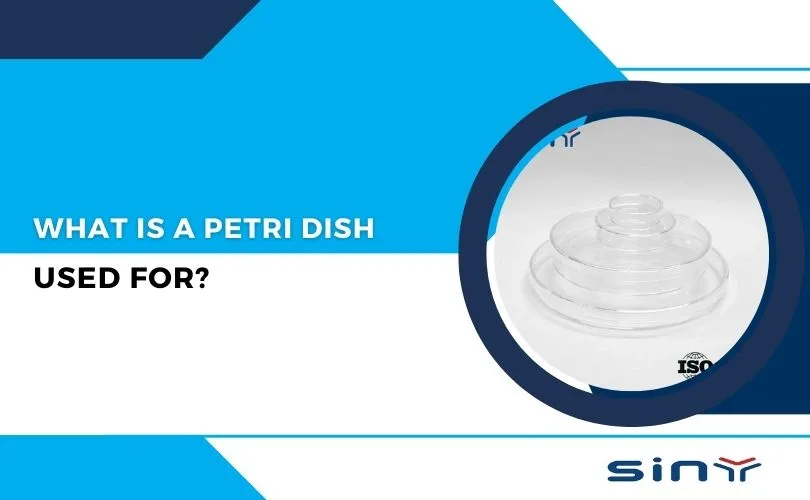
Choosing a Petri dish may seem straightforward until you start comparing the details. Diameter, material, sterility, packaging, compartments, and lid design can all influence how a dish performs in the laboratory. One feature that is easy to overlook is ventilation.
That brings us to Vented vs Non-Vented Petri Dishes. Although the two designs may look nearly identical at first glance, the way the lid sits over the base affects airflow, gas exchange, evaporation, moisture retention, and condensation behavior inside the dish.
These differences can matter in microbiology, environmental testing, culture preparation, research, and other laboratory applications. A dish suitable for routine aerobic culture may not be the best option when reducing moisture loss during a longer incubation period is the priority.
So, what does “vented” actually mean on a Petri dish? Is a non-vented dish airtight? And which configuration should you specify when purchasing laboratory culture dishes?
This guide explains the practical differences so you can choose according to your culture conditions rather than simply selecting the most familiar option.
Table of Contents
- 1 What Are Vented and Non-Vented Petri Dishes?
- 2 Vented vs Non-Vented Petri Dishes: Key Differences in Laboratory Use
- 3 When Should You Use a Vented Petri Dish?
- 4 When Is a Non-Vented Petri Dish the Better Choice?
- 5 How to Choose Between Vented and Non-Vented Petri Dishes
- 6 FAQs About Vented vs Non-Vented Petri Dishes
- 6.1 What does “vented” mean on a Petri dish?
- 6.2 Do vented Petri dishes prevent condensation?
- 6.3 Are non-vented Petri dishes airtight?
- 6.4 Which Petri dish is better for aerobic bacteria?
- 6.5 Are non-vented Petri dishes suitable for anaerobic culture?
- 6.6 Why does agar dry faster in vented Petri dishes?
- 6.7 Should I choose sterile or non-sterile Petri dishes?
- 6.8 What should I specify when ordering vented Petri dishes?
- 6.9 Can I order different Petri dish configurations in bulk?
- 7 Choosing the Right Petri Dish for Your Laboratory
What Are Vented and Non-Vented Petri Dishes?
The main difference is simple: how much space the lid design creates between the lid and the base.
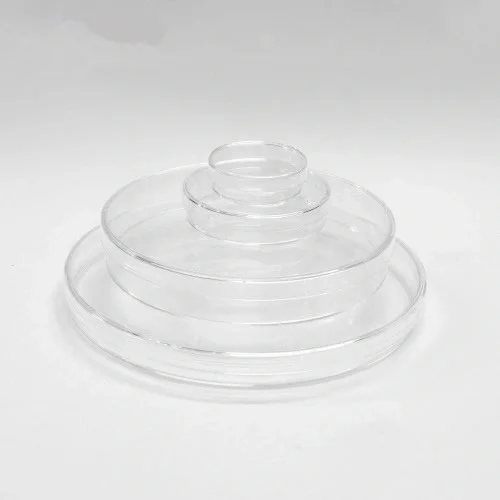
Venting configurations are most commonly specified when comparing disposable plastic Petri dishes. Reusable glass dishes generally use a different lid and base design, so they are better evaluated separately.
Vented Petri Dishes
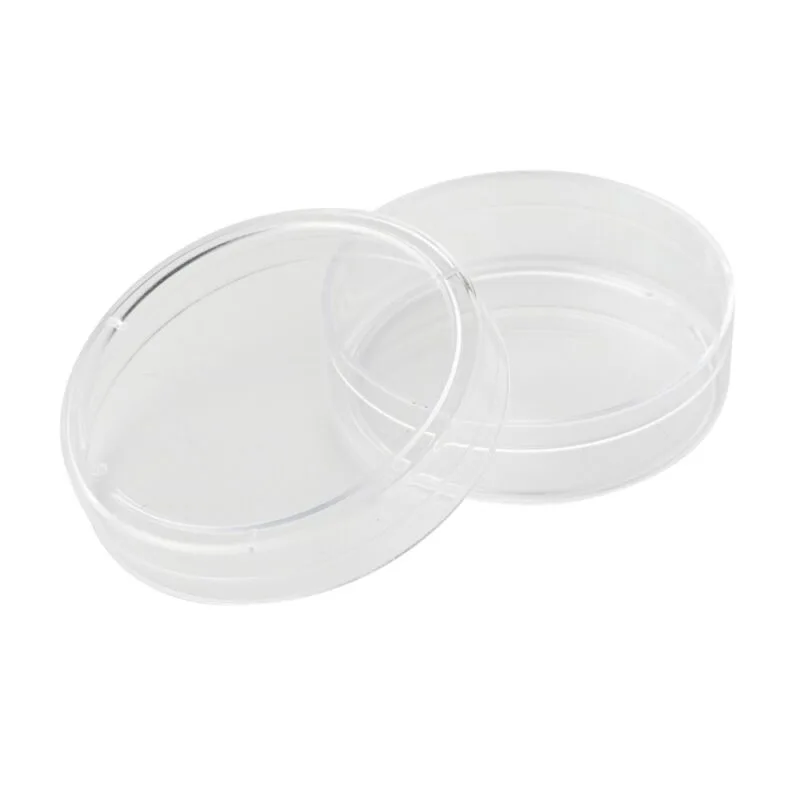
A vented Petri dish incorporates raised spacing features that prevent the lid from sitting completely flush against the base. The resulting gap allows greater air and moisture exchange between the interior of the dish and the surrounding environment.
In practical laboratory use, this can provide:
- Greater gas exchange
- Increased airflow
- Faster moisture release
- Faster drying of freshly prepared plates
- Better condensation management under suitable conditions
- Suitability for many routine aerobic culture workflows
Vented dishes can use different spacing arrangements depending on their design and manufacturer.
Single-Vented vs. Triple-Vented Petri Dishes
When comparing products, you may encounter terms such as single-vented and triple-vented.
A triple-vented dish typically uses multiple raised spacing points to maintain a small gap between the lid and base. This promotes greater air exchange and moisture release and is commonly considered for routine culture applications where ventilation and condensation management are important.
A single-vented dish uses a more limited spacing arrangement. It can provide some air exchange while retaining more internal moisture than a more openly vented configuration.
The exact structure can vary between manufacturers, so buyers should confirm the actual vent design rather than relying only on the product name.
Non-Vented Petri Dishes
A non-vented Petri dish does not use the same raised venting arrangement. Its lid sits more closely against the base, restricting airflow and slowing moisture exchange.
This generally provides:
- More restricted air exchange
- Slower evaporation
- Better moisture retention
- Reduced exposure to surrounding airflow
- Greater suitability for applications where prolonged moisture retention is important
One distinction is especially important: non-vented does not mean airtight.
The lid should not be treated as a hermetic closure. If an application requires a sealed or specifically controlled atmosphere, the complete laboratory protocol and appropriate culture system must be considered.
For buyers, venting is therefore more than a minor design feature. It influences how the culture environment interacts with the surrounding atmosphere.
Vented vs Non-Vented Petri Dishes: Key Differences in Laboratory Use
The easiest way to understand these designs is to compare how they behave under typical culture conditions.
| Feature | Vented Petri Dish | Non-Vented Petri Dish |
|---|---|---|
| Lid design | Raised spacing features maintain a small gap between lid and base | Lid sits more closely against the base |
| Gas exchange | Greater | More restricted |
| Evaporation | Generally faster | Generally slower |
| Moisture retention | Lower | Higher |
| Condensation management | Greater airflow may help reduce condensation accumulation | Reduced airflow may retain more internal moisture |
| Plate drying | Generally faster | Generally slower |
| Typical preference | Many routine aerobic culture applications | Applications prioritizing moisture retention or restricted airflow |
| Airtight | No | No |
Gas Exchange
Gas exchange is one of the clearest differences between the two designs.
The small gap created by venting features allows gases to move more freely between the dish and the surrounding environment. This can be useful when the cultured microorganism or laboratory procedure benefits from aerobic conditions.
A non-vented lid restricts this exchange. That may be useful when excessive airflow could contribute to unwanted drying, but it also means laboratories should consider the atmospheric requirements of the culture before choosing a dish.
Evaporation and Moisture Retention
Air exchange and evaporation are closely connected.
When airflow increases, moisture can leave the dish more readily. A vented plate may therefore dry faster than an equivalent non-vented plate under similar environmental conditions.
This can be useful when freshly poured agar needs to lose excess surface moisture before inoculation.
However, faster evaporation is not always desirable. During extended incubation, excessive moisture loss can dry the medium and alter the usable culture surface. A non-vented design can help slow this process when moisture retention is a higher priority.
Condensation
Condensation is another important consideration when selecting culture dishes.
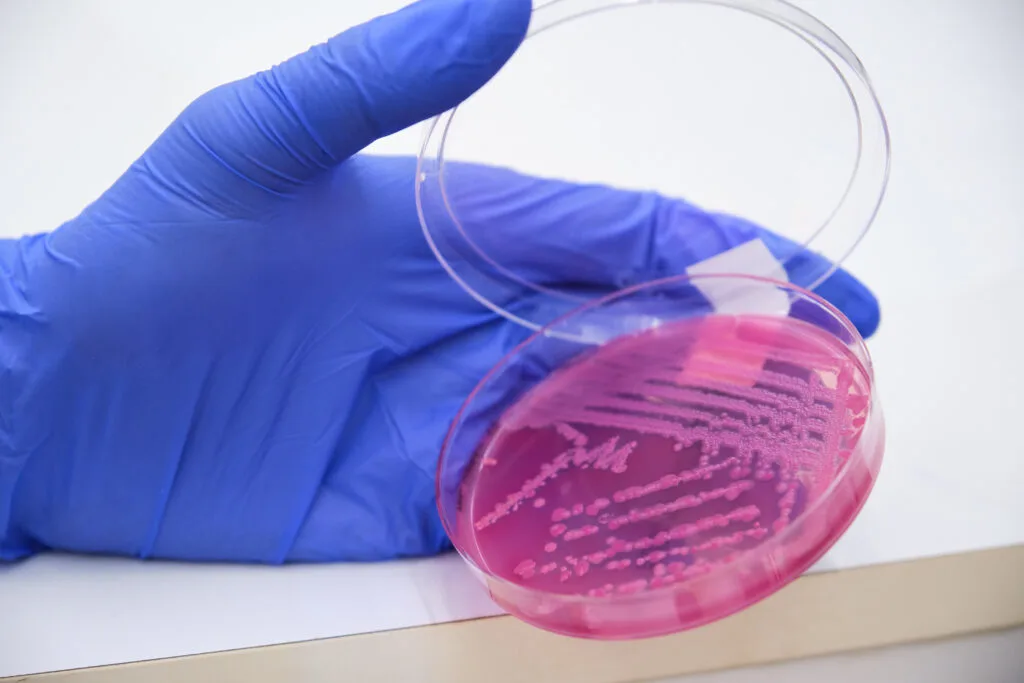
Water vapor can reach the cooler lid and form droplets. If excessive moisture returns to the agar surface, colonies may spread or merge, making observation and isolation more difficult.
Greater ventilation can help moisture escape and may reduce condensation accumulation on the lid. However, choosing a vented plate does not guarantee a condensation-free culture.
Media temperature, incubation temperature, environmental humidity, stacking, plate orientation, and handling practices all influence condensation.
For this reason, laboratories should treat vent configuration as one part of a broader moisture-management strategy rather than as the only solution.
If you are purchasing Petri dishes for different microbiology workflows, Siny Medical can help you compare available configurations according to size, sterility, packaging, venting, and intended application.
Practical Tips for Managing Moisture and Condensation
Use inverted incubation when appropriate. For many routine agar culture workflows, laboratories incubate plates in an inverted position. This helps reduce the chance of condensation droplets falling from the lid onto the agar surface.
Allow freshly prepared plates to stabilize. Excessive surface moisture can originate during media preparation rather than from the dish itself. Appropriate cooling and drying before inoculation can improve the condition of the agar surface.
Consider the incubation period. A vented plate that works well for a short culture may lose more moisture during extended incubation. When incubation time increases, moisture retention becomes more important.
Use sealing materials according to the protocol. Depending on the application, laboratories may use an appropriate laboratory sealing film or tape to reduce contamination risk or moisture loss. The sealing method should match the required gas exchange and culture conditions.
When Should You Use a Vented Petri Dish?
Vented dishes are commonly considered when gas exchange and moisture management are important parts of the culture workflow.
Routine Aerobic Microbial Culture
Many microorganisms used in routine laboratory work grow under aerobic conditions. Because a vented lid permits greater exchange with the surrounding atmosphere, it is a practical choice for many conventional microbiological culture procedures.
This does not mean every aerobic culture requires the same vent configuration. Organism requirements, medium type, incubation period, and laboratory protocol should always guide the final decision.
When Condensation Is a Frequent Problem
Vented plates can be useful when a laboratory regularly encounters moisture accumulation on Petri dish lids.
The additional air exchange may help water vapor leave the dish rather than remain inside. However, the laboratory should also examine other causes of condensation.
For example, pouring excessively hot agar or exposing prepared plates to rapid temperature changes can produce substantial moisture regardless of the lid design.
When Freshly Prepared Plates Need to Dry
After agar has been poured, excess surface moisture sometimes needs to evaporate before inoculation. Greater airflow can help the plate reach a suitable surface condition more quickly.
This can be useful in laboratories preparing larger batches of culture plates where consistent handling and workflow efficiency matter.
When Gas Exchange Is Important to the Protocol
Some applications depend on interaction with the surrounding incubation atmosphere. In these cases, a vented configuration may provide a more appropriate culture environment than a closely fitting non-vented lid.
For procurement teams, this is why selecting Petri dishes purely by diameter and unit price can be misleading. Vent configuration should be included in the product specification whenever it affects the laboratory protocol.
When Is a Non-Vented Petri Dish the Better Choice?
Greater airflow is not automatically better. Some laboratory workflows benefit more from restricted airflow and slower moisture loss.
When Moisture Retention Matters
The closer lid fit of a non-vented dish can slow moisture loss.
This becomes more relevant when plates remain in incubation for longer periods or when the culture medium is particularly susceptible to drying.
As agar loses water, its physical condition changes. Excessive drying can reduce the usable culture surface and potentially interfere with the intended workflow.
During Longer Incubation Periods
Incubation time can significantly influence evaporation.
A plate that performs well during a short routine culture may behave differently after an extended period. Reduced airflow can help preserve moisture and maintain the medium for longer.
This does not automatically make a non-vented dish the correct choice for every long incubation. Temperature, humidity, culture requirements, and sealing procedures should also be considered.
When Restricted Airflow Is Preferred
Some culture workflows require greater control over exposure to ambient air. A non-vented dish reduces direct air exchange compared with a vented design and may therefore be appropriate when restricted airflow is preferred.
However, there is an important limitation.
A non-vented Petri dish does not create anaerobic conditions by itself.
Anaerobic culture generally requires a suitable anaerobic jar, chamber, pouch, atmosphere-generation system, or another validated method for controlling oxygen exposure. The Petri dish is only one component of the overall culture system.
When Reducing Evaporation Is More Important Than Fast Drying
This provides a useful starting point for comparison.
If greater airflow and faster moisture release are desirable, consider a vented dish.
If slower evaporation and longer moisture retention are more important, a non-vented design may be more suitable.
For laboratories, distributors, and procurement teams sourcing Petri dishes in bulk, Siny Medical provides laboratory consumables for different culture and testing requirements. Contact our team to discuss the Petri dish configuration that fits your intended application.
How to Choose Between Vented and Non-Vented Petri Dishes
The Vented vs Non-Vented Petri Dishes decision should begin with the laboratory protocol rather than the product catalog.
Before placing an order, consider these five questions.
1. What Are You Culturing?
Start with the biological requirements of the microorganism or sample.
Does the culture benefit from greater atmospheric exchange, or are restricted airflow and moisture conservation more important?
This question can quickly narrow the available options.
2. How Long Will the Plates Be Incubated?
Short routine cultures and extended incubation do not place the same demands on a culture dish.
As incubation time increases, evaporation becomes more relevant. If drying is already a recurring problem in your laboratory, moisture retention deserves greater consideration when choosing the lid configuration.
3. Is Condensation Affecting Your Results?
If droplets frequently collect on the lid or agar surface, examine the entire workflow rather than changing the dish alone.
Consider:
- Media pouring temperature
- Plate drying time
- Incubation temperature
- Plate orientation
- Environmental humidity
- Stacking conditions
- Vent configuration
Switching to a more vented design may help in some workflows, but effective condensation management usually involves several factors working together.
4. Does Your Protocol Require a Controlled Atmosphere?
Do not rely on the Petri dish lid alone to create a specific atmospheric condition.
If a protocol requires anaerobic, CO₂-controlled, or another defined environment, select the Petri dish together with the appropriate incubation equipment, atmosphere-control method, sealing approach, and validated procedure.
5. What Other Petri Dish Specifications Matter?
Ventilation is only one part of Petri dish selection.
Buyers should also confirm:
- Dish diameter and height
- Material
- Sterile or non-sterile supply
- Number of compartments
- Optical clarity
- Packaging configuration
- Stackability
- Compatibility with laboratory workflows
- Required surface characteristics
- Bulk supply requirements
For distributors, laboratories, universities, research institutions, healthcare suppliers, and testing facilities, these details can matter just as much as unit price.
A lower-cost dish is not necessarily the more economical choice if inconsistent dimensions, unsuitable lid fit, packaging problems, or the wrong vent configuration disrupt routine laboratory work.
The objective is not to identify one universally superior design. It is to match the culture dish to the actual laboratory environment.
FAQs About Vented vs Non-Vented Petri Dishes
What does “vented” mean on a Petri dish?
A vented Petri dish uses raised spacing features that prevent the lid from sitting completely flush with the base. The resulting gap allows greater gas and moisture exchange with the surrounding environment.
Do vented Petri dishes prevent condensation?
No. Greater airflow may help reduce condensation accumulation, but venting cannot eliminate condensation under every condition. Media temperature, incubation temperature, humidity, plate orientation, stacking, and handling practices also influence moisture formation.
Are non-vented Petri dishes airtight?
No. “Non-vented” means the lid sits more closely against the base and restricts airflow compared with a vented dish. It should not be interpreted as an airtight or hermetically sealed culture vessel.
Which Petri dish is better for aerobic bacteria?
Vented dishes are commonly considered for routine aerobic microbial culture because they provide greater gas exchange. However, the correct configuration still depends on the organism, medium, incubation conditions, and laboratory protocol.
Are non-vented Petri dishes suitable for anaerobic culture?
A non-vented dish may form part of a workflow requiring restricted airflow, but the lid alone does not establish anaerobic conditions. Proper anaerobic culture requires an appropriate atmosphere-control system and validated laboratory procedure.
Why does agar dry faster in vented Petri dishes?
The spacing between the lid and base allows greater air and moisture exchange. Water can therefore evaporate from the culture medium more readily than it typically would in a non-vented dish under similar conditions.
Should I choose sterile or non-sterile Petri dishes?
It depends on the application. Microbiological culture and other contamination-sensitive procedures commonly require sterile dishes. Non-sterile dishes may be appropriate when sterility is unnecessary or when the laboratory uses a suitable validated preparation process.
What should I specify when ordering vented Petri dishes?
When requesting a quotation, specify the required dish size, vent configuration, sterility, material, packaging quantity, and intended application. For bulk procurement, buyers may also need to discuss carton quantities, packaging customization, private labeling, and other supply requirements with the manufacturer.
Can I order different Petri dish configurations in bulk?
Yes. Laboratories and distributors often source Petri dishes according to size, vent configuration, sterility, packaging, and application requirements. Confirm these specifications with the supplier before placing a bulk order.
Choosing the Right Petri Dish for Your Laboratory
There is no universal winner between vented and non-vented designs.
Choose a vented Petri dish when greater gas exchange, faster moisture release, and ventilation are important to the workflow. Consider a non-vented Petri dish when reducing evaporation and retaining moisture are higher priorities.
More importantly, evaluate the entire culture process. Incubation time, microorganism requirements, medium characteristics, temperature, humidity, atmospheric control, and laboratory procedures all influence which design is more appropriate.
For procurement teams, this makes vent configuration a specification worth discussing rather than a small design detail to overlook.
Siny Medical supplies Petri dishes and other laboratory consumables for distributors, laboratories, healthcare suppliers, research institutions, and bulk procurement projects. If you are comparing Petri dish sizes, venting configurations, sterility, packaging, or other specifications, visit the Siny Medical Petri Dish product range or contact our team to discuss your purchasing requirements.