
In every microbiology laboratory, petri dishes are among the most frequently used consumables. Whether the work involves growing bacteria in a petri dish, fungal isolation, antibiotic sensitivity testing, environmental monitoring, or educational laboratory training, selecting the right culture dish directly affects workflow efficiency, contamination control, and testing consistency.
That is why the discussion around Plastic vs. Glass Petri Dishes continues to matter for modern laboratories. Some labs prioritize convenience and sterility, while others focus on long-term cost savings and sustainability. Both plastic and glass petri dishes offer advantages, but the ideal option depends heavily on laboratory type, testing volume, sterilization capability, and experimental goals.
For laboratories purchasing petri dishes in bulk, understanding these differences before ordering can prevent operational issues later. A poorly selected dish may increase contamination risk, interfere with microscopy, or create unnecessary waste management costs. In contrast, choosing the right culture plate can improve efficiency and reduce repeated testing.
Table of Contents
- 1 Understanding Plastic and Glass Petri Dishes in Microbiology Labs
- 2 Plastic vs. Glass Petri Dishes: Sterility and Contamination Control
- 3 Cost Comparison: Are Plastic or Glass Petri Dishes More Economical?
- 4 Plastic vs. Glass Petri Dishes for Different Laboratory Applications
- 5 How to Choose the Best Petri Dish for Your Laboratory
- 6 FAQ
- 6.1 Are plastic petri dishes sterile?
- 6.2 Can glass petri dishes be autoclaved repeatedly?
- 6.3 Which petri dish is better for bacterial culture?
- 6.4 Why do hospitals mostly use plastic petri dishes?
- 6.5 Are glass petri dishes environmentally friendly?
- 6.6 Can plastic petri dishes handle high temperatures?
- 6.7 How should laboratories choose between plastic and glass petri dishes?
Understanding Plastic and Glass Petri Dishes in Microbiology Labs
Petri dishes are shallow cylindrical containers designed to hold solid or semi-solid culture media. To learn more about their diverse scientific applications, refer to our guide on what a petri dish is used for. Although the basic design has remained consistent for decades, the manufacturing materials have changed significantly.
Plastic Petri Dishes
Plastic petri dishes are typically manufactured from polystyrene. Most are designed as single-use sterile consumables and are supplied individually wrapped or packaged in sterile sleeves. Because they are lightweight and inexpensive, plastic dishes dominate modern clinical and industrial microbiology laboratories.
Many disposable culture plates are gamma-sterilized or EO-sterilized before shipment, allowing laboratories to use them immediately without additional preparation. This reduces handling time and minimizes contamination opportunities.
Plastic dishes are commonly used for:
- Routine bacterial culture
- Environmental sampling
- Diagnostic microbiology
- Food testing
- Pharmaceutical QC laboratories
- Educational laboratory training
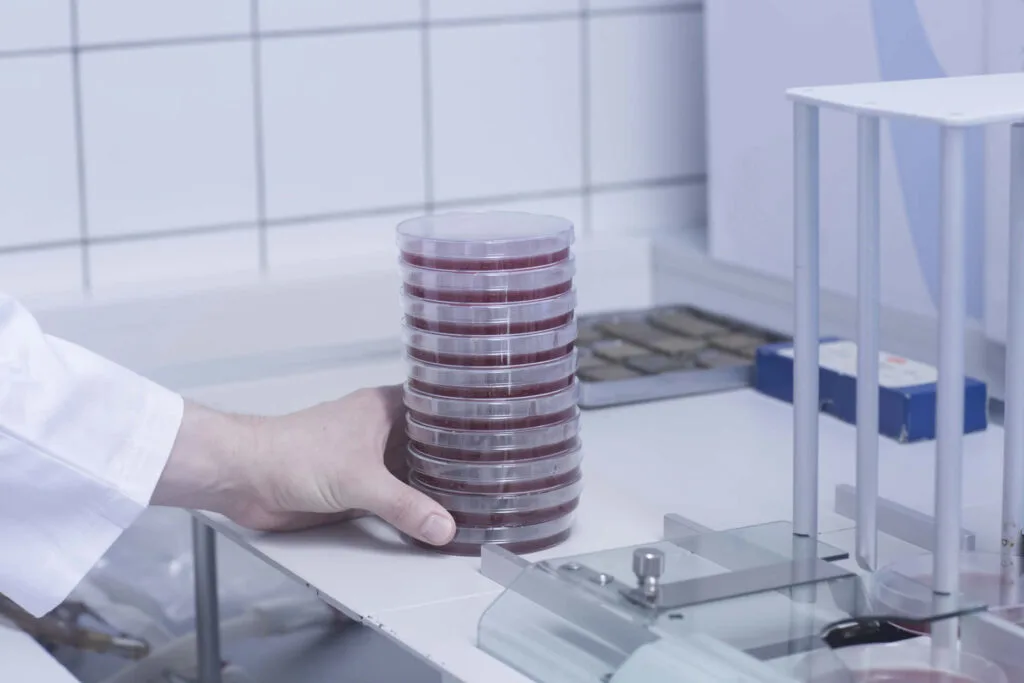
In high-throughput laboratories, disposable plastic dishes simplify workflow management because technicians can discard plates immediately after use without washing or resterilization procedures.
Glass Petri Dishes
Glass petri dishes are reusable laboratory containers traditionally made from borosilicate glass. Unlike disposable plastic plates, glass dishes can tolerate repeated autoclaving and high-temperature sterilization.
Glass culture dishes are still widely used in:
- Research laboratories
- Long-term microbial studies
- Specialized microscopy applications
- Chemical resistance testing
- Laboratories aiming to reduce plastic waste
Because glass surfaces are more resistant to scratching and chemical exposure, some microbiologists prefer them for sensitive analytical work.
However, reusable systems also require additional labor, sterilization equipment, and strict cleaning validation procedures.
For laboratories evaluating purchasing strategies, understanding these operational differences is often more important than comparing material appearance alone.
If your laboratory is planning large-volume microbiology testing projects, selecting reliable petri dish suppliers with stable manufacturing quality can help maintain culture consistency across batches. Siny Medical provides multiple laboratory consumable solutions designed for microbiology and diagnostic applications, including high-quality wholesale sterile petri dishes.
Plastic vs. Glass Petri Dishes: Sterility and Contamination Control
One of the biggest factors influencing the Plastic vs. Glass Petri Dishes decision is contamination management.
Why Plastic Petri Dishes Reduce Operational Contamination Risks
Disposable plastic dishes arrive pre-sterilized and sealed. This immediately eliminates several contamination variables associated with reusable products.
Laboratory staff do not need to:
- Wash dishes
- Dry dishes
- Repackage dishes
- Autoclave dishes
- Store sterilized reusable inventory
Each additional handling step introduces contamination potential. In busy laboratories processing hundreds or thousands of cultures daily, disposable systems reduce human error significantly.
Single-use sterile petri dishes also help laboratories comply with strict contamination control protocols in:
- Clinical diagnostics
- Pharmaceutical manufacturing
- Biotechnology production
- Food microbiology
For these environments, workflow simplicity often outweighs the environmental benefits of reusable materials.
When Glass Petri Dishes Still Offer Advantages
Despite the convenience of disposables, glass dishes remain valuable in certain microbiology settings.
Experienced research laboratories sometimes prefer reusable glass because:
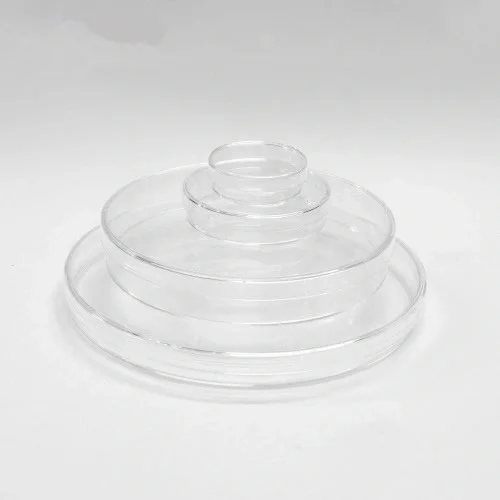
- Surface clarity remains stable over long-term use.
- Glass tolerates aggressive cleaning chemicals.
- Borosilicate glass handles repeated heat exposure.
- Some solvents may deform plastic dishes.
Glass dishes also reduce dependence on constant consumable replenishment. In laboratories where supply chain interruptions are a concern, reusable inventory can provide operational stability.
However, the effectiveness of reusable dishes depends entirely on the quality. Inadequate cleaning or incomplete autoclaving can introduce cross-contamination between experiments.
For this reason, laboratories using reusable glass systems must maintain validated sterilization procedures and strict quality control documentation.
Cost Comparison: Are Plastic or Glass Petri Dishes More Economical?
At first glance, plastic dishes appear cheaper because individual unit prices are low. However, the real cost comparison between plastic and glass petri dishes is more complex.
Reusable glass dishes require:
- Washing equipment
- Water consumption
- Cleaning chemicals
- Sterilization equipment
- Staff labor
- Storage space
- Breakage replacement
When laboratories calculate the total operational expense over time, reusable systems may become more expensive than expected.
Additionally, sterilization cycles consume electricity and increase maintenance costs for autoclaves.
Large diagnostic laboratories often discover that disposable plastic dishes reduce total labor expenses significantly, even if recurring consumable purchases continue monthly.
Why High-Volume Labs Often Prefer Plastic
In modern clinical microbiology labs, workflow speed matters.
Technicians handling large sample volumes benefit from:
- Immediate usability
- Consistent sterility
- Faster disposal procedures
- Reduced washing workload
- Simplified inventory management
This is why disposable sterile petri dishes dominate hospitals, testing centers, and industrial microbiology facilities worldwide.
On the other hand, smaller academic laboratories conducting low-volume research may still find reusable glass dishes economically practical over long periods.
The best purchasing decision depends on balancing:
- Daily testing volume
- Labor availability
- Sterilization infrastructure
- Waste disposal costs
- Sustainability goals
Plastic vs. Glass Petri Dishes for Different Laboratory Applications
The correct petri dish material often depends more on application type than personal preference.
Clinical and Diagnostic Laboratories
Plastic petri dishes are generally preferred because they support:
- Fast turnaround times
- High sterility standards
- Reduced contamination risk
- Efficient disposal systems
Disposable dishes are especially valuable for infectious sample handling.
Academic Teaching Laboratories
Educational laboratories frequently use plastic dishes because they are inexpensive and convenient for student training environments.
However, some universities continue using glass dishes for demonstration purposes and sustainability initiatives.
Advanced Research Laboratories
Research facilities may choose glass dishes when experiments involve:
- High-temperature exposure
- Organic solvents
- Long-term culturing
- Specialized microscopy
Glass surfaces also remain more dimensionally stable under repeated sterilization cycles.
Environmental and Sustainability Considerations
Environmental discussions increasingly influence the Plastic vs. Glass Petri Dishes debate.
Disposable plastic dishes generate substantial laboratory waste, especially in high-volume testing centers. Many institutions now evaluate sustainability targets alongside operational efficiency.
Glass dishes reduce plastic waste generation but increase water and energy consumption due to repeated sterilization.
As a result, there is no universally “green” solution. Laboratories must evaluate environmental impact across the entire operational lifecycle.
Some modern manufacturers are also improving recyclable laboratory plastics and optimizing packaging efficiency to reduce overall waste generation.
When selecting petri dishes for microbiology laboratories, buyers should focus not only on price but also on manufacturing consistency, sterility reliability, and packaging quality. Working with experienced laboratory consumables suppliers like Siny Medical can help laboratories maintain stable product quality across long-term procurement projects.
How to Choose the Best Petri Dish for Your Laboratory
When laboratories compare plastic and glass petri dishes, the ideal choice usually becomes clear after evaluating daily operational realities.
Choose plastic petri dishes if your laboratory prioritizes:
- High-volume testing
- Fast workflow
- Sterile disposable systems
- Reduced labor
- Clinical diagnostics
- Simplified contamination control
Choose glass petri dishes if your laboratory prioritizes:
- Reusability
- Long-term sustainability
- Specialized chemical resistance
- Research flexibility
- High-temperature applications
Rather than asking which material is universally “better,” laboratories should ask which option best supports their operational goals.
The right petri dish improves more than culture performance. It also affects laboratory efficiency, staffing requirements, contamination management, waste handling, and long-term purchasing costs.
As microbiology laboratories continue evolving toward higher efficiency and stricter quality standards, selecting the correct consumables becomes increasingly important for maintaining reliable results.
FAQ
Are plastic petri dishes sterile?
Most disposable plastic petri dishes used in microbiology laboratories are supplied pre-sterilized using gamma irradiation or ethylene oxide sterilization methods.
Can glass petri dishes be autoclaved repeatedly?
Yes. Borosilicate glass petri dishes are designed to withstand repeated autoclave sterilization cycles under high temperature and pressure.
Which petri dish is better for bacterial culture?
Both plastic and glass petri dishes can support bacterial culture effectively. The better choice depends on laboratory workflow, contamination control requirements, and reusability preferences.
Why do hospitals mostly use plastic petri dishes?
Hospitals and clinical diagnostic laboratories prefer disposable plastic dishes because they reduce contamination risks and improve workflow efficiency.
Are glass petri dishes environmentally friendly?
Glass dishes reduce disposable plastic waste, but they also require water, electricity, detergents, and sterilization equipment for repeated reuse.
Can plastic petri dishes handle high temperatures?
Most standard polystyrene plastic petri dishes are not designed for high-temperature sterilization and may deform under autoclave conditions.
How should laboratories choose between plastic and glass petri dishes?
Laboratories should evaluate testing volume, contamination control requirements, labor costs, sterilization capability, sustainability goals, and experimental applications before purchasing.