
| Product Name | Disposable Safe Syringes |
| Material | PVC,PP |
| OEM/ODM | Yes |
| Certificate | CE,ISO |
| Usage | Hospital |
| Sterile | Ethylene Oxide Sterilization |
| Sample | Free |
| Service | In the groups we serve: distributors, import traders, government procurement, buying agents, and medical chain stores, we provide one-stop procurement for you to simplify your procurement process. |
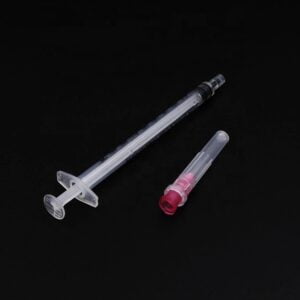
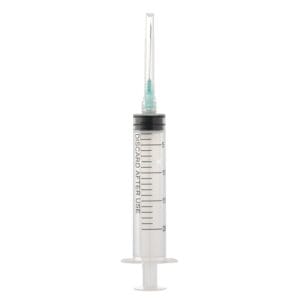
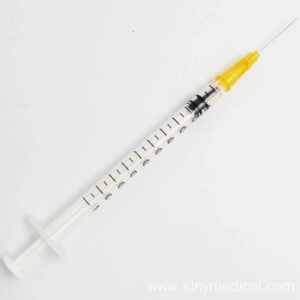
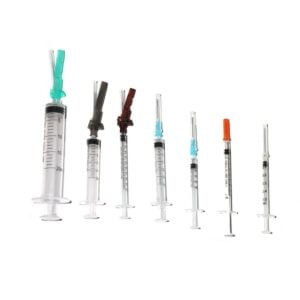
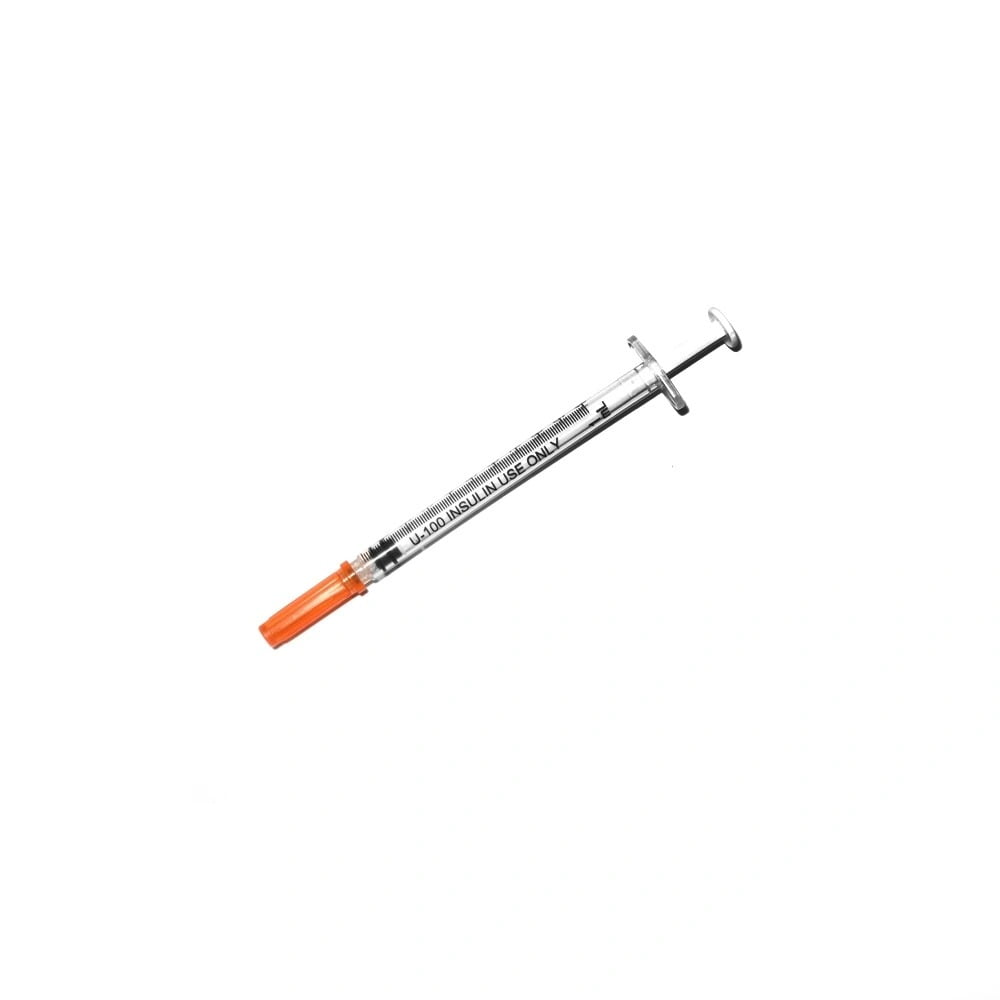
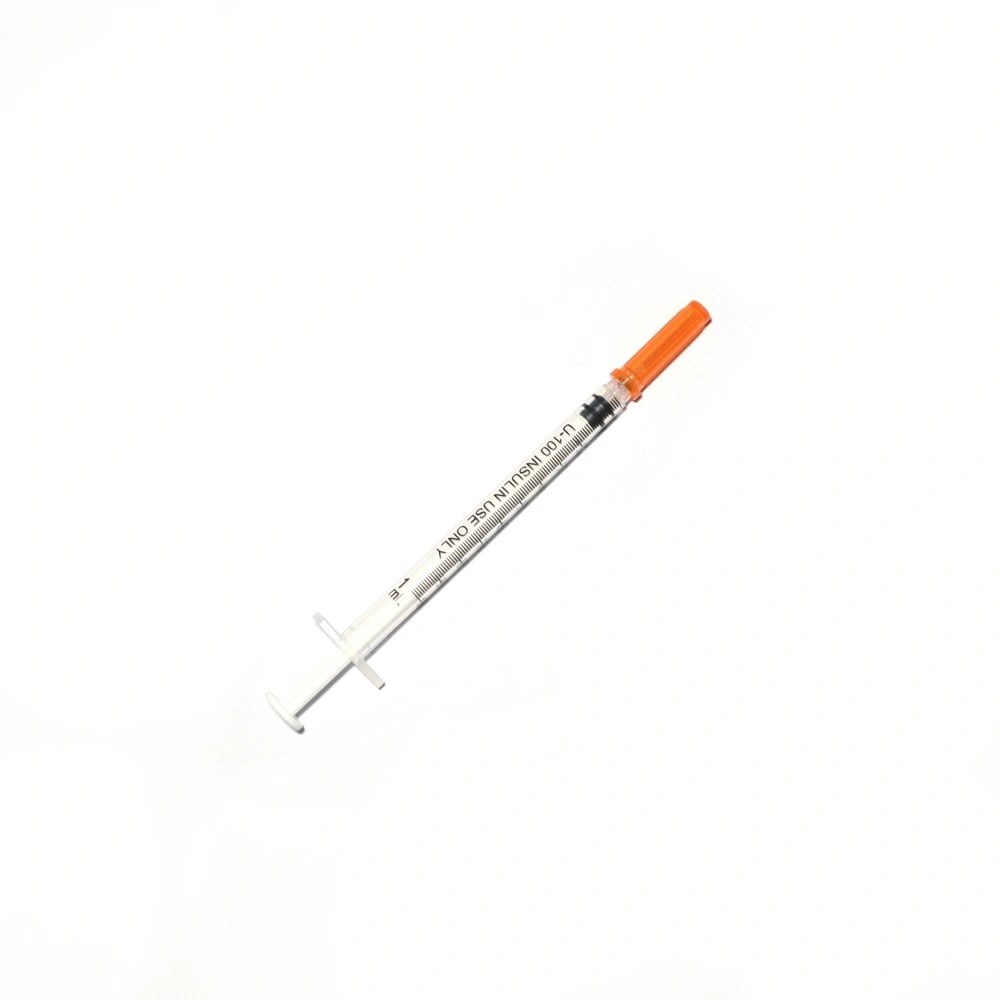
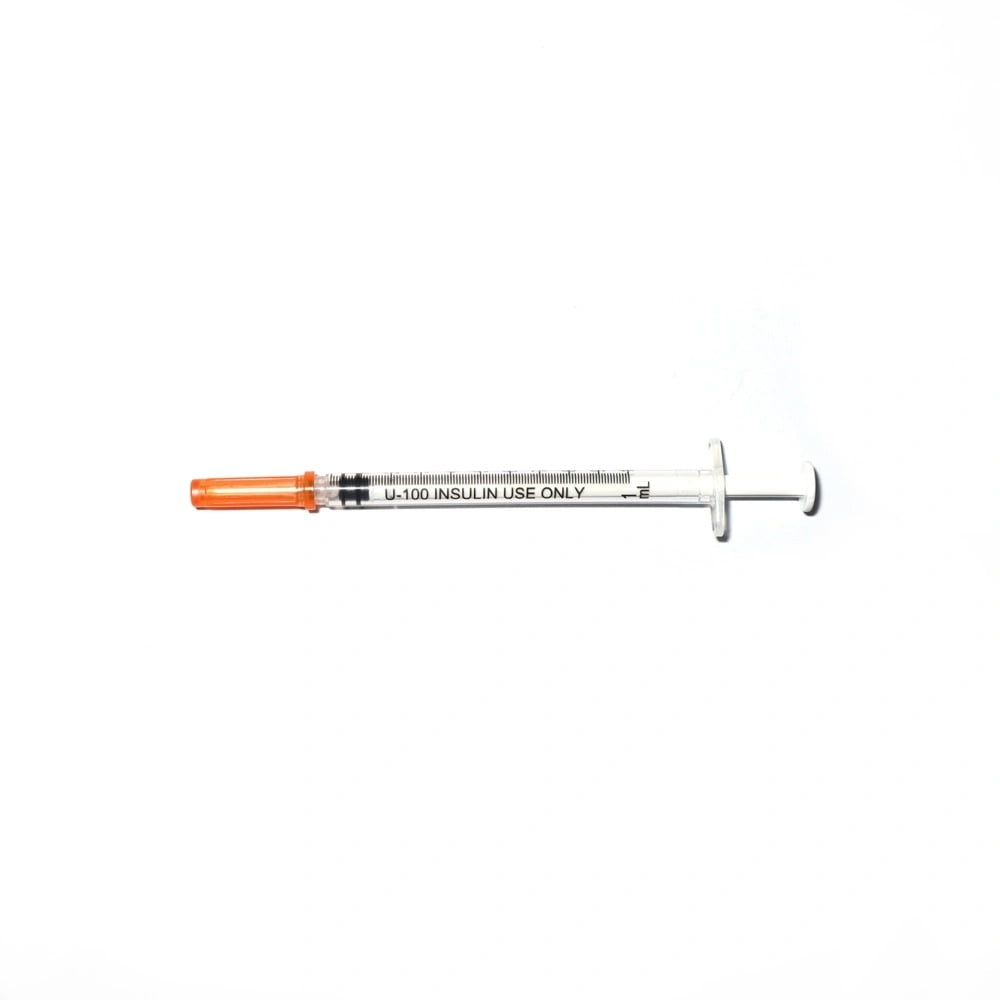
A Sterile Disposable Medical Insulin Syringe with Orange Cap is a medical injection device designed for insulin administration in healthcare settings. It combines a syringe barrel, plunger, measurement markings, and a needle assembly to support controlled liquid administration.
Insulin syringes are designed for applications that require careful volume measurement. Therefore, their graduation systems must correspond to the insulin concentration being administered. Selecting the correct syringe helps healthcare professionals follow prescribed dosing requirements.
The orange cap is a distinctive visual feature of this product. In addition, the original product description identifies a needle protector as part of the syringe assembly. Buyers should check the product specifications to understand the exact cap configuration and function.
This product is identified as sterile and disposable. Consequently, it is intended for single-use medical injection applications.
For hospitals, clinics, diabetes care providers, and medical distributors, several factors matter when selecting an appropriate insulin syringe. These include the measurement system, needle configuration, product construction, and sterilization information.
Siny Medical supplies disposable medical syringes for professional healthcare buyers. We support hospitals, clinics, medical distributors, and international customers with product information and bulk purchasing coordination.
Measurement accuracy is one of the most important considerations when selecting an insulin syringe.
Unlike general-purpose medical syringes, insulin syringes use graduations intended for insulin administration. Therefore, the measurement system must match the insulin concentration to avoid incorrect dose interpretation.
Two commonly encountered insulin concentration systems are:
These concentrations require corresponding syringe calibration systems. Therefore, healthcare professionals should never treat U-100 and U-40 syringes as interchangeable.
When evaluating an insulin syringe, healthcare professionals and procurement teams should consider:
However, the specific insulin calibration of this product has not been confirmed. Buyers should verify the actual graduation system and product labeling before purchasing.
The orange cap is the identifying visual feature included in the product name.
Additionally, the original product description lists a needle protector among the syringe components. A needle protector generally covers the needle before use, helping protect it during product handling and storage.
When evaluating this feature, buyers should consider:
Importantly, buyers should distinguish a conventional needle protector from an integrated safety mechanism. A standard protective cap covers the needle before use; however, it does not automatically provide protection against needlestick injuries after injection.
An insulin syringe generally contains several components that work together during liquid drawing and administration.
These may include:
The original product page identifies a three-part construction and lists different piston material options. However, the exact configuration and material composition of the current product still require confirmation through its technical documentation.
Sterility is an important consideration when selecting disposable insulin syringes.
This product is identified as sterile and intended for single-use medical applications.
Using a new sterile syringe for each injection helps support infection prevention practices. In addition, this approach reduces the risk of cross-contamination associated with syringe reuse.
After use, healthcare professionals should discard the syringe and needle according to applicable sharps disposal procedures.
Healthcare facilities should also maintain appropriate procedures for product storage, handling, and disposal.
Insulin syringes are designed around the requirements of insulin delivery.
Their measurement markings help users identify the intended volume, while the plunger allows controlled liquid administration.
For healthcare buyers, important considerations include:
Together, these characteristics help buyers evaluate different insulin syringe products more effectively.
Although insulin syringes and conventional medical syringes share similar basic components, they serve different measurement requirements and applications.
An insulin syringe uses a graduation system intended for insulin administration. By comparison, a standard syringe generally uses volume-based markings for broader medical applications.
| Comparison | Insulin Syringe | Standard Medical Syringe |
|---|---|---|
| Main Application | Insulin administration | General liquid administration |
| Measurement Scale | Insulin-related calibration | General volume graduations |
| Graduation Requirements | Must match the intended insulin concentration | Depends on the intended application |
| Dose Measurement | Based on the corresponding insulin scale | Based on measured liquid volume |
| Main Selection Factor | Insulin concentration and calibration | Required volume and clinical application |
Insulin concentration and syringe calibration must match.
For example, U-100 insulin contains 100 units per milliliter, while U-40 insulin contains 40 units per milliliter.
Consequently, their corresponding syringe scales differ. Using an incompatible syringe can result in incorrect dose measurement.
Healthcare professionals should therefore verify the insulin concentration, prescribed dose, and syringe calibration before administration.
For medical distributors, clearly identifying the calibration system is equally important when supplying insulin syringes to different markets.
Insulin syringes and insulin pens are two different devices used for insulin administration.
An insulin syringe uses a barrel, plunger, and measurement markings to draw and administer insulin from a compatible container. In contrast, an insulin pen uses a dedicated delivery mechanism to select and administer a dose.
| Comparison | Insulin Syringe | Insulin Pen |
|---|---|---|
| Operating Design | Barrel and plunger | Pen-style delivery mechanism |
| Dose Selection | Based on syringe graduations | Selected through the pen mechanism |
| Insulin Source | Compatible insulin container | Compatible cartridge or prefilled device |
| Main Components | Syringe and needle assembly | Pen body and compatible needle |
| Selection Consideration | Calibration and measurement | Pen compatibility and dose requirements |
Ultimately, the appropriate device depends on the prescribed treatment, patient needs, and healthcare professional’s instructions.
Hospitals and diabetes care facilities require appropriate injection devices for insulin administration.
Sterile disposable insulin syringes provide an option for suitable applications when their measurement systems match the prescribed insulin concentration.
Therefore, healthcare professionals should verify the syringe calibration and follow the relevant administration instructions.
Outpatient clinics and medical centers may use insulin syringes as part of routine diabetes care.
When selecting a suitable device, healthcare professionals should consider the measurement scale, syringe operation, and product handling characteristics.
Most importantly, the selected syringe must match the insulin preparation being administered.
Insulin syringes may also serve home care needs when healthcare professionals prescribe and recommend their use.
Patients should receive appropriate instructions on reading syringe graduations, measuring the prescribed dose, handling the device, and disposing of used needles.
Furthermore, the syringe must match the insulin concentration being used. Patients should never substitute a different calibration without professional guidance.
Medical distributors supply insulin syringes to hospitals, clinics, pharmacies, and other healthcare organizations.
For distributors, understanding the product’s measurement system, needle configuration, and protective cap design helps maintain accurate product descriptions.
Siny Medical also supports professional buyers with product information and bulk purchasing coordination.
First, identify the insulin concentration for which the syringe will be used.
U-100 and U-40 are common insulin concentration systems, and their corresponding syringe scales must match the insulin preparation.
Before purchasing, buyers should confirm:
This is one of the most important purchasing considerations because incorrect calibration can lead to dosing errors.
The needle configuration should match the intended injection requirements.
Before placing an order, buyers should review the relevant needle specifications and confirm that the protective cap fits the corresponding assembly.
Important considerations include:
The manufacturer’s technical documentation should provide the actual specifications.
Clear graduation markings help healthcare professionals identify the intended insulin volume.
When comparing products, buyers should evaluate:
Together, these factors contribute to the practical operation of the syringe.
Before confirming an order, professional buyers should request relevant product information.
Depending on purchasing requirements, this may include:
By reviewing these details, healthcare organizations can maintain accurate product records and purchasing specifications.
Supplier selection is another important part of medical procurement.
Hospitals, clinics, and distributors should consider product information, technical documentation, communication efficiency, and purchasing coordination.
A supplier familiar with disposable medical syringes can help buyers clarify product requirements and organize supply arrangements.
Hospitals and healthcare organizations purchase insulin syringes according to their clinical requirements and patient care needs.
When evaluating suppliers, procurement teams should confirm the intended insulin calibration, graduation system, needle configuration, sterilization information, and relevant technical documentation.
Siny Medical supports professional healthcare buyers with product information and purchasing coordination.
Maintaining clear product specifications helps healthcare organizations manage different insulin syringe configurations.
A purchasing record may include:
| Purchasing Information | Purpose |
|---|---|
| Product Category | Identify the insulin syringe |
| Insulin Calibration | Confirm concentration compatibility |
| Graduation System | Record measurement requirements |
| Needle Configuration | Confirm needle specifications |
| Protective Cap | Identify the cap configuration |
| Sterilization Information | Maintain relevant product records |
| Product Documentation | Organize technical information |
This approach helps procurement teams maintain accurate product information. It also simplifies communication with suppliers.
Medical distributors may purchase sterile disposable insulin syringes for supply to hospitals, clinics, pharmacies, and healthcare suppliers.
Before requesting a quotation, buyers should specify their required calibration, graduation system, needle configuration, estimated quantity, and documentation requirements.
Providing these details helps suppliers understand purchasing needs and prepare appropriate quotations.
For distributors and healthcare organizations with recurring purchasing requirements, maintaining consistent product specifications helps simplify repeat orders.
Before confirming new purchases, teams should review previous orders, current requirements, and relevant product documentation.
Siny Medical supports international medical distributors and healthcare buyers with product information and bulk supply coordination.
It is a sterile, single-use medical device designed for insulin administration. It uses measurement markings intended for insulin-related dosing and includes a syringe assembly with a needle protector.
The orange cap is a visual feature identified in this product’s name. The original product description lists a needle protector as one of its components. Buyers should confirm the exact cap configuration and function through the product specifications.
U-100 insulin contains 100 units per milliliter, while U-40 contains 40 units per milliliter. Consequently, their corresponding syringe graduations differ, so the syringe must match the insulin concentration.
U-100 and U-40 syringes have different calibration systems. Therefore, using a syringe that does not match the insulin concentration can cause dosing errors. Healthcare professionals should select the correct combination and follow appropriate medical instructions.
Buyers should review insulin concentration compatibility, graduation markings, syringe construction, needle configuration, protective cap design, sterilization information, and product documentation.
Yes. The product is identified as disposable and sterile. Therefore, healthcare professionals should use it for a single medical procedure and discard it according to applicable sharps disposal procedures.
No. The cap color alone should not determine insulin concentration or syringe calibration. Instead, buyers should verify the actual product labeling and technical specifications.
Yes. Siny Medical supports professional healthcare buyers with product information and bulk purchasing coordination. Distributors can discuss their required calibration, needle configuration, estimated quantities, and documentation needs with our sales team.
Siny Medical supplies disposable medical syringes for hospitals, clinics, diabetes care facilities, healthcare organizations, and international medical distributors. We support professional customers with product information and bulk purchasing coordination. Contact Siny Medical to discuss your insulin syringe requirements, preferred graduation system, and bulk supply arrangements.
Copyright © 2026 | Ningbo Siny Medical Technology Co., Ltd