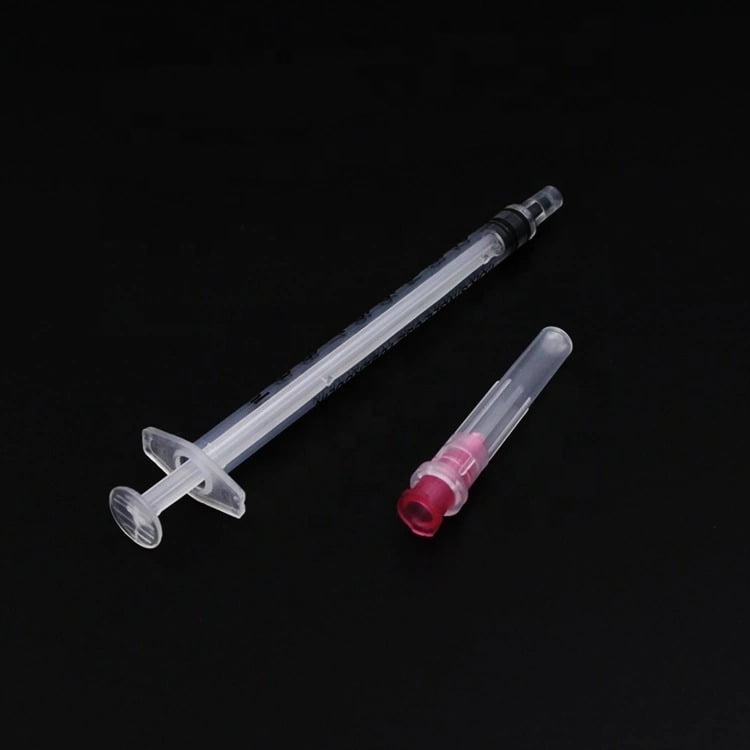
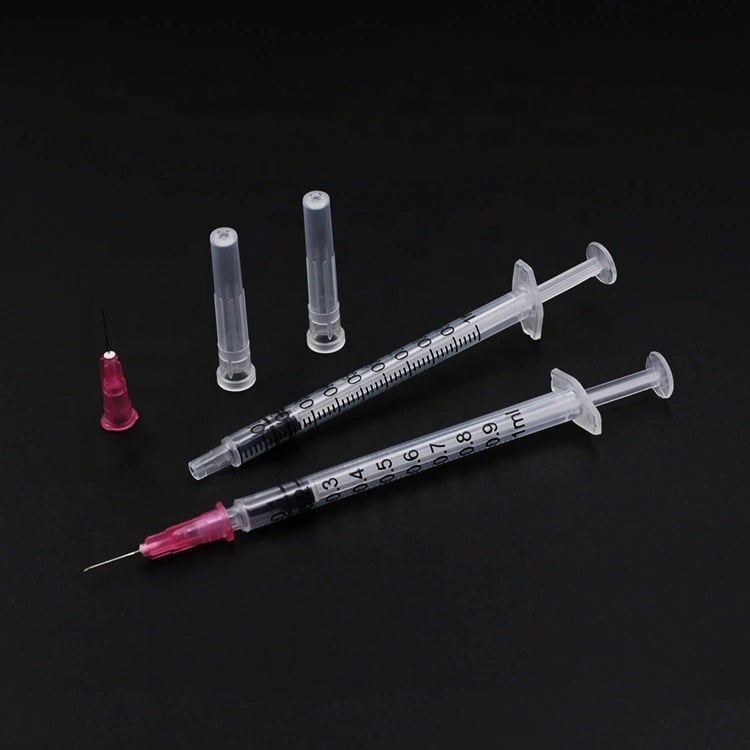
| Product Name | Disposable Safe Syringes |
| Material | PVC,PP |
| OEM/ODM | Yes |
| Certificate | ISO |
| Usage | Hospital |
| Sterile | Ethylene Oxide Sterilization |
| Sample | Free |
| Service | In the groups we serve: distributors, import traders, government procurement, buying agents, and medical chain stores, we provide one-stop procurement for you to simplify your procurement process. |
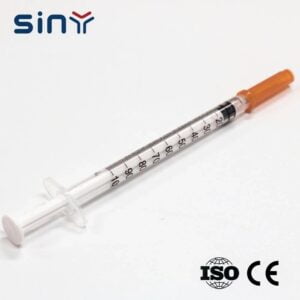
A 3 Part Syringe with Needle is a conventional disposable medical injection device consisting of three main components: a barrel, a plunger, and a separate rubber piston. These components work together to support liquid drawing, measurement, and administration during medical procedures.
Unlike a two-part syringe, a three-part syringe incorporates a separate piston at the end of the plunger. This additional component creates a sealing interface between the moving plunger assembly and the inner wall of the barrel.
Three-part syringes are commonly used in hospitals, clinics, and other healthcare environments. When supplied with a needle, they provide a practical option for different injection and liquid administration procedures.
For healthcare procurement teams and medical distributors, understanding the structure and characteristics of a 3 part syringe with needle helps simplify product evaluation and selection.
Siny Medical supplies disposable medical syringes for professional healthcare buyers. We support hospitals, clinics, medical distributors, and international customers with product information and bulk purchasing coordination.
The defining characteristic of a three-part syringe is its three-component structure. Each component performs a specific function during operation.
Together, these components provide the basic operating structure of a conventional three-part syringe.
The needle is an additional component supplied with the syringe for injection applications. Its configuration should match the intended medical procedure.
The rubber piston is one of the main structural differences between two-part and three-part syringes.
It sits at the end of the plunger and contacts the inner wall of the barrel. This arrangement creates a sealing interface during liquid drawing and administration.
The piston also influences how the plunger moves through the barrel. Its design and compatibility with the syringe assembly are therefore relevant considerations when evaluating product quality.
For medical buyers, important evaluation points include piston consistency, assembly compatibility, and smooth plunger operation.
Graduation markings help healthcare professionals identify the amount of liquid inside a syringe.
For procedures requiring measured liquid administration, clear and readable markings are particularly important.
When evaluating a three-part syringe, buyers should consider:
The actual capacity and graduation system depend on the selected product configuration. Therefore, buyers should confirm the relevant specifications before purchasing.
The barrel, plunger, and rubber piston work together during syringe operation.
When the plunger moves backward, the syringe draws liquid into the barrel. When it moves forward, the syringe dispenses the liquid through the needle or other compatible outlet configuration.
The interaction between the piston and barrel influences the movement of the plunger during both operations.
For this reason, buyers evaluating three-part syringes should consider operating consistency, piston assembly, and the overall construction of the syringe.
Disposable three-part syringes are intended for single-use medical applications.
Using a new syringe for each procedure helps support infection prevention practices and reduces the risk of cross-contamination associated with syringe reuse.
After use, healthcare professionals should dispose of the syringe and needle according to applicable sharps disposal procedures.
Healthcare facilities should also establish consistent procedures for collecting and handling used injection devices.
Three-part and two-part syringes share the same basic purpose, but their internal structures differ.
A two-part syringe generally consists of a barrel and a plunger, while a three-part syringe includes an additional rubber piston attached to the plunger.
This structural difference affects the sealing arrangement and the way the plunger interacts with the barrel.
| Comparison | 2 Part Syringe | 3 Part Syringe |
|---|---|---|
| Main Components | Barrel and plunger | Barrel, plunger, and rubber piston |
| Piston Structure | No separate rubber piston | Separate rubber piston |
| Internal Sealing | Depends on the plunger design | Uses a separate piston |
| Plunger Movement | Depends on material and construction | Influenced by piston and barrel interaction |
| Main Structural Feature | Simpler component arrangement | Additional sealing component |
| Common Application | Medical liquid administration | Medical liquid administration |
Neither design is automatically suitable for every medical procedure. The choice depends on the intended application, required syringe characteristics, and user preferences.
A three-part syringe offers a distinct construction based on its additional piston component.
First, the separate rubber piston creates a dedicated sealing interface inside the barrel.
Second, the piston and barrel work together to support controlled plunger movement.
Additionally, this construction gives healthcare buyers another option when comparing disposable syringe designs.
When selecting a syringe, buyers should evaluate the actual product specifications and intended application rather than assume that a higher component count automatically means better performance.
Hospitals use disposable syringes across different departments for routine medical procedures.
Three-part syringes with needles provide a conventional option for drawing and administering liquids when their specifications match the intended application.
Healthcare professionals should select suitable syringe configurations according to the prescribed volume, injection procedure, and relevant clinical instructions.
Clinics and outpatient facilities require disposable injection devices for different routine healthcare services.
A three-part syringe can support liquid administration procedures that require a conventional syringe structure.
For these facilities, clear measurement markings, appropriate needle configuration, and consistent plunger operation are important product considerations.
Medical laboratories may use disposable syringes for suitable liquid handling and sample-related procedures.
The required syringe configuration depends on the application, liquid volume, and handling requirements.
Healthcare buyers should confirm that the selected syringe is appropriate for the intended laboratory procedure.
Medical distributors supply disposable syringes to hospitals, clinics, laboratories, and other healthcare organizations.
Three-part syringes represent an established category within the disposable medical consumables market.
For distributors, understanding the barrel, plunger, and piston structure helps explain product differences and organize product catalogs.
Siny Medical supports professional customers with product information and bulk purchasing coordination.
The first step is to identify the liquid volume required for the intended application.
The syringe capacity should accommodate the required volume, while its graduation system should allow healthcare professionals to measure the liquid appropriately.
Before purchasing, buyers should confirm the required capacity and corresponding measurement scale.
The rubber piston directly influences the syringe’s internal sealing arrangement and plunger movement.
When comparing products, buyers should consider piston consistency, assembly compatibility, and operating performance.
The piston material and specific construction should also be confirmed through the actual product specifications.
The needle configuration should match the intended injection procedure.
Buyers should review the relevant needle characteristics, including:
Different procedures may require different needle configurations. Therefore, buyers should confirm these details before ordering.
The barrel, plunger, piston, and graduation markings work together to determine the syringe’s basic operating characteristics.
Buyers should evaluate:
These considerations help procurement teams compare different three-part syringe products more effectively.
Before confirming an order, professional buyers should request relevant technical information.
Depending on institutional requirements, this may include:
Reviewing these details helps healthcare organizations establish clear purchasing requirements and maintain accurate product records.
Hospitals and healthcare organizations purchase disposable three-part syringes according to their medical procedures and supply requirements.
Procurement teams should confirm the required syringe configuration, capacity, needle specifications, and relevant documentation before placing an order.
This helps ensure that the selected products match the facility’s intended applications.
Siny Medical supports professional healthcare buyers with product information and purchasing coordination.
Maintaining clear product descriptions helps healthcare organizations manage different syringe configurations.
A purchasing record may include:
| Purchasing Information | Purpose |
|---|---|
| Product Category | Identify the three-part syringe |
| Syringe Structure | Confirm the three-component design |
| Capacity | Record the required volume |
| Measurement Scale | Confirm graduation requirements |
| Needle Configuration | Identify needle specifications |
| Product Documentation | Maintain technical records |
| Order Quantity | Record purchasing requirements |
This approach helps procurement teams maintain consistent product information and simplifies communication with suppliers.
Medical distributors may purchase three-part syringes with needles for supply to hospitals, clinics, laboratories, and healthcare suppliers.
Before requesting a quotation, buyers should specify their required product configuration, capacity, needle specifications, estimated quantity, and documentation needs.
With these details, suppliers can better understand the purchasing requirements and prepare appropriate quotations.
For healthcare organizations and distributors with recurring purchasing requirements, maintaining consistent product specifications helps simplify repeat orders.
Purchasing teams should review previous orders, current requirements, and relevant product documentation before confirming new purchases.
Siny Medical supports hospitals, clinics, and international medical distributors with product information and bulk supply coordination.
A 3 part syringe with needle is a disposable medical injection device consisting of a barrel, plunger, and rubber piston, supplied with a needle for suitable injection procedures.
The three main components are the barrel, plunger, and rubber piston. The barrel holds the liquid, the plunger controls movement, and the piston provides the internal sealing interface.
A two-part syringe generally consists of a barrel and plunger. In contrast, a three-part syringe adds a separate rubber piston at the end of the plunger, creating a different sealing arrangement.
The rubber piston forms a sealing interface against the inner barrel wall. It also influences plunger movement during liquid drawing and administration.
Three-part syringes provide a conventional injection device with a separate piston component. Healthcare professionals select them according to the required volume, syringe characteristics, and intended procedure.
Buyers should review syringe capacity, graduation markings, piston construction, needle configuration, product documentation, and intended medical application.
Yes. Medical distributors, hospitals, and healthcare suppliers can discuss their required product configurations, technical specifications, quantities, and documentation with Siny Medical.
No. Disposable three-part syringes are intended for single use. After the procedure, healthcare professionals should discard them according to applicable sharps disposal procedures.
Siny Medical supplies disposable medical syringes for hospitals, clinics, laboratories, healthcare organizations, and international medical distributors. We support professional customers with product information and bulk purchasing coordination. Contact Siny Medical to discuss your 3 part syringe requirements, preferred needle configuration, and supply arrangements.
Copyright © 2026 | Ningbo Siny Medical Technology Co., Ltd