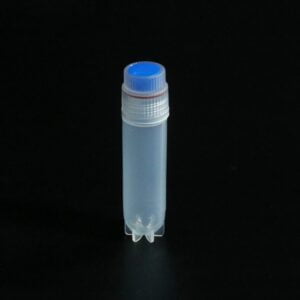
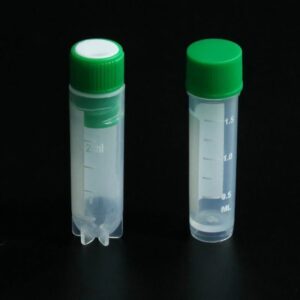
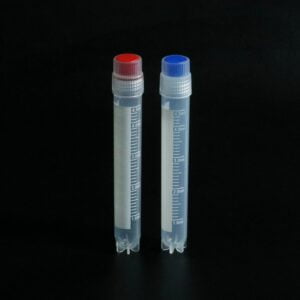
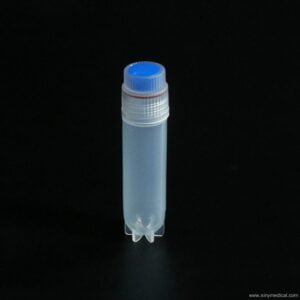
| Product Name | Cryovials Tube |
| Material | PP |
| OEM/ODM | Yes |
| Certificate | CE, ISO |
| Usage | Test Tube |
| Sterile | No-Sterilized |
| Sample | Free |
| Temperature Range | ‘-196~121ºC |
| Service | In the groups we serve: distributors, import traders, government procurement, buying agents, and medical chain stores, we provide one-stop procurement for you to simplify your procurement process. |
Siny Medical supplies Plastic Cryogenic Vials for research laboratories, biotechnology facilities, healthcare institutions, and laboratory consumables distributors. These plastic cryovial tubes provide a container option for laboratory specimen storage, sample organization, and cryogenic storage workflows.
Laboratories often handle biological materials, research specimens, and prepared sample portions that need to be stored for later analysis. Choosing suitable storage containers helps maintain sample identification and supports efficient handling throughout the laboratory workflow.
Plastic cryovials offer a practical alternative to glass containers in appropriate applications. Their lightweight construction makes them convenient to handle, especially in laboratories that manage large numbers of individual specimens. They can also be incorporated into organized storage systems alongside suitable labeling and inventory procedures.
Sample storage requirements vary according to the material being preserved. Storage conditions, specimen characteristics, and laboratory protocols all influence container selection. For this reason, cryogenic storage containers should be chosen according to the intended application rather than appearance alone.
As a supplier of laboratory consumables, Siny Medical serves professional buyers and international distributors. We focus on clear product identification, practical purchasing requirements, and efficient supply coordination.
The plastic construction of these cryogenic vials offers practical advantages for laboratory sample handling.
Compared with glass, plastic containers are generally lightweight and do not present the same shattering risks during routine handling. These characteristics make them a convenient option for laboratories that regularly organize and store specimens.
Material selection remains an important consideration. Different polymers have different chemical and temperature-dependent properties, so laboratories should choose containers according to their samples and intended storage procedures.
Laboratory personnel frequently organize, transfer, and retrieve sample containers.
Lightweight plastic construction can make these tasks more convenient, particularly when large numbers of specimens are handled throughout the working day.
Consistent container selection also helps laboratories establish standardized handling procedures.
For research institutions and sample storage facilities, efficient handling practices support smoother daily operations.
Cryogenic vials are associated with laboratory procedures that involve low-temperature specimen storage.
Such workflows may include the preservation of biological materials, research samples, and prepared aliquots for future analysis.
The storage container is one part of a broader preservation system. Appropriate equipment, handling procedures, and sample preparation methods are also important.
Laboratories should select containers according to their established storage protocols and the requirements of the specimens involved.
Accurate identification is essential when laboratories maintain collections of stored specimens.
Each sample should be linked to appropriate records, including its identification number, preparation information, and storage location.
Cryovials can be incorporated into structured sample management systems that help laboratory personnel organize and retrieve materials efficiently.
Clear records and consistent identification practices are particularly valuable when samples are shared between research teams.
Laboratories often purchase storage consumables for repeated use across research and testing workflows.
A consistent product selection process helps purchasing teams manage inventory and communicate requirements clearly.
For institutional buyers, the intended application, storage procedure, and sample characteristics are important factors.
Well-defined purchasing specifications also help distributors identify suitable laboratory products for their customers.
Biological specimen storage is a common application of cryogenic laboratory containers.
Research laboratories may preserve biological materials for later testing, analysis, or experimental work.
The appropriate container depends on the specimen and the storage method used. Proper sample preparation and handling are essential for maintaining specimen quality.
Laboratories should follow established procedures for each biological material rather than applying a single storage method to every sample.
Research institutions and biotechnology facilities often manage samples across multiple experiments.
Some materials are prepared for immediate testing, while others are stored for later analysis.
Plastic cryovials provide a container option for suitable specimen storage procedures within these environments.
Consistent storage practices help researchers maintain accurate records and locate samples when required.
Aliquoting involves dividing a larger specimen into smaller portions for separate storage or use.
This approach allows laboratories to allocate material to different experiments without repeatedly accessing the original sample.
Individual storage containers can help maintain an organized workflow and reduce unnecessary handling.
Cryogenic vials may be selected for compatible aliquoting and storage procedures, depending on the sample volume and intended application.
Sample banks and research facilities may maintain extensive collections of biological or experimental materials.
These collections require organized storage locations, accurate identification, and reliable inventory records.
Cryogenic storage containers can form part of a structured specimen management system.
Clear recordkeeping helps laboratory personnel retrieve materials efficiently and maintain sample traceability over time.
Universities, research centers, biotechnology companies, and healthcare laboratories purchase storage consumables according to their operational needs.
Their requirements may vary depending on specimen types, storage procedures, and purchasing arrangements.
Distributors serving these customers benefit from clearly identified products and consistent procurement information.
Siny Medical supplies laboratory consumables for institutional purchasing and international distribution.
Cryogenic vials and microcentrifuge tubes are both widely used in laboratory environments. However, they are generally selected for different purposes.
Cryogenic vials are associated with specimen storage and low-temperature preservation workflows. Microcentrifuge tubes are commonly used for mixing, sample preparation, and centrifugation.
| Feature | Cryogenic Vials | Microcentrifuge Tubes |
|---|---|---|
| Primary Application | Laboratory sample storage | Sample preparation and processing |
| Typical Workflow | Specimen preservation and organization | Mixing and centrifugation |
| Main Selection Factor | Storage conditions and sample compatibility | Processing method and equipment compatibility |
| Sample Management | Supports stored specimen collections | Supports preparation and handling |
| Purchasing Priority | Intended storage application | Required processing performance |
These container categories should not automatically be treated as interchangeable.
Laboratories should select tubes according to their intended use and applicable performance requirements.
Material selection plays an important role in laboratory sample storage. Both plastic and glass containers are widely used, but their physical properties and handling characteristics differ.
In general, polymer-based containers are lightweight and do not shatter like glass. Glass, on the other hand, offers different chemical, thermal, and mechanical characteristics that may be preferable for certain laboratory procedures.
| Consideration | Plastic Containers | Glass Containers |
|---|---|---|
| Material | Polymer-based | Glass |
| Weight | Generally lightweight | Generally heavier |
| Breakage Behavior | Does not shatter like glass | Can break or shatter |
| Chemical Compatibility | Depends on polymer and conditions | Depends on glass composition and conditions |
| Handling | Convenient for many routine workflows | Requires appropriate glass handling |
| Main Selection Factor | Material compatibility and application | Chemical, thermal, and application requirements |
Neither material is universally suitable for every storage procedure.
The correct choice depends on the sample characteristics and the intended laboratory application.
Cryogenic storage and routine refrigerated storage involve different temperature conditions and preservation procedures.
Refrigeration is commonly used for materials that remain suitable at refrigerated temperatures. Cryogenic storage involves substantially lower temperatures and requires specialized equipment and handling practices.
The appropriate method depends on the specimen and its preservation requirements.
Laboratories should ensure that the selected container is suitable for the intended storage environment.
Cryogenic storage requires careful handling and appropriate safety procedures.
Laboratory personnel should follow established protocols and use suitable protective equipment when working with low-temperature storage systems.
Container compatibility is particularly important in specialized cryogenic environments, including procedures involving liquid nitrogen.
The selected container and storage method should be appropriate for the intended application.
Laboratory samples differ in composition, quantity, and storage needs.
These differences influence container selection and the overall storage procedure.
Purchasing teams should consider sample compatibility, required capacity, storage conditions, and handling requirements before choosing cryovials.
For institutions managing large sample collections, standardized product selection can also support efficient inventory control.
Begin by defining the specimens that will be stored.
Biological materials, research samples, and prepared aliquots may require different preservation and handling procedures.
Understanding the intended application helps purchasing teams establish suitable product requirements.
Container capacity should match the quantity of material used in the laboratory procedure.
Small aliquots and larger specimen portions may require different container sizes.
Defining these requirements before purchasing helps laboratories maintain consistent sample preparation and storage workflows.
Plastic storage containers differ in their material properties.
The appropriate material depends on the sample composition, storage conditions, and handling requirements.
Cryogenic storage procedures vary according to the specimen and storage system.
The selected container should be appropriate for the intended storage environment and handling method.
Established laboratory protocols should guide the use of specialized low-temperature storage equipment.
Accurate identification is essential for managing stored specimens.
Laboratories should establish labeling and recordkeeping procedures that connect each container with its sample information.
Consistent identification practices support traceability and efficient retrieval.
Institutional buyers and distributors often purchase laboratory consumables in bulk.
Expected usage, inventory capacity, and replenishment schedules influence procurement decisions.
Clearly defined purchasing specifications help simplify repeat orders and supply planning.
Professional buyers may require product specifications, labeling information, and supporting documentation.
Requirements vary according to the intended application and destination market.
Establishing these needs before ordering helps support efficient procurement and distribution.
A plastic cryogenic vial is a laboratory sample storage container intended for suitable low-temperature specimen preservation workflows.
They are commonly used in laboratory workflows involving biological specimen storage, research samples, aliquoting, and organized sample preservation.
Liquid nitrogen compatibility depends on the specific vial and storage method. Laboratories must use containers approved for their intended cryogenic procedures and follow applicable safety instructions.
Laboratories should consider sample volume, aliquoting requirements, storage procedures, and inventory needs when selecting container capacity.
Accurate sample identification, clear storage records, and consistent handling procedures help maintain specimen traceability and simplify retrieval.
Distributors should consider intended applications, sample compatibility, capacity requirements, storage procedures, inventory needs, and applicable purchasing documentation.
Siny Medical supplies Plastic Cryogenic Vials for research laboratories, biotechnology facilities, healthcare institutions, and international laboratory consumables distributors. Our plastic cryovial tubes provide a practical container option for suitable specimen storage and laboratory sample management workflows. Contact Siny Medical to discuss your cryogenic vial purchasing requirements, bulk supply plans, product documentation, and quotation needs.
Copyright © 2026 | Ningbo Siny Medical Technology Co., Ltd