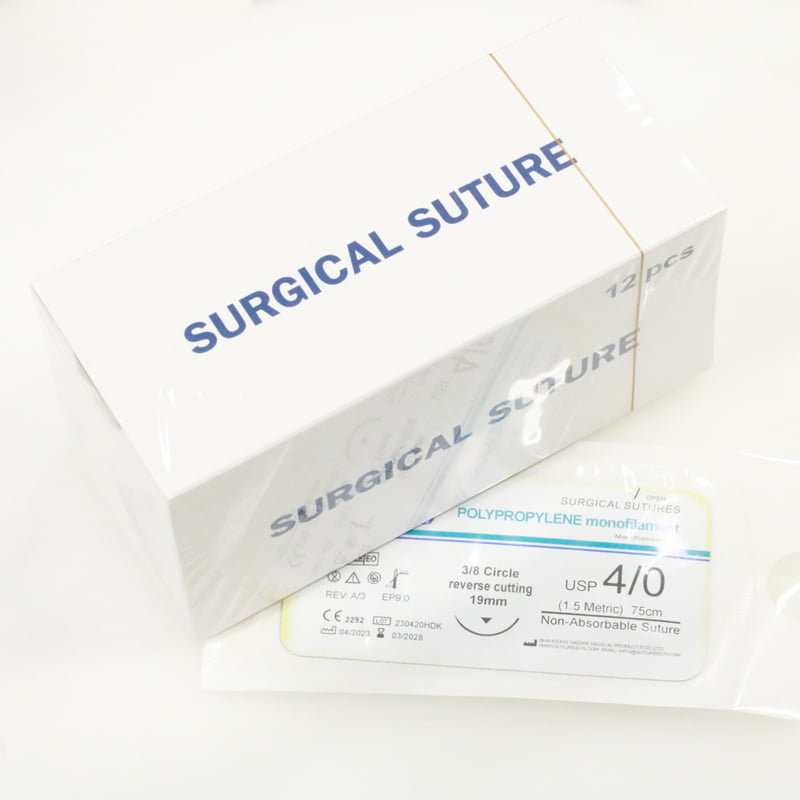


| Item | Specification |
|---|---|
| Product Name | Siny Medical PP Suture |
| Product Type | Non-Absorbable Surgical Suture |
| Suture Material | Polypropylene (PP) |
| Suture Structure | Monofilament |
| Absorption Type | Non-Absorbable |
| Suture Color | Blue |
| Application | Soft Tissue Approximation and Ligation |
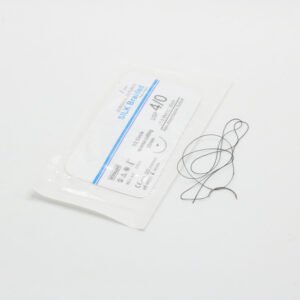
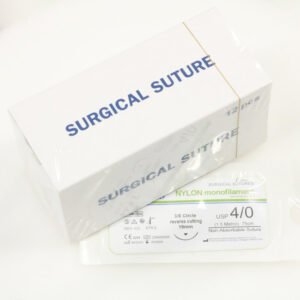
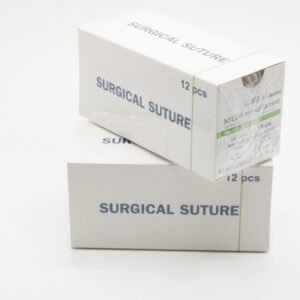
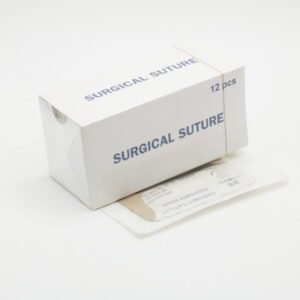
Siny Medical PP Suture is a non-absorbable surgical thread made from synthetic polypropylene. It features a monofilament structure and is designed for selected tissue approximation and ligation procedures.
Polypropylene sutures are widely used in surgery because they offer long-term tensile strength retention and relatively low tissue reactivity. Their smooth, single-strand construction also reduces capillarity compared with braided sutures.
Unlike absorbable materials, polypropylene does not undergo a planned absorption process after implantation. This makes it suitable for procedures where prolonged mechanical support may be necessary.
However, the material is not appropriate for every surgical application. Clinicians must consider tissue characteristics, wound conditions, and the required support period.
Siny Medical supplies polypropylene surgical sutures for hospitals, surgical departments, clinics, and medical distributors. Buyers can select suitable thread sizes, needle configurations, and packaging according to confirmed product availability.
Polypropylene is a synthetic polymer used in non-absorbable surgical sutures. Its material properties influence tissue response, handling, and long-term performance.
A polypropylene suture consists of a single continuous filament.
This smooth construction generally produces less tissue drag and capillarity than braided alternatives. It also reduces the spaces between fibers where fluids may collect.
However, a monofilament structure does not eliminate infection risk. Proper surgical technique and wound management remain essential.
Polypropylene is classified as non-absorbable.
Unlike absorbable polymers, it is not designed to break down during normal tissue healing.
As a result, it can remain in the body for extended periods when the procedure requires it.
Nevertheless, long-term suitability depends on the clinical application and product-specific performance.
Polypropylene sutures are commonly selected when prolonged tissue support is important.
The material generally retains tensile strength well under physiological conditions.
However, this does not mean that every polypropylene suture has identical mechanical properties.
Thread diameter, manufacturing process, and product design can influence performance.
Polypropylene generally produces a relatively limited tissue response compared with some natural suture materials.
This characteristic can be useful when long-term thread retention is required.
However, individual tissue responses vary. Clinicians should consider patient factors and the surgical environment.
The smooth surface of a polypropylene monofilament can reduce friction during tissue passage.
This may help limit tissue drag during appropriate surgical procedures.
However, needle design and surgical technique also influence tissue trauma.
Polypropylene has different handling characteristics from braided silk or polyester.
Its smooth surface and material memory may require careful knot placement and additional attention to knot security.
Surgeons should use a technique appropriate for the selected thread and procedure.
Polypropylene sutures are used in a range of surgical procedures where non-absorbable material is appropriate.
However, suitability depends on the selected product, needle configuration, and clinical requirements.
Polypropylene may be used for selected soft tissue approximation procedures.
Its long-term strength retention can be useful when tissue support is needed beyond the early healing period.
However, the clinician must select an appropriate thread size and technique.
Certain polypropylene sutures are used in cardiovascular procedures.
Their non-absorbable structure and long-term mechanical performance can be valuable in selected applications.
However, cardiovascular use requires a product specifically intended and configured for that procedure.
A general polypropylene suture listing does not establish suitability for every vascular application.
Polypropylene is used for selected external skin closure procedures.
Its monofilament structure and relatively low tissue reactivity can make it a suitable option in certain cases.
When used externally, removal timing depends on the wound location, healing progress, and clinical judgment.
Selected polypropylene sutures may be used in plastic and reconstructive procedures.
The clinician may consider them when prolonged support or specific handling properties are required.
However, the material and thread size must match the intended tissue and technique.
Polypropylene may also be used in selected hernia repair, ophthalmic, or other specialized surgical applications.
These procedures have different technical requirements.
Therefore, buyers should confirm the intended use and exact product configuration before purchasing.
Suture materials differ in structure, absorption behavior, tissue response, and handling.
Understanding these differences helps healthcare buyers identify the appropriate product category.
| Suture Material | Structure | Absorption Type | Main Characteristic |
|---|---|---|---|
| Polypropylene (PP) | Monofilament | Non-Absorbable | Long-term strength retention and relatively low tissue reactivity |
| Nylon | Monofilament or Multifilament | Non-Absorbable | Synthetic polyamide with different handling and strength-retention properties |
| Silk | Braided Multifilament | Non-Absorbable | Flexible handling and knot security, with biological strength loss over time |
| Polyester | Commonly Braided | Non-Absorbable | Synthetic material used for selected durable support applications |
| Polydioxanone (PDO) | Monofilament | Absorbable | Temporary support followed by gradual degradation |
Both polypropylene and nylon are synthetic non-absorbable suture materials.
However, they are made from different polymers and have different long-term behavior.
Polypropylene is commonly associated with prolonged strength retention. Nylon may gradually lose strength in tissue over time.
Therefore, the two materials should not be treated as interchangeable without clinical evaluation.
Silk is a natural braided material, while polypropylene is a synthetic monofilament.
Silk offers flexible handling and good knot friction. However, it can produce a greater tissue reaction and gradually lose strength in tissue.
Polypropylene generally has lower capillarity and retains strength for longer.
The correct choice depends on the procedure and tissue requirements.
Absorbable sutures gradually lose strength and break down after implantation.
Polypropylene is not designed to undergo that process.
Therefore, clinicians may choose polypropylene when prolonged thread retention is appropriate.
However, an absorbable material may be preferable when permanent thread retention is unnecessary.
Selecting a suitable PP suture requires attention to both clinical requirements and technical specifications.
Buyers should confirm the thread size, needle design, length, and packaging before ordering.
USP size identifies the standardized diameter classification of a surgical suture.
Different sizes suit different tissues and procedures.
For example, finer threads may be required for delicate tissue approximation. Larger sizes may be suitable for other applications.
However, the exact available USP range must be confirmed for the selected product.
Thread length affects handling during surgery.
Different procedures may require different lengths.
Buyers should confirm the required length and available product options before preparing an order.
Surgical needles are available in different curvature designs.
Common examples include 3/8-circle and 1/2-circle needles.
However, not every curvature is available with every suture size.
The clinician should select the needle according to tissue accessibility and the surgical technique.
Needle point design affects tissue penetration.
Taper-point needles are commonly used for selected softer tissues. Cutting and reverse-cutting needles serve other applications.
The appropriate design depends on the tissue and procedure.
Polypropylene sutures may be supplied with attached needles or in other configurations, depending on the product.
For needle-attached sutures, the needle-thread connection is an important consideration.
Buyers should confirm the required configuration before ordering.
Surgical sutures intended for sterile procedures require appropriate sterile product presentation.
Buyers should verify the sterility status, package integrity requirements, labeling, and expiration date.
The exact packaging format should match the purchasing project.
Proper handling helps protect the mechanical properties of surgical sutures.
Before use, verify the product material, USP size, needle configuration, and expiration date.
For sterile products, inspect the packaging carefully. Do not use the product if the sterile barrier is damaged.
During surgery, avoid unnecessary handling and excessive tension.
Polypropylene monofilaments can have noticeable material memory. Therefore, surgeons should use a suitable knot technique and follow the product instructions.
Careless instrument handling may damage the thread surface or reduce its strength.
In addition, excessive knot tension may affect tissue approximation.
After placement, postoperative management depends on the procedure and tissue condition.
When polypropylene sutures are used externally, healthcare professionals should determine the appropriate removal time.
When used internally, the suture may remain in place according to the intended surgical application.
Store unused products according to their labeled instructions.
Protect packages from excessive heat, moisture, direct sunlight, and physical damage.
Healthcare facilities should organize surgical sutures by material, thread size, needle type, and expiration date.
This helps reduce product selection errors during surgical preparation.
A PP surgical suture is a non-absorbable thread made from synthetic polypropylene. It commonly features a monofilament structure.
No. Polypropylene is classified as non-absorbable and is not designed to break down during normal tissue healing.
Selected applications include soft tissue approximation, skin closure, and specialized procedures that require prolonged thread support.
No. Polypropylene and nylon are different synthetic polymers. Their handling characteristics and long-term strength behavior differ.
Its smooth, single-strand structure generally offers low capillarity, reduced tissue drag, and relatively low tissue reactivity.
Polypropylene is not designed for absorption and may remain in tissue for extended periods. However, its clinical use depends on the procedure.
Different needle curvatures, point designs, and attachment configurations may be available. Exact options depend on the selected product.
Available USP sizes depend on the product configuration. Buyers should confirm the required range before ordering.
Certain polypropylene suture products are designed for cardiovascular procedures. However, buyers must confirm that the specific product is intended for that use.
Siny Medical supplies Siny Medical PP Suture products for selected surgical applications requiring non-absorbable polypropylene thread.
Available configurations may differ in USP size, thread length, needle curvature, needle point design, and packaging.
Contact Siny Medical with your polypropylene suture requirements, preferred USP sizes, needle configurations, packaging details, and purchasing quantities to discuss suitable products, samples, and bulk-order pricing.
Copyright © 2026 | Ningbo Siny Medical Technology Co., Ltd