| Item | Specification |
|---|---|
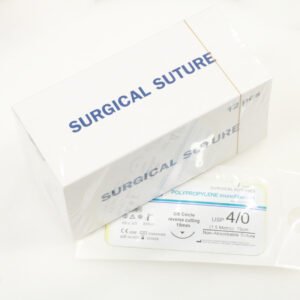
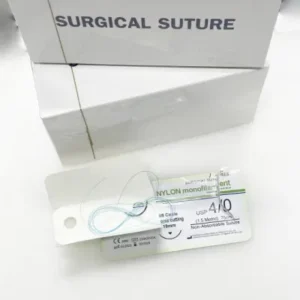
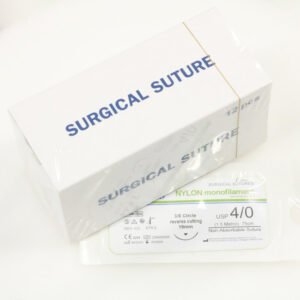
| Product Name | Non-Absorbable Surgical Suture Nylon |
| Product Type | Non-Absorbable Surgical Suture |
| Suture Material | Polyamide (Nylon) |
| Suture Structure | Monofilament |
| Absorption Classification | Non-Absorbable |
| Material Origin | Synthetic Polymer |
| Application | Selected Soft Tissue Approximation and Skin Closure |
Non-Absorbable Surgical Suture Nylon is a synthetic surgical thread made from polyamide. Its monofilament structure provides a smooth surface and mechanical support for selected soft tissue approximation procedures. Nylon is widely used for skin closure, where surgeons often require a thread that can support wound edges during healing and be removed afterward.
Unlike absorbable sutures, nylon does not undergo a controlled degradation process designed to eliminate the thread after implantation. However, its tensile strength can gradually decrease over time. Therefore, the term non-absorbable describes its suture classification rather than a guarantee of permanent mechanical strength.
Monofilament nylon generally offers lower capillarity than braided materials. Its smooth surface also helps the thread pass through tissue with relatively low friction. These characteristics make nylon a familiar option for selected external wound closures.
Siny Medical supplies nylon surgical sutures for hospitals, clinics, surgical departments, and medical distributors. The appropriate configuration depends on the procedure, tissue characteristics, and required needle-and-thread combination.
Nylon belongs to the synthetic polyamide family. Its construction influences tissue passage, knot handling, and the way the thread performs during wound healing.
Manufacturers produce nylon surgical threads from synthetic polyamide polymers. Unlike natural silk or collagen-based catgut, nylon does not originate from animal tissue.
The polymer provides mechanical strength during tissue approximation. In addition, its synthetic composition gives nylon different handling and tissue-response characteristics from natural surgical materials.
However, nylon is not completely resistant to changes after implantation. Its mechanical properties may gradually decline during prolonged exposure to the biological environment.
A monofilament nylon suture consists of one continuous strand.
This structure creates a relatively smooth thread surface. As a result, nylon generally produces less capillarity than braided sutures, which contain spaces between multiple fibers.
The smooth construction can also reduce resistance during tissue passage. Nevertheless, suture design alone cannot prevent infection or wound complications.
Nylon is classified as a non-absorbable surgical material.
It does not follow the predictable absorption process associated with synthetic absorbable sutures such as PDO or PGCL.
However, nylon can gradually lose tensile strength during prolonged implantation. This distinction matters when surgeons select materials for procedures requiring extended mechanical support.
For external skin closure, clinicians commonly remove nylon sutures after sufficient healing has occurred.
Nylon provides mechanical support by holding tissue edges together.
The required thread strength depends on wound location, tissue thickness, and tension across the closure. Thread diameter and surgical technique also influence performance.
Although nylon offers useful initial strength, its long-term retention differs from that of polypropylene.
Therefore, clinicians should evaluate the intended support period before choosing a non-absorbable material.
Monofilament nylon can exhibit material memory. In other words, the thread may tend to return toward its previous shape.
This characteristic affects handling and knot placement. Surgeons should use appropriate knotting techniques to maintain secure tissue approximation.
The finished suture diameter and needle configuration can also influence handling during surgery.
Nylon sutures are commonly used in procedures where a non-absorbable thread provides suitable wound support.
Their most familiar application is skin closure. However, selected soft tissue procedures may also use nylon when its performance matches the clinical requirements.
Skin closure is a common application of monofilament nylon.
The thread helps approximate wound edges during early healing. Its smooth surface supports controlled placement through the skin.
After the wound develops sufficient strength, a clinician can remove the external sutures.
Removal timing depends on wound location, tissue condition, and individual healing.
Nylon may be used for selected minor surgical incisions and accessible soft tissue wounds.
Its monofilament construction provides a smooth thread surface, while the non-absorbable classification allows the clinician to plan removal when appropriate.
The surgeon should select the thread diameter and needle configuration according to the procedure.
Fine nylon sutures may be used for selected skin closures in plastic and reconstructive surgery.
An appropriate thread and needle combination can support precise tissue approximation.
However, scar appearance depends on wound tension, surgical technique, tissue condition, and postoperative care. No suture material guarantees an invisible scar.
Clinicians may use nylon for selected traumatic wounds after proper assessment and preparation.
Before closure, they must evaluate contamination, tissue viability, wound depth, and the risk of infection.
Some wounds require delayed closure or alternative treatment. Therefore, nylon is not automatically suitable for every injury.
Different surgical materials have different structures, handling characteristics, and strength-retention profiles.
Understanding these differences helps clinicians select suitable sutures and prevents purchasing errors.
| Suture Material | Classification | Common Structure | Key Characteristic |
|---|---|---|---|
| Nylon | Non-Absorbable | Monofilament | Smooth surface; commonly used for skin closure |
| Polypropylene | Non-Absorbable | Monofilament | Good long-term chemical stability |
| Silk | Non-Absorbable | Braided | Flexible handling and knot characteristics |
| PDO | Absorbable | Monofilament | Extended temporary tissue support |
| PGCL | Absorbable | Monofilament | Flexible thread with shorter-term support than PDO |
Nylon and polypropylene are both synthetic non-absorbable materials. They are also commonly supplied in monofilament form.
However, their long-term mechanical behavior differs.
Polypropylene generally maintains its strength more consistently during prolonged implantation. Nylon may gradually lose tensile strength.
Both materials are used for selected skin closures, but the choice depends on the required support period and surgical application.
Silk is a natural braided suture material. Its flexible construction offers different knot-handling characteristics from monofilament nylon.
In contrast, nylon generally provides lower capillarity and a smoother thread surface.
These differences can influence material selection. However, neither material eliminates the need for appropriate wound care.
Absorbable sutures gradually lose strength and undergo degradation after implantation.
Nylon does not follow the same controlled absorption process.
Therefore, nylon may be appropriate for accessible wounds where the clinician plans to remove the thread after healing.
Absorbable materials may be more suitable for selected internal closures where temporary support without routine removal is preferred.
Selecting the appropriate nylon suture requires attention to thread diameter, length, needle configuration, and clinical application.
Hospitals and medical distributors should prepare clear specifications before ordering.
First, confirm that the requested product is nylon rather than polypropylene, silk, or another non-absorbable material.
Although these sutures belong to the same general classification, their handling and long-term performance differ.
A clear material description helps prevent product substitution errors.
USP size identifies the standardized diameter classification of surgical sutures.
Different tissues and closure techniques require different thread diameters.
Fine sutures may suit delicate tissue approximation, while other procedures require larger diameters.
The surgeon should determine the appropriate size according to the wound and surgical technique.
Thread length affects how much material is available during the procedure.
The required length depends on the closure technique and wound characteristics.
Buyers should specify the preferred thread length when preparing purchase orders.
Nylon sutures may be supplied with different surgical needle configurations.
Needle curvature, point design, and length affect tissue penetration and surgical access.
For example, reverse-cutting needles are commonly used for selected skin closures. Other needle designs serve different tissue applications.
The selected needle should match the intended procedure.
Monofilament nylon can exhibit material memory.
Consequently, surgeons should pay attention to knot placement and use suitable knotting techniques.
Thread diameter and needle configuration also affect handling during surgery.
For sterile surgical applications, the packaging must maintain the sterile barrier until use.
Buyers should verify the product labeling, package integrity, expiration date, and selected configuration.
Consistent purchasing specifications also help hospitals organize their inventory.
Proper handling helps maintain nylon suture performance before and during surgery.
Before opening the package, confirm the material, thread size, needle configuration, and expiration date.
If the product is supplied sterile, inspect the sterile barrier carefully. Do not use packaging that is damaged or compromised.
During surgery, avoid excessive gripping or crushing of the thread. Mechanical damage may affect its strength and handling.
Surgeons should also use appropriate knotting techniques to maintain secure tissue approximation.
For external skin closure, nylon sutures are commonly removed after the wound has healed sufficiently. However, removal timing varies according to wound location, tissue condition, and patient factors.
Removing sutures too early may compromise wound support. Leaving them in place longer than necessary can also create problems.
Therefore, the clinician should determine the appropriate removal schedule.
Store unused products according to their labeled instructions. Protect packaging from excessive heat, moisture, sunlight, and physical damage.
It is a synthetic surgical thread made from polyamide. Nylon is commonly supplied in monofilament form and used for selected skin closure and soft tissue approximation procedures.
No. Nylon is classified as non-absorbable. However, it may gradually lose tensile strength during prolonged implantation.
Nylon is widely used for skin closure and selected soft tissue approximation procedures.
Nylon is a synthetic polyamide material, not a natural fiber.
Both are synthetic non-absorbable materials. However, polypropylene generally offers greater long-term chemical stability and strength retention.
External nylon sutures are commonly removed after sufficient wound healing. The clinician determines the appropriate timing.
Nylon can be manufactured in different structures, but monofilament nylon is commonly used for skin closure.
No. Their suitability depends on the tissue, wound tension, required support period, and product-specific intended use.
Hospitals should confirm the material, USP size, thread length, needle configuration, packaging, and required quantities.
Siny Medical supplies Non-Absorbable Surgical Suture Nylon products for selected skin closure and soft tissue approximation procedures. The synthetic polyamide material and monofilament construction provide practical handling characteristics for hospitals, clinics, and medical distributors. Contact Siny Medical with your required USP sizes, thread lengths, needle configurations, packaging preferences, and purchasing quantities to discuss suitable products, samples, and bulk supply.
Copyright © 2026 | Ningbo Siny Medical Technology Co., Ltd