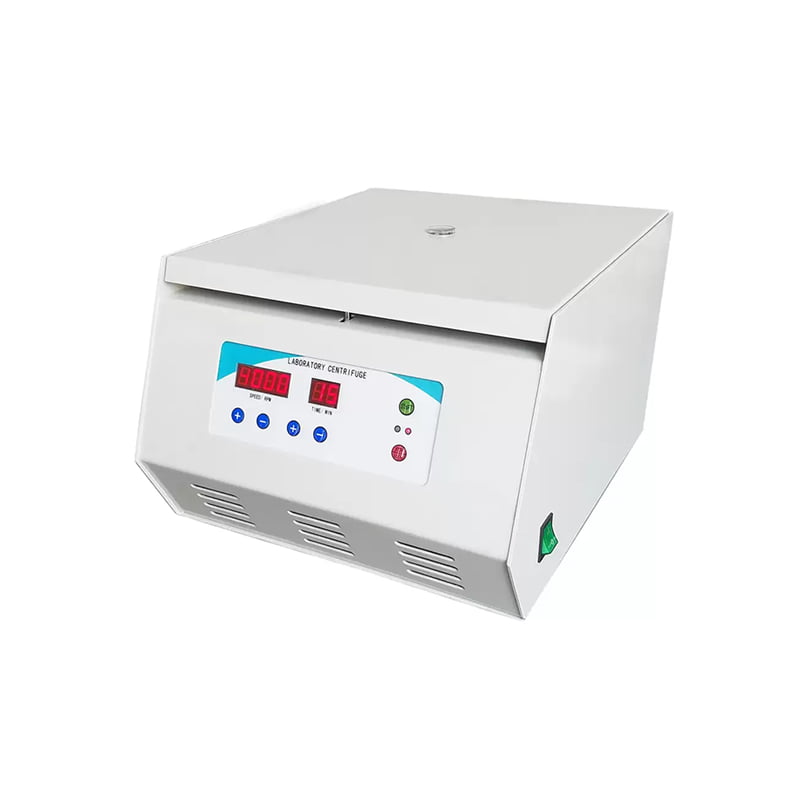
| Specification | Details |
|---|---|
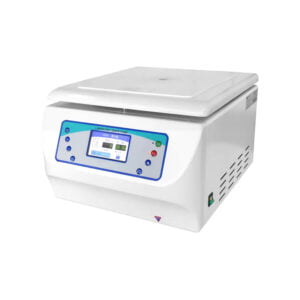
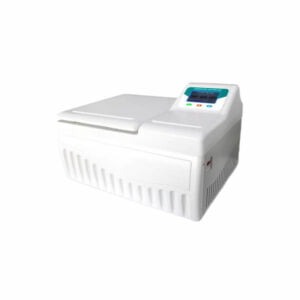
| Product Name | Lab Tabletop Low Speed Centrifuge |
| Product Type | Tabletop Laboratory Centrifuge |
| Maximum Speed | Up to 5000 rpm |
| Maximum RCF | Up to approx. 4000 × g |
| Rotor Configuration | Multiple rotor options available |
| Control Type | Digital Control |
| Timer Range | Adjustable Timer |
| Application | Laboratory Sample Separation |
| Usage | Laboratory Use |
| OEM/ODM | Available |
The Siny Medical Equipment Lab Tabletop Low Speed Centrifuge supports routine sample separation in medical, clinical, biochemical, and research laboratory environments.
With a compact tabletop configuration, this laboratory centrifuge provides a practical solution for facilities that need controlled centrifugation without the space requirements of a large floor-standing system.
The centrifuge separates sample components through controlled rotation and centrifugal force. By adjusting operating speed and centrifugation time, laboratory personnel can process compatible samples according to established testing and preparation procedures.
Laboratories can use this tabletop low speed centrifuge for workflows involving blood samples, biological specimens, and other suitable laboratory materials when they select compatible rotors and containers.
A centrifuge separates sample components by generating centrifugal force through controlled rotation.
During operation, the rotor spins at a selected speed. Different components within the sample respond differently according to density, particle size, and applied centrifugal force.
Heavier components generally move away from the center of rotation, while lighter components remain closer to the center or form separate layers.
This separation process helps laboratories prepare samples for further testing, analysis, or processing.
Different laboratory procedures require different centrifugation conditions.
This tabletop low speed centrifuge provides adjustable speed control. Laboratory personnel can select suitable operating conditions according to the sample type, rotor configuration, and laboratory protocol.
Time control plays an important role in repeatable centrifugation.
The adjustable timer allows laboratory personnel to define the duration of each centrifugation cycle according to the intended application.
A digital control interface helps users set and monitor operating parameters more conveniently.
Clear speed and time settings help laboratories maintain consistent centrifugation procedures across different workflows.
Laboratory space is an important factor when selecting equipment.
A tabletop centrifuge provides centrifugation capability while taking up less working space than larger laboratory systems.
Its compact configuration helps laboratories handle flexible sample processing without requiring a high-capacity floor-standing centrifuge.
Tabletop low speed centrifuges support routine sample preparation and separation procedures.
Laboratories can select suitable rotors and accessories according to their workflow requirements.
The compact design allows laboratories to place the centrifuge on a suitable laboratory bench or workstation.
This makes it easier to integrate centrifugation into existing laboratory layouts.
Different laboratories have different sample processing requirements.
A tabletop centrifuge with compatible rotor options provides flexibility for various routine applications.
A low speed centrifuge supports sample preparation across different laboratory environments.
Typical applications include:
Clinical laboratories often use centrifugation during sample preparation procedures.
Laboratory personnel can use this centrifuge for compatible blood samples and biological specimens when they select suitable tubes, rotors, and operating conditions.
Biochemical testing often requires sample separation before further analysis.
Controlled centrifugation helps laboratories process samples according to established procedures.
Research laboratories frequently need flexible sample preparation equipment.
This tabletop low speed centrifuge supports routine separation tasks when laboratories select appropriate accessories.
Different biological samples may require centrifugation before testing or analysis.
Laboratory personnel choose centrifugation methods according to sample type, protocol requirements, and application needs.
Choosing a laboratory centrifuge requires more than checking maximum speed.
Laboratories should evaluate several factors before selecting suitable equipment.
Speed is commonly measured in revolutions per minute (rpm), while RCF describes the actual centrifugal force applied to the sample.
Because rotor size affects RCF, laboratories should consider both values when evaluating centrifuge performance.
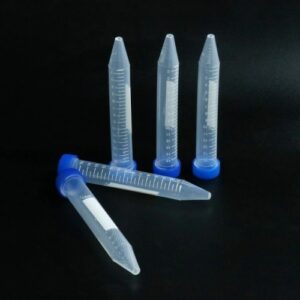
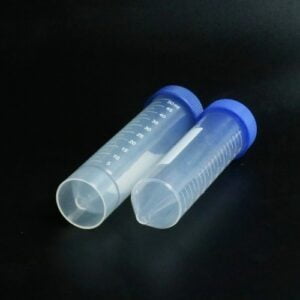
The rotor determines which tubes and containers laboratories can use during centrifugation.
Before operation, users should confirm compatibility between the rotor, adapters, tubes, and required centrifugation conditions.
Different laboratories process different numbers and volumes of samples.
The appropriate centrifuge capacity depends on the intended workflow and sample requirements.
Laboratories should also evaluate control method, timer range, noise level, installation space, and maintenance requirements.
Considering these factors together helps laboratories select equipment that matches their actual workflow.
Proper operation helps maintain safe and consistent centrifuge performance.
Before starting a centrifugation cycle, laboratory personnel should confirm that:
Balanced loading helps reduce vibration during operation.
Laboratory personnel should arrange samples according to rotor instructions to maintain balanced weight distribution.
Different tubes have different operating limitations.
Users should confirm that tubes, adapters, and rotors match the selected speed and centrifugal force.
Centrifugation settings should follow validated laboratory protocols.
Different applications may require different combinations of speed, time, and rotor configuration.
The Siny Medical Equipment Lab Tabletop Low Speed Centrifuge provides a compact and flexible solution for routine laboratory sample separation.
Potential application environments include:
When selecting laboratory centrifugation equipment, organizations should evaluate their actual workflow requirements.
Sample type, processing volume, required centrifugal force, available space, and accessory compatibility all influence equipment selection.
A suitable centrifuge helps laboratories create efficient and consistent sample preparation workflows.
Proper maintenance helps laboratories maintain reliable centrifuge operation.
Laboratory personnel should follow recommended procedures for cleaning, inspection, and routine equipment checks.
Important maintenance considerations include:
A consistent maintenance routine helps laboratories maintain stable centrifugation workflows.
A tabletop low speed centrifuge is a compact laboratory centrifuge designed to separate sample components through controlled centrifugal force. Laboratories install this type of centrifuge on a suitable work surface rather than using floor space.
A low speed centrifuge supports routine sample separation and preparation in medical, clinical, biochemical, and research laboratory environments.
Suitable sample types depend on the rotor configuration, tubes, adapters, and validated laboratory procedures. Laboratories commonly use centrifuges for compatible blood samples, biological specimens, and other laboratory materials.
RPM describes rotor rotation speed. RCF describes the centrifugal force applied to the sample. Rotor speed and rotor radius both affect RCF.
Users should arrange samples according to rotor instructions so opposite positions have balanced weight distribution.
Yes. Laboratories can use compatible blood sample processing applications when they select suitable tubes, rotors, and centrifugation procedures.
Laboratories should evaluate sample type, capacity, speed range, RCF requirements, rotor compatibility, available workspace, and intended application before selecting equipment.
The Siny Medical Equipment Lab Tabletop Low Speed Centrifuge provides a compact solution for routine laboratory sample separation.
Its tabletop configuration, adjustable operating parameters, and flexible application options make it suitable for medical, biochemical, and research laboratory environments.
For laboratories and healthcare facilities evaluating tabletop centrifuge solutions, Siny Medical can provide additional information about configurations, applications, and supply requirements.
Contact Siny Medical to discuss your laboratory centrifuge requirements, bulk supply needs, or OEM/ODM options.
Copyright © 2026 | Ningbo Siny Medical Technology Co., Ltd