| Specification | Description |
|---|---|
| Product Name | Siny 0.1mL Disposable Plastic Laboratory Flat Top PCR Tubes |
| Product Category | PCR Laboratory Consumables |
| Product Type | PCR Reaction Tube |
| Nominal Capacity | 0.1mL (100µL) |
| Material | Plastic |
| Cap Design | Flat Top |
| Usage | Disposable |
| Intended Application | PCR Reaction Preparation and Thermal Cycling |
Polymerase chain reaction (PCR) is an essential technique in molecular biology, genetic research, and laboratory testing. During PCR, reaction mixtures undergo repeated temperature changes to amplify selected DNA sequences. Therefore, choosing a suitable reaction tube is important for maintaining consistent sample handling and compatibility with thermal cycling equipment.
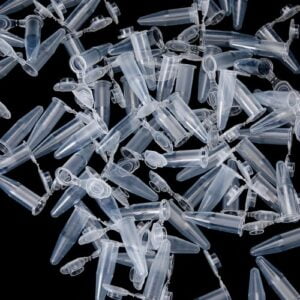
Siny Medical offers 0.1mL PCR Tubes for molecular biology laboratories, research institutions, diagnostic facilities, and laboratory consumable distributors. These disposable plastic reaction tubes feature a flat-top cap design and a nominal capacity of 0.1mL, making them a compact container format for appropriate PCR workflows.
Unlike conventional centrifuge tubes, PCR tubes are intended for use in thermal cycling procedures. Their dimensions, cap design, and material characteristics must suit the intended PCR instrument and reaction conditions.
The flat-top cap provides a flat upper surface, while the tube body accommodates a small reaction mixture. However, cap shape alone does not establish leakproof performance, evaporation resistance, or compatibility with heated lids. These characteristics depend on the finished product and the thermal cycler being used.
For laboratories and medical distributors, selecting the right PCR consumable involves more than choosing a nominal volume. Buyers should also consider instrument compatibility, working volume, contamination-control requirements, and the type of PCR application.
This guide explains the main features, applications, and selection considerations for disposable 0.1mL flat-top PCR reaction tubes.
PCR reaction tubes are designed for laboratory workflows involving controlled temperature changes. The suitability of an individual product depends on its dimensions, material properties, and compatibility with the intended equipment.
The nominal capacity of these tubes is 0.1mL, equivalent to 100 microliters.
This compact format is associated with small-volume molecular biology workflows.
For example, many PCR protocols use reaction mixtures substantially smaller than 100µL. The actual volume depends on the assay, reagent system, and thermal cycler.
However, a tube’s nominal capacity is not necessarily its recommended working volume.
Therefore, laboratories should follow the applicable product and instrument instructions when determining reaction volumes.
The defining closure feature of this product is its flat-top cap.
Flat caps provide a level upper surface and differ in shape from domed-cap alternatives.
This distinction can matter when laboratories select tubes for particular thermal cycler lids or handling procedures.
For example, cap geometry may influence how a tube fits beneath a heated lid.
However, the actual fit depends on the complete tube dimensions and the instrument design.
A flat cap does not automatically guarantee a particular sealing pressure or evaporation performance.
These PCR tubes are described as disposable plastic laboratory consumables.
Using a new reaction tube for each designated procedure supports laboratory workflows that avoid tube reuse.
However, disposable construction does not automatically establish that a product is sterile, DNase-free, RNase-free, or free of PCR inhibitors.
Such characteristics require product-specific information.
Therefore, buyers should match the tube’s documented cleanliness properties to the intended assay.
PCR involves repeated heating and cooling during amplification.
A suitable PCR tube must remain compatible with the temperature conditions specified by the protocol and thermal cycler.
However, the actual temperature tolerance and dimensional stability of a tube depend on its material and construction.
Consequently, laboratories should use tubes that are appropriate for their equipment and operating program.
A product’s designation as a PCR tube should not replace compatibility checks.
PCR preparation often involves small volumes of template, primers, nucleotides, enzymes, and reaction buffer.
A compact reaction tube provides a container for these components.
However, accurate pipetting and proper mixing remain essential.
In addition, technicians should avoid introducing contaminants during reaction setup.
The selected tube should fit the laboratory’s pipetting and sample identification procedures.
Thermal cyclers may use different reaction block designs.
Some instruments accommodate individual tubes, while others use tube strips or plates.
Therefore, laboratories should confirm whether the selected 0.1mL tube fits the intended reaction block.
The tube’s overall dimensions, cap height, and seating position can affect compatibility.
In addition, some real-time PCR systems have optical requirements that must be considered separately.
Small-volume PCR tubes support a range of molecular biology workflows when their specifications match the intended assay and thermal cycling equipment.
Conventional PCR is widely used to amplify selected DNA sequences.
During reaction setup, technicians combine the required reagents and template material in a suitable reaction vessel.
A 0.1mL PCR tube may provide an appropriate container format for compatible small-volume protocols.
After preparation, the tube is placed into the thermal cycler for amplification.
However, laboratories should verify tube compatibility and follow the assay’s recommended reaction volume.
Research laboratories use PCR in many experimental workflows.
These may include DNA amplification, cloning-related procedures, and preparation for downstream analysis.
A compact PCR tube can support appropriate reaction setup when the instrument and protocol are compatible.
However, the tube’s material and cleanliness characteristics should meet the experiment’s requirements.
For contamination-sensitive work, laboratories must also follow established clean-area and reagent-handling procedures.
Genetic research frequently involves the amplification of specific DNA regions.
Researchers may prepare multiple small-volume reactions for analysis.
Suitable PCR tubes help contain reaction mixtures during the thermal cycling process.
However, the quality of the experimental result depends on many factors, including primer design, reagent quality, thermal cycling conditions, and contamination control.
Tube selection is one part of the overall workflow.
Some diagnostic laboratories use PCR-based methods as part of validated testing procedures.
The required consumables depend on the assay and instrument.
For example, a diagnostic platform may specify particular reaction vessels or optical characteristics.
Therefore, laboratories should not substitute a general PCR tube without confirming suitability for the intended system.
Universities and teaching laboratories use PCR to demonstrate molecular biology techniques.
Students may prepare small reaction mixtures and observe amplification results through downstream analysis.
Disposable PCR tubes can support these activities when the equipment is compatible.
However, correct pipetting, labeling, and contamination prevention remain essential.
Laboratory distributors supply PCR consumables to research institutions, diagnostic laboratories, and biotechnology facilities.
Customers may require different tube capacities, cap styles, and instrument compatibility.
Therefore, distributors should identify the customer’s thermal cycler model and assay requirements before selecting a product.
Clear product specifications also help reduce purchasing errors and support repeat orders.
PCR tubes are available with different cap designs. Two commonly encountered formats are flat-top and domed-cap tubes.
The difference is primarily the shape of the cap. However, cap geometry can influence handling preferences and compatibility with particular thermal cycler lids.
Flat-top PCR tubes have a cap with a relatively level upper surface.
This design may be suitable for instruments and workflows that accommodate flat caps.
However, the cap must fit the selected thermal cycler correctly.
In addition, flat-top construction alone does not establish optical compatibility with real-time PCR instruments.
Therefore, laboratories should check the instrument’s consumable requirements.
Domed-cap PCR tubes have a raised or rounded cap surface.
This design is also used in conventional PCR applications.
Depending on the instrument, a domed cap may interact differently with the heated lid.
However, neither cap design is universally better.
The correct choice depends on the instrument and the tube manufacturer’s specifications.
| Feature | Flat Top PCR Tubes | Domed Cap PCR Tubes |
|---|---|---|
| Cap Shape | Flat Upper Surface | Rounded or Raised Upper Surface |
| Typical Application | Compatible PCR Workflows | Compatible PCR Workflows |
| Heated Lid Compatibility | Instrument-Dependent | Instrument-Dependent |
| Sealing Performance | Product-Specific | Product-Specific |
| Real-Time PCR Suitability | Requires Optical Compatibility | Requires Optical Compatibility |
| Main Selection Factor | Cap Geometry and Instrument Fit | Cap Geometry and Instrument Fit |
For purchasing teams, the most important factor is not which cap looks better.
Instead, laboratories should select the cap design specified or supported by their thermal cycling equipment.
Choosing the correct PCR consumable requires careful consideration of reaction volume, equipment compatibility, and assay requirements.
The following factors help laboratories and distributors select appropriate products.
First, identify the thermal cycler used by the laboratory.
Different instruments may require different tube capacities and physical dimensions.
For example, a thermal cycler designed for a particular low-profile tube format may not accommodate every 0.1mL reaction tube.
Therefore, buyers should check the instrument manufacturer’s consumable compatibility information.
Next, determine the reaction volume required by the PCR protocol.
A 0.1mL tube has a nominal capacity of 100µL.
However, the recommended working volume may be lower.
The appropriate volume also depends on the thermal cycler and reagent system.
Therefore, laboratories should not assume that the full nominal capacity is suitable for thermal cycling.
The flat-top cap should suit the intended thermal cycler.
Buyers should consider the cap height, closure geometry, and heated lid requirements.
In addition, the cap should close according to the manufacturer’s instructions.
However, the presence of a flat cap does not automatically establish evaporation resistance or leakproof performance.
Applications with specific sealing requirements need supporting product information.
PCR involves repeated temperature changes.
Therefore, the tube must be appropriate for the thermal cycling program.
Material properties and tube geometry can influence thermal behavior.
However, the actual performance depends on the finished product and instrument.
Buyers should avoid assuming that all plastic PCR tubes provide identical thermal characteristics.
PCR is sensitive to contamination, especially when laboratories handle small quantities of nucleic acid.
Therefore, consumable selection should reflect the assay’s cleanliness requirements.
Some workflows may require products with documented DNase-free, RNase-free, or PCR-inhibitor-free characteristics.
However, these properties should not be assumed from the product name.
Laboratories should verify the relevant specifications before use.
Conventional PCR and quantitative real-time PCR may use different consumable requirements.
In conventional PCR, amplification products are commonly analyzed after thermal cycling.
In qPCR, instruments monitor fluorescence during amplification.
Therefore, qPCR may require specific optical characteristics in the reaction vessel or cap.
A flat-top PCR tube is not automatically suitable for every real-time PCR system.
Buyers should confirm compatibility with the instrument and assay.
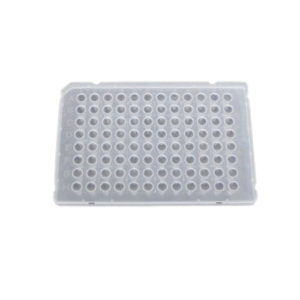
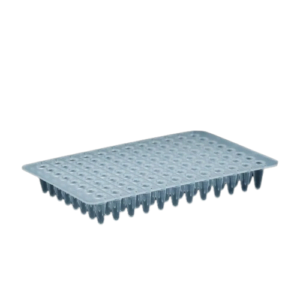
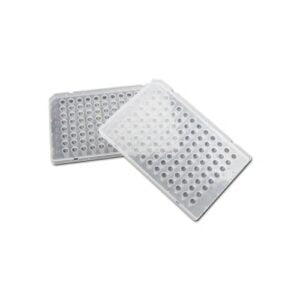
PCR consumables are available as individual tubes, tube strips, and multiwell plates.
Individual tubes may suit workflows involving a limited number of reactions.
Strips and plates can be convenient for processing multiple samples in organized layouts.
However, the correct format depends on the instrument and laboratory throughput.
Therefore, buyers should consider both reaction volume and sample processing frequency.
Research laboratories and diagnostic facilities may consume large quantities of PCR tubes.
Purchasing teams can estimate demand according to the number of reactions performed and the laboratory’s operating schedule.
In addition, they should consider storage space and product consistency.
For distributors, accurate information about capacity, cap design, and instrument compatibility can help customers select the correct consumables.
Proper handling helps laboratories maintain consistent PCR preparation procedures.
Before use, inspect each tube and cap for visible damage.
Next, confirm that the tube is compatible with the intended thermal cycler and reaction protocol.
Prepare the reaction mixture using appropriate pipetting techniques.
In addition, follow the laboratory’s contamination-control procedures.
Avoid touching the inner surfaces of the tube and cap.
After adding the reagents, close the cap according to the manufacturer’s instructions.
Then, place the tube into the appropriate thermal cycler position.
Make sure the tube is seated correctly and that the heated lid arrangement is compatible.
During amplification, follow the validated PCR program.
After thermal cycling, handle the tubes according to the laboratory’s post-amplification procedures.
PCR products can create contamination risks in subsequent reactions.
Therefore, laboratories should separate pre-amplification and post-amplification activities when required by their procedures.
Finally, dispose of used single-use PCR tubes according to the applicable laboratory waste requirements.
Store unused PCR tubes in their original packaging in a clean, dry location.
Protect them from dust, physical damage, and unsuitable environmental conditions.
In addition, follow the manufacturer’s labeled storage instructions.
Laboratories should keep different PCR tube capacities and cap designs clearly identified to reduce accidental substitution.
They are small-volume laboratory reaction tubes with a nominal capacity of 0.1mL, equivalent to 100µL.
They support appropriate PCR reaction preparation and thermal cycling workflows.
It describes the cap’s relatively flat upper surface, distinguishing it from a domed-cap design.
No. Compatibility depends on tube dimensions, cap geometry, and the instrument’s requirements.
The nominal capacity is 100µL, but the permitted working volume must be determined from the product and instrument instructions.
Only when their optical and physical characteristics meet the real-time PCR instrument’s requirements.
Disposable does not automatically mean sterile. Sterility depends on the actual product specifications.
Those properties cannot be assumed from the product name and require product-specific documentation.
PCR tubes are intended for thermal cycling reactions, while centrifuge tubes are intended for compatible centrifugal separation procedures.
Products intended for single use should not be reused.
Distributors should review the nominal capacity, cap design, tube dimensions, instrument compatibility, cleanliness requirements, intended applications, and purchasing quantities.
Siny Medical supplies 0.1mL PCR tubes and other laboratory consumables for molecular biology laboratories, research institutions, diagnostic facilities, and medical distributors. Our disposable plastic flat-top PCR reaction tubes provide a compact container format for compatible amplification workflows. Explore our PCR consumable range or contact Siny Medical to discuss available product specifications, thermal cycler compatibility, and bulk purchasing requirements.
Copyright © 2026 | Ningbo Siny Medical Technology Co., Ltd