

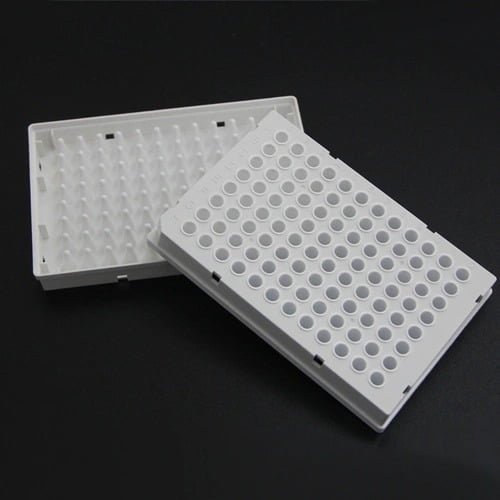
| Item | Specification |
|---|---|
| Product Type | PCR Tubes |
| Material | Plastic |
| Available Capacities | 0.1mL / 0.2mL |
| Nominal Volume | 100µL / 200µL |
| Product Range | Two Capacity Options |
| Application | Compatible PCR Reaction Preparation |
Laboratories do not always use the same PCR tube for every experiment. Different thermal cyclers may require different reaction vessel profiles, while research protocols can vary in reaction volume and sample throughput. Choosing the correct tube size is therefore an important part of maintaining an efficient molecular biology workflow.
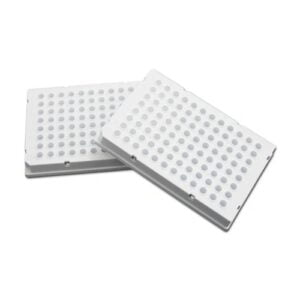
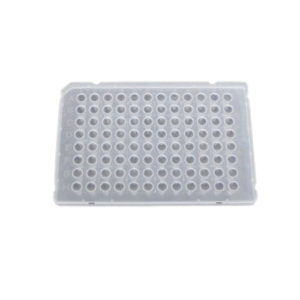
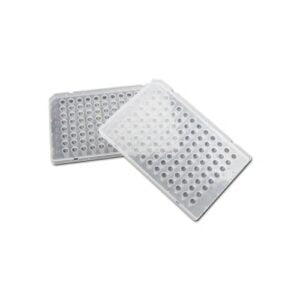
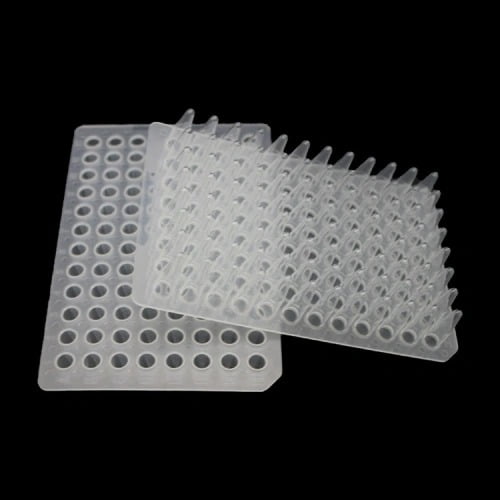
Siny Medical offers 0.1mL and 0.2mL PCR Tubes within one plastic laboratory consumable series. The two available nominal capacities are 100µL and 200µL, providing options for laboratories that use different PCR instruments or prepare reactions under different experimental conditions.
Both capacities are intended for appropriate PCR reaction preparation and compatible thermal cycling applications. However, selecting a tube involves more than comparing the amount of liquid it can hold. Tube geometry, closure design, instrument compatibility, and the requirements of the assay must also be considered.
A smaller nominal capacity does not automatically produce better amplification, just as a larger tube does not necessarily accommodate every reaction protocol. The correct choice depends on the laboratory’s equipment and validated procedures.
For research institutions, molecular biology laboratories, and laboratory consumable distributors, a product series with two capacity options can support more flexible purchasing. This guide explains how to compare the available sizes, identify suitable applications, and select PCR consumables for routine laboratory supply.
The difference between 0.1mL and 0.2mL PCR tubes begins with nominal capacity. Yet their suitability for laboratory work depends on the relationship between tube size, reaction volume, and instrument requirements.
A 0.1mL PCR tube has a nominal capacity of 100 microliters. This format is commonly associated with small-volume PCR applications and certain thermal cycler configurations.
Some PCR instruments use low-profile reaction vessels, and 0.1mL tubes are often associated with these systems. However, nominal capacity alone does not confirm that a particular tube has a low-profile design.
Laboratories should check the actual tube dimensions and the thermal cycler’s accepted consumable formats before selecting the 0.1mL option.
The tube must also accommodate the reaction volume required by the assay. Its nominal capacity should not be interpreted as a recommended working volume.
A 0.2mL PCR tube has a nominal capacity of 200 microliters. This is a familiar format in molecular biology laboratories and is used with compatible PCR instruments.
The larger nominal capacity may provide an appropriate vessel option for laboratories using thermal cyclers designed around 0.2mL reaction tubes.
However, it does not follow that a 0.2mL tube is suitable for every instrument or that the entire 200µL volume can be used during amplification.
As with the smaller option, laboratories must verify tube dimensions, closure compatibility, and the working volume required by their protocols.
One important distinction is the difference between the stated capacity of a tube and the volume of the PCR mixture.
For example, conventional PCR protocols may use reaction volumes of 10µL, 20µL, or 25µL. These are general examples of laboratory practice, not product-specific operating recommendations.
A 20µL reaction may be used in different vessel formats when the assay and instrument permit it. Therefore, selecting a 0.1mL or 0.2mL tube should not be based on reaction volume alone.
The laboratory must consider how the reaction vessel fits the thermal cycler and whether the complete setup meets the assay’s requirements.
A laboratory may operate several thermal cyclers purchased at different times or designed for different workflows.
One instrument may require a particular 0.1mL vessel profile, while another may accommodate a compatible 0.2mL format.
In this situation, purchasing both capacities can be more practical than attempting to standardize every experiment around one tube size.
The two-capacity product series also allows distributors to serve customers with different equipment requirements without treating every request as an entirely separate product category.
PCR tubes are used in a range of molecular biology procedures. The appropriate capacity depends on the instrument, assay, and laboratory workflow rather than the application name alone.
Conventional PCR is used to amplify selected DNA sequences for subsequent analysis.
Laboratory technicians prepare a reaction mixture containing template DNA, primers, polymerase, nucleotides, and an appropriate buffer. The mixture is then placed in a compatible reaction vessel for thermal cycling.
Either nominal capacity may be suitable when the tube dimensions and operating conditions meet the requirements of the instrument and assay.
The tube does not determine amplification success independently. Reagent quality, primer design, temperature settings, and contamination control remain important.
Researchers frequently use PCR to prepare DNA fragments for further laboratory procedures, including cloning-related experiments, sequence analysis, and genetic studies.
These workflows may involve different reaction volumes and equipment configurations.
Having more than one tube capacity available can help laboratories match their consumables to the instruments used across different projects.
However, a tube selected for one procedure should not automatically be assumed suitable for another without checking the relevant requirements.
PCR-based genotyping workflows involve amplifying selected DNA regions for analysis.
A laboratory may prepare a limited number of reactions during method development and later process larger sample batches.
The reaction vessel format should suit the thermal cycler and the number of samples being tested.
For higher-throughput workflows, PCR strips or plates may be more convenient than individual tubes, depending on the instrument.
During PCR assay development, researchers may compare reaction conditions, primer combinations, or amplification programs.
Consistent consumable selection is useful when comparing experimental results.
If the laboratory changes from one tube capacity or profile to another, the change may need to be evaluated within the assay workflow.
This is particularly relevant when moving between thermal cyclers with different reaction block configurations.
Universities and training institutions often use PCR to introduce students to molecular biology techniques.
Students learn to prepare reaction mixtures, identify samples, and operate thermal cyclers.
A laboratory with several instrument models may require more than one reaction tube capacity.
Keeping the appropriate consumables available can simplify practical sessions and reduce the risk of selecting an incompatible tube.
Laboratory distributors supply PCR consumables to research centers, biotechnology facilities, universities, and other laboratories.
Customers may request 0.1mL or 0.2mL tubes based on their equipment rather than the volume of the reaction mixture alone.
Providing both options within one product series can help distributors respond to different purchasing requirements.
Clear capacity identification and accurate product information are especially important when customers order consumables repeatedly.
Both tube sizes serve small-volume molecular biology workflows, but they are not necessarily interchangeable.
The most useful comparison focuses on capacity, equipment compatibility, and purchasing considerations.
| Feature | 0.1mL PCR Tubes | 0.2mL PCR Tubes |
|---|---|---|
| Nominal Capacity | 100µL | 200µL |
| Capacity in Milliliters | 0.1mL | 0.2mL |
| Typical Equipment Consideration | Compatibility With 0.1mL Tube Systems | Compatibility With 0.2mL Tube Systems |
| Physical Tube Profile | Depends on Actual Product Dimensions | Depends on Actual Product Dimensions |
| Recommended Reaction Volume | Determined by Assay and Equipment | Determined by Assay and Equipment |
| Closure Requirements | Must Match Instrument and Tube Design | Must Match Instrument and Tube Design |
| Primary Purchasing Question | Does the Instrument Accept This Format? | Does the Instrument Accept This Format? |
The 0.1mL option may be appropriate when a laboratory’s thermal cycler is designed for a compatible 100µL nominal-capacity reaction vessel.
It may also be relevant when an established assay specifies a particular 0.1mL tube format.
However, the capacity label alone is insufficient to establish instrument compatibility. The tube profile and closure must also match the equipment.
The 0.2mL option may be appropriate when the laboratory uses a thermal cycler designed for compatible 200µL nominal-capacity reaction vessels.
This format is familiar in many conventional PCR workflows, but the correct choice still depends on the instrument and assay.
A larger capacity should not be interpreted as an automatic advantage in amplification performance.
Neither size is universally better.
A laboratory using a thermal cycler that requires a particular 0.1mL profile should prioritize that compatibility. Another laboratory may need a 0.2mL vessel because of its instrument design or established procedures.
The best choice is the tube that meets the complete workflow requirements.
When a facility uses multiple instruments, maintaining both capacities may be more practical than trying to use a single format throughout the laboratory.
Choosing PCR consumables for an individual experiment is different from purchasing them for an entire laboratory or distribution business.
A purchasing team must consider compatibility, inventory organization, recurring demand, and the consequences of ordering the wrong tube format.
Start by identifying the thermal cyclers currently used in the facility.
Record the instrument models and their accepted reaction vessel formats.
This information is more useful than assuming that all PCR machines use the same tube size.
A laboratory operating several thermal cyclers may need both 0.1mL and 0.2mL consumables.
If the equipment requirements are unclear, the laboratory should review the instrument documentation or evaluate suitable samples before placing a large order.
PCR tube capacity and physical profile are related but separate specifications.
Two tubes with the same nominal capacity may differ in height, shape, or closure geometry.
These differences can affect how the tube fits the reaction block and interacts with the heated lid.
Purchasing teams should confirm the actual product dimensions rather than relying only on the capacity printed in a catalog.
Different PCR assays may use different reaction volumes, temperature programs, and handling procedures.
The selected tube must be appropriate for those conditions.
For established laboratory methods, changing consumables may require an evaluation to confirm that the new tube is suitable.
This is especially important when laboratories purchase products for regulated or otherwise tightly controlled workflows.
Conventional PCR and real-time quantitative PCR both involve nucleic acid amplification, but their consumable requirements may differ.
Real-time PCR instruments detect fluorescence during amplification. As a result, some systems require particular optical properties in the tube or cap.
A plastic PCR tube should not automatically be considered suitable for every qPCR instrument.
Laboratories should verify physical and optical compatibility when fluorescence-based detection is part of the procedure.
PCR workflows can be sensitive to contamination.
Some applications require documented characteristics relating to DNase, RNase, human DNA, or substances that interfere with amplification.
These properties should be confirmed from product-specific information.
Likewise, disposable construction does not automatically establish sterility.
Buyers should identify the required cleanliness level before selecting consumables for sensitive experiments.
When laboratories purchase two tube capacities, clear inventory management becomes particularly important.
Separate storage locations or clearly identified packaging can help prevent accidental substitution.
Purchasing teams may also benefit from tracking consumption by capacity rather than combining all PCR tubes into one inventory category.
For example, if one thermal cycler accounts for most routine experiments, its compatible tube size may represent the majority of recurring demand.
A second capacity can then be stocked according to the needs of other instruments or research groups.
For recurring purchasing, laboratories should estimate the number of reactions performed over a typical month or quarter.
They can then compare expected consumption with existing inventory and ordering schedules.
Distributors should also consider which capacity their customers request most frequently.
Before confirming an order, the relevant details should include tube capacity, dimensions, closure configuration, packaging options, and equipment requirements.
This approach helps reduce mismatched orders and supports more consistent laboratory supply.
Proper handling is essential for maintaining organized and contamination-conscious PCR workflows.
Before use, inspect the selected tube for visible damage. Confirm that the capacity and physical profile match the intended instrument.
Prepare the reaction mixture using suitable pipettes and follow the laboratory’s established procedures.
Avoid touching the inside of the tube or closure when contamination control is important.
After dispensing the reagents, close the tube according to its product instructions and position it correctly in the compatible thermal cycler.
Follow the validated amplification program and the instrument manufacturer’s operating guidance.
If a brief centrifugation step is required, verify that the tube and selected rotor or adapter are suitable for the intended conditions.
After amplification, handle used reaction vessels according to the laboratory’s post-PCR contamination-control and waste procedures.
Store unused PCR tubes in their original packaging in a clean, dry environment.
Protect them from dust, physical damage, and unsuitable storage conditions.
Keep 0.1mL and 0.2mL inventory clearly identified to reduce accidental substitution.
Where several laboratories share supplies, consistent labeling and stock management can help ensure that the correct consumables are available when needed.
The main confirmed difference is nominal capacity: 0.1mL equals 100µL, while 0.2mL equals 200µL. The tubes may also differ in physical dimensions and equipment compatibility.
Not necessarily. Interchangeability depends on tube dimensions, closure design, thermal cycler requirements, and assay conditions.
Either nominal capacity may accommodate such a volume in a compatible system. The correct choice depends on the validated assay and thermal cycler requirements.
No. Nominal capacity does not establish a particular physical profile. Buyers should confirm the actual dimensions.
Yes, when the tube specifications, thermal cycler, and reaction protocol are compatible.
Suitability depends on the physical and optical requirements of the real-time PCR instrument. It should be confirmed for the selected tube configuration.
Not automatically. Amplification depends on the assay, reagents, thermal cycling conditions, and instrument compatibility.
These characteristics cannot be assumed from the material or product name. They require product-specific confirmation.
A laboratory may use different thermal cyclers or established protocols that require different reaction vessel formats.
Distributors should confirm capacity, tube dimensions, closure configuration, intended applications, equipment compatibility, packaging, and expected purchasing quantities.
Siny Medical supplies 0.1mL and 0.2mL PCR tubes for molecular biology laboratories, research institutions, biotechnology facilities, and laboratory consumable distributors. With two nominal capacity options in one product series, buyers can select reaction vessels according to their equipment and experimental requirements. Contact Siny Medical to discuss available specifications, capacity options, sample requirements, and bulk purchasing opportunities.
Copyright © 2026 | Ningbo Siny Medical Technology Co., Ltd