| Item | Specification |
|---|---|
| Product Type | PCR Plate |
| Nominal Well Capacity | 0.2mL / 200µL |
| Plate Design | Half Skirt |
| Usage | Disposable |
| Intended Application | Compatible PCR Thermal Cycling Workflows |
PCR laboratories often process multiple samples during the same amplification run. While individual reaction tubes are practical for smaller experiments, plate-based consumables can help organize larger groups of reactions within a single format. Choosing the right PCR plate is therefore important for laboratory efficiency, sample identification, and equipment compatibility.
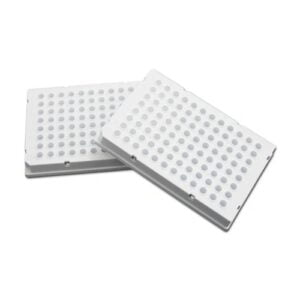
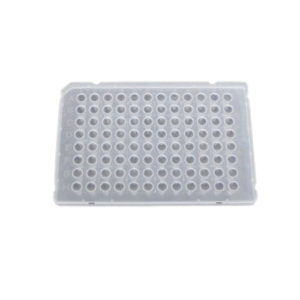
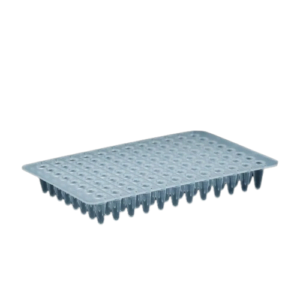
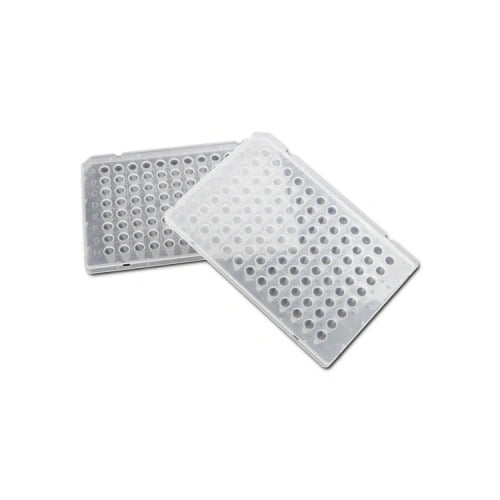
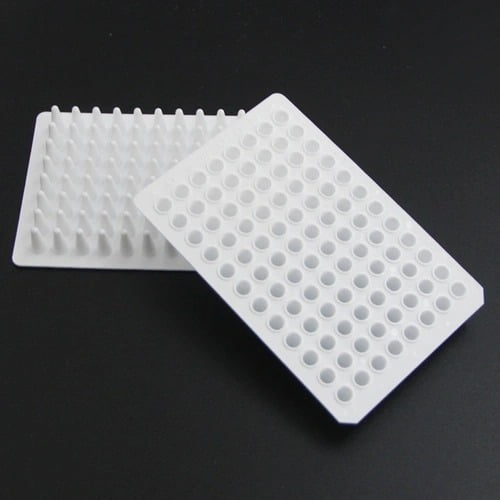
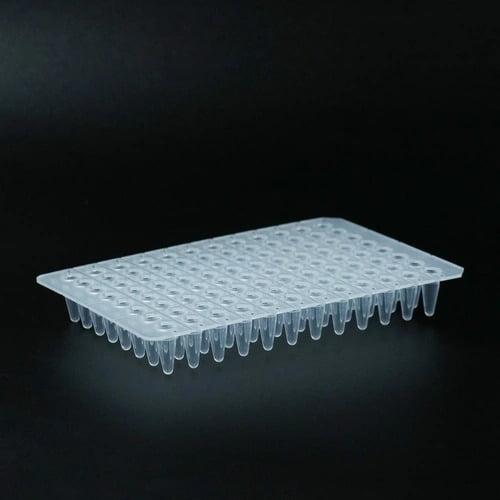
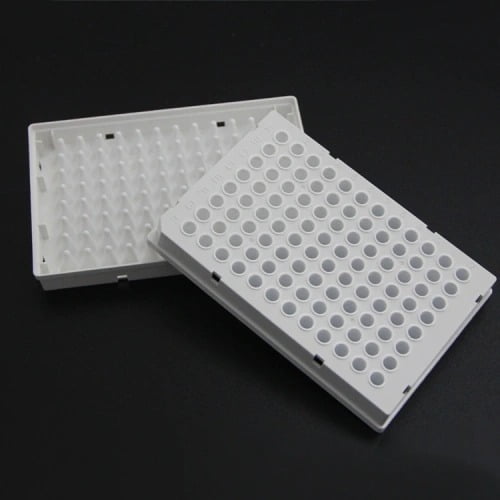
Siny Medical offers the Medical Supply 0.2mL Disposable Half Skirt PCR Plate for molecular biology laboratories, research institutions, biotechnology facilities, and laboratory consumable distributors. The product features a half-skirt design and a nominal well capacity of 0.2mL (200µL). It is intended for compatible PCR workflows that require a plate-based reaction vessel.
The half skirt is a structural feature around part of the plate’s lower perimeter. Compared with a non-skirted design, this configuration provides an additional supporting edge while leaving more of the well structure exposed than a typical full-skirted plate. The exact benefits depend on the finished plate geometry and the equipment being used.
PCR plates are selected according to more than well capacity. The number and arrangement of wells, plate footprint, well profile, sealing method, and compatibility with the thermal cycler can all affect suitability. Laboratories using automated liquid handling systems must also consider whether the plate can be positioned and supported correctly.
This guide explains the role of half-skirt PCR plates, their common laboratory applications, the differences between skirt designs, and the main factors purchasing teams should evaluate before ordering.
A half-skirt PCR plate has a partial skirt around the lower perimeter of the plate. This distinguishes it from non-skirted plates, which have little or no surrounding skirt, and full-skirted plates, which have a more extensive lower frame.
The skirt is part of the plate’s structural design. Depending on the specific product, it may influence how the plate is supported, handled, or positioned in compatible equipment.
However, the presence of a half skirt does not establish universal compatibility with thermal cyclers, plate holders, or automated instruments.
Laboratories should compare the actual plate dimensions and skirt geometry with their equipment requirements.
This PCR plate is described as having a nominal well capacity of 0.2mL, equivalent to 200µL.
The capacity designation identifies the stated size of each reaction well rather than the recommended PCR working volume.
In routine molecular biology, PCR reactions may use considerably smaller volumes, such as 10µL, 20µL, or 25µL, depending on the protocol. These examples are general laboratory practices and are not specific operating recommendations for this plate.
The correct reaction volume should follow the assay and instrument requirements, including the selected sealing method.
A PCR plate provides a structured arrangement of reaction wells within one consumable.
This format can help laboratories organize samples by position, assign identifiers, and prepare groups of reactions using a consistent layout.
For example, a researcher may arrange samples, controls, and experimental conditions across different well positions according to a documented plate map.
The number and layout of wells must match the actual product configuration. Laboratories should not assume a particular well count based only on the half-skirt designation.
PCR amplification requires repeated temperature changes during denaturation, annealing, and extension.
A suitable PCR plate must work with the thermal cycler’s reaction block and lid arrangement throughout the intended temperature program.
Well geometry, material properties, and contact with the instrument can influence thermal behavior.
A half-skirt structure does not independently determine amplification performance. The complete plate-and-instrument combination must be appropriate for the assay.
This product is described as a disposable PCR plate.
Using a fresh reaction vessel for each experiment can support laboratory contamination-control practices and eliminate the need to clean and reuse the same plate.
However, disposable construction does not automatically establish sterility, nuclease-free status, or freedom from PCR inhibitors.
For contamination-sensitive workflows, laboratories should confirm the relevant cleanliness characteristics through product-specific information.
PCR plates typically require a compatible sealing arrangement to contain reaction mixtures during thermal cycling.
Depending on the plate and instrument, laboratories may use appropriate sealing films, foils, or cap systems.
The correct sealing method depends on the plate’s well geometry, sealing surface, thermal cycling conditions, and instrument requirements.
A half-skirt design does not determine which seal is suitable. Purchasing teams should verify the complete configuration before routine use.
Conventional PCR is widely used to amplify selected DNA sequences for downstream analysis.
When a laboratory prepares multiple reactions, a plate format can help organize the samples and controls in a defined arrangement.
Technicians dispense reaction mixtures into the appropriate wells, apply a compatible seal, and place the plate into a suitable thermal cycler.
The plate must match the instrument’s supported format. Successful amplification also depends on reaction preparation, reagent quality, and the selected cycling program.
Genetic research often involves analyzing DNA from multiple samples.
A PCR plate can provide an organized reaction format when researchers need to compare samples, investigate selected genetic regions, or perform genotyping-related amplification.
A documented plate map helps connect each well position to the correct sample and experimental condition.
This is particularly useful when several researchers share laboratory equipment or when experiments involve repeated sample batches.
During assay development, laboratories may evaluate different primers, reaction conditions, or sample preparations.
A plate-based format allows researchers to arrange several experimental conditions within a single consumable.
For example, a study may include multiple sample groups alongside positive and negative controls.
However, consistent plate handling does not replace proper assay design. Laboratories must still verify that the plate, sealing method, and instrument are suitable for the intended procedure.
PCR plates are used in molecular biology workflows involving DNA amplification and preparation for further analysis.
Research teams may use plate-based reaction formats when the number of reactions makes individual tubes less convenient.
The suitability of a half-skirt plate depends on the thermal cycler and any additional equipment used during preparation or processing.
For laboratories performing fluorescence-based real-time PCR, optical compatibility must also be established.
Research facilities often benefit from consistent sample organization and repeatable operating procedures.
Using a suitable plate format can help laboratories establish a standardized approach to reaction setup, well identification, and instrument loading.
A consistent format may also simplify staff training and inventory planning.
However, different instruments may require different plate profiles, even when the nominal well capacity is the same.
Biotechnology companies and laboratory distributors may purchase PCR plates for recurring research and testing workflows.
Customers often select plates based on the equipment they already own, the number of reactions they process, and their preferred sealing systems.
For distributors, clear information about skirt design, well capacity, physical dimensions, and compatible equipment is important for helping customers select suitable consumables.
PCR plates are commonly distinguished by the amount of skirt structure surrounding their wells.
Understanding these designs helps laboratories select a format that suits their equipment and handling requirements.
A half-skirt plate includes a partial supporting skirt around its lower perimeter.
This design offers a structural arrangement between non-skirted and full-skirted configurations.
Depending on the plate geometry, the skirt may provide additional support during handling or positioning.
However, actual compatibility with thermal cyclers, plate holders, and automated systems must be confirmed.
Non-skirted PCR plates have little or no surrounding lower skirt.
Their well structures are generally more exposed, which may suit certain thermal cycler blocks and handling arrangements.
However, a non-skirted plate may require suitable support during some handling or automated procedures.
The absence of a skirt does not mean the plate is less suitable for PCR. Performance depends on the complete product and instrument combination.
Full-skirted PCR plates have a more extensive surrounding frame.
This design may provide a defined lower structure for equipment designed to accommodate full-skirted plates.
Some automated workflows use plate formats with particular external dimensions and support features.
However, a full skirt does not automatically guarantee robotic compatibility or greater stability in every instrument.
| Feature | Half-Skirt PCR Plate | Non-Skirted PCR Plate | Full-Skirted PCR Plate |
|---|---|---|---|
| Skirt Structure | Partial Skirt | Little or No Skirt | More Extensive Skirt |
| Lower Well Exposure | Partially Exposed | More Exposed | More Enclosed by Frame |
| Structural Support | Depends on Plate Geometry | Depends on Plate and Holder | Depends on Frame Design |
| Thermal Cycler Compatibility | Must Be Verified | Must Be Verified | Must Be Verified |
| Automated Handling | Equipment-Dependent | Equipment-Dependent | Equipment-Dependent |
| Sealing Compatibility | Product-Specific | Product-Specific | Product-Specific |
| Main Selection Factor | Half-Skirt Geometry and Equipment Fit | Non-Skirted Geometry and Equipment Fit | Full-Skirt Geometry and Equipment Fit |
No skirt design is universally better.
A half-skirt plate may be appropriate for one laboratory, while a non-skirted or full-skirted design may be required by another instrument.
The correct choice depends on the thermal cycler, plate dimensions, handling procedures, and any automated equipment involved.
The most important step is to identify the thermal cycler model and the plate formats it supports.
Some instruments accept particular skirt configurations, while others require a specific plate footprint or well profile.
A plate that appears similar to another product may still differ in external dimensions or fit.
Before ordering, purchasing teams should review the instrument manufacturer’s recommendations and compare them with the selected plate’s specifications.
The number and arrangement of wells influence how a laboratory prepares and organizes reactions.
Different plate configurations can support different sample volumes and workflow requirements.
Purchasing teams should confirm the actual well count and layout for the product being ordered.
They should also verify that the arrangement matches the laboratory’s thermal cycler and sample preparation procedures.
A familiar plate appearance is not sufficient evidence of compatibility.
This product has a nominal well capacity of 0.2mL, or 200µL.
However, the suitable reaction volume depends on the assay, thermal cycler, and sealing arrangement.
Laboratories should follow their validated procedures rather than assuming that every well can be filled to its nominal capacity during PCR.
For low-volume reactions, liquid handling accuracy and evaporation control may be especially important.
Sealing is an important consideration when selecting PCR plates.
An unsuitable seal can interfere with reaction containment or instrument operation.
Buyers should identify whether their workflow uses adhesive films, heat seals, or compatible cap systems.
They should then confirm that the selected sealing method works with the plate and thermal cycler.
The half-skirt designation alone does not establish sealing compatibility.
Manual laboratory workflows and automated systems can place different demands on PCR plates.
For manual preparation, technicians may prioritize convenient handling and clear sample organization.
Automated liquid handling equipment may require specific external dimensions, support surfaces, or positioning features.
A half-skirt plate should not be assumed compatible with every robotic platform.
If automated processing is planned, laboratories should verify the plate’s geometry against the instrument requirements.
Conventional PCR and quantitative real-time PCR can have different consumable requirements.
Real-time PCR instruments measure fluorescence during amplification. Some systems therefore require specific optical properties in the plate or sealing material.
A 0.2mL PCR plate is not automatically suitable for every qPCR instrument.
Laboratories should verify physical and optical compatibility before using the plate for fluorescence-based detection.
PCR assays can be sensitive to contamination.
Depending on the application, laboratories may require documented characteristics relating to DNase, RNase, DNA contamination, or PCR inhibitors.
These properties should be verified for the actual product rather than inferred from its intended use.
The material should also be suitable for the reagents and operating conditions of the laboratory procedure.
For laboratories and distributors, recurring demand is an important part of product selection.
Purchasing teams should estimate the number of plates used during routine operations and consider how different instruments affect inventory requirements.
Before placing a bulk order, they should confirm the plate configuration, well capacity, skirt design, sealing requirements, packaging, and equipment compatibility.
Where practical, evaluating a sample with the intended thermal cycler and handling equipment can help identify compatibility issues before larger quantities are purchased.
Correct handling helps maintain organized sample preparation and reduces avoidable laboratory errors.
Before use, inspect the plate for visible damage or deformation. Confirm that its configuration matches the intended thermal cycler.
Prepare reaction mixtures using appropriate pipettes and follow the laboratory’s contamination-control procedures.
Dispense the mixtures into the designated wells according to the experimental plate map. Avoid touching internal well surfaces when contamination control is important.
Apply a compatible seal using the method specified for the selected plate and sealing product. Ensure that the plate is positioned correctly in the thermal cycler.
During amplification, follow the validated temperature program and the instrument manufacturer’s operating instructions.
After PCR, handle the plate according to the laboratory’s post-amplification procedures. Amplified DNA can contaminate subsequent experiments, making appropriate separation of work areas important.
Store unused PCR plates in their original packaging in a clean, dry location.
Protect them from dust, physical damage, and unsuitable environmental conditions.
Keep different skirt designs and plate configurations clearly identified to prevent accidental substitution.
Follow any additional storage instructions provided with the product.
A half-skirt PCR plate is a reaction plate with a partial supporting skirt around its lower perimeter. It is intended for use with compatible PCR equipment.
It refers to a nominal well capacity of 200µL. The appropriate working volume depends on the assay, plate, sealing method, and thermal cycler.
A half-skirt plate has a partial lower skirt, while a full-skirted plate has a more extensive surrounding frame. Their equipment compatibility depends on the actual design.
Not necessarily. The most suitable design depends on the thermal cycler, handling equipment, and laboratory workflow.
No. The plate dimensions, well profile, skirt geometry, and instrument requirements must be compatible.
Only when the plate geometry and support features meet the requirements of the specific automated system.
Only if its physical and optical characteristics, together with the selected seal, meet the requirements of the real-time PCR instrument.
Use a sealing method compatible with the plate, thermal cycler, and assay. The correct film, foil, or cap system must be verified.
These characteristics cannot be assumed from the disposable designation. They require product-specific confirmation.
Distributors should confirm well configuration, nominal capacity, skirt design, dimensions, sealing requirements, instrument compatibility, packaging, and purchasing quantities.
Siny Medical supplies 0.2mL half skirt PCR plates and other laboratory consumables for molecular biology laboratories, research institutions, biotechnology facilities, and laboratory distributors. This disposable plate format provides an option for compatible multi-reaction PCR workflows. Contact Siny Medical to discuss product specifications, plate configuration, equipment compatibility, sample availability, and bulk purchasing requirements.
Copyright © 2026 | Ningbo Siny Medical Technology Co., Ltd