| Specification | Details |
|---|---|
| Product Name | PP Round Bottom and Graduated Centrifuge Tube |
| Product Type | Centrifuge Tube |
| Material | Polypropylene (PP) |
| Bottom Shape | Round Bottom |
| Graduation | Graduated |
| Application | Laboratory Sample Preparation and Centrifugation |
| OEM/ODM | Available |
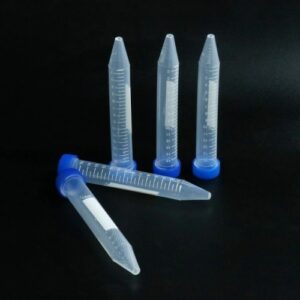
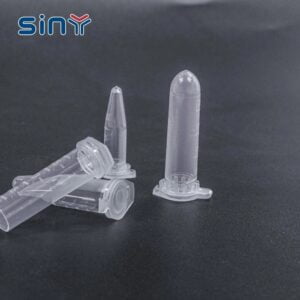
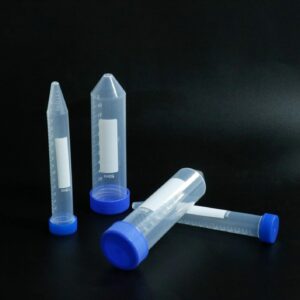
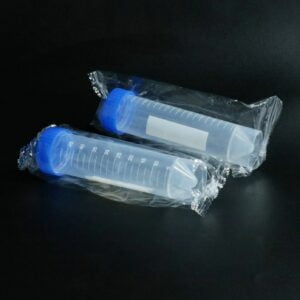
The PP Round Bottom and Graduated Centrifuge Tube from Siny Medical is a polypropylene laboratory container designed for liquid sample handling, mixing, and compatible centrifugation procedures. Its rounded bottom and graduated tube body provide practical features for laboratories that regularly prepare, transfer, and process liquid samples.
PP round bottom centrifuge tubes are used in research laboratories, diagnostic facilities, biotechnology laboratories, and other environments where sample handling requires suitable laboratory containers. The rounded base offers a different internal geometry from conventional conical-bottom tubes, while the graduation markings provide a convenient visual reference for estimating liquid volumes.
Round-bottom designs can be useful for procedures involving liquid mixing, sample resuspension, and selected separation workflows. However, their suitability depends on the sample characteristics, centrifuge rotor, and processing conditions.
The polypropylene construction also provides lightweight handling and useful resistance to many common laboratory reagents. This makes the product suitable for various routine laboratory operations when material compatibility has been established.
Siny Medical supplies laboratory consumables to hospitals, research institutions, medical distributors, and international purchasing teams. Our product range supports different sample preparation requirements across laboratory and medical environments.
The rounded bottom is the defining structural feature of this centrifuge tube.
Unlike a conical tube, which narrows toward a pointed tip, a round-bottom tube has a curved lower section.
This shape can be useful during compatible liquid-handling procedures, including mixing and resuspension.
For example, laboratory personnel may use suitable round-bottom containers when preparing liquid suspensions or redistributing settled material.
However, the rounded shape does not automatically improve every mixing procedure. Results also depend on sample viscosity, mixing technique, and the equipment used.
In addition, round-bottom tubes may require specific centrifuge adapters or holders. Laboratories should verify equipment compatibility before use.
Graduation markings provide a visual reference for estimating the amount of liquid inside the tube.
They can help technicians monitor approximate volumes during sample preparation, dilution, and transfer.
For example, graduations are useful when checking whether a container holds the expected quantity of liquid before further processing.
They may also improve convenience when multiple samples are handled during routine laboratory operations.
However, graduation markings are intended for approximate measurement unless a specific accuracy has been validated.
Laboratories should use calibrated pipettes or volumetric instruments whenever precise liquid measurement is required.
The tube body is made from polypropylene, commonly known as PP.
Polypropylene is widely used in laboratory consumables because it is lightweight and offers useful mechanical and chemical properties.
It is compatible with many routine aqueous laboratory solutions under appropriate conditions.
In addition, its plastic construction makes it convenient for regular laboratory handling.
Nevertheless, chemical resistance varies according to reagent composition, concentration, temperature, and exposure time.
Users should review compatibility before introducing aggressive solvents or specialized chemicals.
Round-bottom graduated tubes can support several sample preparation tasks.
These include compatible liquid transfers, reagent preparation, suspension mixing, and selected centrifugation procedures.
The combination of a rounded base and visible graduations makes the tube useful when both sample handling and approximate volume observation are important.
However, the tube must be selected according to the actual laboratory method.
A well-organized laboratory workflow requires appropriate containers for sample identification, preparation, and processing.
Graduated centrifuge tubes provide a convenient way to observe approximate liquid volumes during handling.
Meanwhile, their polypropylene construction helps keep the containers lightweight.
Users should still follow appropriate sample labeling, contamination-control, and handling procedures.
Centrifuge tubes must be compatible with the equipment used to process them.
Round-bottom geometry can affect how a tube fits inside a rotor, bucket, or adapter.
Therefore, laboratories should check the tube dimensions, closure configuration, and permitted relative centrifugal force before centrifugation.
The maximum centrifugation rating cannot be determined from polypropylene material or bottom shape alone.
Laboratories frequently prepare liquid samples before analysis.
This may involve transferring specimens, combining reagents, or adjusting the sample volume.
Graduated round-bottom tubes provide suitable containers for selected procedures when their specifications match the workflow.
The graduation markings help technicians estimate liquid quantities during preparation.
However, laboratories requiring accurate dilution ratios should use calibrated measuring equipment.
Some laboratory procedures involve mixing liquids or resuspending particles that have settled during processing.
Round-bottom containers can be useful in these workflows because their curved lower section provides a different geometry from a pointed conical base.
For example, a suitable mixing method may help redistribute suspended material throughout a liquid sample.
However, the effectiveness of mixing depends on the sample, container dimensions, and technique.
Laboratories should select appropriate equipment and operating conditions for each procedure.
Research laboratories routinely prepare buffers, reagent solutions, and other compatible liquids.
Graduated tubes provide a convenient container for selected preparation steps.
Technicians can use the markings to estimate the amount of liquid present.
However, the tube material must be compatible with the reagent.
Additionally, laboratories should avoid using approximate graduation markings when precise volumetric measurement is necessary.
Centrifugation is used to separate sample components through centrifugal force.
Round-bottom tubes may be suitable for selected centrifugation procedures when the tube design and rotor are compatible.
During processing, suspended material may sediment toward the lower part of the container.
However, pellet shape and recovery characteristics differ according to the tube geometry and sample.
For procedures that require highly concentrated pellets at a narrow tip, a conical-bottom tube may be more convenient.
Research laboratories use centrifuge tubes during various preparation and processing steps.
Round-bottom graduated containers may support compatible biological sample handling, reagent preparation, and suspension processing.
However, specialized applications may require additional product characteristics.
These can include validated sterility, nuclease-free status, chemical compatibility, or specific centrifugation performance.
Each requirement should be evaluated independently.
Graduated containers can also help technicians organize liquid samples during routine preparation.
Visible volume markings provide a convenient reference, while suitable labeling helps maintain sample identification.
Proper handling remains important, especially when processing multiple specimens.
Laboratories should follow their established procedures for contamination control and sample traceability.
Round-bottom and conical-bottom centrifuge tubes have different geometries.
Understanding these differences helps laboratories select the appropriate container for their procedures.
A round-bottom tube has a curved lower section.
This geometry is used in various laboratory containers, including certain centrifuge tube designs.
Round-bottom tubes may be suitable for compatible mixing, resuspension, and separation procedures.
However, they must fit the intended rotor or adapter.
Their shape alone does not determine maximum centrifugation speed or sample containment performance.
A conical-bottom tube has a tapered lower section that narrows toward a tip.
During compatible centrifugation, sedimented particles may collect in this narrow area.
This geometry is particularly convenient when a procedure requires concentrated pellet collection or careful removal of the supernatant.
Therefore, conical tubes are commonly selected for workflows where pellet recovery is a priority.
The appropriate design depends on the mixing method and sample.
Round-bottom containers may be convenient for certain resuspension and mixing procedures.
However, effective mixing also depends on liquid properties, equipment, and handling technique.
Neither bottom geometry guarantees better mixing under every condition.
Conical-bottom tubes often provide a practical advantage when a small, concentrated pellet is desirable.
Their tapered shape gathers sedimented material near the tip.
Round-bottom tubes can also be used for compatible separation procedures, but the resulting pellet may occupy a broader curved area.
Therefore, laboratories should choose according to their recovery method and processing requirements.
| Feature | Round Bottom Tube | Conical Bottom Tube |
|---|---|---|
| Bottom Geometry | Curved | Tapered |
| Main Structural Characteristic | Rounded lower section | Narrow pointed tip |
| Sample Mixing | Suitable for selected procedures | Suitable for selected procedures |
| Pellet Collection | Depends on sample and procedure | Helps concentrate sediment near the tip |
| Supernatant Removal | Depends on pellet location | Often convenient for concentrated pellet recovery |
| Rotor Compatibility | Requires suitable support | Requires suitable support |
| Typical Selection Priority | Mixing, resuspension, and compatible processing | Pellet concentration and recovery |
The Siny Medical product featured on this page combines a round-bottom structure with graduation markings, making these characteristics central to its product positioning.
First, identify whether the procedure requires a round-bottom or conical-bottom tube.
Round-bottom tubes may be appropriate for selected mixing and sample processing workflows.
Meanwhile, conical-bottom tubes are often preferred when concentrated pellet recovery is important.
Choose the geometry that matches the laboratory method.
Graduation markings are useful for estimating liquid volumes during routine preparation.
However, not all laboratory procedures require the same measurement accuracy.
When precise volume measurement is essential, use calibrated instruments rather than relying only on tube graduations.
Choose a tube capacity that accommodates the sample and any additional reagents.
Also, consider the recommended working volume during centrifugation.
A larger nominal capacity does not necessarily mean the tube can be filled completely for every processing procedure.
The selected configuration should match the intended workflow.
Round-bottom centrifuge tubes may require particular rotor cavities or adapters.
Before use, check the tube dimensions and the equipment manufacturer’s compatibility requirements.
In addition, verify the maximum permitted relative centrifugal force for the selected model.
Do not assume that all PP tubes are suitable for high-speed centrifugation.
PP offers useful resistance to many routine laboratory reagents.
However, its performance varies with the chemical and operating conditions.
Therefore, laboratories should review material compatibility before using aggressive chemicals or specialized solvents.
Some laboratory procedures require sterile containers.
However, the presence of graduation markings or polypropylene construction does not establish sterility.
Buyers should verify the selected configuration’s sterile status and packaging when these characteristics are necessary.
Different samples and procedures may require different closure characteristics.
For example, procedures involving leakage or aerosol risks may need validated containment performance.
Therefore, laboratories should review the selected tube’s closure design and relevant test information.
A closure should not be assumed leakproof without supporting specifications.
Laboratory distributors and purchasing teams should evaluate product consistency, available configurations, and packaging requirements.
They should also consider expected consumption and compatibility with their customers’ laboratory equipment.
Siny Medical supports OEM/ODM services for laboratory consumables, helping purchasing teams discuss product and supply requirements.
It is a polypropylene laboratory tube with a rounded lower section, designed for compatible sample handling and centrifugation procedures.
Graduated tubes help laboratory personnel estimate liquid volumes during sample preparation, transfer, and compatible processing procedures.
Round-bottom tubes have a curved lower section. Conical-bottom tubes taper toward a narrow tip, which can help concentrate sedimented material during centrifugation.
They can be used for compatible mixing and resuspension procedures. However, suitability depends on the sample, tube dimensions, and mixing method.
Graduations are generally used as approximate volume references unless a specific accuracy is validated. Calibrated equipment should be used for precise measurement.
Only when the selected model is rated for the required RCF and is compatible with the intended centrifuge rotor or adapter.
Polypropylene material does not automatically mean a tube is sterile. Sterile status must be verified for the selected configuration.
Important factors include bottom geometry, graduation markings, material, capacity, rotor compatibility, closure design, sterile requirements, and packaging.
Siny Medical supplies laboratory consumables for hospitals, research institutions, diagnostic facilities, and medical distributors. Our PP Round Bottom and Graduated Centrifuge Tube combines polypropylene construction, a rounded bottom, and graduated markings for compatible sample preparation and laboratory processing workflows. Contact Siny Medical to discuss product configurations, OEM/ODM requirements, bulk purchasing, and quotation details.
Copyright © 2026 | Ningbo Siny Medical Technology Co., Ltd