| Specification | Details |
|---|---|
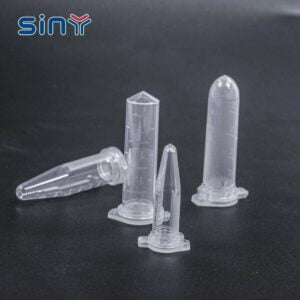
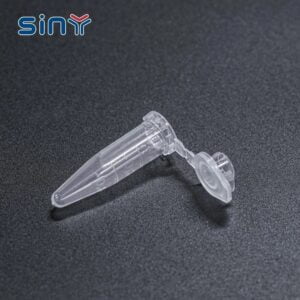
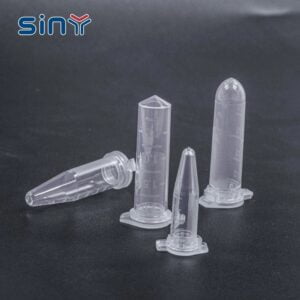
| Product Name | PP Microcentrifuge Tube Rnase & Dnase Free Ep Tube |
| Product Type | Microcentrifuge Tube |
| Material | Polypropylene (PP) |
| Capacity | 0.2ml / 0.5ml / 1.5ml |
| RNase Status | RNase-Free |
| DNase Status | DNase-Free |
| Packaging | Bulk Pack |
The PP Microcentrifuge Tube Rnase & Dnase Free Ep Tube from Siny Medical is a polypropylene laboratory tube designed for handling small-volume biological samples. Its RNase-free and DNase-free properties make it particularly suitable for laboratory workflows that require careful control of nuclease contamination.
RNase and DNase free microcentrifuge tubes help laboratories protect sensitive nucleic acid samples during preparation, transfer, and short-term processing. They are commonly used in molecular biology laboratories, biotechnology research, and selected diagnostic laboratory workflows.
RNases can degrade RNA, while DNases can break down DNA. Therefore, controlling these enzymes is important when preparing samples for downstream analysis. Using appropriate nuclease-free consumables helps reduce one potential source of sample degradation.
These PP microtubes provide a compact container for small liquid volumes. They may support nucleic acid extraction workflows, sample aliquoting, reagent preparation, and compatible centrifugation procedures.
Siny Medical supplies laboratory consumables for research institutions, hospitals, diagnostic laboratories, and medical distributors. Our product range supports customers seeking reliable solutions for routine laboratory operations and specialized molecular biology applications.
RNA is sensitive to degradation by ribonucleases, commonly known as RNases.
These enzymes may enter laboratory workflows through contaminated surfaces, equipment, reagents, or consumables. Even small amounts of RNase contamination can affect sensitive RNA samples.
RNase-free microcentrifuge tubes help reduce the risk of introducing these enzymes through the sample container.
As a result, they are useful during RNA extraction, sample preparation, and other procedures where RNA integrity matters.
However, nuclease-free tubes alone cannot prevent all RNA degradation. Laboratories must also use suitable reagents, clean equipment, and appropriate handling techniques.
DNases are enzymes that break down DNA.
During DNA preparation, unwanted DNase activity can reduce sample integrity and interfere with downstream procedures.
DNase-free laboratory tubes help minimize contamination from the container itself.
Therefore, these tubes are suitable for workflows involving DNA extraction, sample transfers, and compatible molecular biology procedures.
Laboratories should still follow appropriate contamination-control practices throughout the process.
Polypropylene (PP) is widely used in laboratory consumables because of its lightweight construction and useful chemical resistance.
It provides a practical material for routine sample handling and compatible centrifugation procedures.
In addition, PP tubes are convenient for laboratory personnel who frequently transfer small quantities of liquid.
However, chemical compatibility depends on the reagent, concentration, temperature, and exposure time. Users should verify compatibility when working with specialized chemicals.
Microcentrifuge tubes are designed for procedures involving relatively small liquid quantities.
Their compact format supports sample aliquoting, reagent preparation, and organized laboratory workflows.
Moreover, small-volume containers can help technicians manage multiple samples during research and analytical procedures.
The appropriate capacity depends on the selected tube configuration and the intended application.
RNase-free and DNase-free properties are especially valuable when handling DNA and RNA samples.
These tubes can support selected preparation and processing steps before downstream analysis.
However, nuclease-free status does not automatically establish sterility, endotoxin-free performance, PCR thermal-cycling compatibility, or a particular centrifugation rating.
Each additional requirement should be evaluated separately.
RNA extraction workflows require careful contamination control.
During sample preparation, laboratory personnel may transfer RNA-containing solutions between containers.
Using RNase-free tubes helps reduce the risk of introducing ribonucleases through these transfers.
This is especially important when working with limited sample quantities or procedures sensitive to RNA degradation.
However, technicians must also use appropriate pipette tips, reagents, and handling techniques.
DNA extraction involves separating and preparing genetic material for further analysis.
DNase-free tubes provide suitable containers for selected DNA preparation steps.
For example, laboratory personnel may use them to hold extracted DNA or prepare compatible reaction mixtures.
The tubes help reduce one potential source of nuclease contamination, although overall sample quality also depends on the complete laboratory workflow.
Aliquoting involves dividing a larger sample into smaller portions for separate processing steps.
This approach can help laboratories organize samples and reduce unnecessary handling of the original material.
Nuclease-free microtubes are useful when aliquoting sensitive DNA or RNA preparations.
Nevertheless, proper labeling, sample identification, and contamination-control procedures remain essential.
Molecular biology laboratories frequently prepare buffers, solutions, and reaction components.
When these materials require protection from nuclease contamination, RNase-free and DNase-free containers may be appropriate.
Laboratory personnel can use compatible microtubes during selected reagent preparation and mixing procedures.
However, the tube material must also be compatible with the chemicals and processing conditions involved.
Microcentrifuge tubes are commonly used during laboratory separation procedures.
For example, centrifugation may help collect suspended particles or separate liquid fractions during sample preparation.
However, the selected tube must fit the intended centrifuge rotor and support the required relative centrifugal force (RCF).
Nuclease-free properties do not determine the tube’s maximum centrifugation performance.
RNase-free and DNase-free are related but distinct laboratory product characteristics.
Understanding the difference helps laboratories choose appropriate consumables for their procedures.
RNase-free indicates that a product meets the manufacturer’s defined criteria for the absence of detectable RNase contamination.
This characteristic is important for RNA-related workflows because RNases can degrade RNA molecules.
However, the analytical method and detection limits used to establish RNase-free status may differ between products.
DNase-free indicates that a product meets the manufacturer’s defined criteria for the absence of detectable DNase contamination.
This characteristic is important for procedures that require protection of DNA samples.
As with RNase-free status, the relevant testing method and acceptance criteria should be reviewed when required by the laboratory.
Some laboratories work with both DNA and RNA.
Others use different nucleic acid preparations throughout the same research workflow.
Tubes that are both RNase-free and DNase-free provide a practical option for these applications.
However, they do not replace proper laboratory contamination-control procedures.
| Feature | RNase-Free | DNase-Free |
|---|---|---|
| Target Enzyme | Ribonuclease | Deoxyribonuclease |
| Primary Concern | RNA degradation | DNA degradation |
| Relevant Samples | RNA preparations | DNA preparations |
| Typical Laboratory Use | RNA extraction and handling | DNA extraction and handling |
| Verification | Defined RNase testing criteria | Defined DNase testing criteria |
| Sterility | Separate characteristic | Separate characteristic |
The Siny Medical product is identified as both RNase-free and DNase-free. These characteristics address nuclease contamination rather than every possible source of sample degradation.
Selecting suitable laboratory consumables requires careful consideration of sample sensitivity, tube construction, and operating conditions.
First, identify whether the laboratory procedure requires RNase-free, DNase-free, or both properties.
For RNA-related procedures, RNase contamination is a major concern. Meanwhile, DNA preparation workflows may require protection from DNases.
When necessary, procurement teams should review the manufacturer’s testing criteria and supporting documentation.
Choose a tube capacity that accommodates the sample and any additional reagents.
Consider whether the procedure involves mixing, aliquoting, or centrifugation.
However, nominal capacity does not always represent the maximum recommended working volume during centrifugation.
PP is suitable for many routine laboratory procedures.
Nevertheless, its chemical resistance varies with the reagent and operating conditions.
Therefore, laboratories should review material compatibility before using aggressive solvents or specialized solutions.
Before centrifugation, confirm that the selected tube fits the intended rotor or adapter.
Tube dimensions, cap geometry, and bottom design can affect compatibility.
Additionally, the selected model must support the required RCF.
Users should follow documented operating limits rather than assume that every microcentrifuge tube is suitable for high-speed operation.
Nuclease-free consumables help reduce contamination from laboratory containers.
However, contamination may still occur through pipettes, gloves, work surfaces, and reagents.
Therefore, laboratories should combine suitable tubes with established contamination-control procedures.
RNase-free and DNase-free do not automatically mean sterile.
Likewise, these properties do not establish endotoxin-free status or other specialized purity characteristics.
When additional requirements apply, buyers should review the corresponding product documentation.
DNA and RNA samples may require specific storage temperatures and handling procedures.
However, the appropriate storage conditions depend on the sample and the validated laboratory method.
Laboratories should verify the selected tube’s temperature compatibility before refrigeration, freezing, or heating.
Packaging can influence laboratory storage, inventory management, and contamination control.
For sensitive molecular biology applications, buyers should consider how the tubes are packaged and handled before use.
Distributors should also review the available capacities, packaging quantities, and relevant product documentation when planning bulk purchases.
They are laboratory tubes designed to meet defined criteria for the absence of detectable RNase and DNase contamination. They help reduce the risk of introducing these enzymes during nucleic acid sample handling.
RNases can degrade RNA. Using RNase-free tubes helps reduce contamination from the sample container during RNA preparation and handling.
DNases can break down DNA. DNase-free tubes help protect DNA samples from nuclease contamination associated with the container.
Yes. The product is identified as a polypropylene (PP) microcentrifuge tube.
Not necessarily. Nuclease-free properties and sterility are different characteristics. Laboratories should verify sterile status separately when required.
They may support compatible PCR sample preparation workflows. However, direct thermal cycling requires a tube specifically rated for the intended instrument and temperature program.
Only when the selected model supports the required RCF. Laboratories should verify the tube’s operating limits and centrifuge compatibility before use.
Important factors include RNase-free and DNase-free properties, material, capacity, closure design, packaging, centrifuge compatibility, and any additional purity requirements.
Siny Medical supplies laboratory consumables for hospitals, research institutions, biotechnology laboratories, diagnostic facilities, and medical distributors. Our PP Microcentrifuge Tube Rnase & Dnase Free Ep Tube combines polypropylene construction with RNase-free and DNase-free properties for compatible molecular biology sample-handling workflows. Contact Siny Medical to discuss available configurations, bulk purchasing requirements, and quotation details.
Copyright © 2026 | Ningbo Siny Medical Technology Co., Ltd