| Specification | Details |
|---|---|
| Product Name | Medical Disposable 2-Way Latex Foley Catheter |
| Product Type | Indwelling Urinary Catheter |
| Material | Latex |
| Configuration | 2-Way |
| Functional Channels | Urine Drainage, Balloon Inflation |
| Intended Use | Single Use |
| Main Function | Urinary Drainage |
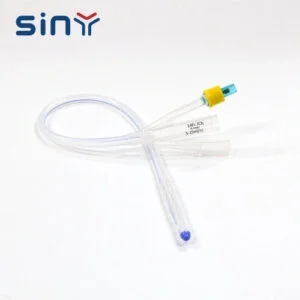
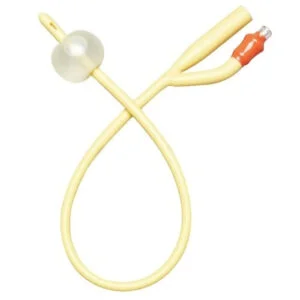
The Medical Disposable 2-Way Latex Foley Catheter is an indwelling urinary catheter designed for continuous urine drainage and balloon retention. It features a flexible latex-based body and two separate channels that support urinary drainage and secure catheter positioning.
Unlike a three-way Foley catheter, this device does not have a dedicated bladder irrigation channel. Instead, its two-way design focuses on urine drainage and balloon inflation. As a result, it is commonly used in clinical situations where temporary or ongoing bladder drainage is necessary.
Siny Medical supplies disposable latex Foley catheters for hospitals, healthcare facilities, and medical distributors. These catheters are intended for single-patient use by trained healthcare professionals.
The catheter uses a latex-based material that provides flexibility during insertion and positioning. This construction allows the catheter to follow the natural curvature of the urethra.
However, latex can cause allergic reactions in sensitive patients. Therefore, healthcare professionals must assess latex sensitivity before selecting this catheter.
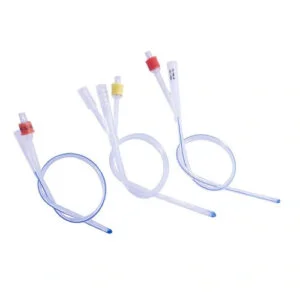
The catheter includes two separate channels:
This two-channel configuration supports routine indwelling urinary drainage without a dedicated irrigation pathway.
A balloon near the catheter tip helps hold the catheter in place after correct insertion.
Healthcare professionals should verify that the catheter is positioned inside the bladder before inflation. They must also follow the specified inflation medium and volume for the selected model.
The catheter is intended for single use and should not be reused or reprocessed.
After removal, healthcare facilities should dispose of the device according to applicable medical waste procedures and local requirements.
The catheter connects to a compatible urine collection system for continuous drainage.
Healthcare professionals should verify the connection before use and maintain the drainage system according to clinical infection-prevention practices.
Two-way Foley catheters are used in clinical settings where patients require ongoing bladder drainage.
Urinary retention occurs when a patient cannot empty the bladder adequately.
In selected cases, healthcare professionals may insert an indwelling Foley catheter to provide continuous drainage. However, catheterization should follow clinical assessment and an appropriate treatment plan.
Some surgical procedures require temporary urinary catheterization.
For example, clinicians may use a two-way Foley catheter to monitor urine output during selected operations or postoperative recovery. The need for catheterization depends on the procedure and patient’s condition.
Healthcare professionals may use an indwelling urinary catheter when accurate urine output measurement is clinically necessary.
The catheter allows urine to drain into a collection system, where staff can monitor the output.
However, routine catheterization is not appropriate when less invasive methods can meet the patient’s needs.
Patients with certain medical conditions may require temporary or longer-term urinary drainage.
A two-way Foley catheter can support these needs when clinically indicated. Nevertheless, clinicians should regularly reassess the need for an indwelling device to reduce avoidable catheter-associated complications.
Material selection affects patient compatibility and catheter handling. Latex is a traditional material used in urinary catheter manufacturing, but it requires careful consideration.
Latex-based catheters provide a flexible structure for urinary catheterization.
However, catheter flexibility depends on the specific formulation and construction. It should not be used as the only criterion for product selection.
Natural rubber latex can cause allergic reactions in susceptible individuals.
Therefore, healthcare professionals should avoid latex-containing catheters in patients with known latex allergy. A verified latex-free alternative may be more appropriate.
Disposable Foley catheters are intended for one patient and one use.
Reusing or improperly reprocessing a single-use catheter may compromise device performance and increase infection risks.
In addition, healthcare professionals should follow appropriate insertion, maintenance, and removal procedures to help reduce catheter-associated urinary tract infection (CAUTI) risks.
| Feature | 2-Way Latex Foley Catheter | 2-Way All-Silicone Foley Catheter |
|---|---|---|
| Base Material | Latex | Silicone |
| Latex Content | Contains latex | Latex-free catheter body |
| Flexibility | Depends on latex construction | Depends on silicone design |
| Latex Allergy Considerations | Avoid in patients with known latex allergy | An option when latex avoidance is necessary |
| Catheterization Duration | Follow product instructions and clinical assessment | Follow product instructions and clinical assessment |
The table describes general material differences. Actual performance and suitability depend on the selected catheter model.
Hospitals and medical distributors should evaluate clinical requirements and product specifications before purchasing urinary catheters.
First, determine whether the patient requires indwelling urinary drainage.
A two-way Foley catheter is suitable for selected drainage applications. However, procedures requiring a dedicated irrigation channel generally call for a three-way catheter.
Foley catheter diameters are expressed in French (Fr) units.
The appropriate size depends on patient anatomy, drainage needs, and clinical assessment. In general, clinicians should choose a catheter size that provides adequate drainage while minimizing unnecessary urethral trauma.
The retention balloon must be inflated according to the selected product’s specifications.
Healthcare professionals should never assume balloon capacity from catheter diameter alone. Instead, they must verify the required inflation volume and medium.
Because this catheter contains latex, it is not appropriate for patients with known latex allergy.
Before purchasing, healthcare facilities should consider whether latex-free catheter options are also needed.
Confirm that the catheter connects properly to the intended urine collection bag.
A compatible drainage system supports correct setup and helps healthcare professionals maintain appropriate urinary drainage.
Medical buyers should verify the catheter diameter, material, balloon capacity, sterile status, packaging, and instructions for use.
These details help ensure that the selected catheter meets clinical and purchasing requirements.
A disposable two-way latex Foley catheter provides continuous urinary drainage. Clinicians may use it for urinary retention, selected surgical procedures, or accurate urine output monitoring when catheterization is clinically necessary.
One channel allows urine to drain from the bladder. The second channel allows healthcare professionals to inflate and deflate the retention balloon.
A two-way catheter has channels for drainage and balloon inflation. A three-way catheter adds a separate channel for bladder irrigation.
No. Latex-containing catheters should be avoided in patients with known latex allergy. Healthcare professionals should select a suitable latex-free alternative.
No. A single-use Foley catheter should not be reused or reprocessed. Healthcare facilities must follow the product labeling and applicable disposal procedures.
Healthcare professionals consider patient anatomy, drainage requirements, and clinical condition. They should select the appropriate French size according to clinical assessment and product instructions.
The appropriate duration depends on the product’s instructions for use and the patient’s clinical needs. Latex material alone does not establish a specific replacement interval.
Hospitals should verify catheter material, size, balloon specifications, sterile status, packaging, and compatibility with their urine collection systems.
Siny Medical supplies urinary catheters and other medical consumables for hospitals, healthcare facilities, and medical distributors. Our Medical Disposable 2-Way Latex Foley Catheter supports urinary drainage in appropriate clinical settings. Contact Siny Medical to discuss product specifications, purchasing requirements, and quotation details.
Copyright © 2026 | Ningbo Siny Medical Technology Co., Ltd