| Specification | Details |
|---|---|
| Product Name | Medical Men Women 3-Way Urinary Catheter |
| Product Type | Indwelling Urinary Catheter |
| Configuration | 3-Way |
| Functional Channels | Urinary Drainage, Balloon Inflation, Irrigation |
| Intended Patient Group | Male and Female |
| Main Application | Urinary Drainage and Bladder Irrigation |
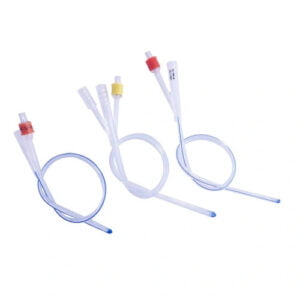
The Medical Men Women 3-Way Urinary Catheter is an indwelling urinary catheter designed for male and female patients who require bladder drainage and irrigation. It features three separate channels for urine drainage, balloon inflation, and irrigation fluid delivery.
Unlike a standard two-way Foley catheter, a three-way urinary catheter provides an additional pathway for bladder irrigation. This design allows healthcare professionals to introduce irrigation fluid while maintaining a separate drainage channel.
Siny Medical supplies three-way urinary catheters for hospitals, urology departments, and medical distributors. These catheters support selected clinical procedures where urinary drainage and bladder irrigation are required together.
The catheter includes three channels with different functions:
Together, these channels support simultaneous irrigation and drainage when connected to suitable medical equipment.
The catheter includes a balloon near its tip to help maintain its position inside the bladder.
Healthcare professionals should confirm correct catheter placement before balloon inflation. They must also follow the specified inflation volume and medium for the selected model.
The product category includes catheters intended for male and female urinary catheterization.
However, male and female patients have different urethral anatomy. Therefore, healthcare professionals must select the appropriate catheter length, diameter, and configuration for each patient.
A catheter described as suitable for both sexes does not mean that every individual size or length is appropriate for all patients.
The additional irrigation channel allows clinicians to introduce fluid without using the drainage pathway for fluid delivery.
This design is particularly relevant when patients require continuous bladder irrigation after certain urological procedures.
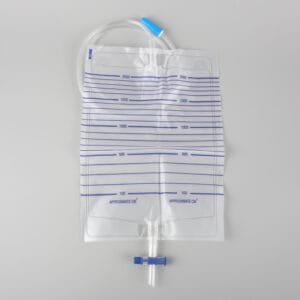
The catheter is intended for connection to suitable urinary drainage and irrigation equipment.
Before use, healthcare professionals should verify connection compatibility and follow the selected product’s instructions.
Three-way urinary catheters support selected urological procedures where bladder irrigation is required.
Following certain prostate or bladder procedures, patients may require continuous bladder irrigation (CBI).
During irrigation, fluid enters the bladder through the irrigation channel. Meanwhile, urine and returning irrigation fluid flow into a connected drainage system.
This process helps maintain drainage and manage blood or clot accumulation when irrigation is clinically indicated.
Gross hematuria refers to visible blood in the urine. In some cases, blood clots may obstruct urinary drainage.
Healthcare professionals may use a three-way catheter for bladder irrigation during selected cases of hematuria.
However, catheterization and irrigation do not treat the underlying cause of bleeding. Clinical assessment and monitoring remain essential.
Male patients may require a three-way catheter following selected prostate or bladder procedures.
Because the male urethra is longer, clinicians must consider catheter length, diameter, and the patient’s anatomy before insertion.
The selected catheter should meet the requirements of the intended procedure.
Female patients may also require a three-way catheter when bladder irrigation is clinically necessary.
Although the female urethra is shorter, catheter selection still depends on the patient’s condition, required drainage, and procedure.
Therefore, healthcare professionals should not select a catheter based on sex alone.
Selecting an appropriate catheter requires consideration of patient anatomy, clinical purpose, and product specifications.
Catheter length is an important consideration for male and female patients.
Male urinary catheterization generally requires a catheter long enough to accommodate the male urethra. Female patients have a shorter urethra, but the appropriate catheter length still depends on the product design and clinical requirements.
Clinicians should confirm the length of the selected model rather than assuming that every catheter is universally suitable.
Urinary catheter diameters are commonly expressed in French (Fr) units.
The appropriate diameter depends on patient anatomy, drainage requirements, and the intended procedure. In selected clot-management situations, clinicians may consider a larger catheter.
However, using a larger catheter than necessary may increase the risk of urethral irritation or trauma.
The retention balloon helps keep the catheter in position after insertion.
Balloon capacity varies by catheter model. Therefore, healthcare professionals must follow the specified inflation volume and medium.
Catheter diameter does not determine balloon capacity.
Urinary catheters may use latex-based or silicone-based materials. Each material has different characteristics.
For example, patients with known latex allergy require a suitable latex-free catheter.
However, buyers should confirm the actual material of the selected product before purchasing.
A three-way catheter is generally selected when clinicians need a separate irrigation pathway.
For routine urinary drainage without irrigation, a two-way Foley catheter may be sufficient.
Therefore, the catheter configuration should match the clinical procedure.
Understanding the difference between two-way and three-way catheters helps healthcare facilities choose the appropriate device.
A two-way Foley catheter has two channels. One allows urine drainage, while the other enables balloon inflation.
This configuration is commonly used for routine indwelling urinary drainage when bladder irrigation is not required.
A three-way Foley catheter includes an additional irrigation channel.
This design supports bladder irrigation while maintaining a separate drainage pathway. As a result, clinicians may choose it for selected postoperative urological procedures and hematuria management.
| Feature | 2-Way Foley Catheter | 3-Way Foley Catheter |
|---|---|---|
| Number of Channels | Two | Three |
| Urine Drainage | Yes | Yes |
| Balloon Inflation | Yes | Yes |
| Dedicated Irrigation Channel | No | Yes |
| Typical Application | Routine urinary drainage | Urinary drainage with bladder irrigation |
| Continuous Bladder Irrigation | Not designed for standard three-way CBI setups | Supports CBI with compatible equipment |
The appropriate configuration depends on clinical requirements. A three-way catheter is not automatically a better choice for every patient.
A three-way urinary catheter supports bladder drainage, balloon retention, and irrigation. Clinicians may use it during selected urological procedures or postoperative care.
Yes. Three-way urinary catheters are used for male and female patients when clinically indicated. However, the selected catheter must have an appropriate length, diameter, and design for the individual patient.
A two-way catheter has channels for urine drainage and balloon inflation. A three-way catheter includes a separate channel for introducing irrigation fluid.
Yes. A compatible three-way catheter can support continuous bladder irrigation when connected to appropriate equipment and used under clinical supervision.
Not necessarily. Catheter lengths vary by design and intended patient group. Clinicians should confirm the selected model’s length before use.
Common materials include latex, silicone-coated latex, and all-silicone. However, the actual material depends on the selected product and should be confirmed before ordering.
Healthcare professionals consider patient anatomy, drainage requirements, and the intended procedure. The French size should match the patient’s clinical needs.
Hospitals should verify catheter length, diameter, balloon specifications, material, sterile status, packaging, and compatibility with drainage and irrigation equipment.
Siny Medical supplies urinary catheters and medical consumables for hospitals, healthcare facilities, and medical distributors. Our three-way urinary catheter range supports bladder drainage and irrigation for male and female patients in appropriate clinical settings. Contact Siny Medical to discuss your purchasing requirements, obtain product information, and request a quotation.
Copyright © 2026 | Ningbo Siny Medical Technology Co., Ltd