| Specification | Details |
|---|---|
| Product Name | Siny Screw Cap Cone Bottom Centrifuge Falcon Tubes |
| Product Type | Conical Centrifuge Tube |
| Main Material | Polypropylene (PP) |
| Nominal Capacities | 10ml / 15ml / 50ml |
| Bottom Design | Conical Bottom |
| Closure | Screw Cap |
| Primary Application | Laboratory Sample Handling and Centrifugation |
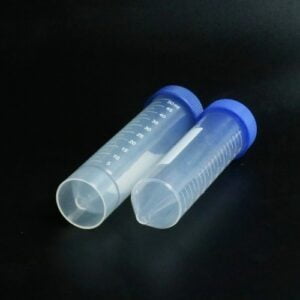
The Siny Screw Cap Cone Bottom Centrifuge Falcon Tubes are polypropylene laboratory tubes designed for sample handling, centrifugation, and the collection of sedimented material. Their conical bottoms help concentrate particles or cell pellets in a smaller area, making the material easier to locate after centrifugation.
Each tube features a screw cap that provides a secure closure when correctly fitted. This design supports routine laboratory handling and helps reduce the risk of accidental spills during normal use.
Siny Medical supplies screw cap conical centrifuge tubes for research laboratories, diagnostic facilities, and medical consumables distributors. These tubes are suitable for laboratory workflows that require sample containment, separation, and pellet recovery.
These centrifuge tubes are made from polypropylene (PP), a plastic commonly used in laboratory consumables.
Polypropylene combines low weight with useful mechanical and chemical resistance for many routine laboratory applications. However, its compatibility depends on the reagent, concentration, temperature, and exposure time.
Laboratories should verify chemical compatibility before using the tubes with solvents, aggressive reagents, or other demanding samples.
The threaded cap helps keep the tube closed during routine handling.
A correctly fitted screw cap can reduce the risk of accidental opening and sample spills. However, a screw cap alone does not guarantee leakproof performance under every condition.
Users should inspect the cap and tube before use, tighten the closure correctly, and follow the product’s operating instructions.
The cone-shaped bottom directs sedimented material toward the narrow end of the tube during centrifugation.
This makes it easier to locate and recover a pellet after removing the supernatant.
For example, laboratories may use conical tubes when preparing cell suspensions or separating particulate material from a liquid sample.
The combination of a rigid tube body, threaded closure, and conical base supports common laboratory procedures.
Users can transfer samples, centrifuge compatible materials, and collect separated fractions within their established workflows.
Nevertheless, laboratories must use the correct centrifuge rotor, adapter, and operating conditions for the selected tube.
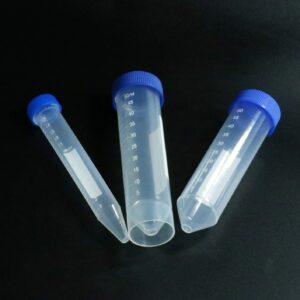
Siny Medical’s product range includes conical centrifuge tube configurations in 10ml, 15ml, and 50ml nominal capacities.
These sizes serve different sample-handling needs. Smaller tubes may suit limited sample volumes, while larger tubes provide more working space for bulk sample preparation.
The actual usable fill volume and centrifugation limits must be confirmed for each model.
Screw cap centrifuge tubes support many laboratory procedures that involve liquid samples, suspended particles, or biological materials.
Laboratories commonly use conical tubes to collect cells from liquid suspensions.
During appropriate centrifugation, suspended cells may sediment toward the bottom of the tube. The conical shape helps concentrate the pellet in a smaller area.
Researchers can then remove the supernatant and process the remaining material according to their laboratory protocol.
Conical centrifuge tubes are useful for workflows involving repeated suspension, centrifugation, and liquid removal.
For example, laboratories may wash cell pellets or other particulate samples using a suitable buffer.
The tube’s conical base makes the sedimented material easier to locate between processing steps.
Centrifugation can separate suspended particles from liquids when the selected operating conditions are appropriate.
The resulting pellet collects near the bottom of the tube, while the supernatant remains above it.
However, separation performance depends on particle properties, sample composition, centrifugal force, and processing time.
These tubes can also serve as containers for preparing and transferring compatible laboratory samples.
The screw cap helps keep the contents contained during routine handling.
Users should confirm the tube’s suitability before using it for hazardous substances, biological containment, long-term storage, or specialized analytical procedures.
Selecting the appropriate capacity helps laboratories manage sample volumes and use their equipment efficiently.
A 10ml tube may suit laboratory procedures that require relatively small sample volumes.
Its conical bottom supports the collection of sedimented material after centrifugation.
Before use, laboratories should confirm that the selected tube fits their rotor or adapter.
The 15ml format is widely used in routine sample preparation and cell-handling workflows.
It provides space for liquid samples while retaining a conical base for pellet collection.
However, users should not assume that all 15ml tubes have identical dimensions or centrifugal force ratings.
The 50ml format provides greater nominal capacity for larger sample preparation tasks.
It may be useful when processing larger liquid volumes or collecting suspended material.
Because larger tubes can place different demands on centrifuge equipment, users must verify rotor compatibility and operating limits.
| Feature | 10ml Tube | 15ml Tube | 50ml Tube |
|---|---|---|---|
| Nominal Capacity | 10ml | 15ml | 50ml |
| Bottom Shape | Conical | Conical | Conical |
| Main Material | PP | PP | PP |
| Closure Type | Screw Cap | Screw Cap | Screw Cap |
| Typical Selection Reason | Smaller sample volumes | Routine sample preparation | Larger sample volumes |
| Equipment Requirement | Compatible rotor or adapter | Compatible rotor or adapter | Compatible rotor or adapter |
The nominal capacity does not establish the maximum safe centrifugation volume or force. Users should consult the specifications for the selected tube.
Laboratories and distributors should evaluate tube design, equipment compatibility, and sample requirements before purchasing.
Choose a tube size that accommodates the intended sample volume while meeting the required operating limits.
The nominal capacity should not be treated as a universal maximum fill level during centrifugation.
Users should follow the selected product’s instructions.
Confirm that the tube fits the intended rotor, bucket, or adapter.
Tube dimensions and bottom geometry affect equipment compatibility. Therefore, nominal capacity alone is not enough to confirm a suitable fit.
Relative centrifugal force (RCF), expressed as multiples of gravitational acceleration (× g), is an important operating limit.
The maximum permitted RCF depends on the tube design and operating conditions.
Before centrifugation, users should verify the selected model’s rating and follow the centrifuge manufacturer’s instructions.
Polypropylene is suitable for many routine laboratory applications, but it is not compatible with every chemical or temperature condition.
Laboratories should evaluate the sample composition, reagent exposure, and intended processing temperature.
Specialized applications may require additional product validation.
Some laboratory procedures require sterile consumables, while others do not.
Buyers should confirm whether the selected centrifuge tube configuration is supplied sterile and review the documented sterilization method when necessary.
A screw cap or polypropylene body does not, by itself, indicate sterile status.
Check the tube and cap for visible damage before filling.
Ensure that the cap engages correctly with the tube threads. In addition, use suitable containment precautions when handling hazardous or infectious samples.
Do not use damaged tubes or exceed the product’s verified operating limits.
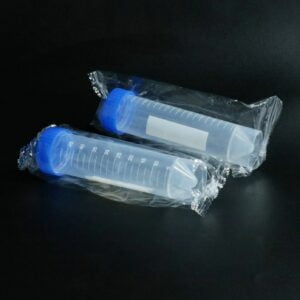
For laboratory procurement, packaging format can affect inventory management and daily workflow.
Buyers should confirm the selected model’s capacity, dimensions, packaging, sterile status, and centrifugation rating before ordering.
These details help medical distributors supply products that match their customers’ equipment and procedures.
They are used for laboratory sample handling, centrifugation, and the collection of sedimented particles or cell pellets. Their conical bottoms help concentrate material after separation.
These tubes are made from polypropylene (PP), a plastic commonly used in laboratory consumables.
The conical shape concentrates sedimented material in a smaller area. This makes the pellet easier to locate and recover after centrifugation.
A screw cap provides a threaded closure that helps keep the tube closed during normal handling. However, users should not assume that every screw cap tube is leakproof under all conditions.
The product range includes 10ml, 15ml, and 50ml conical tube configurations. Buyers should confirm the specifications of the selected model.
Sterile status depends on the selected configuration. Buyers should check the product labeling and documentation rather than assume that all versions are sterile.
Polypropylene can tolerate certain autoclaving conditions, but this does not mean every finished centrifuge tube is validated for autoclaving. Users must confirm the selected tube’s temperature limits and instructions before attempting sterilization.
Consider the required sample volume, tube dimensions, centrifuge compatibility, maximum RCF, chemical compatibility, and sterile status. These factors help determine whether a tube suits the intended procedure.
Siny Medical supplies polypropylene centrifuge tubes and laboratory consumables for hospitals, research laboratories, diagnostic facilities, and medical distributors. Our Siny Screw Cap Cone Bottom Centrifuge Falcon Tubes provide practical options for routine sample handling and centrifugation workflows. Contact Siny Medical to discuss available tube capacities, product specifications, bulk purchasing requirements, and quotation details.
Copyright © 2026 | Ningbo Siny Medical Technology Co., Ltd