| Item | Specification |
|---|---|
| Product Name | Clear Filtered Low Retention Pipette Tips |
| Tip Appearance | Clear / Transparent |
| Filter Configuration | Filtered |
| Surface Characteristic | Low Retention |
| Filter Function | Aerosol Barrier |
| Primary Function | Laboratory Liquid Aspiration and Dispensing |
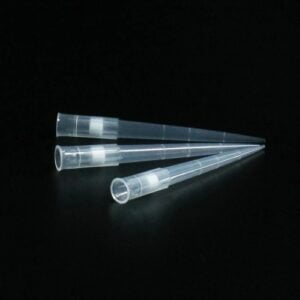
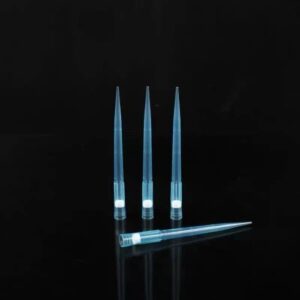
Siny Medical Clear Filtered Low Retention Pipette Tips combine a transparent tip body, an integrated filter, and a low-retention design for laboratory liquid handling. These three features address different aspects of pipetting: visual observation, aerosol barrier protection, and reduced liquid residue after dispensing.
During laboratory procedures, liquid can remain on the inner surface of a pipette tip. This is particularly relevant when handling small samples, valuable reagents, or solutions that tend to adhere to plastic surfaces. A low-retention design aims to reduce this remaining liquid under suitable pipetting conditions.
The integrated filter provides an additional barrier between the sample-containing region and the pipette. Meanwhile, the clear tip body allows users to observe liquid movement and visible residue more easily.
At Siny Medical, we supply laboratory consumables for sample preparation, reagent transfer, and research applications. Our clear filtered low-retention tips bring together three practical features within a single liquid handling consumable.
A pipette tip serves as the liquid-contact component of a pipetting system. Its construction influences sample handling, instrument protection, and the visibility of liquid during transfer.
The combination of transparency, filtration, and low-retention surface behavior gives this product a different functional emphasis from conventional pipette tips.
The clear appearance allows liquid inside the tip to be observed during pipetting.
This can help users identify visible air bubbles, incomplete aspiration, or remaining droplets after dispensing.
Transparency may also make it easier to notice unusual liquid movement during manual pipetting.
However, visual observation cannot establish the exact transferred volume. Small amounts of residual liquid may remain even when the tip appears empty.
The pipette and the selected method determine volumetric performance.
The filter is positioned within the upper region of a filtered pipette tip.
Its purpose is to reduce the movement of aerosols and accidental liquid contamination toward the pipette’s internal components.
During aspiration and dispensing, small droplets or aerosols can form inside the liquid handling pathway.
The filter provides an additional physical barrier between the sample and the pipette interface.
However, filtration performance depends on the filter design and operating conditions. A filtered tip does not guarantee complete protection against every contamination event.
The low-retention design aims to reduce liquid remaining inside the tip after dispensing.
Liquid residue can form when a sample wets or adheres to the internal surface.
The amount depends on the liquid’s properties, the tip surface, and the pipetting technique.
Low-retention tips are designed to limit this effect, supporting more complete liquid transfer under suitable conditions.
However, low retention does not mean that all liquids will dispense without residue.
Low-retention performance is closely related to the way a liquid interacts with the tip surface.
When liquid contacts a solid material, it may spread across the surface or form droplets. This behavior is influenced by surface tension, wetting characteristics, and the properties of the liquid.
A low-retention tip is designed to reduce unwanted liquid adhesion during dispensing.
Wetting describes how readily a liquid spreads across a surface.
When a solution wets the inner wall of a conventional pipette tip, a thin film may remain after dispensing.
The amount of liquid left behind can vary between aqueous solutions, viscous liquids, and samples containing surfactants.
Low-retention surfaces aim to reduce this behavior.
However, the effect must be evaluated with the actual liquid. A surface that performs well with one reagent may behave differently with another.
Residual liquid is the portion of a sample that remains inside the tip after the dispensing step.
It may appear as a visible droplet near the opening or as a thin film along the inner wall.
This remaining liquid can become relevant when the intended transfer volume is small or when the sample is valuable.
A low-retention design may help reduce one source of incomplete liquid transfer.
Nevertheless, pipetting performance also depends on the instrument, transfer volume, and dispensing technique.
The two are different characteristics.
Low retention concerns bulk liquid remaining after dispensing. Low adsorption concerns molecules binding to the tip surface.
For example, a liquid may dispense almost completely while some protein molecules still bind to the plastic surface.
Conversely, a tip with low molecular adsorption may still retain visible liquid droplets.
| Characteristic | Low Retention | Low Adsorption |
|---|---|---|
| Main Objective | Reduce residual liquid | Reduce molecular surface binding |
| Primary Interaction | Liquid wetting and adhesion | Adsorption of sample components |
| Typical Evaluation | Residual liquid or dispensing performance | Sample recovery or binding measurement |
| Main Limitation | Does not guarantee zero residue | Does not guarantee zero molecular binding |
The low-retention feature of this product should not be treated as an independent low-adsorption performance claim.
The filter adds a separate protective function to the pipette tip.
Its purpose is not to improve liquid release directly. Instead, it helps reduce contamination transfer toward the pipette during liquid handling.
Aerosols can form during aspiration and dispensing, especially when pipetting is performed rapidly or when the liquid contains biological material.
Without an internal filter, aerosols may reach the pipette shaft or other internal surfaces.
A filtered tip provides a barrier intended to reduce this movement.
This can be useful in procedures where contamination control is important.
However, the filter does not replace correct pipetting technique, suitable laboratory practices, or instrument maintenance.
Accidental over-aspiration occurs when liquid is drawn beyond the intended sample-containing region.
In a filtered tip, the internal filter may limit further liquid movement toward the pipette.
However, liquid contact can compromise filter performance and interfere with normal pipetting.
The filter should not be treated as a substitute for selecting the correct tip capacity or pipette setting.
If liquid reaches the filter, the tip should be handled according to the laboratory procedure and instrument instructions.
Filtered and non-filtered tips share the same basic liquid transfer function.
Their main difference is the presence of an internal aerosol barrier.
| Feature | Filtered Pipette Tips | Non-Filtered Pipette Tips |
|---|---|---|
| Internal Filter | Present | Absent |
| Liquid Transfer | Aspiration and dispensing | Aspiration and dispensing |
| Aerosol Barrier | Additional barrier within the tip | No integrated filter barrier |
| Typical Consideration | Contamination-sensitive procedures | Routine compatible liquid handling |
| Important Limitation | Does not guarantee complete contamination prevention | No built-in filter protection |
A filtered tip is not automatically sterile, low-retention, or free from specific biological contaminants. These characteristics must be established separately.
Clear filtered low-retention tips are relevant to laboratory procedures that benefit from reduced liquid residue and additional aerosol barrier protection.
Their suitability depends on the sample, pipette, and method requirements.
PCR and qPCR workflows involve transferring samples, primers, enzymes, and reaction reagents.
Contamination control is important because small amounts of unwanted nucleic acid material can affect downstream reactions.
Filtered tips provide an additional barrier against aerosol movement toward the pipette.
Low-retention characteristics may also be useful when handling small quantities of reagents.
However, a filtered low-retention designation does not establish DNase-free, RNase-free, or DNA-free status.
Any required cleanliness characteristics must be verified separately.
Molecular biology procedures often involve repeated transfers of biological samples and reagents.
Clear tips allow visible liquid movement to be observed during pipetting.
The filter provides an additional barrier against aerosol transfer, while the low-retention design addresses liquid remaining after dispensing.
These features can support compatible laboratory workflows.
However, the complete procedure must still account for sample properties and contamination-control requirements.
Biochemical research may involve valuable reagents, protein solutions, and other sensitive materials.
Some liquids leave noticeable residue inside conventional pipette tips.
Low-retention tips may help reduce this effect under suitable conditions.
However, low retention does not establish low protein adsorption. Surface binding of proteins is a separate consideration.
For protein-sensitive methods, both liquid retention and molecular adsorption may need to be evaluated.
Analytical laboratories prepare samples for testing, dilution, and measurement.
Consistent liquid handling is important when transferring standards, reagents, and prepared samples.
A low-retention surface may reduce unwanted liquid residue, while a transparent tip supports visual observation.
The selected tip must also be chemically compatible with the sample.
This is particularly important when procedures involve organic solvents or other solutions that may interact with plastic materials.
The performance of a pipette tip depends on more than its product designation.
Transparency, filtration, and low retention are useful characteristics, but the complete pipetting system determines the final liquid handling result.
A pipette tip must fit the intended pipette correctly.
The mounting interface should provide a suitable seal during aspiration and dispensing.
Poor attachment may allow air leakage, affecting liquid transfer.
Tips with similar appearances are not necessarily compatible with the same pipette models.
Therefore, the mounting dimensions and instrument requirements must be considered.
Different liquids behave differently during pipetting.
Viscosity, surface tension, temperature, and sample composition can influence aspiration and dispensing.
Some liquids form thin films, while others leave visible droplets.
Low-retention design may reduce these effects, but suitable pipetting technique remains essential.
For difficult liquids, the laboratory method may require slower aspiration, controlled dispensing, or other validated adjustments.
Filter performance depends on its construction and operating conditions.
Relevant considerations include aerosol barrier behavior, filter placement, and resistance to accidental liquid transfer.
A specific filtration efficiency should not be assumed without supporting product data.
Likewise, the presence of a filter does not establish sterility or freedom from nucleases and other contaminants.
Low-retention performance can be evaluated by measuring liquid remaining inside the tip after dispensing.
Results depend on the selected test liquid, volume, pipette, and procedure.
A result obtained with water may not predict performance with every biological sample or reagent.
Therefore, numerical retention claims should reflect defined product-specific testing.
The tip material must be suitable for the intended liquid.
Some solvents or chemicals can interact with plastic surfaces and affect their properties.
A clear appearance does not identify a specific polymer or establish chemical resistance.
Material compatibility should be considered separately from transparency and low-retention behavior.
Proper handling helps maintain the condition of clear filtered low-retention tips before and during laboratory use.
Before pipetting, confirm that the selected tip is compatible with the instrument and suitable for the required transfer volume.
Inspect the tip for visible damage or contamination. Avoid touching the dispensing opening or internal sample-contact surfaces.
Attach the tip securely according to the pipette instructions.
During aspiration, use a suitable immersion depth and pipetting speed. Avoid drawing liquid into the filter.
The clear tip body can help users observe visible air bubbles and liquid movement.
During dispensing, follow the pipette instructions and the validated laboratory method. Low-retention properties do not replace correct technique.
Change tips between samples when required by the procedure.
After use, discard the tips through the appropriate laboratory waste stream.
Store unused products in their original packaging under suitable conditions. Protect them from dust, physical damage, and environmental contamination.
They are pipette tips that combine a transparent body, an internal filter, and a surface design intended to reduce liquid residue after dispensing.
Transparency allows users to observe visible liquid movement, air bubbles, and remaining droplets during pipetting.
Low retention refers to a design intended to reduce the amount of liquid remaining inside the tip after dispensing.
The filter provides an additional barrier against aerosol transfer toward the pipette.
No. Low retention concerns residual liquid, while low adsorption concerns molecular binding to the tip surface.
They may be suitable for compatible PCR preparation workflows, provided they meet the method’s pipette compatibility and cleanliness requirements.
No. Filtered construction does not establish sterility.
Transparency may help users notice visible air bubbles or incomplete aspiration. However, it does not guarantee accurate liquid transfer.
No. Some residue may remain depending on the liquid, tip surface, and dispensing conditions.
No. Compatibility depends on the mounting interface and the intended pipette model.
Siny Medical supplies clear filtered low retention pipette tips for laboratory liquid handling applications where visual observation, aerosol barrier protection, and reduced liquid residue are important. Our laboratory consumables support compatible sample preparation, molecular biology, and analytical workflows. Explore our pipette tip products or contact Siny Medical to discuss available specifications, instrument compatibility, and product supply requirements.
Copyright © 2026 | Ningbo Siny Medical Technology Co., Ltd