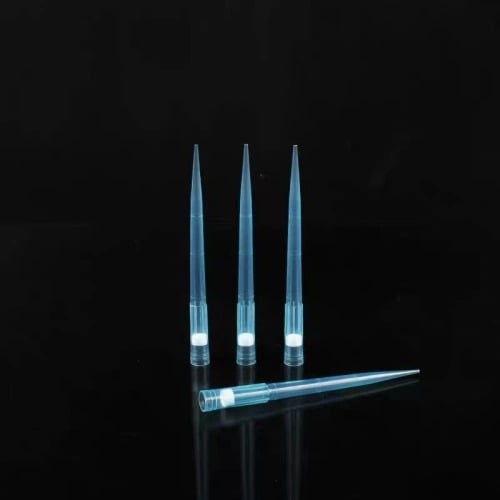

| Item | Specification |
|---|---|
| Product Name | 1000UL Low Retention Pipette Tips |
| Nominal Capacity | 1000 µL (1 mL) |
| Tip Design | Low Retention |
| Primary Feature | Reduced Liquid Retention After Dispensing |
| Liquid Handling Function | Aspiration and Dispensing |
| Intended Application | Laboratory Liquid Transfer |
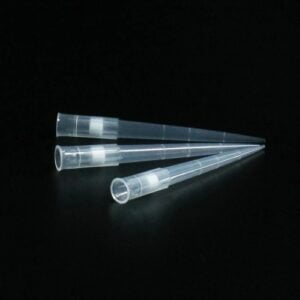
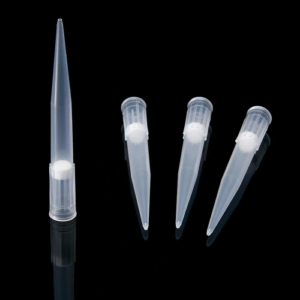
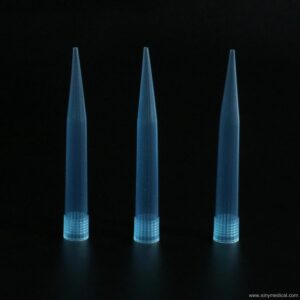
Siny Medical 1000 µL Low Retention Pipette Tips are designed for laboratory liquid handling applications where residual liquid inside the pipette tip requires attention. Their low-retention design aims to reduce the amount of liquid remaining on the inner surface after dispensing, supporting more complete liquid transfer under suitable operating conditions.
During conventional pipetting, a thin film or small droplets of liquid may remain inside the tip. This effect depends on the liquid’s surface tension, viscosity, and interaction with the tip material. Residual liquid can become particularly relevant when transferring valuable reagents or working with methods that require consistent sample volumes.
Our 1000 µL low-retention tips provide a nominal 1 mL capacity format for compatible laboratory pipetting procedures. At Siny Medical, we supply laboratory consumables that address practical sample handling requirements, including liquid transfer, tip compatibility, and surface-related performance.
A low-retention pipette tip is designed to reduce liquid adhesion and the amount of fluid left inside the tip after dispensing.
When liquid contacts a solid surface, its behavior depends on the interaction between the liquid molecules and the material. Some liquids spread across the surface, while others form droplets.
These interactions affect how the liquid moves during aspiration and how completely it leaves the tip during dispensing.
Surface wetting describes how a liquid spreads across a solid material.
A liquid that wets the tip surface strongly may form a thin film along the inner wall. After dispensing, part of that film can remain inside the tip.
Low-retention designs aim to reduce this unwanted wetting or adhesion, allowing more liquid to leave the tip during a suitable dispensing procedure.
However, the effect varies with the liquid. A tip that performs well with one solution may behave differently with another.
Surface tension, viscosity, temperature, and sample composition all influence the result.
Residual liquid is the portion of a sample that remains inside the tip after the dispensing step.
It may appear as a visible droplet near the dispensing opening or as a thin film along the inner wall.
The amount of residue depends on the liquid and the pipetting method. Aspiration speed, dispensing speed, tip geometry, and contact with the receiving vessel can all affect liquid transfer.
A low-retention tip is intended to reduce this residue. It does not guarantee that every drop will leave the tip under all conditions.
Low retention and low adsorption are sometimes discussed together, but they address different types of sample loss.
Low retention concerns the bulk liquid remaining in the tip after dispensing. Low adsorption concerns molecules binding to the tip surface.
For example, a protein solution may leave visible liquid residue while some protein molecules also bind to the plastic surface. These are separate processes.
| Characteristic | Low Retention | Low Adsorption |
|---|---|---|
| Main Objective | Reduce residual liquid | Reduce molecular surface binding |
| Main Interaction | Liquid wetting and adhesion | Adsorption of sample components |
| Typical Evaluation | Residual volume or dispensing performance | Sample recovery or adsorption testing |
| Relevant Consideration | More complete liquid transfer | Reduced loss of surface-sensitive molecules |
| Limitation | Does not guarantee zero residue | Does not guarantee zero molecular binding |
Our 1000 µL product is identified as a low-retention tip. Specific low-adsorption performance should not be assumed without separate testing.
The 1000 µL nominal capacity is associated with a larger-volume format commonly used in laboratory pipetting.
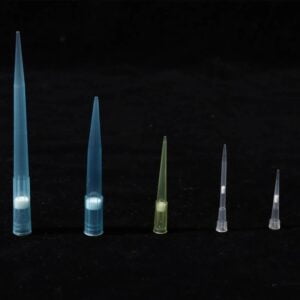
It provides a different handling range from smaller tips intended for microliter-scale reagent transfers.
However, the appropriate working volume depends on the pipette and tip combination.
A capacity of 1000 µL is equivalent to 1 mL.
This nominal designation helps identify the general size of the pipette tip. It does not mean that every volume below 1000 µL can be transferred with the same accuracy.
Pipettes have specified operating ranges, and their performance can vary across those ranges.
The selected tip must also fit the pipette correctly.
For accurate liquid handling, the instrument’s instructions and the laboratory method should determine the working volume.
Larger-volume pipetting can involve more noticeable liquid movement and changes in pressure during aspiration and dispensing.
The liquid’s viscosity and the speed of pipetting may influence how smoothly the sample enters and leaves the tip.
When a solution adheres strongly to the inner wall, a portion may remain after dispensing.
A low-retention surface can help address this effect, but it does not replace suitable pipetting technique.
The shape of the tip influences liquid movement and attachment to the pipette.
The mounting interface must provide a suitable seal during aspiration. Poor sealing can affect the pressure used to draw liquid into the tip.
The dispensing opening also influences how the liquid exits.
Tips with the same nominal capacity are not necessarily interchangeable between pipette models. Compatibility depends on the actual mounting dimensions and instrument design.
Pipetting accuracy and precision are properties of the complete pipetting system under defined operating conditions.
The tip, instrument, liquid, and technique all contribute to performance.
A low-retention designation describes an intended surface-related characteristic. It does not establish a particular volumetric accuracy or precision.
Any numerical performance claim requires appropriate testing under specified conditions.
Low-retention tips are particularly relevant when laboratories handle liquids that tend to remain on conventional tip surfaces.
Their value depends on the sample and the requirements of the procedure.
Routine laboratory work involves transferring buffers, reagents, and prepared samples between containers.
When residual liquid is undesirable, low-retention tips may support more complete dispensing.
This can be useful when a procedure requires consistent transfer steps or when reagent consumption is an important consideration.
However, the benefit must be evaluated for the actual liquid and pipetting method.
Viscous liquids resist movement more strongly than low-viscosity solutions.
They may aspirate and dispense more slowly, and some can leave visible residue inside the tip.
Low-retention surfaces may help reduce liquid adhesion in suitable applications.
Nevertheless, high viscosity can still require slower pipetting, suitable aspiration settings, and other method adjustments.
Low-retention construction does not automatically make a tip suitable for every viscous liquid.
Molecular biology and biochemical workflows often involve valuable reagents and prepared samples.
These materials may require careful transfer to minimize unnecessary loss.
Low-retention tips can be considered when liquid residue is a concern.
However, low retention does not establish that a tip is sterile, filtered, or free from DNase, RNase, or other specified contaminants.
Those requirements must be verified separately for the intended laboratory method.
Analytical laboratories prepare solutions for testing and instrumental measurement.
Consistent liquid transfer can be important when preparing standards, dilutions, or test samples.
Low-retention tips may reduce one source of liquid loss during dispensing.
The selected material must also be chemically compatible with the sample. This is especially important when the method uses solvents or other reactive solutions.
Low-retention and conventional pipette tips share the same basic function: transferring liquid through a compatible pipetting instrument.
Their main difference is the intended behavior of liquid on the internal surface.
A conventional tip may retain a visible film or droplets after dispensing, depending on the liquid.
A low-retention design aims to reduce this effect through suitable surface characteristics.
The difference may be more noticeable with certain solutions than with ordinary aqueous samples.
Therefore, low-retention performance should be assessed using relevant test liquids rather than appearance alone.
Reducing residual liquid may help improve the completeness of a transfer when adhesion is a significant source of loss.
However, pipetting consistency also depends on instrument calibration, tip fit, technique, and environmental conditions.
Low-retention tips cannot correct an unsuitable pipette setting or an incorrect aspiration procedure.
| Feature | Low Retention Pipette Tips | Conventional Pipette Tips |
|---|---|---|
| Main Function | Liquid aspiration and dispensing | Liquid aspiration and dispensing |
| Surface Objective | Reduce liquid retention | General liquid handling |
| Residual Liquid | Designed to reduce remaining liquid | Depends on material and liquid properties |
| Potential Application | Procedures sensitive to liquid residue | Routine compatible liquid transfers |
| Performance Factors | Surface behavior, liquid properties, and technique | Liquid properties, geometry, and technique |
| Key Limitation | No guarantee of zero residue | No inherent low-retention performance claim |
Both types require correct pipette compatibility and appropriate laboratory handling.
The performance of a low-retention tip depends on several technical characteristics. These should be considered separately from its nominal capacity.
Low-retention behavior depends on the interaction between the liquid and the tip surface.
Performance can be evaluated by measuring residual liquid after dispensing under defined conditions.
Different liquids may produce different results. A favorable measurement with water does not necessarily predict performance with a viscous buffer or solvent.
For this reason, numerical retention claims should be supported by product-specific test methods and data.
The term low retention describes the intended function but does not establish a universal residual-volume percentage.
Pipette tips are used with a wide range of laboratory solutions.
Material compatibility is important because certain chemicals may interact with the tip surface or affect its physical properties.
A low-retention surface is not automatically resistant to every solvent, reagent, or temperature condition.
The selected tip must be suitable for the actual laboratory method.
A secure fit between the pipette and tip helps maintain appropriate pressure during aspiration and dispensing.
An unsuitable mounting interface may cause leakage or inconsistent liquid handling.
Tip dimensions also influence positioning and liquid movement.
Consequently, mechanical compatibility remains essential even when the tip has favorable low-retention characteristics.
Low-retention construction does not determine whether a tip contains an aerosol filter.
Filtered tips provide an additional barrier between the liquid and the pipetting instrument. That function is separate from reducing residual liquid.
Similarly, low retention does not establish sterility or freedom from specific biological contaminants.
These characteristics require their own product information and supporting evidence.
When comparing tip performance, the laboratory method should remain consistent.
Relevant variables include the pipette, liquid, transfer volume, aspiration speed, dispensing method, and environmental conditions.
Changing several variables at once can make the results difficult to interpret.
A controlled comparison helps determine whether reduced liquid retention provides a meaningful benefit for the intended procedure.
Correct handling helps maintain the condition of pipette tips and supports consistent liquid transfer.
Before use, confirm that the tip is compatible with the selected pipette and suitable for the intended transfer volume.
Inspect the tip for visible damage. Avoid touching the dispensing opening or internal liquid-contact surfaces.
Attach the tip securely according to the pipette instructions. Excessive force should be avoided because it may damage the mounting interface.
During aspiration, use an appropriate immersion depth and a controlled pipetting speed.
For viscous or difficult-to-handle liquids, follow a validated laboratory method. Adjustments such as slower aspiration or a suitable dispensing technique may be necessary.
During dispensing, maintain a consistent procedure. Follow the pipette instructions regarding blow-out and contact with the receiving vessel.
Change tips between samples when required by the laboratory protocol.
After use, discard the tips through the appropriate laboratory waste stream.
Store unused tips in their original packaging under suitable conditions. Protect them from dust, physical damage, and environmental contamination.
They are pipette tips with a nominal capacity of 1000 µL, designed to reduce the amount of liquid remaining inside the tip after dispensing.
Their main purpose is to reduce unwanted liquid residue during transfer. The actual benefit depends on the liquid and pipetting conditions.
Yes. A volume of 1000 microliters is equal to 1 milliliter.
No. Low retention concerns residual liquid, while low adsorption concerns molecules binding to the tip surface.
They may be useful with compatible viscous solutions, but suitable pipetting techniques and material compatibility remain important.
They may reduce liquid residue when adhesion is a significant factor. However, accuracy depends on the complete pipetting system and method.
No. The mounting interface must match the intended pipette model.
The product name does not specify a filter. Low-retention properties do not establish filter configuration.
Low retention does not establish sterility. Sterile status must be verified through the relevant product information.
No. Some liquid may remain depending on the sample, surface properties, and dispensing conditions.
Siny Medical supplies 1000 µL low retention pipette tips for laboratory liquid handling applications where reducing residual liquid is important. Our laboratory consumables support compatible sample preparation, reagent transfer, and research procedures. Explore our pipette tip products or contact Siny Medical to discuss available technical specifications, pipette compatibility, and product supply requirements.
Copyright © 2026 | Ningbo Siny Medical Technology Co., Ltd