| Item | Specification |
|---|---|
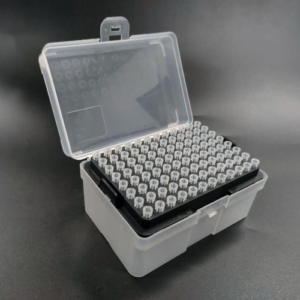
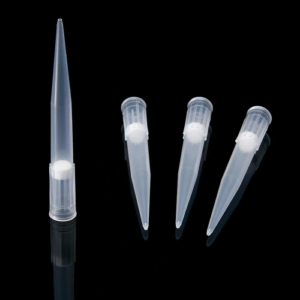
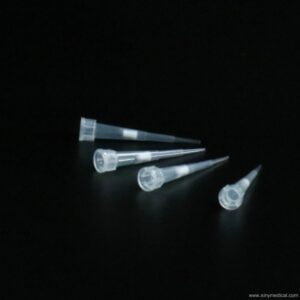
| Product Name | 100UL 200UL 1000UL Low Adsorption Pipette Tips |
| Product Design | Low Adsorption Pipette Tips |
| Nominal Volume Options | 100 µL / 200 µL / 1000 µL |
| Surface Characteristic | Low Adsorption |
| Liquid Handling Function | Aspiration and Dispensing |
| Intended Application | Laboratory Liquid Handling |
Siny Medical Low Adsorption Pipette Tips are designed for laboratory liquid handling applications where sample recovery and surface interactions are important. Available in 100 µL, 200 µL, and 1000 µL nominal volume options, these tips provide different capacity formats for transferring samples, reagents, and laboratory solutions.
During pipetting, some sample components may interact with the inner surface of a conventional plastic tip. This interaction can cause a portion of the material to remain associated with the surface rather than being transferred with the liquid. Low-adsorption pipette tips are designed to reduce this effect, particularly when handling samples that are sensitive to surface binding.
At Siny Medical, we supply laboratory consumables for sample preparation and routine liquid handling. Our low-adsorption pipette tip range combines different nominal capacities with surface characteristics intended to reduce unwanted sample binding. Selecting the appropriate tip depends on the transfer volume, liquid properties, pipette compatibility, and requirements of the laboratory method.
A pipette tip serves as the disposable liquid-contact component of a pipetting system. It holds the aspirated liquid temporarily and guides the sample during dispensing.
The interaction between the liquid and the inner wall can influence the amount and composition of material recovered after transfer.
Adsorption occurs when molecules accumulate on a material surface.
During pipetting, proteins, peptides, and other sample components may interact with the tip wall through hydrophobic, electrostatic, or other molecular forces.
The extent of adsorption depends on several factors. These include the sample concentration, molecular characteristics, liquid composition, contact time, and surface properties of the tip.
For some laboratory methods, the amount of material associated with the tip surface may be small enough to have little practical effect. In other procedures, especially those involving dilute or sensitive samples, the loss may become more significant.
Low-adsorption tip designs aim to reduce these interactions. However, their performance must be considered in relation to the actual sample and pipetting conditions.
Sample recovery describes how much of the intended material remains available after a handling step.
When a sample contains components that readily bind to plastic surfaces, adsorption can contribute to material loss.
A suitable low-adsorption surface may help reduce this loss during liquid transfer.
However, improved recovery cannot be guaranteed for every sample. Different substances interact with surfaces in different ways.
The effect also depends on how long the sample remains inside the tip and how the liquid is aspirated and dispensed.
These two are related concepts, but they describe different properties.
Low adsorption focuses on reducing molecular binding to the tip surface.
Low retention focuses on reducing the amount of liquid left behind after dispensing. It is closely associated with liquid wetting and adhesion.
A tip may have favorable adsorption characteristics without providing the same performance for residual liquid.
| Characteristic | Low Adsorption | Low Retention |
|---|---|---|
| Main Concern | Sample components binding to the tip surface | Liquid remaining after dispensing |
| Relevant Interaction | Molecular adsorption | Liquid wetting and adhesion |
| Typical Evaluation | Recovery of selected sample components | Residual liquid or dispensing behavior |
| Main Limitation | Does not guarantee zero sample binding | Does not guarantee zero liquid residue |
These properties should be evaluated separately when a laboratory procedure requires specific sample recovery or dispensing performance.
The three nominal capacities in this product range support different liquid handling requirements.
A larger nominal capacity generally accommodates a greater volume of liquid. However, the correct tip must also match the pipette and the required operating range.
The capacity printed in a product name does not establish the minimum accurate dispensing volume.
The 100 µL format is associated with smaller-volume laboratory transfers.
It may be suitable for compatible procedures involving reagent preparation, sample aliquoting, and other transfers within the validated working range of the selected pipette.
At relatively small volumes, sample adsorption and residual liquid can represent a meaningful proportion of the transferred material.
Appropriate pipetting technique is therefore important.
The pipette setting, tip fit, liquid properties, and dispensing method must all be considered when establishing the procedure.
The 200 µL format provides a nominal capacity commonly associated with routine laboratory pipetting.
It may support compatible workflows involving sample preparation, reagent distribution, and transfers between laboratory containers.
Low-adsorption surface characteristics are particularly relevant when the transferred material is sensitive to contact with plastic surfaces.
However, the nominal capacity does not establish compatibility with every pipette designed for similar volumes.
The mounting interface and intended operating range must match the selected instrument.
The 1000 µL format provides a larger nominal capacity for laboratory liquid handling.
It may be used in compatible procedures involving sample dilution, buffer transfer, and reagent preparation.
Larger transfers can involve different aspiration and dispensing conditions from small-volume procedures.
Liquid viscosity, aspiration speed, and tip geometry may influence the result.
Low-adsorption construction addresses surface binding, but it does not remove the need for suitable pipetting technique.
| Nominal Capacity | General Application | Main Selection Consideration |
|---|---|---|
| 100 µL | Smaller-volume sample and reagent transfers | Suitable pipette range and sample recovery |
| 200 µL | Routine small-volume laboratory transfers | Pipette compatibility and dispensing method |
| 1000 µL | Larger-volume sample and reagent preparation | Liquid properties and instrument compatibility |
These values represent nominal tip formats. They are not claims of specific accuracy, precision, or minimum working volume.
Low-adsorption pipette tips are particularly relevant when unwanted surface binding can affect the amount of sample recovered.
Their suitability depends on the characteristics of the liquid and the requirements of the laboratory method.
Proteins and peptides can interact with plastic surfaces.
The degree of binding depends on the molecular structure, concentration, buffer composition, and surface characteristics.
In procedures involving dilute protein solutions, adsorption may contribute to sample loss.
Low-adsorption tips may help reduce these interactions under suitable conditions.
However, different proteins behave differently. A favorable result with one protein does not establish the same recovery performance for every biological sample.
Molecular biology workflows involve transferring nucleic acids, enzymes, buffers, and other reagents.
Some of these materials may be sensitive to surface interactions, particularly when sample quantities are limited.
Low-adsorption tips can be considered where the procedure requires attention to sample recovery.
However, low adsorption does not establish that a product is free from DNase, RNase, human DNA, or other specified contaminants.
Any cleanliness requirement must be verified separately.
Analytical laboratories often transfer solutions before instrumental measurement.
In some methods, unwanted adsorption can affect the amount of analyte available for analysis.
The significance depends on the analyte, concentration, solvent, and contact conditions.
Low-adsorption tips may be useful when the selected tip material and surface properties are suitable for the method.
Chemical compatibility remains essential, especially when samples contain solvents or other reagents that interact with plastic materials.
Not every laboratory transfer requires specialized surface properties.
For many routine aqueous solutions, conventional pipette tips may provide suitable performance.
Low-adsorption tips become more relevant when the procedure involves sensitive sample components or when surface binding has been identified as a source of loss.
The appropriate selection should reflect the actual laboratory application rather than nominal volume alone.
The performance of a pipette tip depends on its construction and its interaction with the pipetting instrument.
Low-adsorption surface characteristics are important, but they represent only one part of the complete liquid handling process.
A pipette tip must attach securely to the intended pipette.
The mounting interface should create a suitable seal during aspiration and dispensing.
An incorrect fit may allow air leakage, which can affect liquid transfer.
Tips with similar nominal capacities are not necessarily interchangeable between different pipette models.
The selected tip must therefore be compatible with the instrument used in the laboratory.
Liquid viscosity, surface tension, and temperature can influence pipetting behavior.
These factors affect aspiration, dispensing, and the amount of liquid remaining inside the tip.
For some liquids, pre-wetting the tip or adjusting aspiration speed may improve consistency when the laboratory method permits it.
Low-adsorption construction does not replace correct technique.
The complete pipetting method should be suitable for the liquid being transferred.
Low-adsorption performance should be evaluated using defined test materials and operating conditions.
Different sample components may show different degrees of binding.
As a result, a single recovery measurement cannot describe every possible laboratory application.
Any numerical adsorption reduction or recovery claim should be supported by relevant product-specific testing.
Without such data, it is more accurate to describe the intended low-adsorption function than to promise a particular percentage improvement.
The tip material must be compatible with the intended laboratory solutions.
Some chemicals can interact with polymer surfaces or affect their physical properties.
Surface behavior may also vary between aqueous buffers, biological samples, and organic solvents.
Therefore, low adsorption should not be treated as a universal chemical compatibility claim.
The selected product must meet the requirements of the actual sample and procedure.
Low-adsorption properties do not automatically mean that a pipette tip contains an aerosol filter.
Filtered tips have an additional internal barrier, while non-filtered tips do not.
Likewise, low adsorption does not establish sterility or freedom from specified contaminants.
These are separate product characteristics that require their own supporting information.
Proper handling helps maintain the condition of pipette tips before and during laboratory use.
Before pipetting, confirm that the selected nominal capacity is suitable for the required transfer volume and compatible with the pipette.
Inspect the tip for visible damage. Avoid touching the dispensing opening or inner sample-contact surfaces.
Attach the tip securely without applying excessive force.
During aspiration, use an appropriate immersion depth and pipetting speed for the liquid and instrument.
Avoid introducing air bubbles or drawing liquid beyond the intended working region.
During dispensing, follow the pipette instructions and the laboratory method. Where appropriate, use consistent aspiration and dispensing techniques to reduce variation between transfers.
For contamination-sensitive procedures, change tips between samples according to the laboratory protocol.
Discard used tips through the appropriate laboratory waste stream.
Store unused tips in their original packaging under suitable conditions. Protect them from dust, physical damage, and environmental contamination.
Low-adsorption pipette tips are designed to reduce unwanted binding of sample components to the internal tip surface during liquid handling.
These values identify different nominal capacity formats. The appropriate choice depends on the required transfer volume and compatible pipette.
No. Low adsorption concerns molecular binding to the tip surface, while low retention concerns residual liquid after dispensing.
They may help reduce protein adsorption under suitable conditions. Actual recovery depends on the protein, buffer, concentration, and pipetting method.
They may be suitable for compatible molecular biology procedures, but low adsorption does not establish DNase-free or RNase-free status.
The product name does not specify a filter. Filter configuration must be confirmed separately rather than inferred from low-adsorption properties.
Low adsorption does not establish sterility. Sterile status must be supported by the product labeling and relevant documentation.
A tip’s nominal capacity does not establish its minimum accurate working volume. The pipette and tip combination must be suitable for the intended transfer.
No. Sample loss may also result from residual liquid, pipetting technique, or other handling factors.
No. Tip compatibility depends on the mounting interface and the specific pipette model.
Siny Medical supplies low adsorption pipette tips in 100 µL, 200 µL, and 1000 µL nominal capacities for laboratory liquid handling applications. Our product range supports sample preparation, reagent transfer, and research workflows where surface interactions require attention. Explore our laboratory consumables or contact Siny Medical to discuss available pipette tip specifications, compatibility requirements, and product supply inquiries.
Copyright © 2026 | Ningbo Siny Medical Technology Co., Ltd