| Item | Specification |
|---|---|
| Product Name | Clear Yellow Low Retention Pipette Tips with Filter |
| Product Type | Filter Pipette Tips |
| Color | Clear / Yellow |
| Surface Property | Low Retention |
| Filter Configuration | Integrated Filter Barrier |
| Primary Function | Liquid Transfer with Reduced Residual Liquid |
| Applications | Laboratory Pipetting and Sample Preparation |
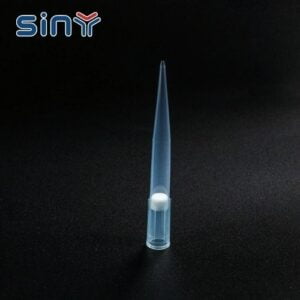
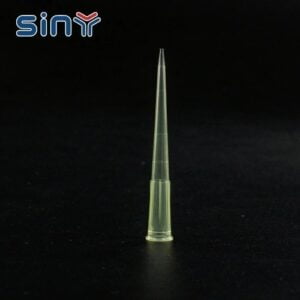
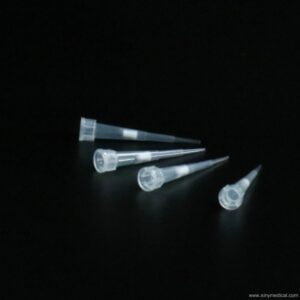
Siny Medical Clear Yellow Low Retention Pipette Tips with Filter combine a low-retention liquid-contact surface with an integrated filter barrier. Available in clear and yellow configurations as identified by the product name, these disposable tips support compatible laboratory pipetting procedures where liquid recovery and aerosol-related contamination control are important.
During liquid handling, small amounts of liquid may remain attached to the inner surface of a conventional pipette tip. This can become particularly noticeable when transferring viscous solutions, small sample volumes, or liquids that tend to form droplets on the tip wall.
Low-retention pipette tips are designed to reduce residual liquid after dispensing. Meanwhile, the integrated filter provides a barrier intended to help limit the movement of aerosols and droplets toward the pipette during suitable use.
At Siny Medical, we supply laboratory pipette tips for sample preparation, reagent transfer, and routine liquid handling. Our filtered low-retention tips provide a practical option for laboratories that require both reduced liquid carryover and a filter barrier.
The defining features of this product are its low-retention surface and integrated filter.
These characteristics serve different purposes, but both can be relevant to laboratory liquid handling.
Liquid retention occurs when a portion of the aspirated sample remains on the inner wall of the pipette tip after dispensing.
The amount of residual liquid depends on several factors, including surface properties, liquid composition, viscosity, and pipetting technique.
Some liquids spread into thin films, while others form droplets that cling to the tip wall.
Low-retention tips are designed to reduce these interactions and help more of the aspirated liquid leave the tip during dispensing.
However, no pipette tip can guarantee complete liquid recovery under every condition.
A low-retention surface is intended to reduce the tendency of liquid to remain attached to the tip wall.
This can be useful when working with solutions that wet conventional plastic surfaces or leave visible droplets after dispensing.
The actual effect depends on the liquid and the specific tip surface.
For example, a low-retention tip may perform differently with an aqueous buffer than with a viscous reagent.
Laboratories should therefore evaluate the tip using representative liquids when dispensing performance is critical.
Filter pipette tips contain a barrier between the liquid-contact region and the pipette connection.
This barrier is intended to help reduce the movement of aerosols and droplets toward the pipette during appropriate use.
It can provide an additional contamination-control measure when transferring samples that may generate aerosols.
However, a filter does not eliminate all contamination risks.
Correct pipetting technique, clean equipment, and suitable laboratory procedures remain essential.
Although these terms sound similar, they describe different properties.
Low retention refers to reducing the amount of bulk liquid remaining inside the tip after dispensing.
Low adsorption, by comparison, concerns the attachment of sample molecules, such as proteins, to the tip surface.
Both characteristics may influence sample recovery, but they address different mechanisms.
For example, a tip that minimizes residual droplets does not necessarily prevent molecular adsorption.
Likewise, a low-adsorption tip may not have verified low-liquid-retention performance.
The appropriate choice depends on the sample and the laboratory procedure.
The product name identifies clear and yellow tip configurations.
Color can help distinguish consumables during laboratory work, but it does not independently establish capacity or performance.
Clear tips allow users to observe the liquid inside the tip more easily.
This can help during aspiration and dispensing, particularly when checking for visible bubbles or unexpected liquid behavior.
However, visual inspection cannot replace accurate pipette calibration or a validated liquid handling method.
The actual transparency and product configuration should be confirmed from the selected item.
Yellow tips provide a visually distinct configuration.
Some laboratories use tip colors to help organize consumables or distinguish pipetting workflows.
However, color conventions vary between manufacturers and product ranges.
A yellow tip should not automatically be assigned a particular capacity without checking its specifications.
The correct tip must match the intended pipette and working volume.
Color may support identification, but capacity and compatibility should be determined from the product specifications.
When several tip configurations are used in the same laboratory, consistent organization can help reduce selection errors.
Nevertheless, labeling and documented procedures remain more reliable than color alone.
Low-retention filtered tips can support a range of laboratory procedures where liquid recovery and contamination control are important.
Their suitability depends on the sample, pipette, and experimental method.
Viscous liquids may flow more slowly and leave residual material on conventional tip surfaces.
Low-retention tips can help reduce unwanted liquid remaining after dispensing.
However, viscosity also affects aspiration speed, dispensing behavior, and pipetting accuracy.
Users should follow an appropriate technique for the liquid.
For highly viscous samples, additional adjustments or specialized pipetting methods may be necessary.
When working with small sample volumes, residual liquid may represent a meaningful portion of the intended transfer.
A low-retention surface can be useful when minimizing liquid left inside the tip is important.
However, accurate small-volume pipetting also depends on the pipette’s operating range, calibration, and technique.
The tip must be compatible with the selected pipette.
Biological laboratories routinely transfer buffers, reagents, and sample solutions.
Some procedures require careful control of liquid recovery.
The integrated filter may provide an additional precaution against aerosol movement toward the pipette.
However, filter presence does not establish sterility or freedom from nucleases.
Any additional cleanliness requirements must be verified separately.
Molecular biology procedures often involve transferring small quantities of reagents between reaction vessels.
Filter tips may be useful when aerosol-related contamination is a concern.
Low-retention properties may also be relevant when minimizing residual liquid.
Nevertheless, the selected product must meet any specific cleanliness requirements of the procedure.
Research laboratories use pipette tips for dilution, sample preparation, and reagent dispensing.
Different liquids may behave differently during transfer.
Low-retention tips provide one way to address residual liquid, while the filter addresses a separate contamination pathway.
The combined features may be useful when both considerations are relevant.
Pipette tips are available with different surface properties and contamination-control features.
Understanding these differences helps laboratories select products according to their actual needs.
Standard disposable tips support routine aspiration and dispensing.
They may be suitable for many general laboratory procedures.
However, certain liquids may leave more residual material on conventional surfaces.
Low-retention tips are designed to address this issue.
Low-adsorption tips focus on reducing the attachment of sample molecules to the tip surface.
This can be relevant when handling proteins, peptides, or other adsorption-sensitive compounds.
However, low adsorption and low retention are separate performance characteristics.
A product should only be described as having both when both features are confirmed.
Non-filter tips do not include an integrated aerosol barrier.
They are commonly used in general liquid handling applications.
Filter tips provide an additional barrier intended to limit aerosol or droplet movement toward the pipette.
However, filter performance varies between products and should not be assumed to meet a particular efficiency without supporting data.
| Tip Type | Main Characteristic | Typical Selection Reason |
|---|---|---|
| Standard Pipette Tip | General liquid transfer | Routine pipetting |
| Low Retention Tip | Reduced residual liquid | Improved liquid recovery |
| Low Adsorption Tip | Reduced molecular attachment | Adsorption-sensitive samples |
| Filter Pipette Tip | Integrated aerosol barrier | Aerosol-related contamination control |
| Low Retention Filter Tip | Combined low-retention surface and filter | Liquid recovery and contamination control |
The appropriate tip depends on the sample and the complete laboratory workflow.
Selecting a suitable pipette tip requires attention to working volume, pipette compatibility, liquid properties, and contamination-control needs.
A secure fit helps maintain consistent aspiration and dispensing.
Tip geometry can vary between products and pipette models.
Therefore, laboratories should verify that the selected tip fits the intended pipette.
Poor sealing may affect liquid transfer performance.
The tip must be suitable for the intended working volume.
A mismatch between the tip and pipette may affect handling and dispensing.
Color should not be used as the only indicator of capacity.
Instead, users should confirm the nominal volume from the product specifications.
Different liquids behave differently during pipetting.
Viscosity, surface tension, and temperature can influence aspiration and dispensing.
Low-retention surfaces may reduce residual liquid, but they do not eliminate the need for suitable technique.
For demanding liquids, users should follow a validated procedure.
The filter is intended to help limit aerosol and droplet movement toward the pipette.
However, the filter’s specific performance depends on its construction.
Laboratories requiring a defined filtration characteristic should verify the relevant product information.
A filter tip should not be assumed to provide a particular filtration efficiency or pore size.
Before use, inspect the tip and confirm that it is suitable for the pipette.
Attach the tip securely without excessive force.
During aspiration, use an appropriate immersion depth and pipetting speed.
Avoid drawing liquid into the filter.
If the filter becomes wet or compromised, follow the laboratory procedure for replacing the tip and assessing possible pipette contamination.
Dispense the sample according to the required method.
Use a fresh tip when necessary to prevent cross-contamination.
After use, discard the tip according to the laboratory’s waste handling procedures.
Store unused tips in their original protective packaging.
Keep them in a clean, dry environment away from dust, moisture, and physical damage.
Follow any product-specific storage instructions.
If a procedure requires sterile or specially tested consumables, verify those characteristics separately before use.
They are filtered pipette tips with a low-retention surface, available in clear and yellow configurations as identified by the product name.
They are designed to reduce the amount of liquid remaining inside the tip after dispensing.
The filter is intended to help limit aerosol and droplet movement toward the pipette during suitable liquid handling procedures.
No. Low retention concerns residual liquid, while low adsorption concerns molecular attachment to the tip surface.
No. Color conventions vary between product ranges and manufacturers. Capacity should be confirmed from the specifications.
They may help reduce residual liquid, but suitable pipetting technique remains important.
Sterility cannot be determined from the presence of a filter or low-retention surface. It must be confirmed separately.
Not automatically. These characteristics require separate product-specific verification.
No. The filter addresses certain aerosol-related contamination pathways but does not replace correct laboratory practices.
Keep unused tips in protective packaging under the recommended storage conditions and protect them from contamination.
Siny Medical supplies clear yellow low retention pipette tips with filter for compatible laboratory sample preparation, reagent transfer, and liquid handling applications. Our filtered pipette tip range supports laboratories that require reduced residual liquid and an additional aerosol barrier. Explore our pipette tip products or contact Siny Medical to discuss available capacities, color configurations, pipette compatibility, and laboratory supply requirements.
Copyright © 2026 | Ningbo Siny Medical Technology Co., Ltd