Bloodborne diseases, such as HIV, Hepatitis B, and Hepatitis C, are infections transmitted through contact with infected blood or bodily fluids. Healthcare workers are particularly vulnerable to these diseases due to frequent exposure to needles and other sharp instruments. Needlestick injuries are a leading cause of occupational exposure, with millions of incidents reported annually worldwide.
The introduction of safety injection needles has significantly reduced the risk of needlestick injuries. These needles are designed with built-in safety mechanisms that minimize the chances of accidental punctures, thereby safeguarding healthcare professionals and patients alike.
Table of Contents
- 1 The Silent Threat of Bloodborne Diseases
- 2 Understanding Safety Injection Needles
- 3 How Safety Injection Needles Prevent Bloodborne Disease Transmission
- 4 The Global Health Burden of Needlestick Injuries (NSIs) and Bloodborne Pathogens
- 5 The Science Behind the Safety
- 6 Why Bloodborne Disease Prevention Matters
- 7 Types of Safety Injection Needles
- 8 Siny Medical: Pioneering Safe Injection Solutions
- 9 Summary
- 10 FAQs About Safety Injection Needles
The Silent Threat of Bloodborne Diseases
Every time a syringe pierces the skin, there’s a hidden danger — bloodborne pathogens such as HIV (Human Immunodeficiency Virus), HBV (Hepatitis B Virus), and HCV (Hepatitis C Virus). These infections can spread rapidly through needle-stick injuries, posing a major occupational hazard for healthcare workers worldwide.
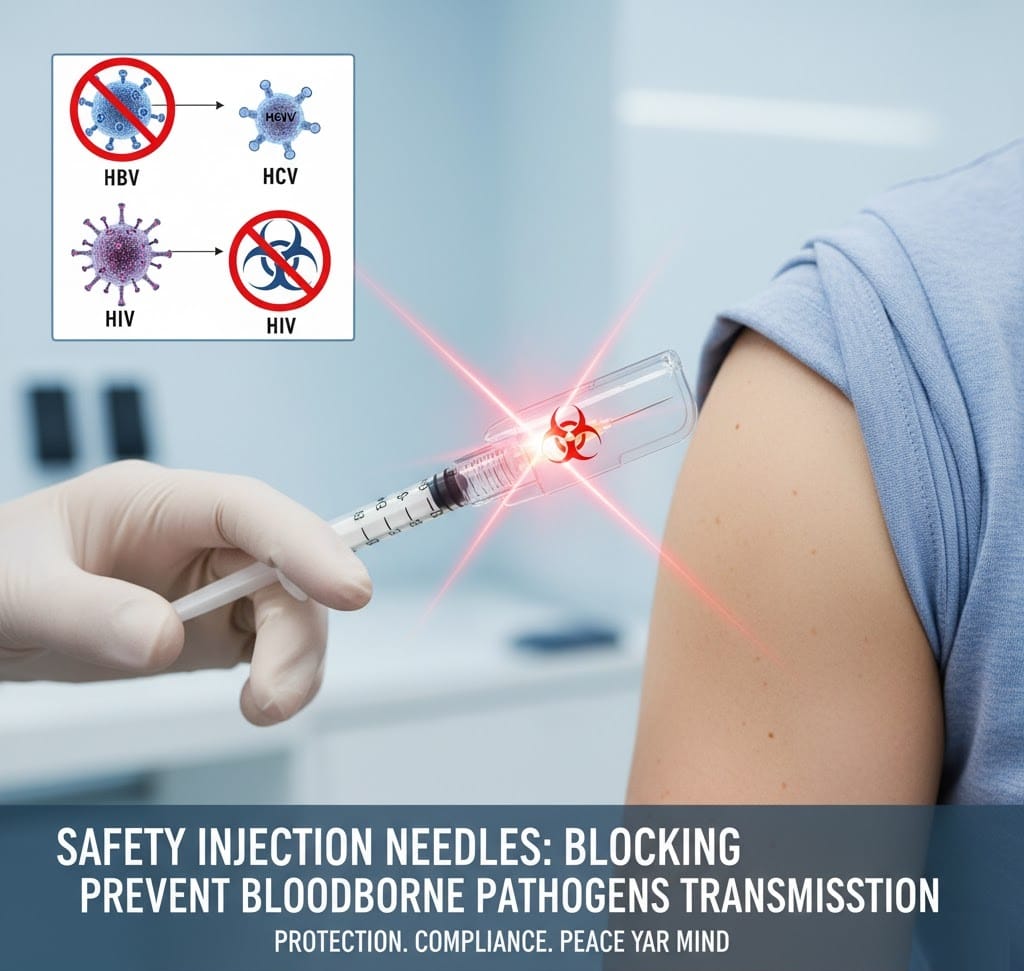
According to the World Health Organization (WHO), more than 3 million healthcare workers experience needle-stick injuries each year, leading to thousands of cases of Hepatitis B, Hepatitis C, and HIV. The need for safe injection practices has never been more urgent.
That’s where Safety Injection Needles come into play — an innovation that’s reshaping the medical landscape. Manufacturers like Siny Medical are at the forefront of this change, producing cutting-edge safety solutions that drastically reduce infection risks.
Understanding Safety Injection Needles
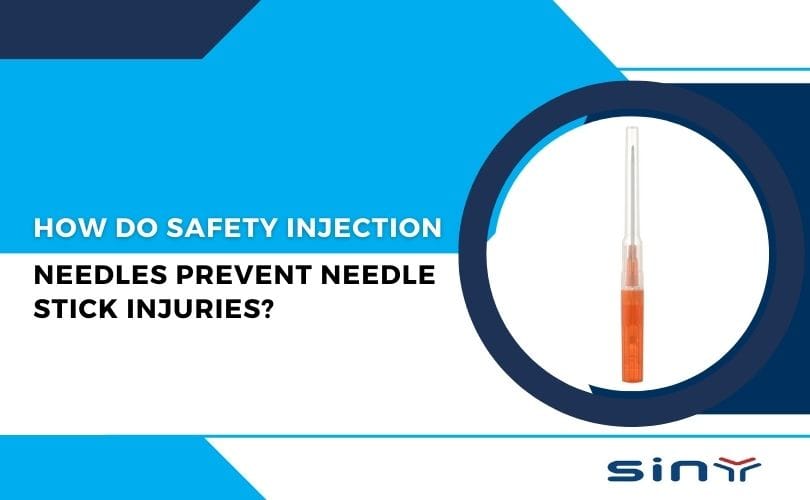
Safety Injection Needles are specially designed syringes that include built-in safety mechanisms to minimize or eliminate accidental needle-stick injuries. These mechanisms are activated either automatically or manually after injection, ensuring the needle is covered or retracted before disposal.
Unlike conventional needles, safety needles are created with ergonomic and protective engineering, ensuring that the healthcare provider never directly handles an exposed needle tip after use.
Key Components of Safety Injection Needles:
- Needle Hub: Provides connection between syringe and needle.
- Protective Shield or Cap: Covers the needle after injection.
- Safety Mechanism: Retractable or sliding guard that locks post-use.
- Needle Barrel: Holds the injected medication.
- Plunger: Used for controlled medication delivery.
You can find an extensive range of such safe and durable designs at Siny Medical’s Safety Injection Needle collection.
How Safety Injection Needles Prevent Bloodborne Disease Transmission
The primary goal of safety injection technology is to eliminate exposure to contaminated needles. Here’s how it works:
- After an injection, the safety mechanism either automatically retracts the needle into the barrel or slides a protective shield over the tip.
- This prevents any direct contact with contaminated surfaces or fluids.
- Even if the syringe is accidentally dropped or handled post-procedure, the needle remains covered effectively breaking the chain of infection.
Research shows that safety needles can reduce accidental injuries by up to 80–90% when compared to traditional needles.
Siny Medical’s Butterfly Injection Needles and Butterfly Blood Collection Needles are prime examples of this innovation, built with precision locking mechanisms that prevent re-use and protect medical staff.
The Global Health Burden of Needlestick Injuries (NSIs) and Bloodborne Pathogens
The needlestick injury problem is vast and persistent, forming one of the most significant preventable risks in modern healthcare. According to the Centers for Disease Control and Prevention (CDC), an estimated 385,000 needlesticks and other sharps-related injuries are sustained by hospital-based healthcare personnel each year in the United States alone. Similar injuries occur across all healthcare settings, from clinics and nursing homes to emergency care services.
The true gravity of NSIs lies in their potential to transmit life-threatening bloodborne pathogens:
- Hepatitis B Virus (HBV): While highly preventable with vaccination, the risk of seroconversion (becoming infected) after an exposure incident is estimated to be as high as 1% to 40% if the source is positive and the worker is unvaccinated.
- Hepatitis C Virus (HCV): HCV is a major concern, with the risk of seroconversion estimated to be around 1.8% following a percutaneous exposure from a positive source. HCV can lead to chronic liver disease, cirrhosis, and liver cancer.
- Human Immunodeficiency Virus (HIV): While the risk of seroconversion from an occupational exposure is the lowest of the three (approximately 0.3%), the emotional trauma and the expense of post-exposure prophylaxis (PEP) treatment following a potential exposure are immense.
The vast majority of these injuries occur during two critical phases: (1) during the use of the needle on the patient (insertion, manipulation, or withdrawal) and (2) after use, during the disposal process or before the sharp is secured. Studies consistently show that anywhere from 62% to 88% of sharps injuries can be prevented by simply substituting conventional sharp devices with safer alternatives, demonstrating the powerful impact of safety injection needles.
The Science Behind the Safety
Safety injection devices work based on mechanical engineering and ergonomic design that prioritize safety and ease of use. There are generally two main safety systems:
Passive Safety Systems
These systems activate automatically without requiring user intervention.
- Example: Retractable needle systems that pull the needle back into the barrel immediately after injection.
- Benefit: Eliminates human error, ensuring the needle is never left exposed.
Active Safety Systems
These require manual activation by the healthcare provider, such as sliding a protective sheath over the needle after use.
- Benefit: Easy to operate and compatible with various syringe types.
- Available through Siny Medical’s Injection Needles for Sale.
Both systems contribute significantly to reducing cross-contamination, infection risk, and needle re-use — a critical issue in developing healthcare settings.
Why Bloodborne Disease Prevention Matters
Bloodborne infections don’t just affect healthcare providers; they impact patients, hospital systems, and entire communities.
Let’s look at the data:
- Hepatitis B can survive outside the body for up to 7 days, making even a single contaminated needle dangerous.
- Hepatitis C infects around 1.75 million people annually due to unsafe injections.
- HIV remains a persistent threat, with nearly 1% of occupational exposures resulting in infection.
These statistics highlight why transitioning to Safety Injection Needles from trusted manufacturers like Siny Medical is essential.
Types of Safety Injection Needles
Safety needles aren’t one-size-fits-all. They come in various designs tailored to specific medical applications:
Retractable Safety Needles
Automatically retract after injection. Ideal for high-volume hospitals.
Sliding Sheath Needles
Feature a manual sliding guard that locks post-use.
Butterfly Safety Needles
Used for blood draws and IV infusions. Flexible wings allow precise control — check out the Siny Medical Butterfly Needle.
Pre-Filled Safety Syringes
These come ready-to-use, minimizing contamination risk during medication preparation.
All these designs are manufactured under strict quality control by Siny Medical, a globally trusted name in medical safety technology.
Siny Medical: Pioneering Safe Injection Solutions
Founded with a mission to enhance healthcare safety, Siny Medical has become a global leader in medical consumables and injection systems.
Their advanced range of Safety Injection Needles is designed to meet international standards and reduce cross-contamination risks in hospitals and clinics.
Summary
Safety injection needles are a vital tool in modern healthcare, offering unparalleled protection against bloodborne disease transmission. Their innovative design and advanced safety features make them an essential component of infection control strategies. By choosing reliable products from trusted manufacturers like Siny Medical, healthcare facilities can ensure the safety of their staff and patients while complying with industry standards.
For more information or to explore our product range, visit our Safety Injection Needles page or contact us today.
Stay connected with us on YouTube and Made-in-China for the latest updates and product insights.
FAQs About Safety Injection Needles
Q1: What makes Safety Injection Needles different from regular needles?
They include a built-in safety mechanism that covers or retracts the needle after use, preventing accidental injuries.
Q2: Can Safety Needles be reused?
No, they are strictly single-use to avoid contamination and maintain sterility.
Q3: Are they more expensive than traditional needles?
Initially, yes — but they save costs long-term by preventing infections, lawsuits, and treatment expenses.
Q4: Do Safety Needles work for all injection types?
Absolutely. They’re available for IM, IV, and blood collection procedures, including butterfly needle options.
Q5: Where can I purchase high-quality Safety Injection Needles?
You can explore and purchase from Siny Medical’s online catalog.