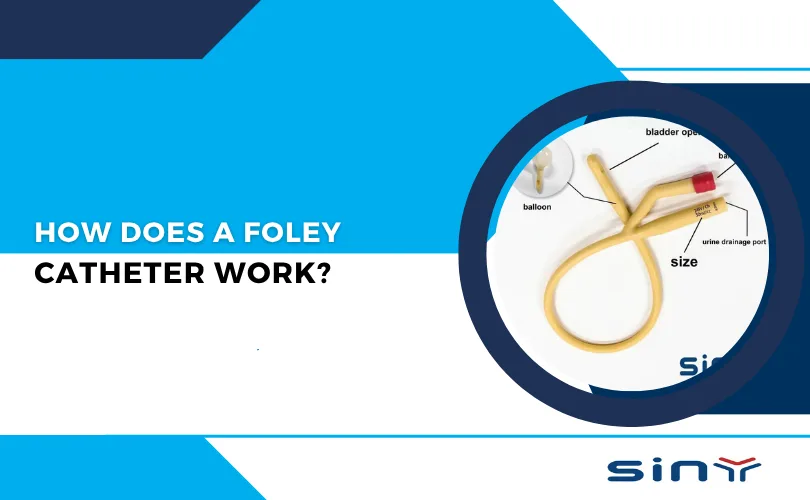
A Foley catheter is one of the most widely used urinary drainage devices in hospitals, nursing facilities, and home healthcare environments. Understanding how does a Foley catheter work helps healthcare professionals, caregivers, and medical buyers better understand its design, clinical applications, and key factors when selecting a suitable product.
Unlike intermittent urinary catheters that are inserted and removed after bladder emptying, a Foley catheter is designed to remain inside the bladder for continuous urine drainage. Its unique retention balloon system allows the catheter to stay securely positioned while providing a reliable pathway for urine collection.
A Foley catheter works by creating a controlled drainage route between the bladder and an external urine collection bag. During insertion, the flexible tube passes through the urethra until the catheter tip reaches the bladder. Once proper placement is confirmed, healthcare professionals inflate the small balloon near the catheter tip with sterile water. This balloon helps hold the catheter in position and prevents accidental movement.
Foley catheters are commonly used after surgical procedures, during critical care, for urinary retention management, and in situations where continuous bladder drainage is required. Because these devices remain inside the urinary tract for a period of time, product quality, material safety, and manufacturing consistency are essential considerations.
For hospitals, clinics, and medical distributors, choosing the right Foley catheter involves more than comparing prices. Factors such as catheter material, size options, balloon reliability, packaging quality, and supplier capability all influence long-term product performance. Siny Medical provides professional urinary catheter solutions with reliable manufacturing standards and customized options for healthcare partners worldwide.
Table of Contents
- 1 What Is a Foley Catheter? Understanding Its Structure and Main Components
- 2 How Does a Foley Catheter Work Step-by-Step?
- 3 Different Types of Foley Catheters and Their Medical Applications
- 4 Foley Catheter vs Other Urinary Catheters: Understanding the Differences
- 5 How to Choose the Right Foley Catheter for Healthcare Use
- 6 Frequently Asked Questions About Foley Catheters
- 6.1 1. How does a Foley catheter stay inside the bladder?
- 6.2 2. How long can a Foley catheter remain in place?
- 6.3 3. Are Foley catheters painful?
- 6.4 4. What is the difference between a Foley catheter and a regular urinary catheter?
- 6.5 5. Are silicone Foley catheters better than latex Foley catheters?
- 6.6 6. What sizes of Foley catheters are commonly used?
- 6.7 7. How should healthcare facilities choose a Foley catheter supplier?
- 7 Choosing a Reliable Foley Catheter Partner for Healthcare Supply
What Is a Foley Catheter? Understanding Its Structure and Main Components
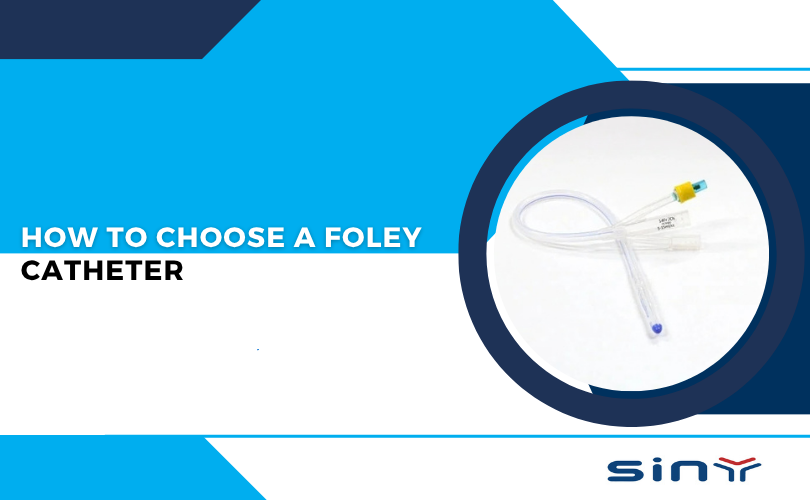
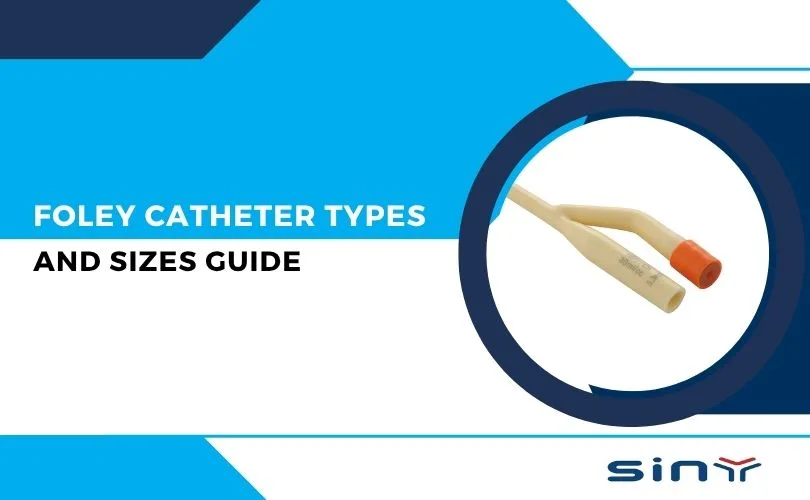
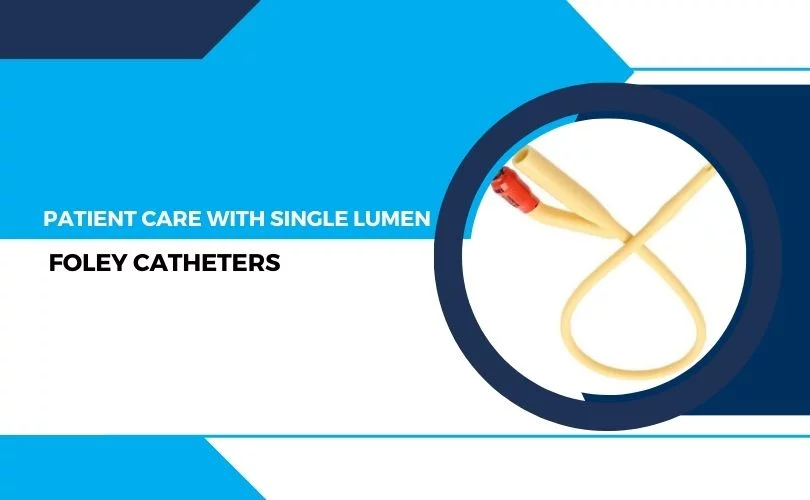
A Foley catheter is an indwelling urinary catheter designed to remain inside the bladder for continuous drainage. Unlike temporary urinary catheters, Foley catheters include a retention balloon that keeps the device securely positioned after insertion.
Although a Foley catheter has a relatively simple appearance, each component is carefully designed to support safe urine drainage and patient comfort. Understanding its structure helps healthcare buyers evaluate product quality and choose the right catheter for different applications.
A standard Foley catheter usually consists of four main parts:
1. Flexible Catheter Tube
The catheter tube is the main pathway that allows urine to travel from the bladder to the collection bag. A high-quality Foley catheter must balance flexibility, strength, and smoothness.
The tube needs to be:
- Flexible enough to follow the natural shape of the urinary tract
- Strong enough to maintain its shape during insertion
- Resistant to kinking to support continuous drainage
Common Foley catheter materials include latex, silicone-coated latex, and 100% silicone. Each material has different characteristics depending on the intended application.
Latex Foley Catheters
Latex catheters are widely used because they provide excellent flexibility and cost efficiency. Their soft texture can make insertion easier in many routine applications.
However, some patients may have sensitivity to latex materials. Healthcare providers should consider patient conditions and intended usage duration when selecting latex-based products.
Silicone Foley Catheters
Silicone Foley catheters are often preferred for longer-term catheterization because silicone offers excellent biocompatibility and a smooth surface.
Compared with traditional latex options, silicone catheters may provide advantages such as:
- Reduced risk of material sensitivity
- Good resistance to mineral buildup
- Improved comfort during extended use
For healthcare facilities managing different patient needs, having access to multiple material options allows more flexible product selection.
2. Drainage Eyes Near the Catheter Tip
At the end of the Foley catheter inserted into the bladder, small openings called drainage eyes allow urine to enter the catheter tube.
The design of these openings affects drainage performance. Smooth and accurately manufactured drainage holes help maintain consistent urine flow while reducing unnecessary irritation during use.
For medical buyers, manufacturing precision is an important factor because even small differences in catheter design can influence product reliability and patient experience.
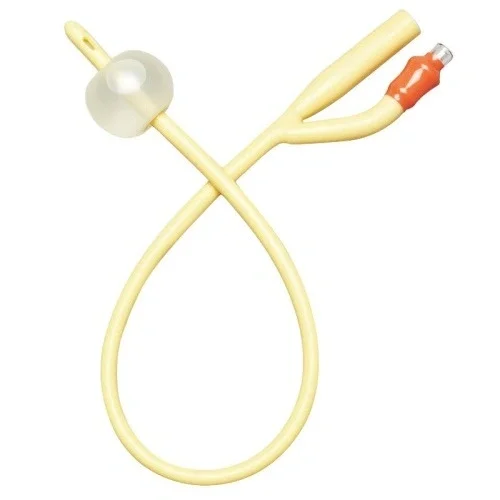
3. Retention Balloon System
The retention balloon is the key feature that separates Foley catheters from many other urinary catheters.
After the catheter reaches the bladder, healthcare professionals fill the balloon with sterile water through the inflation channel. The expanded balloon gently holds the catheter in place and reduces the risk of accidental displacement.
The balloon does not block urine flow because it sits behind the drainage openings inside the bladder. Instead, it works as a positioning mechanism that allows continuous drainage while maintaining catheter stability.
Different Foley catheter models may use different balloon capacities depending on patient requirements and clinical applications. Standard adult Foley catheters commonly use a 10 ml balloon, while other sizes may be selected for specific medical situations.
How Does a Foley Catheter Work Step-by-Step?
To fully understand how does a Foley catheter work, it is helpful to look at the complete process from insertion to removal. Each step requires proper technique and a well-designed catheter system to ensure effective drainage and patient safety.
Step 1: Catheter Insertion Into the Bladder
Before inserting a Foley catheter, healthcare professionals clean the surrounding area and apply sterile lubricant to reduce friction. The flexible catheter tube is then gently guided through the urethra until it reaches the bladder.
When urine begins flowing through the catheter, it usually indicates that the catheter tip has entered the bladder. At this stage, healthcare professionals typically advance the catheter slightly further before inflating the balloon to ensure the retention balloon is positioned safely inside the bladder.
Proper insertion technique is essential because inflating the balloon before the catheter reaches the correct position may cause discomfort or injury.
Step 2: Balloon Inflation and Catheter Fixation
After confirming correct placement, sterile water is injected through the inflation port to expand the retention balloon.
The inflated balloon acts as a gentle anchor inside the bladder, helping prevent the catheter from moving back through the urethra. This allows the catheter to remain securely positioned while urine continues to drain.
Sterile water is commonly used for balloon inflation because it remains stable inside the balloon system. Other fluids, such as saline solutions, may leave mineral deposits over time that could affect balloon deflation during catheter removal.
The retention balloon is one of the most important design features of Foley catheters. Without this mechanism, continuous drainage would be difficult because the catheter could shift out of position during movement.
Step 3: Continuous Urine Drainage
Once the Foley catheter is secured, urine flows naturally from the bladder through the drainage openings near the catheter tip.
The urine passes through the internal lumen of the catheter and enters an external collection bag. This creates a closed drainage system that allows healthcare providers to manage patients who cannot empty their bladder independently.
A properly functioning Foley catheter helps healthcare teams:
- Monitor urine output during critical care
- Prevent excessive bladder expansion
- Support recovery after certain surgical procedures
- Manage urinary retention caused by medical conditions
The effectiveness of urine drainage depends on several factors, including correct catheter placement, appropriate catheter size, proper tubing positioning, and product quality.
Step 4: Catheter Removal After Clinical Use
When the Foley catheter is no longer needed, healthcare professionals first empty the retention balloon by withdrawing the sterile water through the inflation port.
After the balloon completely collapses, the catheter can be gently removed from the urethra.
The length of time a patient uses a Foley catheter depends on the medical condition, treatment requirements, and healthcare provider recommendations. Since prolonged catheter use may increase the risk of catheter-associated urinary tract infections (CAUTIs), healthcare teams usually remove the catheter as soon as continuous drainage is no longer medically necessary.
Different Types of Foley Catheters and Their Medical Applications
Although Foley catheters follow the same basic working principle, different designs are available to meet specific clinical requirements. Understanding these variations helps hospitals, distributors, and healthcare providers select products that match different applications.
1. Two-Way Foley Catheter
The two-way Foley catheter is the most commonly used type for general urinary drainage.
It contains two separate channels:
- One channel allows urine to flow from the bladder.
- One channel is used to inflate and deflate the retention balloon.
Because of its simple and reliable design, two-way Foley catheters are commonly used for:
- Postoperative bladder drainage
- Urinary retention management
- Monitoring urine output in hospitalized patients
- Long-term drainage when clinically required
For most routine applications, the two-way design provides an effective balance between functionality, comfort, and cost.
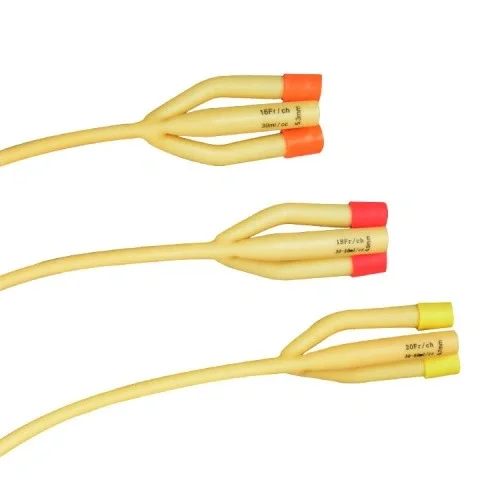
2. Three-Way Foley Catheter
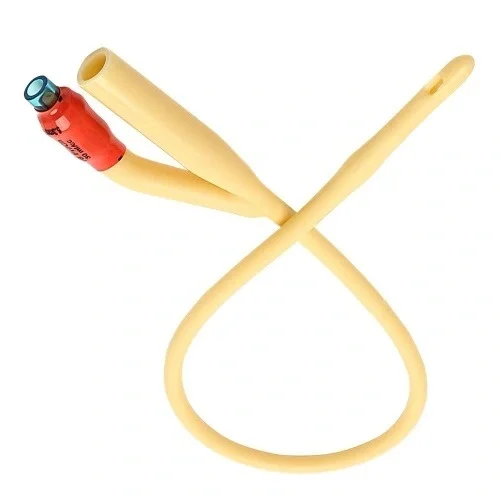
A three-way Foley catheter includes an additional irrigation channel compared with a standard two-way model.
The three channels allow:
- Continuous urine drainage
- Balloon inflation
- Bladder irrigation
Three-way Foley catheters are commonly used after certain urological procedures, such as prostate surgery, where blood clots or tissue fragments may need to be flushed from the bladder.
The additional irrigation pathway makes this catheter type more specialized and suitable for specific medical situations.
3. Pediatric Foley Catheter
Pediatric Foley catheters are designed for infants and children who require urinary drainage.
Compared with adult models, pediatric versions generally feature:
- Smaller diameters
- Smaller balloon capacities
- Softer materials designed for delicate anatomy
Because children have smaller and more sensitive urinary systems, selecting the correct catheter size and material is particularly important.
Foley Catheter vs Other Urinary Catheters: Understanding the Differences
Many people use the terms “urinary catheter” and “Foley catheter” interchangeably, but they are not exactly the same.
A Foley catheter is a specific type of indwelling urinary catheter that contains a retention balloon. This allows it to remain inside the bladder for continuous drainage.
Other urinary catheter types, such as intermittent catheters, work differently.
| Type | Retention Balloon | Main Application |
|---|---|---|
| Foley catheter | Yes | Continuous bladder drainage |
| Intermittent catheter | No | Temporary bladder emptying |
| Suprapubic catheter | Usually yes | Long-term drainage through abdominal access |
For hospitals and medical distributors, understanding these differences helps ensure the correct catheter type is selected for different healthcare environments.
How to Choose the Right Foley Catheter for Healthcare Use
Understanding the working principle of a Foley catheter is only the first step. For hospitals, clinics, and medical supply distributors, product selection requires careful evaluation of several factors.
1. Select the Appropriate Catheter Size
Foley catheters are measured using the French (Fr) scale. A higher French size indicates a larger catheter diameter.
The appropriate size depends on factors such as:
- Patient age
- Clinical application
- Required drainage flow
- Physician preference
Using an unsuitable catheter size may affect comfort and drainage performance.
2. Consider Material Selection
Material choice directly affects patient comfort and application suitability.
Latex
Advantages:
- Flexible
- Cost-effective
- Easy to manufacture
Considerations:
- Not suitable for patients with latex sensitivity
- Usually preferred for shorter-term applications
Silicone
Advantages:
- Excellent biocompatibility
- Smooth surface
- Suitable for longer-term use
Considerations:
- Higher material cost compared with latex options
Healthcare facilities should select materials according to patient requirements, treatment duration, and clinical protocols.
3. Evaluate Balloon Reliability and Catheter Design
The retention balloon is critical for safe catheter performance.
A reliable Foley catheter should provide:
- Consistent balloon inflation
- Smooth balloon expansion
- Reliable deflation before removal
- Secure catheter positioning
Other design details, such as smooth catheter surfaces, secure connectors, and accurate drainage openings, also influence overall performance.
4. Check Sterilization, Packaging, and Supplier Capability
Because Foley catheters directly enter the urinary tract, sterile manufacturing and packaging are essential.
Healthcare buyers should evaluate:
- Sterilization methods
- Packaging integrity
- Shelf life
- Quality management systems
- Customization capability
For international distributors, supplier stability and manufacturing experience are also important factors when building long-term cooperation.
Siny Medical provides urinary catheter solutions for healthcare organizations and distributors worldwide. With professional manufacturing capabilities and customized product support, Siny Medical helps partners select suitable catheter solutions based on different market and clinical requirements.
Frequently Asked Questions About Foley Catheters
1. How does a Foley catheter stay inside the bladder?
A Foley catheter stays in place because it has a small balloon near the catheter tip. After the catheter enters the bladder, healthcare professionals fill the balloon with sterile water, allowing it to hold the catheter securely during use.
2. How long can a Foley catheter remain in place?
The duration depends on the patient’s medical condition, catheter material, and clinical requirements. Short-term use is common after surgery, while silicone Foley catheters may be selected for longer-term applications when appropriate.
3. Are Foley catheters painful?
Some patients may experience mild discomfort or pressure during insertion and while the catheter remains in place. Proper catheter selection, lubrication, sterile technique, and correct placement can help improve comfort.
4. What is the difference between a Foley catheter and a regular urinary catheter?
A Foley catheter includes a retention balloon that allows continuous bladder drainage. Many other urinary catheters, such as intermittent catheters, do not contain a balloon and are removed after bladder emptying.
5. Are silicone Foley catheters better than latex Foley catheters?
Neither material is always better for every situation. Silicone catheters are often preferred for longer-term use because of their biocompatibility, while latex options may provide flexibility and cost advantages for certain applications.
6. What sizes of Foley catheters are commonly used?
Common adult Foley catheter sizes often range from 12 Fr to 18 Fr, although the appropriate size depends on patient condition and clinical requirements. Healthcare providers select the size that provides effective drainage while maintaining patient comfort.
7. How should healthcare facilities choose a Foley catheter supplier?
Healthcare facilities should consider product quality, manufacturing experience, material options, customization services, documentation support, and supply reliability. A dependable supplier should provide consistent products that meet the requirements of different healthcare markets.
Choosing a Reliable Foley Catheter Partner for Healthcare Supply
A Foley catheter may appear simple, but its design involves multiple components working together to provide safe and effective urinary drainage. The catheter tube, drainage openings, retention balloon, and connector system all contribute to reliable performance.
For hospitals, distributors, and healthcare organizations, choosing the right Foley catheter requires more than comparing unit prices. Material quality, manufacturing consistency, product customization, and supplier support all influence long-term cooperation.
Siny Medical provides professional medical consumable solutions for global healthcare partners, including urinary catheter products designed for different clinical applications. Whether you need standard Foley catheter options, customized specifications, or stable OEM supply support, our team can help develop suitable solutions.
Contact Siny Medical today to learn more about our Foley catheter products and discuss cooperation opportunities.