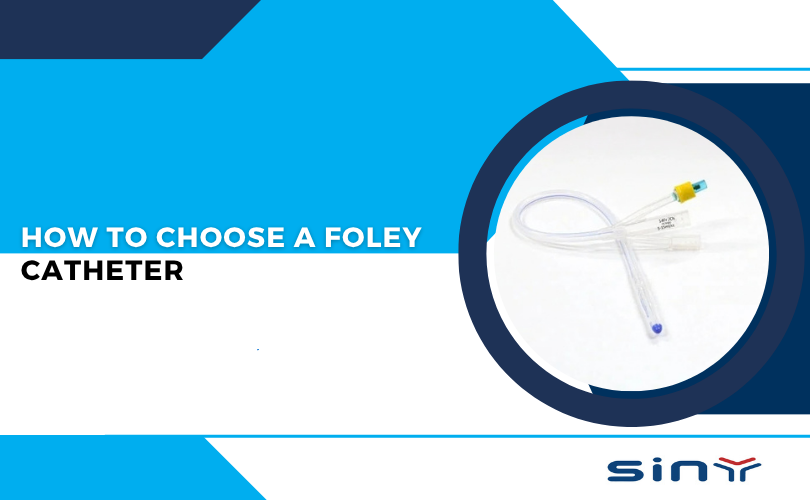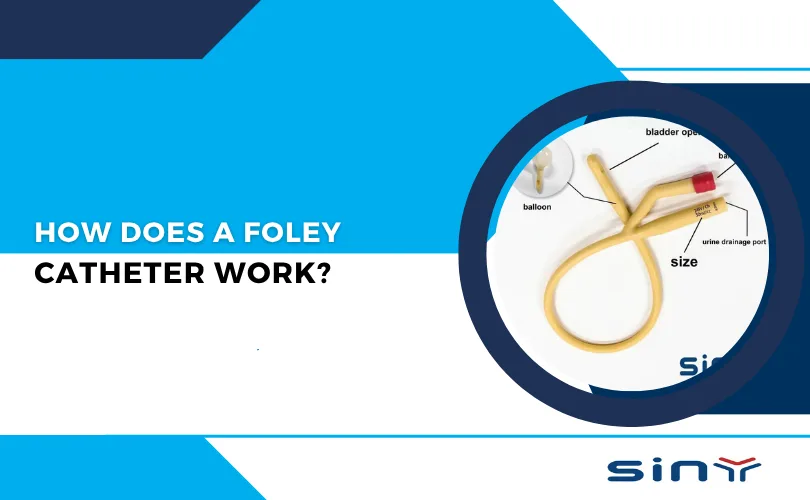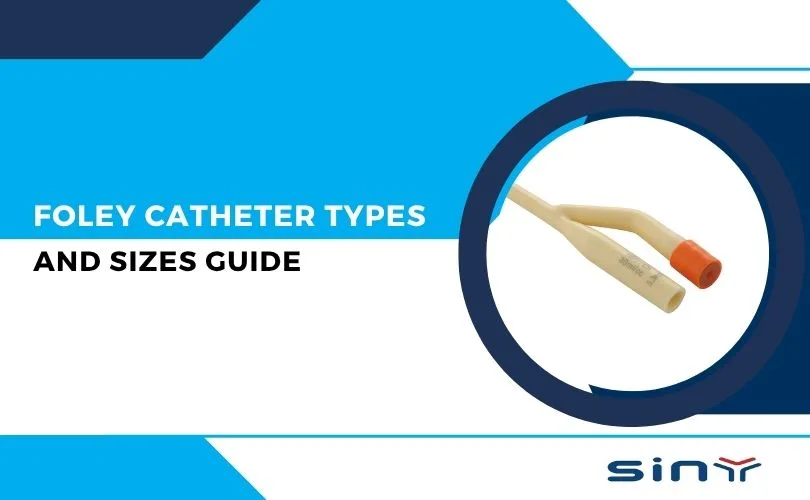
Choosing the right Foley catheter is an important decision for hospitals, clinics, and medical distributors. When comparing 2-Way vs. 3-Way Foley Catheters, the main difference lies in their internal channels and clinical functions. Both devices provide urinary drainage and use an inflatable balloon for retention. However, a three-way catheter has an additional channel for bladder irrigation.
A two-way Foley catheter is commonly used for routine urinary drainage, while a three-way catheter is designed for situations that require irrigation alongside drainage. These include selected urological procedures and the management of significant bleeding in the bladder.
The choice is not simply about having more channels. Catheter size, material, balloon capacity, and internal drainage design also affect suitability. Understanding these differences helps healthcare professionals select appropriate devices and allows buyers to make more informed purchasing decisions.
This guide explains how both catheter types work, their clinical applications, and the key specifications to consider before ordering.
Table of Contents
- 1 What Are 2-Way and 3-Way Foley Catheters?
- 2 2-Way vs. 3-Way Foley Catheters: Key Differences
- 3 When Should You Use a 2-Way or 3-Way Foley Catheter?
- 4 How to Choose the Right Foley Catheter Size, Material, and Balloon
- 5 How Should Hospitals and Distributors Choose Foley Catheters?
- 6 Frequently Asked Questions About Foley Catheters
- 6.1 What is the main difference between a 2-way and a 3-way Foley catheter?
- 6.2 Is a 3-way Foley catheter better than a 2-way catheter?
- 6.3 What is a 3-way Foley catheter used for?
- 6.4 Can a 2-way Foley catheter be used for bladder irrigation?
- 6.5 What size Foley catheter is commonly used for adults?
- 6.6 Why do some 3-way Foley catheters have a 30 mL balloon?
- 6.7 Which Foley catheter material is better, silicone or latex?
- 6.8 Can a 3-way Foley catheter be used without bladder irrigation?
- 7 Final Thoughts: Choosing the Right Foley Catheter
What Are 2-Way and 3-Way Foley Catheters?
A Foley catheter is a flexible urinary catheter designed to remain inside the bladder for a clinically appropriate period. A small balloon near its tip helps keep it in position after insertion.
Unlike an intermittent catheter, which is removed after bladder drainage, a Foley catheter remains connected to a urinary collection system during use.
The terms two-way and three-way refer to the number of separate internal channels, also known as lumens. Each lumen serves a specific purpose.
What Is a 2-Way Foley Catheter?
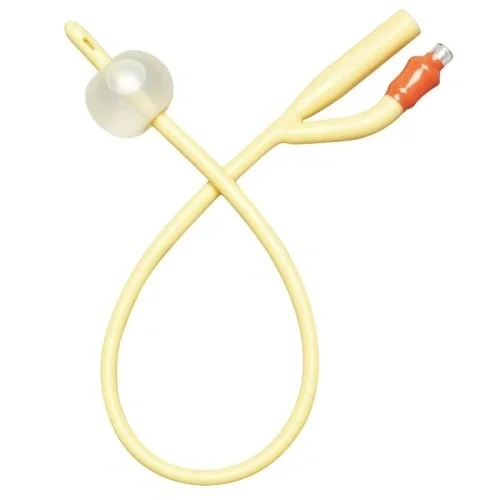
A two-way Foley catheter has two internal channels:
- Drainage lumen: Carries urine from the bladder into a collection bag.
- Balloon inflation lumen: Allows the retention balloon to be inflated after correct catheter placement.
This simple design makes two-way catheters suitable for many routine urinary drainage applications.
They are commonly used for urinary retention, selected postoperative care, and accurate urine output monitoring when clinically indicated.
Some patients may also require longer-term catheterization when other bladder management methods are unsuitable. In these cases, material selection, catheter care, and ongoing clinical assessment become particularly important.
Two-way catheters are available in various French sizes, lengths, materials, and balloon capacities. The appropriate configuration depends on the patient’s anatomy and treatment requirements.
What Is a 3-Way Foley Catheter?
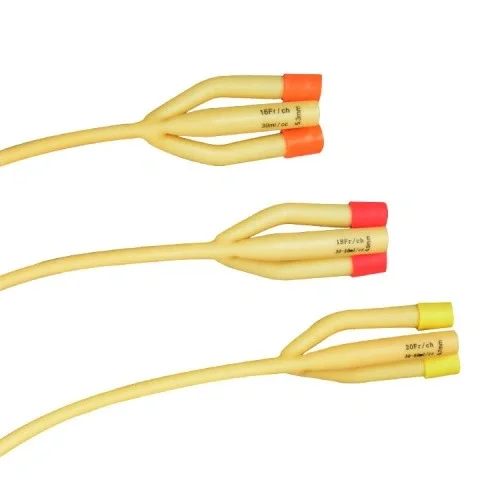
A three-way Foley catheter contains three separate lumens:
- Drainage lumen: Removes urine and irrigation fluid from the bladder.
- Balloon inflation lumen: Inflates the retention balloon.
- Irrigation lumen: Introduces sterile irrigation fluid into the bladder.
The additional irrigation channel is its defining feature.
This design allows irrigation fluid to enter the bladder while the drainage channel provides an outflow pathway. It is particularly useful when continuous bladder irrigation (CBI) is prescribed.
Three-way catheters are commonly associated with postoperative urological care and the management of significant hematuria, especially when blood clots may obstruct urinary drainage.
However, the third lumen does not guarantee that the catheter will remain unobstructed. Effective irrigation depends on the internal channel design, catheter size, drainage openings, and appropriate clinical monitoring.
Both catheter types provide urinary drainage, but their different internal structures make them suitable for different medical needs.
2-Way vs. 3-Way Foley Catheters: Key Differences
The most important distinction between these catheter types is their irrigation capability. A two-way catheter is designed primarily for urinary drainage, while a three-way catheter supports drainage and bladder irrigation through separate channels.
Other differences involve internal construction, typical applications, and product specifications.
| Feature | 2-Way Foley Catheter | 3-Way Foley Catheter |
|---|---|---|
| Number of lumens | Two | Three |
| Urine drainage | Yes | Yes |
| Balloon inflation | Yes | Yes |
| Dedicated irrigation channel | No | Yes |
| Main function | Routine urinary drainage | Drainage with bladder irrigation |
| Common applications | Urinary retention, selected postoperative care, urine output monitoring | Urological postoperative care and significant hematuria requiring irrigation |
| Continuous bladder irrigation | Not designed for standard CBI | Designed to support CBI |
| Common size range | Broad range, including smaller Fr sizes | Often larger Fr sizes for irrigation applications |
| Balloon capacity | Commonly smaller balloons for routine drainage | Some postoperative models use 30 mL balloons |
| Product selection | Based on drainage requirements | Based on drainage and irrigation requirements |
Specifications vary by manufacturer and intended clinical application. The table describes common product characteristics rather than universal requirements.
Drainage and Irrigation Functions
A two-way Foley catheter provides a drainage pathway and a separate channel for balloon inflation. It is suitable when urine needs to drain continuously without a dedicated irrigation system.
A three-way catheter adds an irrigation channel. This allows clinicians to introduce irrigation fluid while urine and fluid drain through another lumen.
Continuous bladder irrigation may be used after certain urological procedures or when significant hematuria creates a risk of clot formation.
However, not every patient with blood in the urine requires a three-way catheter. The decision depends on bleeding severity, drainage needs, and clinical assessment.
Intermittent bladder irrigation may also be performed through an appropriate catheter system when indicated. A dedicated third lumen is particularly useful for continuous irrigation.
Does a 3-Way Catheter Provide Better Drainage?
Not necessarily.
Catheter size is measured using the French (Fr) scale, which describes the external diameter of the catheter.
1 Fr is equivalent to approximately 0.33 mm of external diameter.
The French size does not indicate the diameter of the internal drainage lumen.
A three-way catheter must accommodate three separate channels within its body. As a result, its drainage lumen may differ from that of a two-way catheter with the same external diameter.
Internal lumen geometry, catheter material, and drainage-eye design also influence fluid flow.
For irrigation applications, the size and configuration of the drainage channel are particularly important. A larger external diameter does not automatically guarantee better performance across different catheter designs.
Healthcare buyers should therefore compare the complete catheter construction rather than relying on French size alone.
Is a 3-Way Foley Catheter More Expensive?
Three-way catheters generally have a more complex internal structure and an additional irrigation connection.
This may result in a higher unit price than comparable two-way models. Actual pricing depends on material, dimensions, product design, and purchasing quantities.
However, cost should be evaluated alongside clinical requirements.
A two-way catheter is often sufficient for routine urinary drainage. A three-way catheter becomes valuable when its additional irrigation function is needed.
Choosing the correct configuration helps hospitals avoid unnecessary expenditure while maintaining appropriate product availability.
When Should You Use a 2-Way or 3-Way Foley Catheter?
The choice between two-way and three-way catheters depends primarily on the patient’s clinical condition and whether bladder irrigation is required.
Both devices are used in healthcare settings, but their typical applications differ.
Common Applications of 2-Way Foley Catheters
Urinary retention
A two-way catheter may be used when a patient cannot empty the bladder adequately and continuous urinary drainage is clinically necessary.
It provides a direct drainage pathway without the additional irrigation channel.
Postoperative urinary drainage
Some surgical patients require temporary catheterization during recovery. A two-way catheter may be suitable when the main purpose is urine drainage or output monitoring.
The need for catheterization should be reviewed regularly, particularly when the patient no longer requires continuous drainage.
Accurate urine output monitoring
In selected critically ill patients, an indwelling catheter may help healthcare professionals measure urine output accurately.
This application is generally reserved for situations where precise monitoring is necessary and less invasive alternatives are unsuitable.
Longer-term bladder management
Certain patients require ongoing urinary drainage because of persistent bladder-emptying problems.
Two-way Foley catheters may be used when clinically appropriate. The choice of material and replacement schedule should follow the product instructions and the patient’s individual needs.
Common Applications of 3-Way Foley Catheters
After prostate surgery
Three-way catheters are commonly used after selected prostate procedures, including transurethral resection of the prostate (TURP).
Postoperative bleeding may require continuous bladder irrigation to help maintain drainage and reduce clot accumulation.
After bladder procedures
Some bladder operations require irrigation during postoperative recovery.
A three-way catheter provides separate channels for irrigation and drainage, allowing the prescribed fluid to circulate through the bladder.
Not all bladder procedures require continuous irrigation. The decision depends on the procedure and the patient’s condition.
Management of significant hematuria
Hematuria refers to blood in the urine. When bleeding is substantial, blood clots may form and obstruct urinary drainage.
A three-way catheter can support continuous irrigation to help prevent clot accumulation and maintain catheter patency.
However, established clot retention may require manual irrigation, clot evacuation, or another intervention by trained healthcare professionals.
Continuous bladder irrigation
CBI is performed using a prescribed irrigation system and appropriate clinical monitoring.
Healthcare staff must monitor both the fluid entering the bladder and the fluid draining from it. They also need to assess urine appearance, catheter patency, and signs of discomfort or bladder distension.
If outflow becomes obstructed, irrigation must be managed promptly according to the clinical protocol. Continuing fluid inflow without adequate drainage can cause serious complications.
Can a 3-Way Foley Catheter Replace a 2-Way Catheter?
A three-way catheter can drain urine, but it is not automatically the best choice for routine catheterization.
Its additional lumen is useful when irrigation is required. Without that need, a standard two-way catheter may be more appropriate.
Three-way catheters used for irrigation are also frequently available in larger diameters. Unnecessarily large catheters may increase discomfort or urethral trauma.
For routine drainage, clinicians generally select the smallest appropriate catheter that provides adequate urine flow.
When significant bleeding or clot management is involved, a larger catheter with suitable drainage characteristics may be necessary.
The correct choice should always reflect the clinical indication rather than the number of available channels.
How to Choose the Right Foley Catheter Size, Material, and Balloon
Once the catheter configuration has been selected, several technical specifications require attention.
For hospitals and distributors, these details help determine whether a product is suitable for its intended use.
Foley Catheter Size and French Measurements
Foley catheter sizes are expressed in French units.
Common adult sizes include 12 Fr, 14 Fr, 16 Fr, and 18 Fr. These sizes are frequently associated with routine urinary drainage, although clinical requirements vary.
Three-way Foley catheters used for bladder irrigation are commonly available in larger sizes, such as 20 Fr, 22 Fr, and 24 Fr.
The appropriate size depends on the clinical procedure, drainage requirements, and catheter design.
Larger catheters may provide advantages in selected clot-management situations, but their external diameter alone does not determine flow performance.
Buyers should also consider the internal drainage lumen and the design of the catheter openings.
Silicone vs. Latex Foley Catheters
Material selection affects catheter handling, flexibility, and patient compatibility.
All-silicone Foley catheters do not contain natural rubber latex. They may be preferred for patients with latex sensitivity and are available in designs intended for different durations of catheterization.
Silicone-coated latex Foley catheters use a latex-based structure with a silicone coating. They may offer different flexibility and cost characteristics.
However, a silicone coating does not make a latex catheter suitable for patients with natural rubber latex allergy.
Neither material is universally superior. Selection should consider the intended duration of use, patient compatibility, product construction, and manufacturer instructions.
Foley Catheter Balloon Capacity
The retention balloon helps maintain the catheter’s position inside the bladder.
Common balloon capacity markings include 5 mL, 10 mL, and 30 mL, depending on the product.
Smaller balloons are commonly used for routine adult urinary drainage. Some three-way catheters intended for specific postoperative urological procedures are equipped with 30 mL balloons.
A larger balloon may be selected for a particular clinical purpose, but it is not required for every three-way catheter or every postoperative patient.
Balloon capacity should never be selected solely because a catheter has three lumens.
Healthcare professionals must follow the manufacturer’s instructions for the specified inflation volume and medium. Overinflation or inappropriate balloon selection may increase the risk of discomfort, tissue pressure, and other complications.
Catheter Tip and Drainage-Eye Design
Foley catheters are available with different tip configurations.
Straight-tip designs are common in routine catheterization. Specialized tip designs may be used for particular anatomical or urological requirements.
For three-way catheters, drainage-eye size and placement can be especially important when irrigation and clot management are required.
These features influence how fluid and debris enter the drainage lumen.
When comparing products, buyers should evaluate the tip design alongside catheter diameter and internal channel construction.
How Should Hospitals and Distributors Choose Foley Catheters?
For healthcare procurement teams, understanding 2-Way vs. 3-Way Foley Catheters is the starting point. The next step is matching the product configuration to actual clinical demand.
A practical purchasing process should focus on application, technical specifications, and supply consistency.
Match Products to Clinical Requirements
Different hospital departments have different catheter needs.
General wards, emergency departments, and intensive care units may require two-way Foley catheters for routine drainage and selected monitoring applications.
Urology departments and surgical units may also need three-way models for postoperative irrigation and hematuria management.
Purchasing teams should review expected usage with clinical departments before selecting sizes, materials, and quantities.
This approach helps prevent overstocking specialized products while ensuring that suitable catheters remain available.
Compare the Specifications That Matter
When evaluating Foley catheters from different suppliers, buyers should confirm the following details:
| Specification | What Buyers Should Check |
|---|---|
| Catheter type | Two-way or three-way configuration |
| French size | External diameter and available sizes |
| Material | All-silicone, silicone-coated latex, or other specified material |
| Balloon capacity | Labeled capacity and intended clinical application |
| Catheter length | Compatibility with the intended patient population |
| Tip design | Straight or specialized configuration |
| Drainage openings | Size and arrangement suitable for the intended use |
| Packaging | Sterile barrier, labeling, and individual packaging |
| Product information | Technical specifications and instructions for use |
For three-way catheters, drainage and irrigation channel design deserve particular attention.
Products with identical French sizes may have different internal dimensions and fluid-flow characteristics. Available technical performance information can help buyers make a more meaningful comparison.
Evaluate Samples Before Bulk Orders
Product samples allow purchasing teams to check whether a catheter matches the requested specifications.
Visual and handling assessments may include surface finish, flexibility, connector construction, labeling, and packaging quality.
Where appropriate, structured product evaluation may also assess balloon integrity, lumen patency, and drainage performance.
These checks should follow suitable evaluation procedures rather than rely on appearance alone.
For medical distributors, sample evaluation is especially useful when introducing a new supplier or adding catheter configurations to an existing product range.
Consider Supply Consistency
A reliable purchasing decision also depends on consistent product specifications across repeat orders.
Hospitals and distributors may require several French sizes, balloon capacities, and catheter materials. Clear product identification helps reduce ordering errors.
Buyers should confirm that delivered products match approved specifications and that packaging and labeling remain consistent.
A suitable product range is useful, but dependable quality and accurate technical information are equally important.
By focusing on clinical requirements and product consistency, procurement teams can build a catheter selection that supports routine drainage and specialized urological applications.
Frequently Asked Questions About Foley Catheters
What is the main difference between a 2-way and a 3-way Foley catheter?
A two-way Foley catheter has two lumens for urine drainage and balloon inflation. A three-way catheter adds a separate irrigation lumen. This additional channel allows bladder irrigation to take place while fluid drains through another channel.
Is a 3-way Foley catheter better than a 2-way catheter?
Not necessarily. A three-way catheter is useful when continuous bladder irrigation is required. For routine urinary drainage without irrigation, a two-way catheter is often more appropriate. The correct choice depends on the clinical indication.
What is a 3-way Foley catheter used for?
Three-way Foley catheters are commonly used for bladder drainage and irrigation after selected urological procedures. They may also be used when significant hematuria creates a risk of clot formation or urinary obstruction.
Can a 2-way Foley catheter be used for bladder irrigation?
A two-way Foley catheter does not have a dedicated irrigation lumen and is not designed for standard continuous bladder irrigation. However, intermittent irrigation may be performed through an appropriate catheter system when clinically indicated and managed by trained healthcare professionals.
What size Foley catheter is commonly used for adults?
Common adult Foley catheter sizes include 12 Fr, 14 Fr, 16 Fr, and 18 Fr. Larger sizes may be used for selected urological procedures or clot-management requirements. Catheter size should be chosen according to clinical needs rather than a fixed standard for every patient.
Why do some 3-way Foley catheters have a 30 mL balloon?
Some three-way catheters have 30 mL balloons for specific postoperative urological applications. However, a 30 mL balloon is not necessary for every three-way catheter. The appropriate balloon capacity and inflation volume depend on the intended procedure, product labeling, and clinical instructions.
Which Foley catheter material is better, silicone or latex?
Both materials have different characteristics. All-silicone catheters are latex-free and may be suitable when latex sensitivity is a concern. Silicone-coated latex catheters have a latex-based structure and may offer different handling characteristics. Selection should depend on patient compatibility and the intended application.
Can a 3-way Foley catheter be used without bladder irrigation?
A three-way catheter can provide urinary drainage without active irrigation. However, its additional lumen offers no routine advantage when irrigation is unnecessary. A two-way catheter is generally the more appropriate choice for standard drainage unless there is another specific clinical reason.
Final Thoughts: Choosing the Right Foley Catheter
The key difference between two-way and three-way Foley catheters is their intended function. A two-way catheter provides routine urinary drainage, while a three-way catheter adds a dedicated channel for bladder irrigation. Neither design is universally better. The appropriate choice depends on the clinical application, catheter dimensions, material, balloon capacity, and drainage requirements.
For hospitals and medical distributors, selecting the right catheter also means reviewing product specifications and ensuring consistent supply. If you are sourcing Foley catheters for your healthcare facility or distribution business, Siny Medical can help you explore suitable product options. Contact our team to discuss your purchasing requirements.