Choosing the right syringe is an important part of medical purchasing. Hospitals, clinics, and healthcare distributors need products that support safe injections, reliable performance, and efficient daily operations. When comparing Safety Syringes vs. Standard Syringes, buyers should look beyond purchase price and consider how different designs affect injection procedures, healthcare worker safety, and product handling.
Standard disposable syringes are widely used because of their simple design and familiar operation. However, conventional models generally lack built-in mechanisms that prevent reuse or protect an exposed needle after injection. Safety-engineered syringes address these concerns through features such as auto-disable mechanisms and protective needle shields. Since these features serve different purposes, understanding their functions helps medical buyers select appropriate products for hospitals, vaccination programs, and distribution markets.
Table of Contents
- 1 Safety Syringes vs. Standard Syringes: Key Differences
- 2 How Do Safety Syringe Mechanisms Work?
- 3 Choosing Syringes for Different Medical Applications
- 4 Comparing Cost, Safety, and Performance
- 5 Medical Syringe Purchasing Checklist: What Should Buyers Verify?
- 6 Frequently Asked Questions About Safety and Standard Syringes
- 6.1 1. Are safety syringes better than standard syringes?
- 6.2 2. What is the difference between an auto-disable syringe and a needle shield syringe?
- 6.3 3. Can auto-disable syringes be used for all injections?
- 6.4 4. Do needle shield syringes completely prevent needlestick injuries?
- 6.5 5. Why do safety syringes usually cost more?
- 6.6 6. Can a needle shield syringe be reused?
- 6.7 7. What should distributors consider when purchasing syringes in bulk?
- 7 Summary: Selecting the Right Syringe for Medical Purchasing
Safety Syringes vs. Standard Syringes: Key Differences
Standard and safety-engineered syringes share the same basic purpose: delivering or withdrawing fluids during appropriate medical procedures. Their main difference lies in the additional protective features incorporated into certain designs. While standard disposable syringes depend on correct single-use practices and safe handling, safety-engineered models include mechanisms intended to address specific injection-related risks.
What Are Standard Disposable Syringes?
A conventional disposable syringe typically consists of a barrel, plunger, and a connection for a needle or another compatible device. Depending on the model, it may feature a Luer Lock or Luer Slip tip. Healthcare professionals use these syringes for medication preparation, injections, aspiration, and other procedures within the product’s intended use.
Standard syringes offer familiar handling, multiple capacities, and different needle configurations. Their relatively simple construction also generally results in lower acquisition costs than comparable safety-engineered products. However, basic models do not include integrated reuse-prevention or needle-protection mechanisms. Although disposable syringes are intended for single use, their plungers may remain mechanically movable after injection. This does not make reuse safe or acceptable.

What Are Safety Syringes?
Safety syringes incorporate additional features designed to reduce specific risks during or after injection. Two important categories are Auto-Disable Syringes and Needle Shield Safety Syringes.
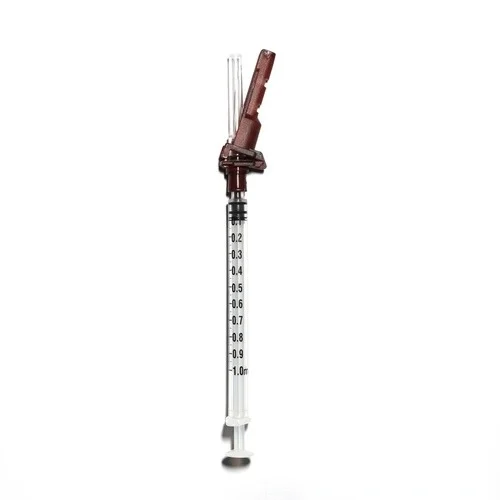
Auto-disable syringes contain mechanisms that prevent the device from being used again after its intended injection cycle. They are particularly relevant to vaccination programs and other applications requiring controlled single-use injection equipment. Needle shield safety syringes, by comparison, include protective components that cover the needle after use, helping reduce accidental contact with contaminated sharps during handling and disposal.
These mechanisms are not interchangeable. An auto-disable syringe does not necessarily provide needle protection, while a needle shield syringe may not prevent the plunger from moving again. Buyers should therefore identify the specific safety function required rather than assuming that every safety syringe provides the same protection.
Comparison of Standard and Safety Syringes
| Feature | Standard Syringes | Auto-Disable Syringes | Needle Shield Syringes |
|---|---|---|---|
| Main purpose | Fluid delivery or aspiration | Injection with reuse prevention | Injection with needle protection |
| Reuse prevention | No built-in mechanism in basic models | Yes, according to design | Not necessarily |
| Needlestick protection | No integrated shield in basic models | Not necessarily | Protective shield after activation |
| Typical applications | General compatible medical procedures | Vaccination and specified injections | Procedures requiring sharps protection |
| Operating mechanism | Conventional plunger | Mechanical disabling feature | Needle shield activation |
| Purchase cost | Generally lower | Depends on design | Often higher due to additional components |
| Main purchasing consideration | Intended use and compatibility | Reliable disabling mechanism | Effective needle protection |
Neither design is universally suitable for every medical procedure. The appropriate choice depends on the intended application, required safety features, and working conditions of the healthcare facility.
How Do Safety Syringe Mechanisms Work?
Safety-engineered syringes use different mechanisms to improve injection safety. Some prevent improper reuse, while others reduce exposure to used needles. Understanding how these mechanisms operate is important because products marketed under the same general category may have different functions, activation methods, and limitations.
Auto-Disable Syringes: Preventing Reuse
An auto-disable syringe contains a built-in mechanism that makes the device unusable after its intended injection cycle. Depending on the design, the plunger may lock or an internal component may prevent another complete injection. This feature helps reduce opportunities for improper reuse, particularly in high-volume immunization settings where large numbers of injections are administered.
However, not all syringes with reuse-prevention features operate identically. Fixed-dose auto-disable syringes are commonly used in vaccination programs and are designed around a predetermined dose. Other reuse-prevention designs may allow variable-dose operation, but their preparation and activation characteristics depend on the specific model. Buyers should confirm whether the selected device supports the complete intended procedure, including any required medication preparation steps.
The activation point is especially important. A mechanism that activates before the intended procedure is complete may interfere with medication delivery, while a mechanism that fails to activate as designed may not provide the expected reuse prevention. Procurement teams should therefore evaluate plunger movement, dose delivery, and disabling performance before selecting a product for routine use.
Needle Shield Safety Syringes: Protecting Healthcare Workers
Needle shield syringes incorporate a protective component that covers the needle after use. Depending on the design, this may be a hinged shield, sliding cover, or another protective structure. Some models require healthcare workers to activate the shield manually after completing the injection, while others use different activation methods. Once properly engaged, the shield creates a physical barrier around the used needle.
This additional protection can reduce accidental contact with contaminated sharps during handling and disposal. However, its effectiveness depends on correct activation and practical operation. A shield that is difficult to engage or interferes with injection technique may create unnecessary handling challenges. Buyers should assess activation convenience, needle visibility, grip comfort, and whether the protective component remains securely positioned after use.
Importantly, needle shielding does not automatically provide reuse prevention. A syringe may include an effective protective cover while still allowing the plunger to move. Healthcare facilities should therefore distinguish between needle protection and reuse-prevention functions when preparing purchasing specifications.
What About Retractable Syringes?
Retractable safety syringes use another protective approach. After injection, the needle retracts into the syringe barrel or another protective housing, reducing exposure to the used sharp. Although this mechanism differs from an external needle shield, both designs primarily address needle exposure rather than necessarily preventing reuse.
For purchasing purposes, the distinction is straightforward: auto-disable mechanisms prevent reuse, while needle shields and retractable mechanisms address sharps exposure. Some products combine multiple functions, but buyers should confirm the actual features of each model rather than relying only on its product name.
Choosing Syringes for Different Medical Applications
The most suitable syringe depends on where and how it will be used. Vaccination programs, hospitals, outpatient clinics, and medical distributors have different requirements for injection volume, needle configuration, handling convenience, and safety features. Selecting products according to these practical needs helps avoid purchasing devices that are unsuitable for the intended procedure.
Vaccination and Immunization Programs
Vaccination programs often involve large numbers of injections and require consistent single-use practices. Auto-disable syringes are particularly relevant because their mechanisms help prevent the device from being used again after the intended injection cycle. This makes them useful in settings where reuse prevention is an important part of injection safety.
However, buyers should consider more than the disabling mechanism. The required dose, needle configuration, graduation markings, and medication preparation process must all match the intended application. For example, a fixed-dose auto-disable syringe designed for vaccination may not be appropriate for procedures requiring repeated aspiration. The selected device must support the complete administration process without activating its disabling mechanism prematurely.
Hospitals and General Clinical Departments
Hospitals use syringes for a wide range of procedures, including intramuscular injections, subcutaneous injections, medication preparation, and aspiration. These applications do not necessarily require identical syringe designs. Where accidental contact with used needles is a significant concern, needle shield syringes may provide an additional protective measure by covering the needle after injection.
Nevertheless, the protective mechanism must fit existing clinical workflows. A device that requires awkward handling or interferes with injection technique may be less practical for certain procedures. Hospitals should consider whether healthcare workers can activate the shield comfortably, whether the syringe maintains suitable visibility during use, and whether its needle configuration meets the intended application. Product samples can help clinical teams evaluate these factors before wider adoption.
Outpatient Clinics and Healthcare Facilities
Outpatient clinics often need syringes that are straightforward to operate and suitable for frequent routine injections. Needle shield models may be useful where healthcare workers handle used sharps throughout the day, particularly when the protective component can be activated conveniently after injection.
For these facilities, handling comfort and ease of operation are important purchasing considerations. Buyers should assess whether the shield interferes with the injection technique, whether the syringe offers clear graduation markings, and whether the device can be disposed of safely after use. A suitable product should provide the intended protective function without making routine procedures unnecessarily complicated.
Medical Distributors and Importers
Medical distributors often supply several types of healthcare facilities, each with different purchasing requirements. Some customers need conventional disposable syringes for compatible procedures, while others prioritize auto-disable mechanisms for immunization or needle shields for occupational safety.
Maintaining a clearly differentiated product range helps distributors respond to these requirements. It also reduces confusion when customers request safety syringes without specifying the mechanism they need. By understanding the differences between product categories, distributors can provide more accurate specifications and help customers identify suitable options for their intended applications.
Comparing Cost, Safety, and Performance
Unit price is an important consideration when purchasing disposable medical products in large quantities. However, comparing syringes only by price can overlook differences in safety mechanisms, usability, and suitability for clinical procedures. A more effective purchasing approach considers both acquisition cost and practical performance.
Purchase Price and Product Design
Standard disposable syringes generally have simpler constructions than safety-engineered models, which often results in lower initial purchase prices. Auto-disable and needle shield syringes include additional components or mechanisms that may increase manufacturing complexity. Nevertheless, actual pricing depends on capacity, needle configuration, materials, packaging, and order quantity.
Buyers should compare products with equivalent clinical specifications rather than selecting the lowest-priced option without considering its intended use. A conventional syringe and a safety-engineered syringe may serve different purchasing requirements, even when their capacities and needle sizes are similar.
Safety During and After Injection
Different syringe mechanisms address different risks. Auto-disable syringes help prevent improper reuse by mechanically restricting subsequent operation, while needle shield syringes reduce exposure to used needles when their protective components are activated correctly. Both functions can contribute to safer injection practices, but neither eliminates every risk associated with injections.
For example, a needle shield may not provide the intended protection if it is activated incorrectly. Likewise, an auto-disable mechanism does not necessarily protect healthcare workers from an exposed needle. Safe handling, appropriate staff training, and immediate disposal into approved sharps containers remain essential regardless of the syringe design.
Ease of Use and Injection Performance
A syringe should perform reliably throughout its intended procedure. Important considerations include smooth plunger movement, visible graduation markings, barrel clarity, secure connections, and comfortable handling. For auto-disable models, buyers should examine whether the disabling mechanism activates correctly without interfering with necessary preparation or injection steps.
Needle shield models require additional attention to activation convenience. The protective component should be practical to operate and should remain securely engaged after use. Product demonstrations and sample evaluations can help healthcare organizations identify potential handling difficulties before introducing a new syringe into routine clinical work.
Understanding the Overall Purchasing Cost
The total cost of using a syringe may extend beyond its purchase price. Healthcare organizations may need to consider staff familiarization, inventory management, compatibility with existing procedures, and disposal arrangements. Safety-engineered products may also require additional evaluation before being introduced into established clinical workflows.
For distributors, consistency between approved samples and bulk deliveries is particularly important. A lower quotation offers limited value if the supplied product does not match the customer’s functional requirements. Purchasing decisions should therefore balance cost, safety features, usability, and reliable product availability.
Medical Syringe Purchasing Checklist: What Should Buyers Verify?
Before placing an order, procurement teams should prepare clear purchasing specifications based on the intended medical application. This is particularly important when comparing conventional disposable syringes with products incorporating additional safety mechanisms. A structured evaluation helps buyers identify suitable products and avoid misunderstandings during bulk purchasing.
Confirm the Required Syringe Type
The first step is to identify the procedure and the safety function required. Standard disposable syringes may meet the needs of compatible applications where their use is appropriate. Where reuse prevention is required, buyers should evaluate suitable auto-disable or reuse-prevention designs. Where protection against exposed needles is a priority, a needle shield syringe may be more appropriate.
The final choice should reflect the intended procedure rather than the general product category alone. Buyers should also consider whether the selected syringe supports medication preparation, injection technique, and any other necessary handling steps.
Check Capacity, Needle Configuration, and Connections
Syringe capacity and needle configuration directly affect how a device performs during injection. Buyers should confirm the required volume, graduation markings, needle gauge, needle length, and connection type. Common connection options include Luer Lock and Luer Slip, although the appropriate choice depends on the procedure and compatible equipment.
For safety-engineered models, purchasers should also check whether the disabling or protective mechanism affects needle attachment, injection handling, or medication preparation. Confirming these details before ordering helps reduce the risk of receiving products that do not match the intended application.
Evaluate Product Samples
Product samples allow buyers to examine handling and functional performance before committing to larger quantities. For conventional syringes, important factors include plunger movement, barrel visibility, graduation clarity, and connection fit. For auto-disable models, evaluations should also examine whether the disabling mechanism activates as intended.
Needle shield syringes require additional attention to the protective component. Buyers should assess how the shield moves, whether activation is convenient, and whether it remains securely engaged afterward. These evaluations should follow the manufacturer’s instructions and appropriate testing procedures rather than improvised clinical testing.
Review Packaging and Supply Details
Packaging affects storage, transportation, and product handling. Buyers should confirm whether syringes are individually sterile-packed and whether the packaging format meets their distribution requirements. Other important details include carton quantities, shelf life, labeling, and storage conditions.
For distributors, stable specifications and consistent packaging are particularly important when supplying repeat orders. Confirming these details before purchasing helps support inventory planning and reduces misunderstandings between suppliers and customers.
Practical Syringe Purchasing Checklist
| Purchasing Item | What to Confirm |
|---|---|
| Syringe type | Standard, auto-disable, or needle shield |
| Intended application | Vaccination, general injection, or another specified procedure |
| Capacity | Required volume and graduation markings |
| Needle configuration | Appropriate gauge, length, and attachment |
| Tip connection | Luer Lock, Luer Slip, or another required design |
| Safety mechanism | Activation method and intended protective function |
| Product handling | Plunger movement, visibility, and ease of operation |
| Packaging | Sterile packaging format and carton quantity |
| Supply requirements | Order quantity, delivery arrangements, and consistency |
This checklist gives procurement teams a practical way to compare products beyond price alone. For larger orders, requesting samples and confirming specifications before finalizing the purchase can reduce purchasing errors and support more consistent product selection.
Frequently Asked Questions About Safety and Standard Syringes
1. Are safety syringes better than standard syringes?
Safety syringes include additional features intended to address specific injection-related risks. However, their suitability depends on the intended procedure. Standard disposable syringes remain appropriate for applications where their use meets the relevant clinical and purchasing requirements.
2. What is the difference between an auto-disable syringe and a needle shield syringe?
An auto-disable syringe includes a mechanism that prevents reuse after its intended injection cycle. A needle shield syringe has a protective component designed to cover the needle after use. These functions are different, and not every safety syringe includes both.
3. Can auto-disable syringes be used for all injections?
No. Some auto-disable syringes are designed for fixed-dose immunization, while other reuse-prevention designs support different applications. Buyers should confirm that the selected device accommodates the required injection and medication preparation steps.
4. Do needle shield syringes completely prevent needlestick injuries?
No syringe can guarantee complete protection. Needle shields can reduce accidental exposure when activated correctly, but healthcare workers must still follow safe handling and disposal procedures.
5. Why do safety syringes usually cost more?
Safety-engineered syringes include additional components or mechanisms. These features may increase production complexity and purchase cost. Pricing also depends on product design, specifications, packaging, and order quantity.
6. Can a needle shield syringe be reused?
A needle shield does not necessarily prevent the syringe from operating again. Unless a separate reuse-prevention mechanism is included, the plunger may remain movable. However, disposable syringes must not be reused between patients, regardless of whether the device has a needle shield.
7. What should distributors consider when purchasing syringes in bulk?
Distributors should confirm the syringe type, intended application, capacity, needle configuration, safety mechanism, packaging, and supply requirements. Product samples can also help verify that the selected design matches customer expectations before a large order.
Summary: Selecting the Right Syringe for Medical Purchasing
Understanding Safety Syringes vs. Standard Syringes helps hospitals, clinics, and medical distributors select injection devices based on their actual requirements. Standard disposable syringes offer familiar operation and a broad range of configurations, while auto-disable syringes help prevent reuse and needle shield models provide additional protection against accidental needle contact.
The right purchasing decision depends on the intended application, safety requirements, product compatibility, handling convenience, and overall cost. Evaluating these factors carefully can help healthcare organizations choose suitable syringes while maintaining efficient purchasing practices.
Siny Medical supplies a range of disposable medical consumables, including standard syringes, auto-disable syringes, and needle shield safety syringes. To explore available injection products, visit Siny Medical or contact our team for product specifications, available configurations, and bulk purchasing information.