| Item | Specification |
|---|---|
| Product Name | Total General Bacteria Test Tube |
| Volume | 9ml |
| Test Principle | Extinction Dilution Method |
| Sample Type | Water Samples / Soil Leachate |
| Culture Temperature | 28±2°C |
| Culture Period | 5–7 Days |
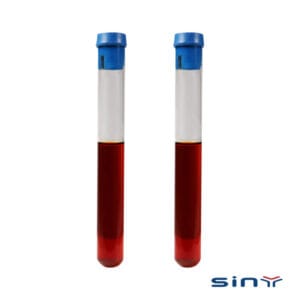
| Packaging | 8 Tubes/Box; 1200 Tubes/Carton |
Monitoring Total General Bacteria for Waste & Water Treatment can help operators evaluate microbial conditions across industrial and environmental water systems.
The Siny Medical Total General Bacteria Test Tube is designed for culture-based detection and estimation of total bacteria in compatible samples. It can be used with industrial circulating water, wastewater, groundwater, drinking water, soil leachate, and other suitable samples.
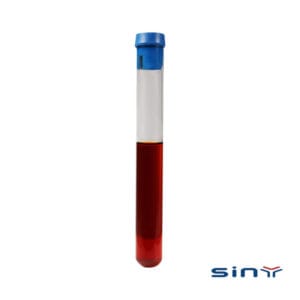
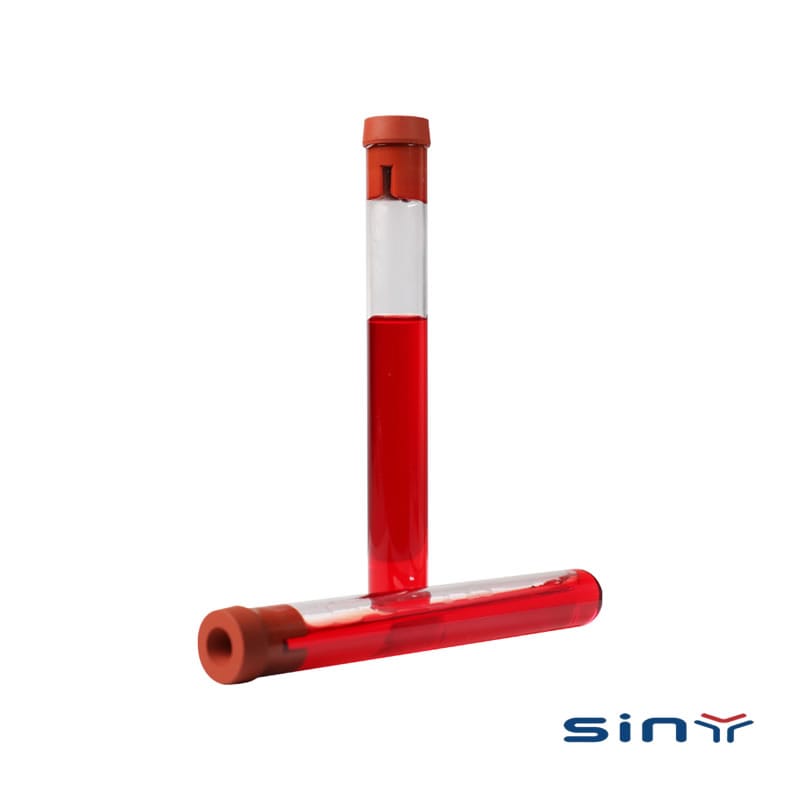
Each tube contains 9ml of prepared culture medium. The test uses an extinction dilution method. Samples are progressively diluted through a series of tubes and then incubated under specified conditions.
After incubation, the positive reactions and corresponding dilution levels are used to evaluate bacterial content.
This makes the test tube suitable for routine microbial monitoring in water treatment and related environmental applications.
Bacterial populations can change as water passes through collection, storage, circulation, treatment, and discharge processes.
Monitoring these changes provides useful information about microbial conditions within the system.
For example, TGB testing may support monitoring of:
Testing at different points or times can help operators compare bacterial conditions across a treatment process.
However, Total General Bacteria testing should not be treated as a complete water-quality assessment. It evaluates bacterial growth under the defined culture conditions.
When a specific bacterial group or another water-quality parameter needs to be investigated, an appropriate targeted test should also be used.
Wastewater conditions can change during treatment.
For this reason, microbial monitoring may be performed at selected stages of the treatment process. Samples collected before and after a treatment step can then be tested under consistent conditions.
This allows operators to compare bacterial levels between sampling points or monitoring periods.
The same principle can be applied to industrial water systems.
For example, circulating water may be tested periodically to observe changes in bacterial content. Groundwater or environmental water can also be monitored when microbial conditions are part of the assessment program.
The Total General Bacteria Test Tube provides a standardized culture medium for this type of monitoring.
It does not treat the water itself. Instead, it provides a method for detecting and evaluating bacterial content in collected samples.
The Siny Medical Total General Bacteria Test Tube uses an extinction dilution method.
First, collect a representative sample using a sterile container.
Arrange the test tubes in sequence according to the required dilution levels. Then use a sterile syringe to transfer 1ml of representative sample into the first tube.
The instructions recommend using an 18G needle for sample transfer.
Mix the first tube thoroughly. Next, use another sterile syringe to transfer 1ml from the first tube into the second tube.
Continue this process through the required dilution series.
Each tube represents a progressively higher dilution of the original sample.
After preparation, place the test tubes in a constant-temperature incubator.
Incubate the prepared Total General Bacteria Test Tubes at 28±2°C and protect them from light.
The standard culture period is 5–7 days. When required by the actual testing situation, observation may be extended to 10 days.
Avoid unnecessary movement or tilting during incubation.
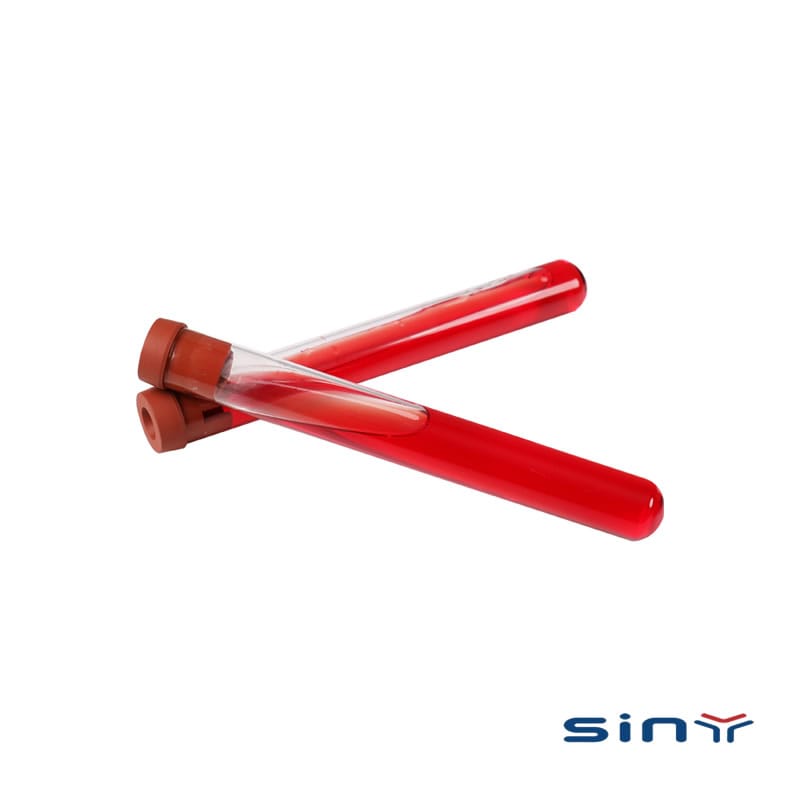
The unused culture medium has a clear red appearance.
A positive result occurs when the red liquid changes to yellow. This indicates bacterial growth under the specified culture conditions.
A negative result occurs when the medium remains clear and red without an obvious color change.
When positive reactions continue into higher dilution levels, the original sample has a relatively higher bacterial content.
Users can then evaluate the dilution series and positive reactions according to the specified calculation procedure.
One useful application of TGB testing is comparison.
Instead of looking at one isolated result, water-treatment operators can collect samples from defined locations or stages and compare them under the same testing conditions.
For example, a monitoring program may compare samples collected:
Consistency is important when comparing results.
Sample collection, dilution, incubation temperature, culture period, and result interpretation should follow the same procedure.
A change in TGB results can show that bacterial conditions have changed. However, the test result alone does not establish the cause of that change.
Additional investigation may be required when the source or type of microbial activity needs to be identified.
Different microbial groups may be relevant to different water systems.
A Total General Bacteria Test Tube evaluates general bacterial content under its specified culture conditions.
An Iron-Oxidizing Bacteria (IOB) Test Tube targets iron bacteria.
A Sulfate-Reducing Bacteria (SRB) Test Tube targets sulfate-reducing bacteria.
These test tubes use different culture media and have different positive-result criteria.
Therefore, they should be selected according to the actual monitoring target rather than used interchangeably.
A water-treatment monitoring program may use TGB for general bacterial evaluation and add IOB or SRB testing when those specific bacterial groups need to be investigated.
Store unopened Total General Bacteria Test Tubes at 4–25°C in a cool, dry place protected from light.
The specified unopened shelf life is 2 years. After opening, use the product within 2 weeks.
Sterile technique is important during sampling and dilution. External microbial contamination can interfere with the test result.
Each dilution step should also be mixed thoroughly before the next sample transfer.
The test tubes provide a vacuum, oxygen-free condition for culture. Follow the supplied instructions during testing to maintain the required test environment.
For wastewater or industrial water monitoring, users should also define consistent sampling locations and testing intervals according to their own monitoring program.
TGB testing is used to evaluate general bacterial content in compatible water samples. It can support microbial monitoring at selected stages or locations within a wastewater treatment system.
No. The product is a bacterial detection test tube. It is used to test collected samples and does not purify wastewater or directly reduce bacterial levels.
It uses an extinction dilution method. The sample is progressively diluted through a series of tubes. Positive reactions and dilution levels are then used to evaluate bacterial content.
The culture medium initially appears clear and red. A change from red to yellow indicates bacterial growth under the specified test conditions.
Incubate the test tubes at 28±2°C, protected from light, for 5–7 days. When necessary, the culture period may be extended to 10 days.
Testing samples from defined locations or stages under consistent conditions can help compare bacterial conditions before and after a treatment process. However, the result should be interpreted together with other relevant water-quality parameters.
That depends on the monitoring objective. TGB evaluates general bacterial content, while IOB and SRB tests target specific bacterial groups. Select the test according to the microbial parameter that needs to be monitored.
The Siny Medical Total General Bacteria Test Tube provides a culture-based method for monitoring bacterial content in wastewater, industrial water, groundwater, and other compatible samples.
Its 9ml prepared medium supports extinction dilution testing. After incubation, the specified color reaction and dilution levels provide information for evaluating bacterial content.
For water-treatment facilities and environmental monitoring programs, the product can support routine testing at defined sampling points and help track changes in microbial conditions over time.
Siny Medical can supply Total General Bacteria Test Tubes for industrial, environmental, and water-treatment applications, with bulk packaging and confirmed OEM/ODM requirements available.
Contact Siny Medical for TGB Test Tube specifications, samples, bulk pricing, or water-treatment monitoring requirements.
Copyright © 2026 | Ningbo Siny Medical Technology Co., Ltd