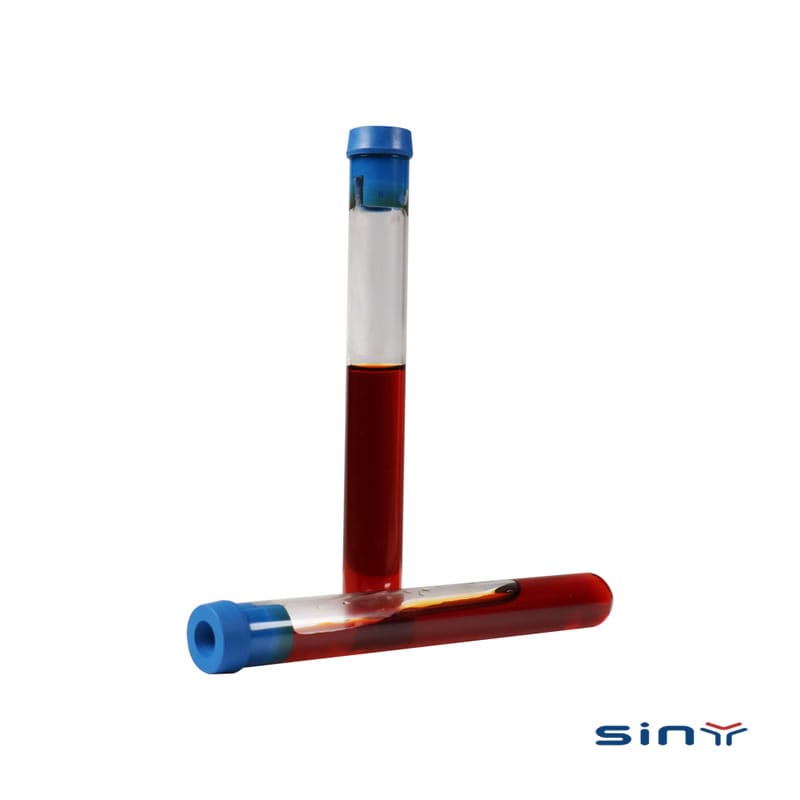
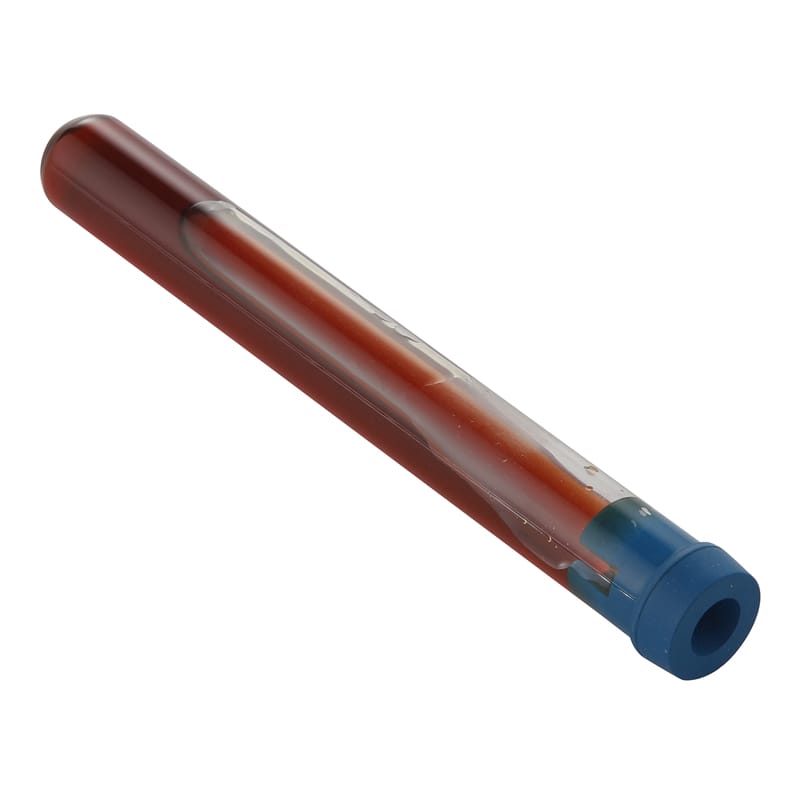
| Item | Specification |
|---|---|
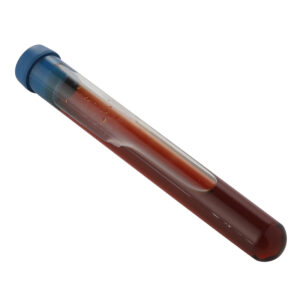
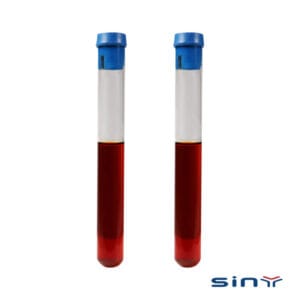
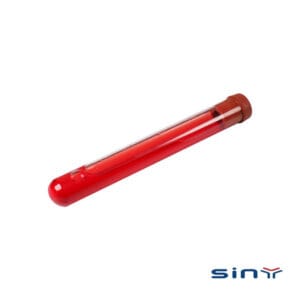
| Product Name | Iron-Oxidizing Bacteria Test Tube |
| Product Type | IOB Detection Test Tube |
| Target | Iron-Oxidizing Bacteria (IOB) |
| Material | Glass |
| Sample Type | Water Samples |
| Testing Method | Culture-Based Visual Detection |
| Result Observation | Visual Changes in Test Medium |
| Application | Water and Environmental Monitoring |
| OEM/ODM | Available |
| Sample | Available |
| Origin | China |
Iron oxidizing bacteria in water can contribute to reddish-brown deposits, biofilm formation, sediment buildup, and other changes in water systems. When these signs appear, visual inspection alone cannot confirm whether bacterial activity is involved.
The Siny Medical Iron-Oxidizing Bacteria (IOB) Test Tube provides a culture-based method for screening compatible water samples. It helps users observe signs of IOB growth through specified changes in the prepared test medium.
This product is suitable for water-system monitoring, environmental testing, and industrial applications where iron-related bacterial activity needs to be investigated.
Iron is naturally present in many groundwater and water systems. However, iron deposits do not always have the same cause.
Iron-oxidizing bacteria can use ferrous iron (Fe²⁺) in their metabolic processes. Their activity can contribute to ferric iron (Fe³⁺) formation and visible iron-related deposits.
Possible signs associated with IOB activity include:
These signs can indicate that further investigation is needed. However, they do not prove that IOB are present.
Chemical iron oxidation and other water conditions can produce similar visible changes. Therefore, a dedicated detection method provides a more structured way to investigate possible bacterial activity.
Iron-oxidizing bacteria can occur in natural and engineered water environments where suitable conditions are present.
Testing may be relevant for:
For example, a well may develop recurring reddish deposits or slime. An industrial water system may experience similar deposits inside pipes or tanks.
In these situations, IOB testing can help determine whether iron-related bacterial activity should be considered as part of the investigation.
Siny Medical supplies IOB detection products for compatible water-monitoring applications.
The IOB Test Tube uses a prepared medium for culture-based visual detection.
First, introduce the compatible water sample according to the specified testing procedure. Then maintain the tube under the required test conditions.
If iron-oxidizing bacteria grow, observable changes can develop in the test medium.
For the current Siny Medical test method, black or brown colloidal precipitates in the liquid can indicate bacterial growth. Changes from the original red-brown appearance toward a transparent, clear liquid can also form part of the specified interpretation.
Users should evaluate the result according to the instructions supplied with the product.
Do not change the sample volume, observation period, testing conditions, or interpretation criteria without validating the method.
Reddish water does not automatically mean that iron-oxidizing bacteria are present.
This distinction is important when investigating water-system problems.
Iron can oxidize through chemical processes without bacterial activity. At the same time, IOB may contribute to deposits and biofilms under suitable conditions.
Therefore, water-system investigation may involve several types of information, including:
An IOB Test Tube focuses specifically on screening for iron-oxidizing bacterial activity. It does not provide a complete analysis of every microbiological or chemical parameter in the water.
This makes the product more useful as part of a defined water-monitoring program rather than as a general-purpose water-quality test.
Routine monitoring can help users identify changes in a water system over time.
For example, testing may be considered when iron deposits repeatedly appear in a well, pipeline, storage tank, or industrial water system. It may also support investigation after changes in operating conditions or water appearance.
However, the required monitoring frequency depends on the individual system.
The IOB Test Tube provides a practical screening method when iron-oxidizing bacteria are the specific target.
For broader microbial monitoring, other bacterial groups may require separate detection products. Sulfate-reducing bacteria (SRB), for example, are different from IOB and require an appropriate testing method.
Siny Medical also supplies bacterial detection products for different water-monitoring requirements.
Start by confirming the target microorganism.
If the objective is to investigate iron oxidizing bacteria in water, choose a detection product specifically intended for IOB rather than a general bacterial test.
Next, consider the sample and testing procedure.
Before ordering, confirm:
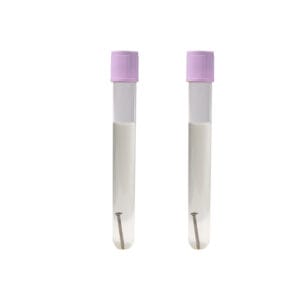
Different bacterial detection tubes can look similar. However, their media and testing methods may target different microorganisms.
For this reason, IOB, SRB, and total bacterial detection products should not be treated as interchangeable.
Contact Siny Medical to discuss your Iron-Oxidizing Bacteria Test Tube requirements for water-monitoring applications.
Iron-oxidizing bacteria are microorganisms associated with the oxidation of ferrous iron (Fe²⁺) to ferric iron (Fe³⁺). Their activity can contribute to iron-related deposits and biofilm formation under suitable water conditions.
Possible signs include reddish-brown deposits, sediment, slime, discoloration, and recurring deposits in water equipment. However, these signs alone cannot confirm IOB activity.
A dedicated IOB Test Tube can be used to screen compatible water samples. The method relies on bacterial growth and specified visual changes in a prepared test medium.
No. Chemical iron oxidation and other water conditions can also produce reddish-brown deposits or discoloration. Testing helps investigate whether bacterial activity may be involved.
IOB testing may be relevant to groundwater, wells, pipelines, storage tanks, industrial water systems, and other compatible water-monitoring applications.
No. Iron-oxidizing bacteria and sulfate-reducing bacteria are different microbial targets. Select the detection product according to the microorganism being investigated.
No. An IOB Test Tube focuses on iron-oxidizing bacterial activity. Other microbiological and chemical water parameters require appropriate testing methods.
Testing for iron oxidizing bacteria in water can help investigate whether bacterial activity is associated with recurring iron deposits, biofilms, or other changes in a water system.
Siny Medical supplies Iron-Oxidizing Bacteria Test Tubes for compatible water and environmental monitoring applications. The culture-based method provides a practical way to screen samples for specified signs of IOB growth.
OEM/ODM, labeling, packaging, and bulk-order requirements can also be discussed according to the confirmed product specification.
Contact Siny Medical for IOB Test Tube product information, bulk pricing, or a quotation.
Copyright © 2026 | Ningbo Siny Medical Technology Co., Ltd