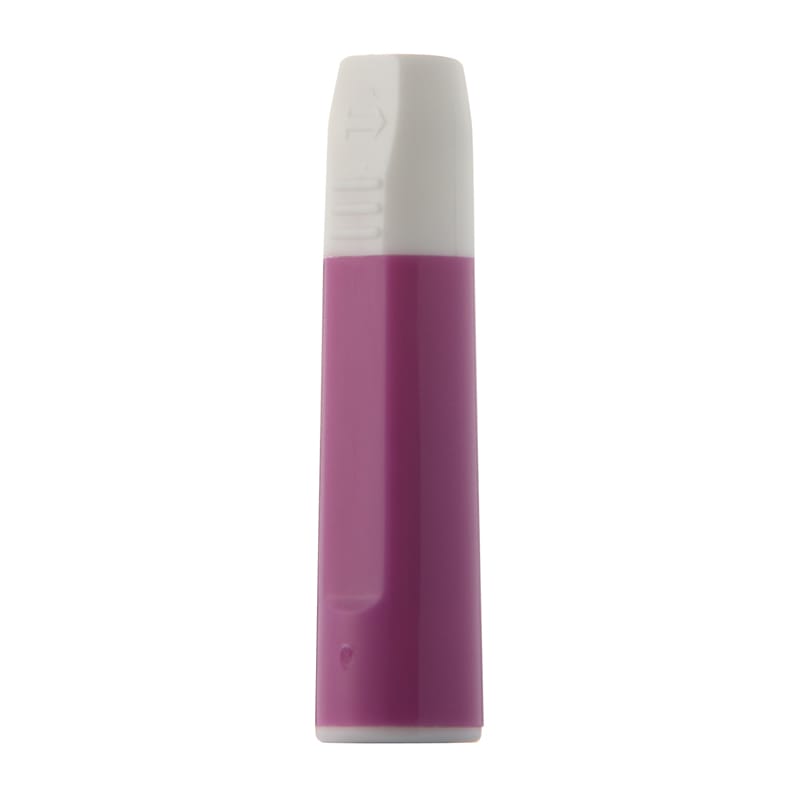
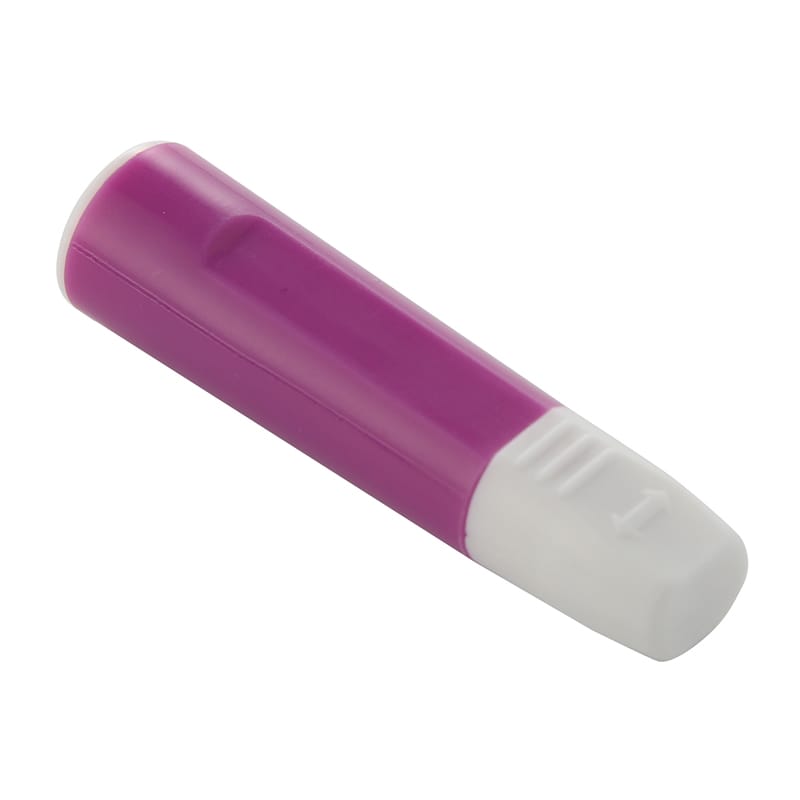
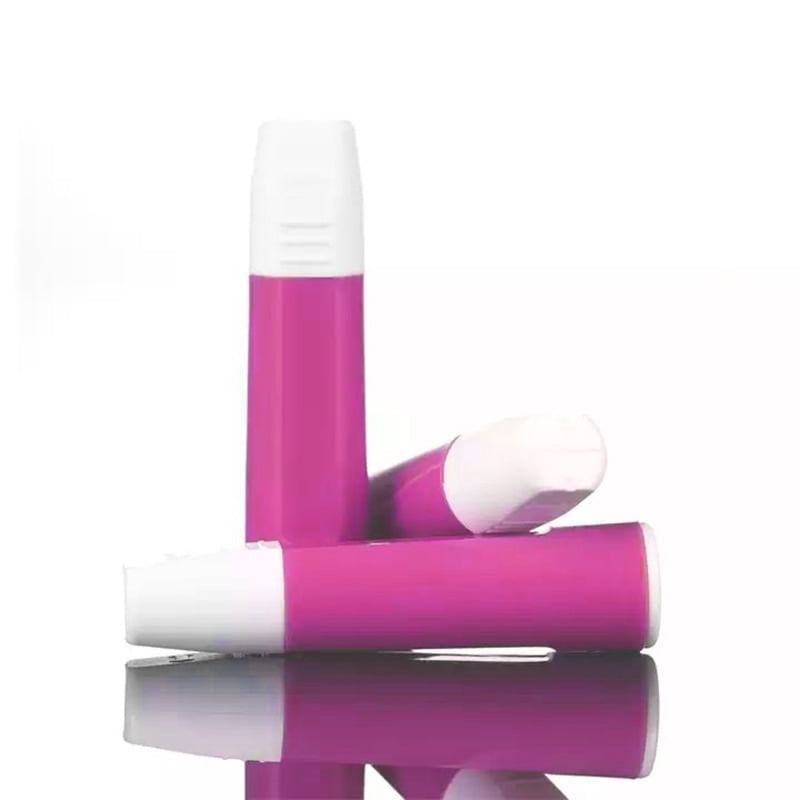

| Product Name | Safety Blood Lancet |
| Material | PP |
| OEM/ODM | Yes |
| Certificate | CE, ISO13485, ISO9001 |
| Usage | Hospital |
| Specification | 21G |
| Sample | Free |
| Service | In the groups we serve: distributors, import traders, government procurement, buying agents, and medical chain stores, we provide one-stop procurement for you to simplify your procurement process. |
Capillary blood tests do not all require the same specimen volume. Some point-of-care tests need only a small blood drop, while other sampling procedures may require a larger capillary specimen.
The Siny Medical Disposable Safety 21G Blood Lancet provides a larger-gauge option for capillary blood sampling. Its 21G needle has a larger diameter than 23G, 26G, 28G, and 30G alternatives. The current 21G configuration also uses a 2.8 mm puncture depth.
Together, these specifications give the 21G safety lancet a clear position in procedures that require greater capillary sample-volume capability.
The key selection question is not simply which lancet is the finest. It is whether the gauge and puncture specification can provide the capillary specimen required by the intended testing procedure.
A blood lancet creates a controlled skin puncture to obtain capillary blood.
Different diagnostic procedures require different amounts of blood. Therefore, the lancet specification should match the required specimen volume.
The 21G model sits at the larger-diameter end of the current Siny Medical safety lancet range.
Gauge numbers work in reverse order. A lower gauge number means a larger needle diameter. As a result, 21G has a larger diameter than:
The current 21G configuration also uses a 2.8 mm puncture depth, which further separates it from the finer lancet specifications in the range.
This combination makes 21G relevant when a capillary sampling procedure requires more blood than a fine-gauge, small-sample lancet is intended to provide.
The main reason to select a 21G lancet is not the assumption that a larger needle is automatically better.
The real consideration is the sample requirement.
A diagnostic procedure needs enough capillary blood to complete the intended test. If the collected specimen is insufficient, the sampling process may need to be repeated according to the applicable procedure.
A 21G lancet provides a larger needle diameter than the other gauges in the current range. Its 2.8 mm puncture depth also creates a different puncture specification from the 1.8 mm configurations used by the current 23G, 26G, 28G, and 30G models.
Therefore, 21G provides an option when the intended procedure requires greater capillary blood availability.
However, healthcare professionals should still select the lancet according to the patient, puncture site, specimen requirements, and validated testing method.
Gauge is only one part of lancet selection.
Puncture depth matters too.
Two lancets can have different gauges, so puncture depth should also be checked when comparing specifications.
The current Siny Medical 21G safety lancet specification uses a 2.8 mm puncture depth.
This differs from the current 23G, 26G, 28G, and 30G models, which use a 1.8 mm specification.
Gauge alone may therefore not provide enough information for correct product selection. The complete specification should identify both:
21G + 2.8 mm puncture depth
Clearly identifying both specifications helps prevent different lancet models from being treated as interchangeable.
21G and 23G sit near the larger-diameter end of the current safety lancet range, but they have meaningful differences.
The 21G lancet has a larger needle diameter.
The 23G lancet is finer.
Their current puncture depths also differ. The 21G model uses a 2.8 mm depth, while the 23G configuration uses 1.8 mm.
This gives 21G a stronger position for larger capillary sample requirements.
By contrast, 23G provides a more moderate option for general capillary sampling.
Neither gauge should automatically replace the other.
If the intended procedure requires a 21G gauge and 2.8 mm puncture depth, both specifications should be confirmed before use or ordering.
The difference becomes clearer when 21G is compared with finer lancet gauges.
A 26G lancet moves toward a moderate-fine needle and can support compatible blood sugar sampling requirements.
A 28G lancet provides a fine-gauge option for smaller capillary sample requirements.
A 30G lancet sits at the finest end of the current range and is more closely associated with very small sample requirements.
The 21G lancet sits at the opposite end.
Its larger needle diameter and 2.8 mm puncture depth make it the more appropriate product to consider when greater sample-volume capability is required.
This does not make 21G universally better. Instead, it gives 21G a different role within capillary blood sampling.
Each gauge addresses different specimen and puncture requirements.
It is easy to assume that a finer needle is always the better lancet.
That approach ignores the purpose of the device.
A lancet must obtain enough capillary blood for the intended diagnostic procedure.
If the test requires only a very small specimen, a fine-gauge lancet may provide an appropriate solution.
If the procedure requires more blood, a larger needle diameter or different puncture specification may need to be considered.
Lancet selection should therefore consider:
These factors should work together.
For the 21G model, the combination of a larger needle diameter and 2.8 mm puncture depth creates its main product distinction.
The 21G safety lancet is designed for capillary blood sampling rather than venous blood collection.
This distinction is important.
A venous blood collection needle enters a vein to collect blood into an appropriate collection system.
A safety lancet creates a controlled skin puncture so that capillary blood can be obtained from an appropriate sampling site.
Depending on the validated testing procedure, capillary blood can support various point-of-care and diagnostic applications.
However, the lancet itself does not determine which test should be performed.
The diagnostic method determines the required specimen type and volume. Healthcare professionals should therefore follow the instructions for the relevant analyzer, test kit, or laboratory procedure.
The larger 21G specification gives this lancet a clear purpose, but it should not be positioned as a universal capillary sampling device.
Different users and diagnostic procedures have different requirements.
For example, a test that requires only a very small blood drop may not need the same gauge and puncture depth as a procedure requiring a larger specimen.
Rather than asking which gauge is “best,” selection should begin with a more practical question:
How much capillary blood does the procedure require?
From there, gauge, puncture depth, safety configuration, and other product specifications can be evaluated.
This provides a more useful basis for product selection than simply choosing the largest or finest lancet available.
The 21G model is a disposable safety blood lancet intended for single-use capillary sampling.
Because the device comes into contact with blood, it should not be reused or shared between patients.
After sampling, users should handle and dispose of the lancet according to their facility’s sharps and biohazard procedures.
The safety configuration supports controlled needle handling around the sampling process. However, the safety feature does not replace correct infection-control practices.
Healthcare professionals should continue to follow established procedures for site preparation, sample collection, blood-contact materials, and sharps disposal.
This is especially important in professional environments where many capillary blood samples may be collected each day.
Within the current Siny Medical safety lancet range, the 21G specification uses pink identification.
This provides a useful visual reference for distinguishing the 21G specification from other lancet gauges.
However, color should not replace the written product specification.
The product specification should always confirm:
For this product, the important combination is:
21G + 2.8 mm + Pink Identification + Safety Blood Lancet
Using the complete specification helps reduce confusion between different lancet configurations.
The 21G specification sits at the larger-diameter end of the current Siny Medical safety lancet range.
21G combines a larger needle diameter with a 2.8 mm puncture depth for greater capillary sample requirements.
23G provides a more moderate option for general capillary sampling.
26G moves toward a moderate-fine specification for compatible blood sugar sampling.
28G provides a finer option for smaller capillary sample requirements.
30G sits at the finest end of the current range for very small sample requirements.
The important difference is not simply the gauge number. Each specification provides a different combination of needle diameter, puncture depth, and sample-volume capability.
This is why lancet selection should start with the diagnostic procedure and required specimen rather than simply choosing the highest or lowest gauge number.
Start by confirming the specimen requirements of the intended capillary sampling procedure.
Then determine whether the procedure calls for the 21G gauge and 2.8 mm puncture depth.
Next, confirm the safety configuration and intended sampling method.
Key product specifications include:
Confirming these details helps distinguish the 21G model from smaller-gauge lancets and supports more appropriate product selection.
Product labeling and packaging requirements can be discussed according to the confirmed 21G safety lancet configuration and order quantity.
Available requirements may include:
Specific product and packaging requirements should be confirmed before quotation and production.
Contact Siny Medical with your required 21G safety blood lancet quantity, packaging, and labeling requirements for more product information or a quotation.
A 21G safety blood lancet is a single-use device with a 21-gauge needle designed to create a controlled skin puncture for capillary blood sampling.
21G refers to the needle gauge. Lower gauge numbers indicate larger needle diameters. Therefore, 21G has a larger needle diameter than 23G, 26G, 28G, and 30G.
The current Siny Medical 21G safety lancet specification lists a 2.8 mm puncture depth.
The 21G configuration has a different gauge and puncture specification designed to support greater capillary sample requirements. The appropriate lancet should still be selected according to the intended diagnostic procedure.
Within the current Siny Medical safety lancet range, the 21G specification uses pink identification.
Yes. A 21G needle has a larger diameter than a 23G needle.
21G has a larger needle diameter and, in the current Siny Medical range, a 2.8 mm puncture depth. The 30G model is much finer and currently uses a 1.8 mm puncture depth. They address different capillary sample requirements.
No. The appropriate lancet depends on the required specimen volume, puncture site, diagnostic procedure, patient characteristics, and testing-system instructions.
No. This safety lancet is designed for capillary blood sampling. Venous blood collection requires a suitable venous blood collection device.
No. The product is intended for single use. Users should dispose of it according to appropriate sharps-handling procedures after sampling.
Packaging and labeling requirements can be discussed according to the confirmed product configuration and order quantity.
The 21G specification occupies a distinct position within the Siny Medical safety lancet range.
It combines the largest needle diameter among the current 21G–30G options with a 2.8 mm puncture depth. This separates it clearly from the finer 23G, 26G, 28G, and 30G configurations.
The Siny Medical Disposable Safety 21G Blood Lancet is therefore positioned for capillary sampling procedures that require greater sample-volume capability rather than an ultra-fine, small-sample lancet.
Contact Siny Medical with your required 21G safety lancet specifications, quantity, packaging, and labeling requirements to request more product information or a quotation.
Copyright © 2026 | Ningbo Siny Medical Technology Co., Ltd