| Product Name | Specimen Cup |
| Main Material | PP/PS |
| OEM/ODM | Yes |
| Certificate | CE, ISO13485, ISO9001 |
| Usage | Hospital |
| Sterile | EO sterilization |
| Sample | Free |
| Service | In the groups we serve: distributors, import traders, government procurement, buying agents, and medical chain stores, we provide one-stop procurement for you to simplify your procurement process. |
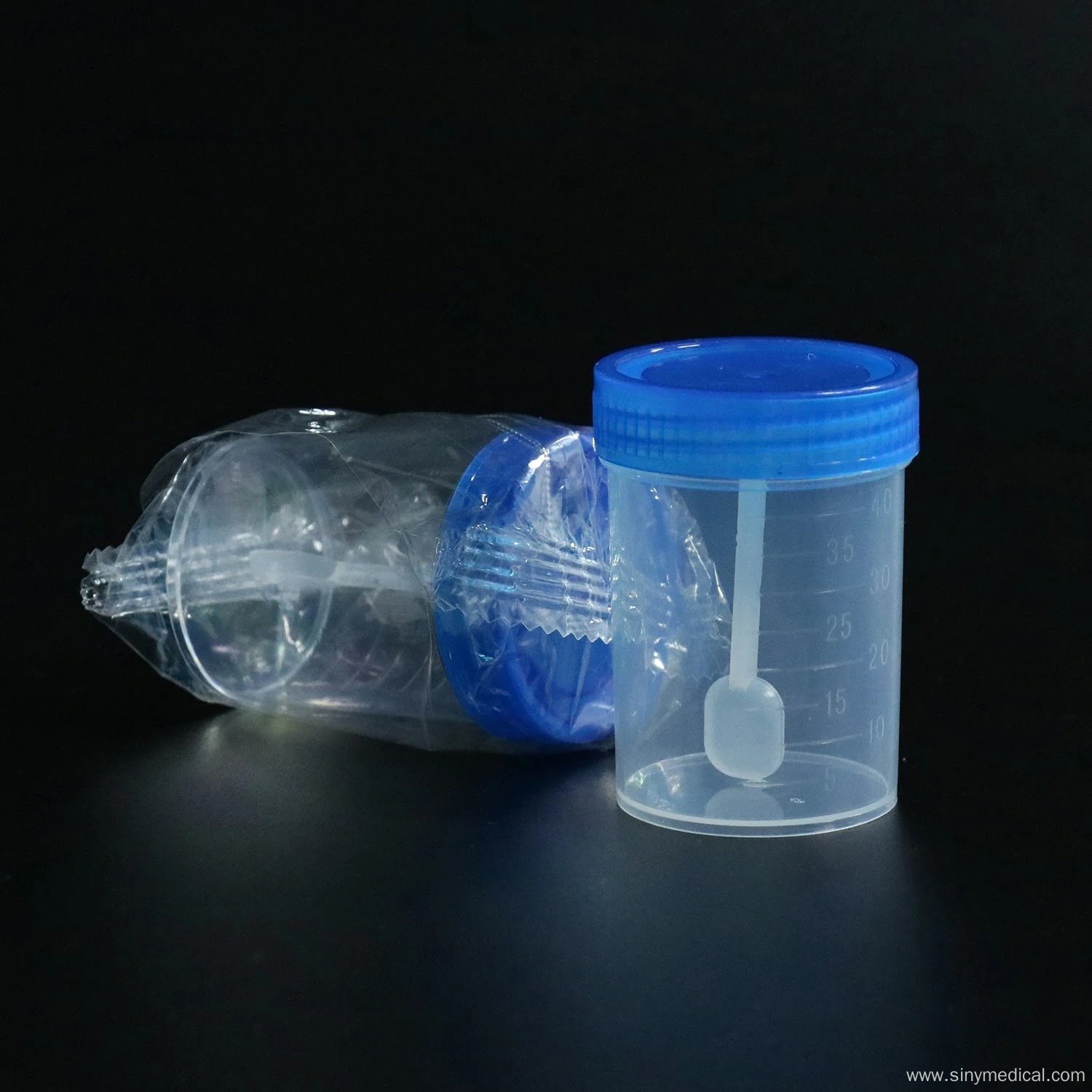
The 40ml Medical Sterile Stool Cup is designed for stool specimen collection in hospitals, clinical laboratories, diagnostic centers, and other healthcare facilities. With a nominal capacity of 40 mL and a sterile product designation, it provides a defined collection container option for medical institutions that require sterile specimen collection supplies.
For hospitals and laboratory procurement teams, selecting an appropriate stool collection container involves considering capacity, sterility requirements, and the intended examination. A clearly identified 40 mL model helps healthcare facilities organize collection supplies and distinguish sterile products from other specimen containers.
The container is intended to receive stool specimens before laboratory examination. Its nominal capacity should not be confused with the actual amount of specimen required for testing, as collection quantities depend on the requested examination and laboratory instructions.
It is also important to distinguish the sterility of the container from the condition of the collected specimen. A sterile container provides a sterile receptacle before use, but it does not automatically make the collected stool specimen sterile. Proper collection, handling, and laboratory procedures remain essential.
Siny Medical supplies medical specimen collection products to hospitals, diagnostic laboratories, healthcare distributors, and international medical buyers. We support professional customers with product information and bulk purchasing coordination.
The container has a nominal capacity of 40 mL, providing a defined size category for stool specimen collection.
This capacity helps hospitals and laboratories organize their collection supplies and distinguish this model from containers with different nominal capacities.
However, container capacity and required specimen quantity are different considerations. A 40 mL container does not mean that every examination requires 40 mL of stool.
Healthcare personnel should follow the receiving laboratory’s instructions when determining the appropriate specimen quantity.
Sterility is a defining characteristic of this product.
Healthcare facilities that require sterile stool specimen collection containers can classify this model separately from non-sterile specimen cups.
The sterile designation concerns the collection container before use. After collection, specimen quality and handling depend on the collection procedure and applicable laboratory requirements.
For purchasing teams, the sterile designation is also an important product identification factor when preparing procurement specifications and managing medical supplies.
The product is intended for stool specimen collection in medical and laboratory environments.
A designated collection container helps healthcare personnel organize specimen collection before laboratory submission.
The appropriate collection procedure and specimen quantity should follow the requirements of the requested examination.
The combination of 40 mL capacity and sterile designation provides two clear product identification characteristics.
Hospitals can use these attributes to distinguish this model from:
Clear product classification helps procurement teams organize product catalogs, purchasing records, and inventory systems.
| Specification | Details |
|---|---|
| Product Name | Siny 40ml Medical Sterile Stool Cup |
| Product Category | Stool Specimen Collection Cup |
| Capacity | 40 mL |
| Sterility | Sterile |
| Intended Application | Stool Specimen Collection |
Clinical laboratories receive stool specimens for different diagnostic examinations.
A sterile stool collection container provides a designated receptacle for workflows that require sterile collection supplies.
Laboratory personnel determine the appropriate specimen quantity, collection requirements, and handling procedures according to each examination.
The 40 mL capacity gives laboratory purchasing teams a defined product category when organizing specimen collection supplies.
Outpatient departments coordinate stool specimen collection for patients undergoing diagnostic examinations.
Healthcare personnel provide collection instructions and explain the requirements for specimen identification and laboratory submission.
Procurement teams can review outpatient examination volumes to estimate demand for stool specimen collection containers.
Inpatient wards may require stool specimen collection containers for patients undergoing laboratory examinations during hospitalization.
Nursing personnel coordinate collection according to medical orders and institutional procedures.
Central supply departments can distribute collection containers according to departmental demand and monitor consumption through regular inventory records.
Departments coordinating gastrointestinal examinations may arrange stool specimen collection for different laboratory investigations.
The receiving laboratory determines the appropriate specimen requirements and handling procedures for each examination.
Healthcare facilities should select collection supplies according to the intended testing workflow and established specimen management procedures.
Medical distributors may supply sterile stool specimen cups to hospitals, diagnostic laboratories, clinics, and healthcare institutions.
Identifying the product by its 40 mL capacity and sterile designation helps distributors organize product catalogs and prepare quotations.
These characteristics also help distinguish this model from non-sterile stool containers and other specimen collection products.
The first step is to determine the container capacity required by the laboratory.
The 40 mL model provides a defined size option within stool specimen collection supplies.
Buyers should distinguish nominal container capacity from the actual specimen quantity required for individual examinations.
This helps healthcare facilities select collection containers according to laboratory requirements rather than assuming that every specimen must fill the container.
Before purchasing, healthcare facilities should determine whether their intended examination requires a sterile collection container.
Procurement teams should identify the required sterile product category and verify the relevant product documentation for the supplied version.
Sterile and non-sterile products should be classified separately in purchasing records and inventory systems.
Healthcare personnel should provide collection instructions according to the requested examination.
During collection, patients should avoid mixing stool specimens with urine, toilet water, or other substances that may affect specimen quality.
The specimen quantity should follow laboratory instructions rather than the container’s full nominal capacity.
After collection, the specimen should be handled according to the receiving laboratory’s requirements.
Correct specimen identification is essential for laboratory management.
Depending on institutional requirements, specimen records may include:
Healthcare personnel should check the required information before submitting the specimen to the laboratory.
Different examinations may have different specimen handling and submission requirements.
Healthcare facilities should follow the receiving laboratory’s instructions regarding specimen handling, transport, and processing.
The sterile status of the collection container does not replace proper specimen identification, collection technique, or handling procedures.
Hospitals often purchase specimen collection containers through centralized medical supply departments.
When preparing purchasing plans, procurement teams should identify this model using its two confirmed characteristics: 40 mL capacity and sterile designation.
Departments can consolidate their requirements before placing orders, helping purchasing teams coordinate supplies across outpatient clinics, inpatient wards, and diagnostic laboratories.
Centralized purchasing also makes it easier to review quotations, compare purchasing requirements, and coordinate repeat orders.
Siny Medical supports professional healthcare buyers with product information and bulk purchasing coordination.
Hospitals may maintain stool specimen containers with different capacities and sterility requirements.
Separating these products in inventory records helps purchasing teams distribute the appropriate collection supplies to each department.
A practical inventory record can include:
| Inventory Field | Purpose |
|---|---|
| Product Category | Identify stool specimen containers |
| Capacity | Identify the 40 mL model |
| Sterility | Distinguish sterile and non-sterile products |
| Department | Record the intended supply department |
| Available Stock | Monitor current inventory |
| Historical Consumption | Review actual usage |
| Incoming Orders | Track expected deliveries |
| Replenishment Requirement | Plan future purchases |
For this product, the inventory description should clearly identify it as a 40 mL sterile stool specimen cup.
Hospitals can estimate purchasing demand using historical stool specimen collection records.
A practical calculation is:
Expected Period Consumption = Average Daily Consumption × Planned Number of Days
For example, if a hospital uses an average of 80 stool specimen containers per day and plans inventory for 30 days:
80 × 30 = 2,400 containers.
This provides an initial estimate of monthly demand.
Hospitals should calculate consumption separately for outpatient departments, inpatient wards, and diagnostic laboratories before consolidating purchasing requirements.
This approach helps procurement teams identify departmental demand and allocate supplies more accurately.
Hospitals can estimate their reorder point using the following formula:
Reorder Point = Average Daily Consumption × Replenishment Lead Time + Safety Stock
For example, if a hospital uses 80 containers per day, has a replenishment lead time of 10 days, and maintains 250 containers as safety stock:
80 × 10 + 250 = 1,050 containers.
The hospital can use 1,050 containers as an illustrative reorder point.
Actual inventory levels should reflect supplier lead times, historical consumption, storage capacity, and institutional purchasing policies.
For sterile collection products, procurement teams should also monitor applicable storage conditions and expiry information as part of routine stock management.
Medical distributors may supply 40 mL sterile stool specimen cups to hospitals, diagnostic laboratories, clinics, and healthcare institutions.
Before preparing quotations, distributors should confirm:
Clear product descriptions help distributors distinguish sterile stool collection products from non-sterile containers and other specimen collection categories.
Hospitals and distributors can organize repeat purchasing according to historical consumption and anticipated demand.
Procurement teams should review available stock, incoming quantities, departmental requirements, and expected testing volumes before preparing each order.
For sterile collection containers, stock rotation and expiry monitoring should form part of routine inventory management.
Consistent product descriptions also make repeat orders easier to process and reduce confusion between different specimen collection products.
Siny Medical supports hospitals, laboratories, and medical distributors with product information and bulk supply coordination.
A 40ml medical sterile stool cup is a stool specimen collection container with a nominal capacity of 40 mL and a sterile product designation. It is intended for stool collection in medical and laboratory environments.
No. The 40 mL designation refers to nominal container capacity, not the required specimen quantity. The amount collected should follow the instructions for the requested laboratory examination.
A sterile stool specimen cup is supplied with a sterile designation, while a non-sterile container does not have that designation. Healthcare facilities should select the appropriate product according to laboratory requirements.
No. The sterility of the container and the condition of the collected stool specimen are different matters. Specimen quality depends on collection technique, handling, and applicable laboratory procedures.
The sterilization method should be confirmed against the supplied product version and its supporting documentation. Buyers should not assume a particular sterilization process based only on the product name.
Hospitals should confirm the 40 mL capacity, sterility requirement, intended laboratory application, relevant product documentation, purchasing quantity, and applicable procurement specifications.
Hospitals can review historical daily consumption across outpatient departments, inpatient wards, and laboratories. Multiplying average daily usage by the planned inventory period provides an initial purchasing estimate.
Yes. Siny Medical supplies medical specimen collection products to hospitals, laboratories, and medical distributors. Professional buyers can discuss product requirements, purchasing quantities, and bulk supply arrangements with our team.
Siny Medical supplies the Siny 40ml Medical Sterile Stool Cup for hospitals, diagnostic laboratories, healthcare distributors, and international medical buyers. With its defined 40 mL nominal capacity and sterile product designation, this model provides a clearly classified option for stool specimen collection procurement. Contact Siny Medical to discuss your product requirements, purchasing quantities, and bulk quotation needs.
Copyright © 2026 | Ningbo Siny Medical Technology Co., Ltd