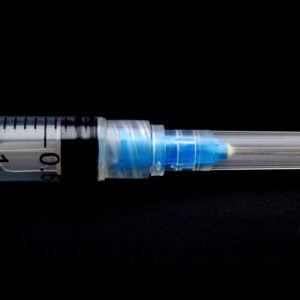
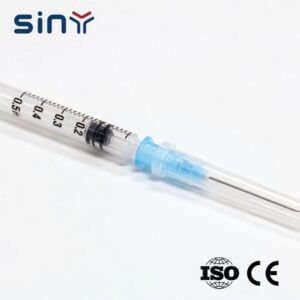
| Product Name | Disposable Insulin Syringe |
| Material | PVC,PP |
| OEM/ODM | Yes |
| Certificate | CE,ISO |
| Usage | Hospital |
| Sterile | Ethylene Oxide Sterilization |
| Sample | Free |
| Service | In the groups we serve: distributors, import traders, government procurement, buying agents, and medical chain stores, we provide one-stop procurement for you to simplify your procurement process. |
A Disposable Self-Destructing Safety Insulin Syringe is designed for insulin administration with an additional safety mechanism that helps prevent the reuse of disposable injection devices. Compared with conventional insulin syringes, this type of product incorporates a built-in safety feature that changes the syringe’s operating condition after use.
Different safety designs address different concerns during and after injection. Some models use an automatic needle retraction mechanism, while others incorporate a plunger self-destruction mechanism. Both options provide an additional level of protection for single-use injection procedures, but their operating principles are different.
For hospitals, diabetes clinics, healthcare organizations, and medical distributors, understanding these differences is important when selecting suitable safety injection devices.
Siny Medical supplies disposable medical syringes and other medical consumables for professional healthcare buyers. We support customers with product information and bulk purchasing coordination.
An automatic needle retraction syringe uses a built-in mechanism to withdraw the needle into the syringe body after the designed activation point.
Unlike conventional fixed-needle syringes, this design incorporates an additional safety function that helps contain the used needle after injection.
The main characteristics include:
The activation sequence depends on the specific product construction. Healthcare professionals should follow the corresponding instructions for use to understand how and when the mechanism operates.
Another available design uses a self-destructing plunger mechanism.
Rather than retracting the needle, this mechanism focuses on disabling the syringe after use. Once activated, the plunger or associated component is designed to prevent the syringe from operating normally again.
Its main characteristics include:
The specific activation process depends on the selected design. Buyers should review the technical documentation to understand the operating sequence and the components involved.
Although both designs belong to the self-destructing safety syringe category, they achieve their safety functions through different mechanisms.
| Comparison | Automatic Needle Retraction | Plunger Self-Destruction |
|---|---|---|
| Main Mechanism | Needle retracts into the syringe | Plunger mechanism becomes disabled |
| Primary Focus | Reducing exposure to the used needle | Preventing subsequent syringe operation |
| Safety Function | Needle containment | Syringe disabling |
| Operating Principle | Automatic needle withdrawal | Plunger or associated component destruction |
| Main Selection Consideration | Needle protection requirements | Reuse-prevention requirements |
The distinction is important for medical procurement teams.
Automatic needle retraction focuses on containing the used needle, while plunger self-destruction focuses on disabling the syringe after administration.
Neither mechanism should be assumed to include the other. Buyers should identify the required design before requesting a quotation.
Conventional insulin syringes and self-destructing safety insulin syringes share the same general application, but their safety structures differ.
A conventional insulin syringe relies on appropriate handling and disposal after injection. A self-destructing safety syringe incorporates an additional mechanism designed to provide protection after use.
| Feature | Conventional Insulin Syringe | Self-Destructing Safety Insulin Syringe |
|---|---|---|
| Main Application | Insulin administration | Insulin administration |
| Additional Safety Mechanism | Not implied | Built-in safety mechanism |
| Needle Protection | Depends on product design | May include automatic needle retraction |
| Reuse Prevention | Relies on proper disposal | Incorporates a designed disabling mechanism |
| Main Consideration | Standard injection requirements | Additional injection safety requirements |
For healthcare facilities, the choice depends on institutional injection safety policies, staff requirements, and the intended application.
When purchasing self-destructing safety insulin syringes, professional buyers should evaluate the actual safety mechanism rather than rely on the product name alone.
Important considerations include:
Reviewing these details helps hospitals and distributors understand the actual functions of the selected product.
Hospitals and diabetes clinics provide insulin administration services for patients who require ongoing diabetes management.
In these environments, injection safety is an important consideration for healthcare professionals.
Self-destructing safety insulin syringes provide an additional approach to managing used injection devices. Depending on the selected mechanism, they can help contain used needles or prevent subsequent syringe operation.
Outpatient clinics provide diabetes management services, follow-up consultations, and patient education.
These facilities require appropriate injection devices that support established medical procedures.
Safety insulin syringes may be considered where additional needle protection and reuse-prevention features form part of the facility’s injection safety requirements.
Community healthcare programs may involve insulin administration across different healthcare settings.
Preventing the reuse of disposable injection devices is an important consideration in these environments.
Self-destructing syringe designs provide an additional technical approach to supporting single-use practices. Healthcare organizations should select products according to their procurement standards, training requirements, and applicable medical guidelines.
Medical distributors supply injection devices to hospitals, clinics, pharmacies, and healthcare organizations.
Self-destructing safety insulin syringes represent a specialized category within the disposable syringe market.
Understanding the differences between automatic needle retraction and plunger self-destruction helps distributors explain product functions more accurately.
Clear product classification also allows customers to identify the safety mechanism that matches their requirements.
The first step is to determine which safety mechanism matches the intended application.
Automatic needle retraction focuses on containing the used needle after injection. Plunger self-destruction focuses on disabling the syringe to prevent subsequent operation.
Healthcare facilities should evaluate their injection safety policies and operational requirements before selecting between these designs.
The activation process is another important selection factor.
Buyers should understand when and how the safety mechanism operates during the injection procedure.
For automatic needle retraction, review the conditions that activate needle withdrawal.
For plunger self-destruction, examine how the mechanism disables the syringe after use.
Clear instructions help healthcare professionals understand the device and operate it correctly.
A product’s safety description should correspond to its actual construction.
For example, a needle retraction model should provide clear information about how the needle is withdrawn and contained.
A plunger self-destruction model should explain how the mechanism disables subsequent operation.
Buyers should avoid treating these functions as interchangeable when preparing purchasing specifications.
Different healthcare environments may have different injection safety priorities.
Hospitals may place particular emphasis on needlestick risk reduction and staff safety. Other healthcare programs may prioritize preventing the reuse of disposable injection devices.
The selected mechanism should address the facility’s actual requirements rather than rely solely on general product descriptions.
Before placing an order, professional buyers should request and review the relevant technical information.
Depending on institutional requirements, this may include:
These details help procurement teams compare products and establish clear purchasing requirements.
Hospitals and healthcare organizations purchase safety injection devices according to their clinical requirements and institutional safety policies.
When evaluating self-destructing safety insulin syringes, procurement teams should confirm the preferred mechanism and understand its operating principle.
This helps prevent confusion between automatic needle retraction and plunger self-destruction designs.
Siny Medical supports professional healthcare buyers with product information and purchasing coordination.
For medical supply management, self-destructing safety insulin syringes should be classified according to their actual safety mechanism.
A purchasing record may include:
| Purchasing Information | Purpose |
|---|---|
| Product Category | Identify the safety insulin syringe |
| Safety Mechanism | Record the selected design |
| Activation Method | Document the operating sequence |
| Reuse Prevention | Identify the disabling function |
| Needle Retraction | Record whether applicable |
| Product Documentation | Maintain technical records |
| Order Quantity | Record purchasing requirements |
This classification helps hospitals and distributors distinguish between different safety syringe designs.
Medical distributors may purchase self-destructing safety insulin syringes for supply to hospitals, clinics, and healthcare organizations.
Before requesting a quotation, buyers should provide their preferred safety mechanism, intended application, estimated quantity, and documentation requirements.
Distributors should also maintain clear product descriptions to distinguish automatic needle retraction models from plunger self-destruction models.
This makes it easier for customers to identify the appropriate product and helps distributors prepare accurate quotations.
For healthcare organizations and distributors with recurring purchasing requirements, maintaining consistent product specifications helps simplify repeat orders.
Purchasing teams should review previous orders, current safety requirements, and applicable product documentation before confirming new purchases.
Siny Medical supports hospitals, clinics, and international medical distributors with product information and bulk supply coordination.
A self-destructing safety insulin syringe is a disposable injection device designed with an additional mechanism to prevent reuse after administration. Available designs may use automatic needle retraction or plunger self-destruction.
Automatic needle retraction withdraws the used needle into the syringe body. Plunger self-destruction disables the syringe’s operating mechanism to prevent subsequent use. Both support safer single-use practices but operate differently.
An automatic needle retraction syringe uses a built-in mechanism that withdraws the needle into the syringe after the designed activation point. This helps reduce exposure to the used needle.
A plunger self-destructing syringe uses a mechanism that disables the plunger or an associated component after activation. This prevents the syringe from functioning normally for another injection.
Healthcare facilities may use these products to support injection safety programs. Depending on the selected mechanism, they help reduce exposure to used needles or prevent the reuse of disposable syringes.
No. These products are designed for single use. Their safety mechanisms support reuse prevention, and users should discard them according to applicable sharps disposal procedures.
Buyers should review the safety mechanism, activation process, reuse-prevention function, needle retraction features where applicable, instructions for use, packaging, and relevant technical documentation.
Yes. Siny Medical supports professional healthcare buyers with product information and bulk purchasing coordination. Distributors can discuss their preferred safety mechanisms, estimated quantities, and documentation requirements with our sales team.
Siny Medical supplies disposable medical syringes and other medical consumables for hospitals, clinics, healthcare organizations, and international medical distributors. We support professional customers with product information and bulk purchasing coordination. Contact Siny Medical to discuss your self-destructing safety insulin syringe requirements, preferred safety mechanisms, and supply arrangements.
Copyright © 2026 | Ningbo Siny Medical Technology Co., Ltd