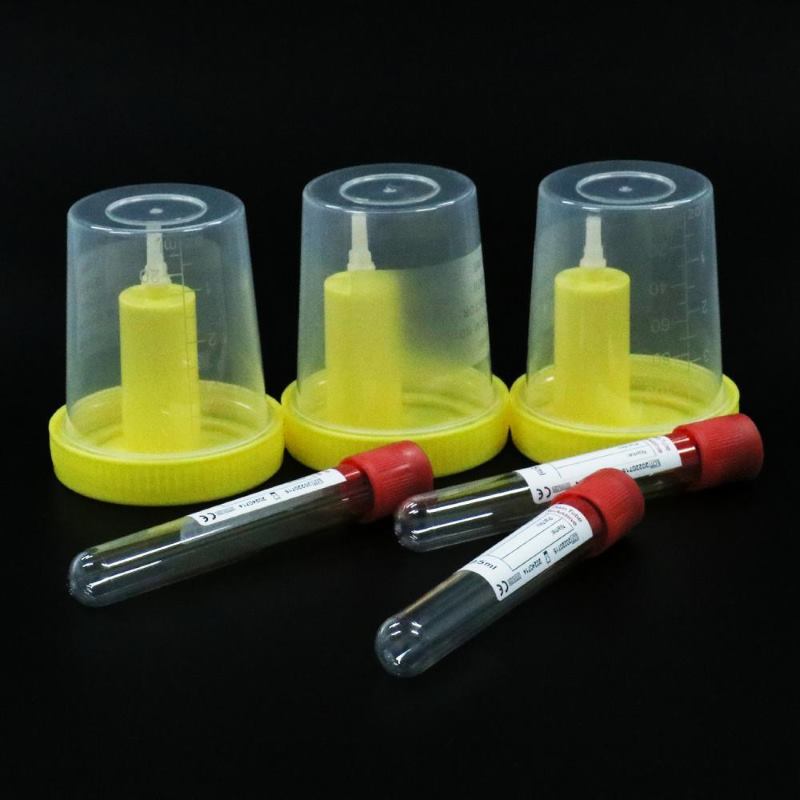
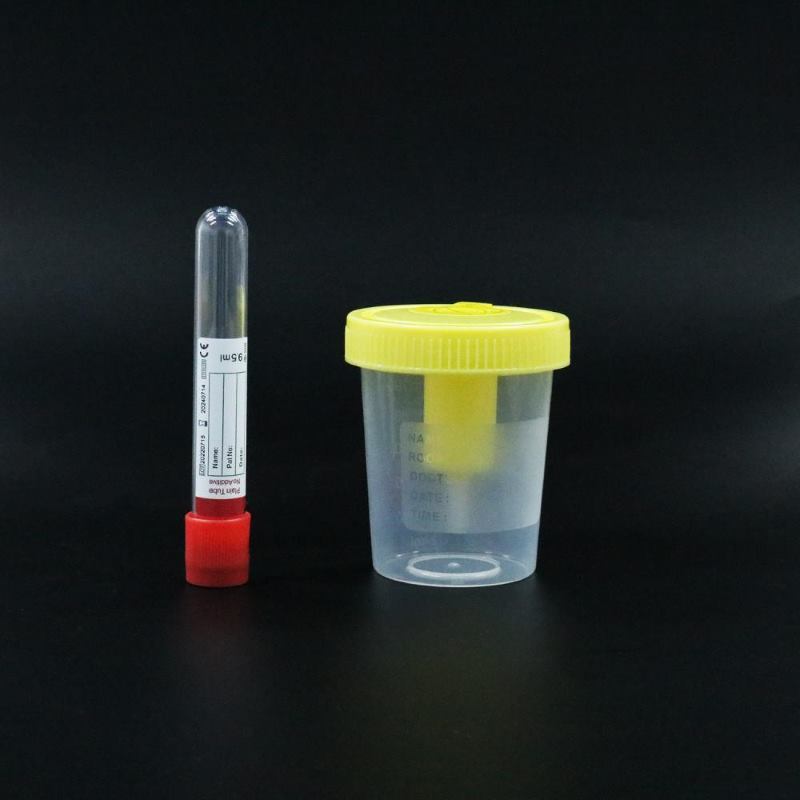
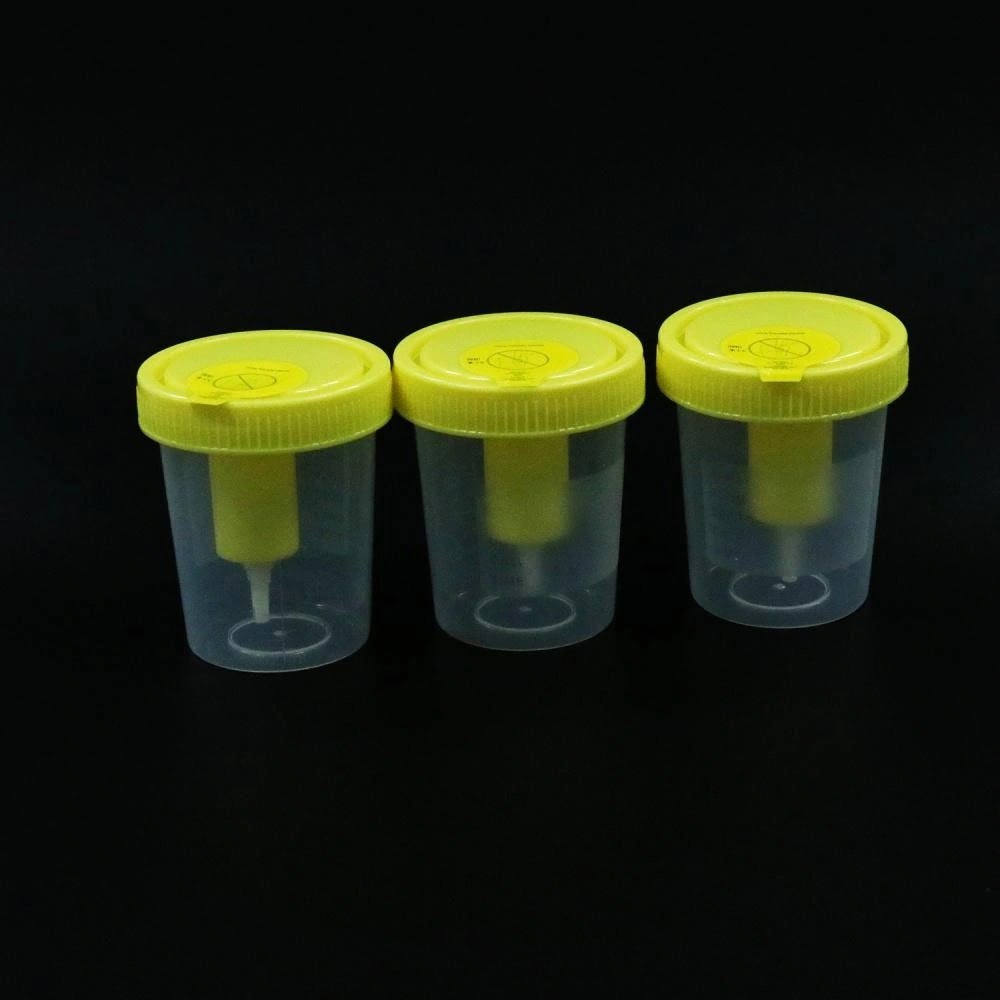
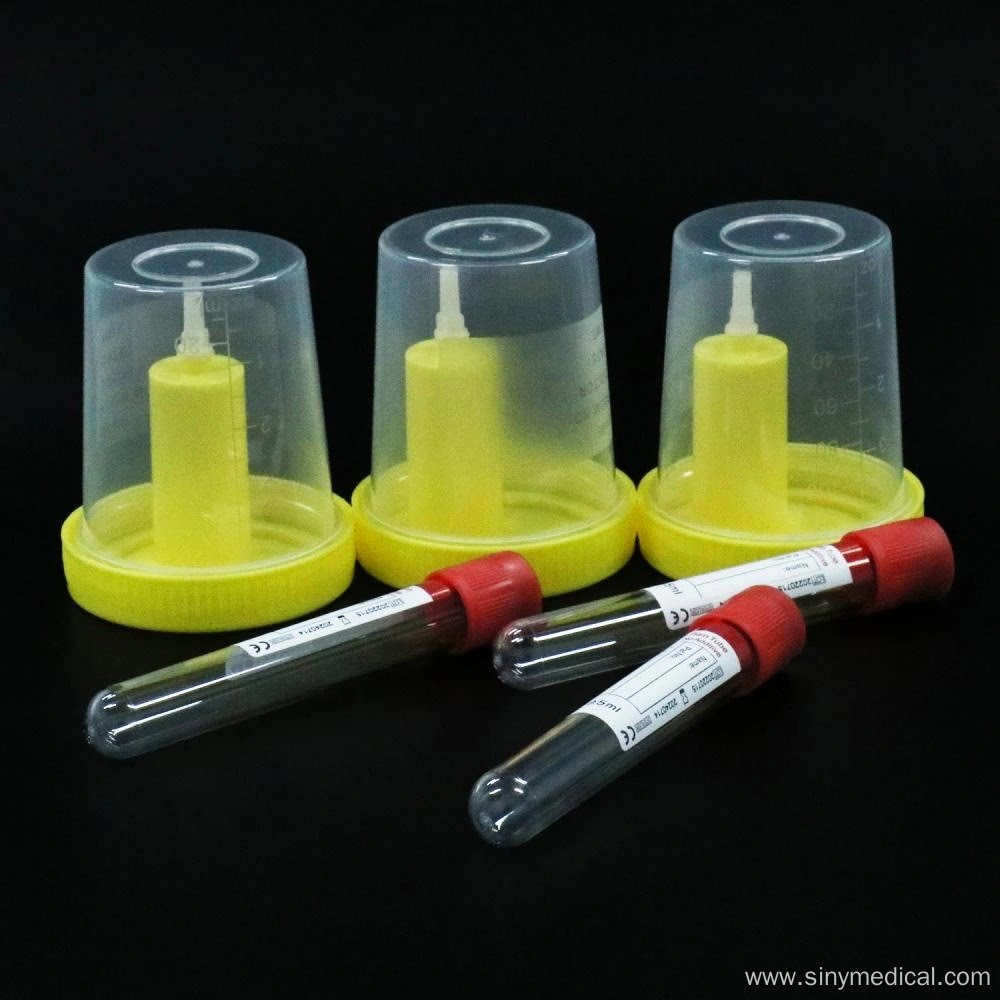
| Product Name | Specimen Cup |
| Main Material | PP/PS |
| OEM/ODM | Yes |
| Certificate | CE, ISO13485, ISO9001 |
| Usage | Hospital |
| Sterile | EO sterilization |
| Sample | Free |
| Service | In the groups we serve: distributors, import traders, government procurement, buying agents, and medical chain stores, we provide one-stop procurement for you to simplify your procurement process. |
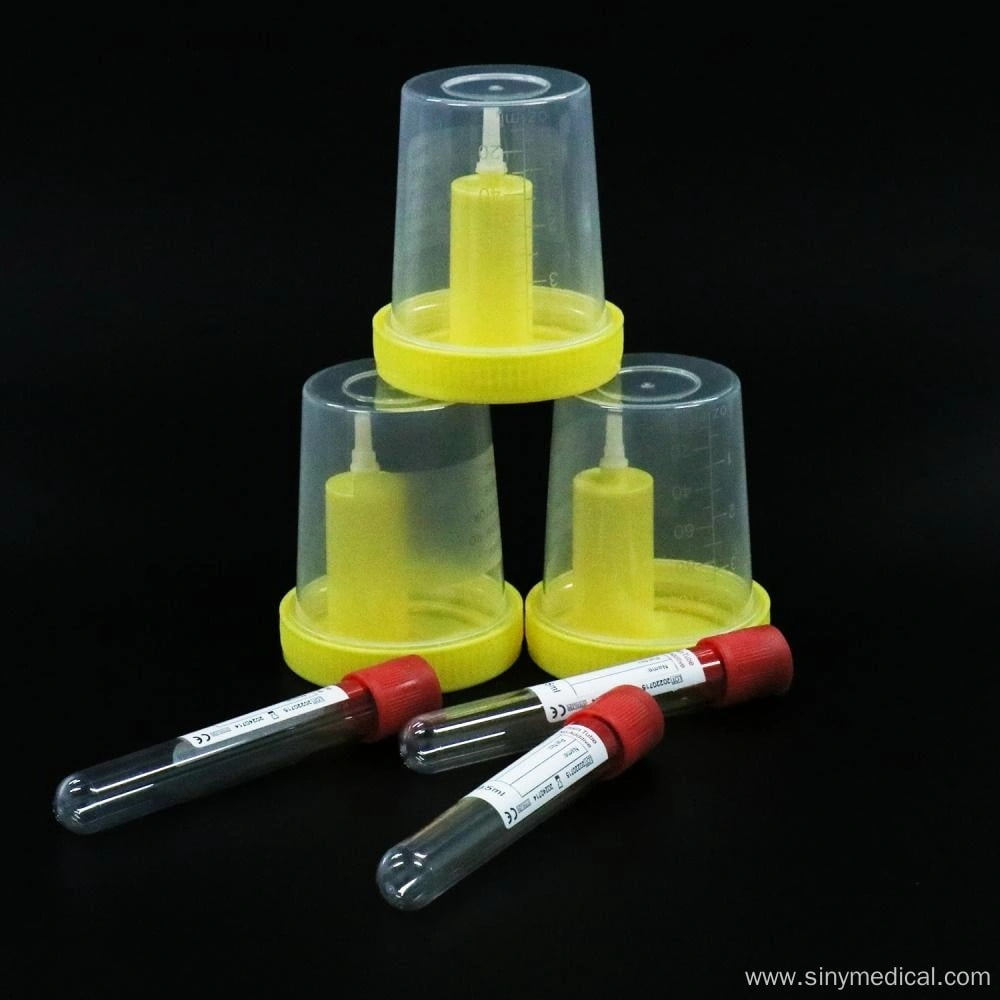
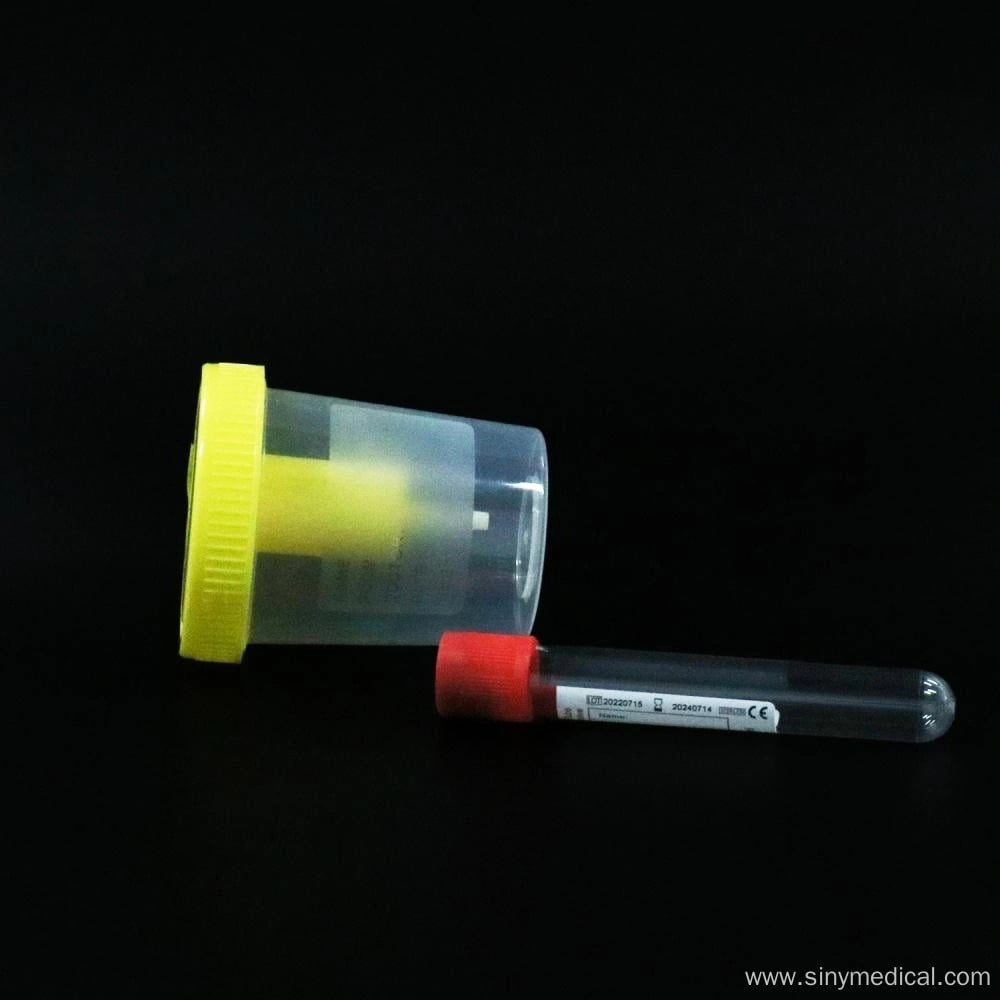
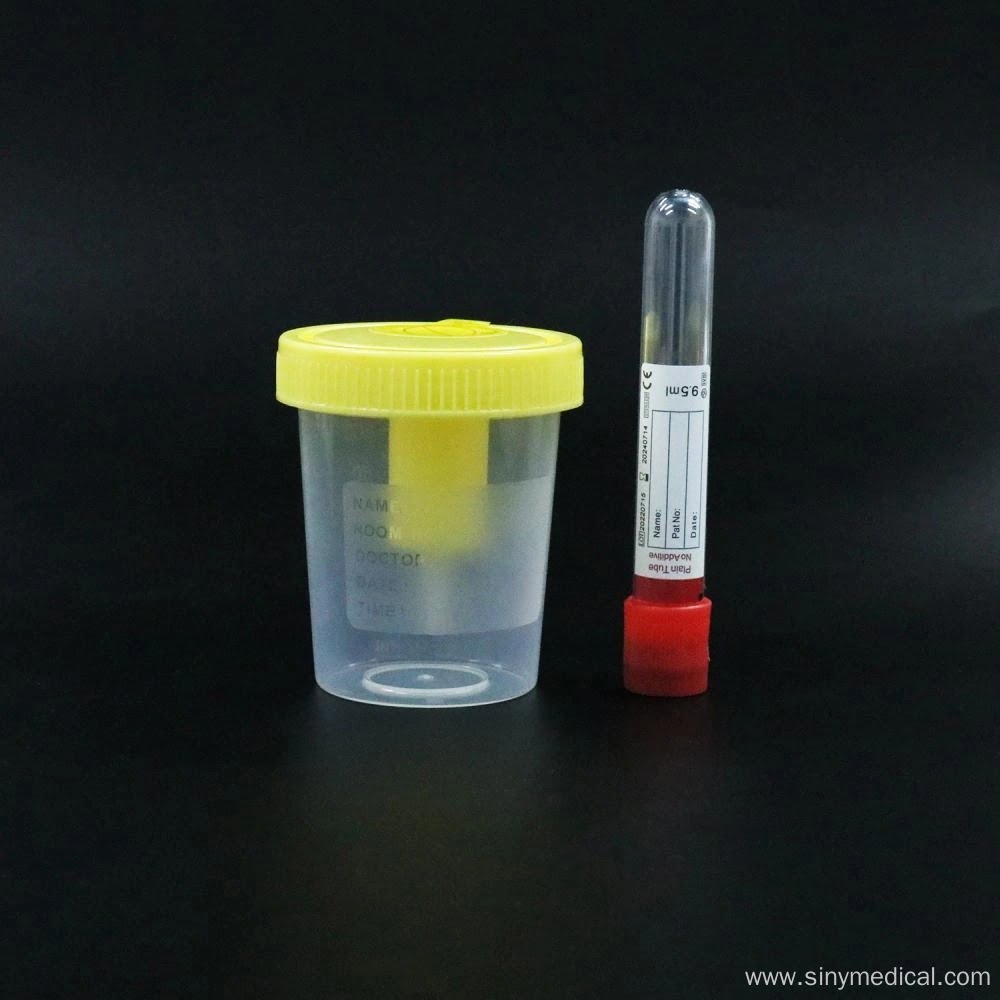
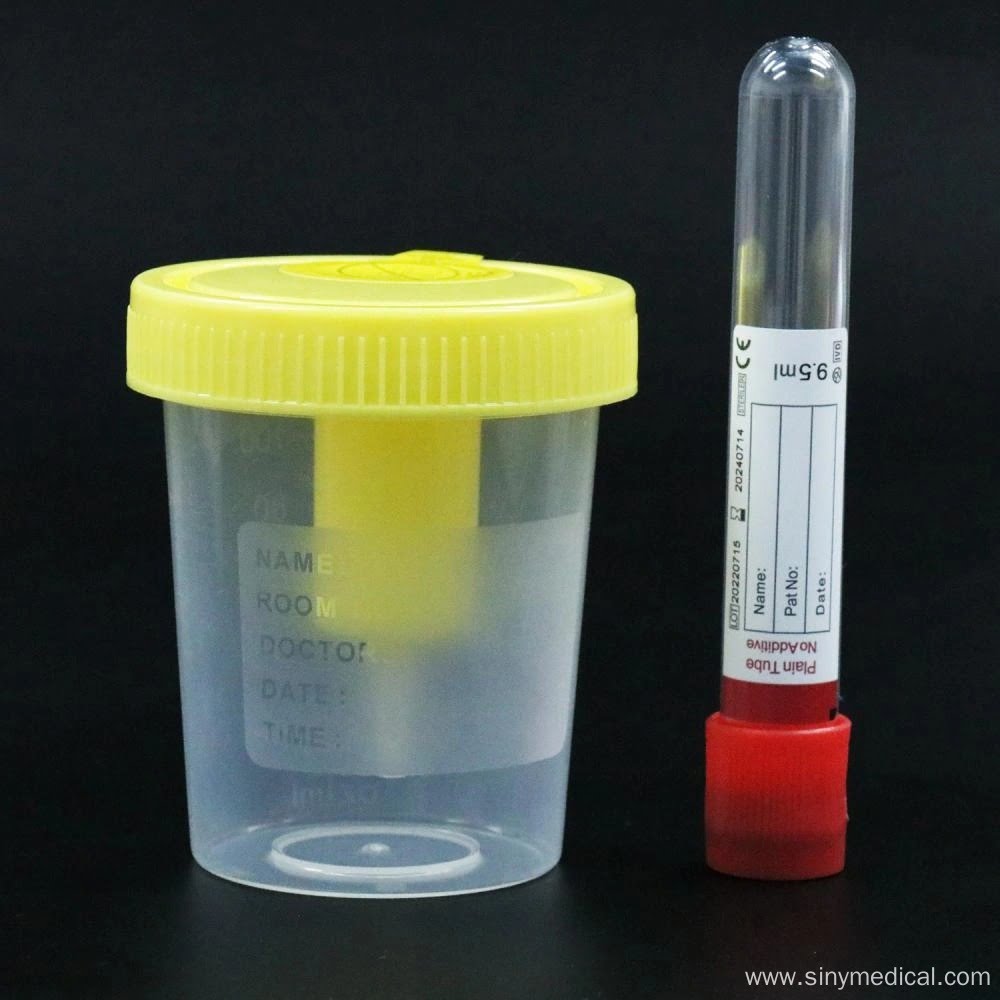
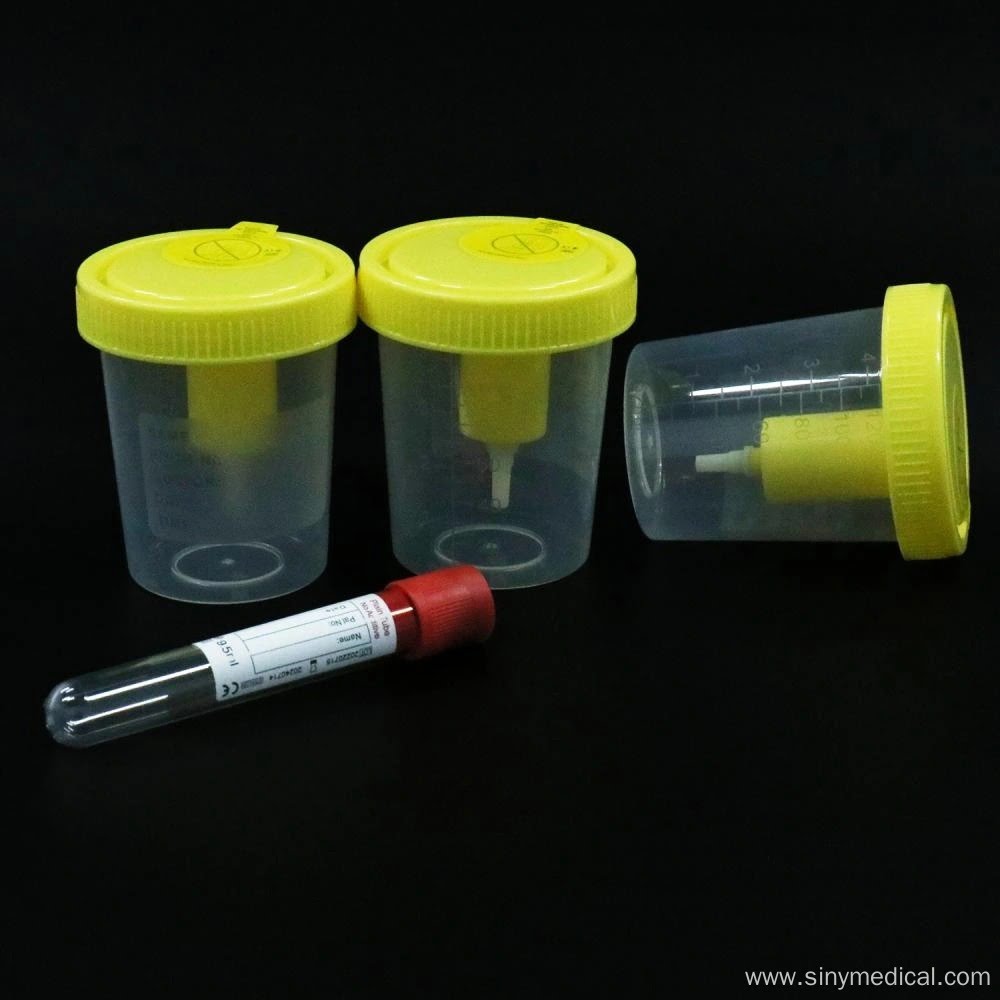
The Medical Supplies Vacuum Urine Cup with Collection Tube is a urine specimen collection product designed for hospitals, diagnostic laboratories, and healthcare facilities. The collection cup serves as the primary component for receiving urine specimens, while the accompanying vacuum collection tube supports subsequent specimen transfer through its preset negative pressure design.
Unlike conventional urine sample cups used independently, this product combines a collection cup with a corresponding vacuum collection tube. This configuration provides healthcare facilities with a coordinated option for urine collection and transfer during laboratory workflows.
The collection cup is the main focus of this product. Its role is to receive the specimen before transfer, making its configuration and compatibility with the accompanying tube important considerations during product selection.
For healthcare buyers, the main purchasing considerations include the collection cup design, corresponding vacuum tube, component compatibility, laboratory requirements, and supply quantities.
Siny Medical supplies medical specimen collection products to hospitals, clinical laboratories, healthcare distributors, and international medical buyers. We support professional customers with product information and bulk purchasing coordination.
The urine collection cup is the primary component of this product.
It receives the urine specimen during the initial collection stage before the subsequent transfer process. Healthcare facilities can evaluate the cup according to their collection procedures, laboratory requirements, and specimen handling workflows.
When purchasing this product, buyers should consider the collection cup together with its corresponding vacuum collection tube rather than treating them as unrelated supplies.
The accompanying vacuum collection tube features preset negative pressure.
This design supports urine specimen transfer from the collection cup when the product is operated according to its instructions.
The tube serves a supporting role within the collection process, while the cup remains the primary component for receiving the specimen.
This combination distinguishes the product from an ordinary urine collection cup supplied without a transfer tube.
The two components serve different functions:
Their coordinated use provides a defined collection and transfer arrangement for healthcare facilities.
The actual connection and transfer procedure should follow the supplied product instructions.
The product is intended for urine specimen collection and transfer before laboratory examination.
Hospitals, diagnostic laboratories, and healthcare facilities can evaluate it for collection workflows that require both a specimen collection cup and a corresponding vacuum tube.
The appropriate collection method, specimen quantity, and handling conditions depend on the requested examination and receiving laboratory procedures.
| Specification | Details |
|---|---|
| Product Name | Medical Supplies Vacuum Urine Cup with collection tube |
| Product Category | Urine Specimen Collection Product |
| Primary Component | Urine Collection Cup |
| Supporting Component | Vacuum Collection Tube |
| Collection Tube Design | Preset Negative Pressure |
| Intended Application | Urine Specimen Collection and Transfer |
| Application Environment | Hospitals and Laboratories |
Diagnostic laboratories receive urine specimens for different examinations.
The collection cup provides the initial container for receiving the specimen before the accompanying vacuum tube is used for transfer.
Laboratory personnel should determine the appropriate specimen quantity, collection method, and handling requirements according to each examination.
For laboratories using vacuum transfer procedures, compatibility between the collection cup and its corresponding tube is an important product selection consideration.
Outpatient departments frequently coordinate urine specimen collection for patients undergoing laboratory examinations.
The collection cup serves as the initial collection component. Healthcare personnel should explain the required collection procedure and ensure that specimens are correctly identified before submission.
For procurement teams, outpatient testing volumes provide a useful basis for estimating demand for collection cups and their corresponding tubes.
Inpatient wards may require urine collection products for patients undergoing diagnostic examinations during hospitalization.
Nursing personnel coordinate collection according to medical orders and laboratory procedures.
Central supply departments can distribute the collection cup and corresponding tube according to departmental demand.
Managing both components together helps departments maintain the required product configuration for their collection workflows.
After initial collection, the accompanying vacuum tube supports specimen transfer according to its operating instructions.
Laboratories should establish procedures for specimen identification, transfer, submission, and receiving.
The collection cup and tube should be selected according to actual laboratory processing requirements rather than treated as interchangeable with unrelated urine containers.
Central purchasing departments may distribute urine collection products to outpatient clinics, inpatient wards, and diagnostic laboratories.
This product should be identified separately from ordinary urine cups because it includes a corresponding vacuum collection tube.
Clear product descriptions help hospitals distinguish the collection cup with tube from standalone urine cups and other specimen collection products.
The collection cup is the primary component, so buyers should first identify the required collection configuration.
Important considerations include the intended application, laboratory collection procedures, and any specific requirements for the cup itself.
Healthcare facilities should confirm the relevant product specifications before purchasing.
The accompanying collection tube is designed to work with the collection cup as part of the same product configuration.
Buyers should confirm that the cup and tube are supplied as the intended combination.
This is particularly important when hospitals purchase collection cups and transfer tubes through different procurement channels.
The collection tube features preset negative pressure to support specimen transfer.
Depending on the intended application, buyers may need to confirm additional tube characteristics, such as capacity, configuration, and identification requirements.
These specifications should be verified against the actual product documentation.
The specific polymer and material grade of the collection cup and vacuum tube should be confirmed separately.
Buyers who require particular material specifications should request the relevant information for each component.
Sterility is another independent purchasing requirement. Healthcare facilities should confirm whether the requested product version is sterile and obtain the appropriate supporting documentation.
Different laboratories may follow different specimen collection and transfer procedures.
Before ordering, healthcare facilities should confirm that the product configuration and operating procedure match their laboratory requirements.
This helps procurement teams select the appropriate collection product rather than relying only on a general product name.
| Selection Factor | Buyer Consideration |
|---|---|
| Primary Component | Is a urine collection cup required? |
| Supporting Component | Is a corresponding vacuum tube included? |
| Component Compatibility | Are the cup and tube designed to work together? |
| Vacuum Tube | Does the tube have the required preset negative pressure? |
| Material | What material specifications apply to each component? |
| Tube Specifications | Are capacity and configuration requirements confirmed? |
| Sterility | Does the application require a sterile product? |
| Labeling | Are specimen identification or barcode requirements applicable? |
| Laboratory Compatibility | Does the product match the collection and transfer procedure? |
| Purchasing Quantity | How many complete product sets are required? |
Before collection, healthcare personnel should prepare the urine collection cup and its corresponding vacuum tube according to the supplied product instructions.
Both components should be available before beginning the collection procedure.
Personnel should also review the laboratory’s specimen collection requirements.
The patient or healthcare personnel collects the urine specimen in the collection cup according to the requested examination.
The required specimen quantity and collection method depend on laboratory instructions.
After collection, staff should identify the specimen according to the facility’s established procedures.
The accompanying collection tube contains preset negative pressure to support urine transfer.
Healthcare personnel should operate the collection cup and tube according to the manufacturer’s instructions.
The specific connection method and transfer sequence should follow the supplied product documentation.
After transfer, healthcare personnel should complete the required specimen identification procedures.
Depending on laboratory requirements, identification may include patient information, specimen type, collection date, collection time, and requested examination.
The specimen should then be submitted according to the receiving laboratory’s handling and processing requirements.
After their intended use, the collection cup and accompanying tube should be handled according to institutional procedures and applicable waste-management regulations.
Healthcare facilities should follow their established waste classification and disposal procedures based on the circumstances of use and local requirements.
Hospitals purchasing vacuum urine collection products should identify the collection cup as the primary component and confirm the corresponding vacuum tube configuration.
Central purchasing departments can consolidate requirements from outpatient departments, inpatient wards, and diagnostic laboratories.
Clear product descriptions should distinguish this collection cup with tube from conventional standalone urine cups.
Siny Medical supports professional healthcare buyers with product information and bulk purchasing coordination.
Hospitals should manage the collection cup and vacuum tube as components of one coordinated product configuration.
Inventory records can distinguish:
This structure helps procurement teams monitor complete-set availability and identify shortages of individual components.
It also reduces confusion when departments request replacement or additional collection supplies.
Hospitals can estimate purchasing demand using historical urine specimen collection records.
A practical calculation is:
Expected Period Demand = Average Daily Consumption × Planned Number of Days
For example, outpatient departments, inpatient wards, and diagnostic laboratories can calculate their average daily consumption separately.
The combined figure provides a starting point for centralized purchasing.
Because the product includes a collection cup and accompanying tube, hospitals should estimate demand in complete sets whenever both components are required for each collection workflow.
Hospitals can use the following formula to estimate their reorder point:
Reorder Point = Average Daily Consumption × Replenishment Lead Time + Safety Stock
For example, a hospital using 100 complete sets per day, with a replenishment lead time of 10 days and safety stock of 200 sets, would calculate:
100 × 10 + 200 = 1,200 sets.
This is an illustrative calculation. Actual inventory levels should reflect historical consumption, supplier lead times, purchasing schedules, and hospital policies.
Purchasing teams should also monitor the quantities of collection cups and vacuum tubes to ensure that both components remain available in the required proportions.
Medical distributors may supply vacuum urine cups with collection tubes to hospitals, diagnostic laboratories, clinics, and healthcare institutions.
Before preparing quotations, distributors should confirm:
Clear product identification helps distributors distinguish this product from standalone urine cups and other vacuum urine collection products.
Hospitals and distributors can organize repeat orders according to historical consumption and anticipated demand.
Maintaining consistent product descriptions helps prevent confusion between the complete collection cup and tube configuration and individual components.
For larger purchasing programs, procurement teams should coordinate order quantities and delivery schedules to maintain appropriate inventory levels.
Siny Medical supports hospitals, laboratories, and medical distributors with product information and bulk supply coordination.
A vacuum urine cup with collection tube is a urine specimen collection product consisting of a collection cup and a corresponding vacuum collection tube. The cup receives the specimen, while the tube supports subsequent transfer.
The urine collection cup is the primary component used to receive the specimen during the initial collection stage. It works with the accompanying vacuum tube as part of the collection and transfer configuration.
The tube contains preset negative pressure and supports specimen transfer from the collection cup when operated according to the product instructions.
A regular urine cup primarily serves as a standalone collection container. This product combines a collection cup with a corresponding vacuum collection tube to support an additional specimen transfer step.
The specific polymer and material grade of each component should be confirmed through the product specifications. Buyers with particular material requirements should verify the collection cup and vacuum tube separately.
Sterility is a separate product specification. Buyers should confirm the supplied version, sterilization method, and supporting documentation before purchasing.
Hospitals should manage both components as one coordinated product configuration. Inventory records should monitor complete sets and individual component quantities to support consistent replenishment.
Yes. Siny Medical supplies medical specimen collection products to hospitals, diagnostic laboratories, and medical distributors. Professional buyers can discuss product configuration, component specifications, purchasing quantities, and bulk supply arrangements with our team.
Siny Medical supplies the Medical Supplies Vacuum Urine Cup with collection tube for hospitals, diagnostic laboratories, healthcare distributors, and international medical buyers. With the urine collection cup as its primary component and a corresponding preset negative-pressure collection tube, this product provides a coordinated option for urine specimen collection and transfer. Contact Siny Medical to discuss your product requirements, purchasing quantities, and bulk quotation needs.
Copyright © 2026 | Ningbo Siny Medical Technology Co., Ltd