| Item | Specification |
|---|---|
| Product Name | ECG Graph Paper |
| Product Type | ECG Recording Paper |
| Paper Type | Thermal Paper |
| Key Feature | Printed Measurement Grid |
| Compatibility | Compatible ECG Machines |
| Usage | Electrocardiogram Recording |
| Customization | OEM / ODM Available |
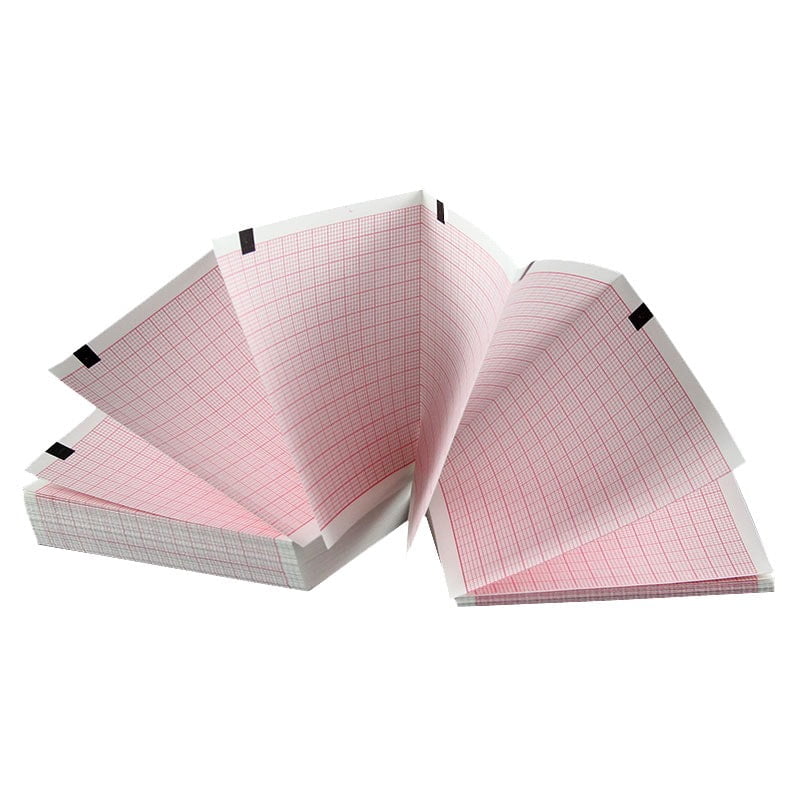
ECG Graph Paper is thermal recording paper with a printed grid for use with compatible electrocardiograph machines. The grid provides a structured background for displaying ECG waveforms and reviewing printed recordings.
During an examination, the ECG machine processes electrical signals and transfers the recording to the paper through its printing system. The waveform appears over the printed grid, allowing the resulting trace to be viewed against consistent horizontal and vertical reference lines.
Siny Medical supplies ECG recording paper for hospitals, clinics, diagnostic centers, and other healthcare facilities. Since ECG machines can require different paper dimensions, formats, and grid configurations, buyers should confirm their equipment requirements before ordering.
The printed grid is the feature that distinguishes graph paper from plain thermal recording media.
It consists of evenly arranged horizontal and vertical lines that divide the recording area into small squares. Heavier lines may also be used to group smaller squares into larger sections.
This organized background provides a consistent visual reference for the waveform printed by the ECG machine.
The horizontal direction is commonly associated with time, while the vertical direction represents signal amplitude according to the settings and calibration of the ECG system.
However, the paper itself does not determine the operating speed, calibration, or interpretation of the examination. These depend on the ECG equipment and the settings used during recording.
For this reason, grid quality should be considered together with machine compatibility rather than treated as an independent diagnostic feature.
A clear and consistent grid makes the printed ECG record easier to read.
Lines should remain visible without overwhelming the waveform. The background should provide enough contrast for reference while allowing the machine-generated trace to remain easy to distinguish.
Consistency is also important across the recording area. Uneven lines, irregular spacing, or poor printing can make the physical record harder to review.
When evaluating graph paper, several characteristics deserve attention:
These characteristics work together during routine ECG printing.
The grid provides the reference background, while the thermal surface receives the waveform generated by the electrocardiograph.
Most modern ECG recording systems that use this type of paper rely on thermal printing.
The paper has a heat-sensitive surface. As it passes beneath the thermal printhead, controlled heat produces the waveform and other information generated by the machine.
This process does not require conventional ink or toner.
For a readable printout, the thermal surface needs to interact properly with the printer. The paper should also move through the machine in the correct direction and remain aligned during recording.
Paper condition can affect printing as well.
Excessive heat, moisture, contamination, or physical damage may affect thermal recording media. Suitable storage and careful handling are therefore important before the paper is loaded into the machine.
The printed grid and thermal recording surface serve different purposes. The grid provides the structured background, while the thermal layer allows the ECG printer to create the waveform.
Not every ECG machine uses the same recording paper.
Two products may both have a printed grid while differing in dimensions, format, folding method, or other physical characteristics.
Before purchasing replacement paper, check the requirements of the intended machine.
Confirm the required width, length, or sheet dimensions.
Do not assume that visually similar graph paper will fit the same ECG equipment.
Determine whether the machine uses a roll, folded paper, or another configuration.
The correct format needs to match the paper compartment and feeding mechanism.
Check the grid appearance and configuration required for the intended recording system.
If replacing an existing product, the current paper can provide a useful reference.
The machine brand and model can help identify the required recording paper.
When specifications are uncertain, check the equipment manual or provide the machine information when requesting product confirmation.
For regular or bulk purchasing, confirm the required quantity and packaging arrangement.
Facilities operating several ECG machines should identify each paper requirement separately rather than assuming one product will fit every machine.
The term “graph paper” describes the presence of the printed reference grid. It does not necessarily describe how the paper is physically supplied.
Depending on the ECG machine, recording paper may be provided in different physical formats.
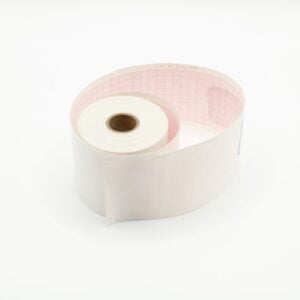
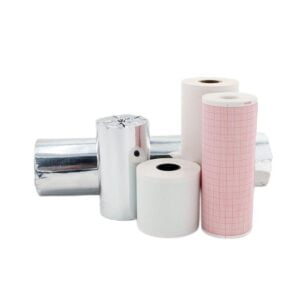
Roll paper is supplied as a continuous roll and feeds through equipment designed for a roll mechanism.
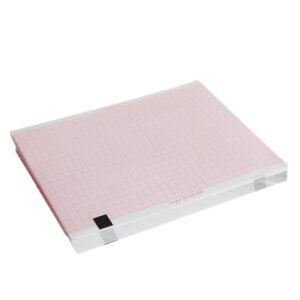
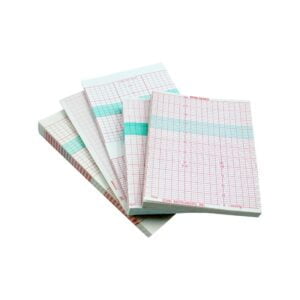
Z-fold paper is arranged in connected folded sections and is used with machines designed for a folded-paper feeding system.
Both formats may incorporate a printed ECG grid.
This distinction is useful when purchasing replacement paper. A product can have the correct grid appearance while still using the wrong dimensions or physical format for the machine.
Therefore, buyers should consider both the grid configuration and the paper format when confirming compatibility.
Thermal graph paper should be stored carefully before use.
Keep unused paper in a clean and dry environment. Avoid prolonged exposure to excessive heat, moisture, direct sunlight, and contamination.
The paper surface should also be protected from unnecessary scratching, rubbing, or pressure.
When loading new paper, follow the ECG machine manufacturer’s instructions. Confirm the paper orientation and make sure it feeds correctly through the printing mechanism.
If a printout appears unclear or the paper does not feed normally, check:
For facilities that store several recording paper specifications, separate labeling can help prevent products intended for different machines from being mixed.
It is recording paper with a printed grid designed for use with compatible electrocardiograph machines. The grid provides a structured background for the waveform produced by the ECG system.
This product uses thermal paper for compatible ECG printing systems. The heat-sensitive surface allows the machine to produce a printed trace without conventional ink or toner.
The horizontal and vertical lines create a structured reference grid for viewing and measuring the recorded waveform according to the ECG machine’s settings and calibration.
No. ECG recording paper can vary in width, length, sheet dimensions, and physical format. The correct specification depends on the intended machine.
ECG recording paper with a printed grid can be supplied in different physical formats. The required format should match the ECG machine.
Check the existing paper, equipment manual, required dimensions, paper format, grid configuration, and ECG machine model before ordering.
Keep unused paper in a clean, dry environment and protect it from excessive heat, moisture, direct sunlight, contamination, and unnecessary physical damage.
Siny Medical supplies ECG Graph Paper for compatible electrocardiograph recording systems.
The printed grid provides a structured background for ECG waveform records, while the thermal surface works with compatible printing equipment to produce the machine-generated trace.
Because paper dimensions, formats, and machine requirements can vary, buyers should confirm the required configuration before ordering.
Contact Siny Medical with your ECG machine information, required paper format, quantity, and packaging needs for samples, product information, or bulk-order pricing.
Copyright © 2026 | Ningbo Siny Medical Technology Co., Ltd