| Item | Specification |
|---|---|
| Product Name | ECG Recording Paper |
| Product Type | Medical ECG Paper |
| Paper Material | Wood Pulp-Based Paper |
| Paper Type | Thermal Recording Paper |
| Paper Format | Roll / Z-Fold |
| Recording Method | Direct Thermal Printing |
| Application | Electrocardiograph (ECG) Machines |
| Usage | ECG Waveform Recording |
Siny Medical supplies ECG recording paper for compatible electrocardiograph machines used in hospitals, clinics, diagnostic centers, and other healthcare facilities.
ECG paper provides a physical recording surface for electrocardiogram waveforms and related examination information. Different ECG machines require different paper dimensions, formats, and printing configurations.
As an ECG paper supplier, Siny Medical helps customers identify their recording paper requirements and discuss suitable supply options for regular purchasing projects.
Buyers can provide their ECG machine model, required paper dimensions, order quantity, and packaging preferences when requesting product information.
Because ECG equipment varies between manufacturers, compatibility should always be confirmed before an order is finalized.
ECG recording systems use different types of paper. The correct configuration depends on the machine’s printing mechanism and physical requirements.
Thermal paper is commonly used in modern electrocardiograph printers. Its heat-sensitive surface responds to controlled heat, allowing the machine to create waveform traces without conventional ink or toner.
However, thermal recording technology does not make all ECG paper interchangeable.
Products may differ in width, length, folding arrangement, roll diameter, core configuration, and printed grid.
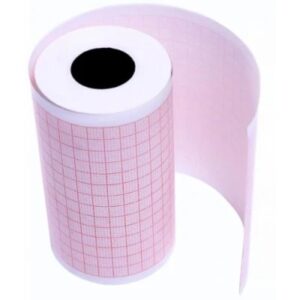
Roll paper consists of a continuous strip wound into a compact roll.
It feeds through compatible ECG machines that use a roll-based printing system.
When sourcing replacement rolls, buyers should confirm the required width, length, outside diameter, and core configuration where applicable.
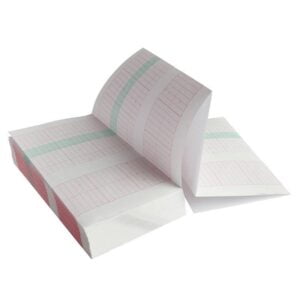
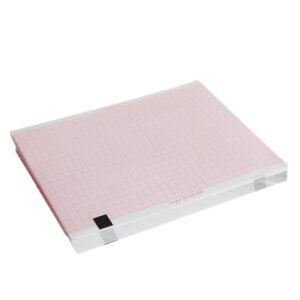
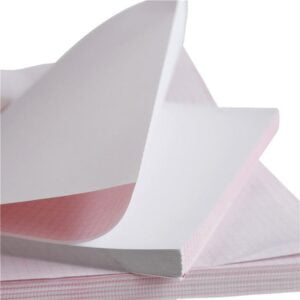
Folded paper consists of connected sections arranged in a stack.
Some electrocardiographs use this format instead of a continuous roll. The folded dimensions and feeding arrangement must match the equipment.
Certain recording papers include a printed measurement grid.
The grid provides a structured background for viewing ECG waveforms. Its configuration should correspond to the recording system and intended use.
These product characteristics may appear in different combinations. Therefore, each purchasing request should identify the complete paper specification rather than relying only on a general product name.
Machine compatibility is one of the most important considerations when sourcing recording paper.
Single-channel, three-channel, six-channel, and twelve-channel electrocardiographs can use different recording layouts.
However, the number of channels does not establish a universal paper size.
Two machines with the same channel designation may require different widths or feeding formats. Likewise, similar-looking rolls may have different core dimensions or lengths.
For this reason, Siny Medical recommends checking the intended equipment before confirming a replacement paper specification.
Useful information includes the ECG machine brand, model, existing paper dimensions, and physical format.
The equipment manual can provide additional details when the original paper packaging is unavailable.
For projects involving several ECG machines, buyers should identify the requirements of each model separately.
This makes it easier to prepare an accurate product list and reduces the risk of mixing incompatible paper configurations.
Recording paper is a frequently replaced medical consumable. Its physical consistency matters during routine printing.
The thermal surface should respond properly when used with compatible equipment. It should also remain clean and free from unnecessary damage.
Paper dimensions and edge quality affect how the product moves through the printer.
For roll paper, the winding arrangement and physical configuration should suit the intended feeding mechanism.
For folded paper, the stack and fold dimensions must correspond to the machine’s design.
Where a printed grid is required, consistent lines provide a visible reference background for the recorded waveform.
Several practical characteristics deserve attention when evaluating a paper specification:
These characteristics relate to the recording medium itself.
The ECG machine remains responsible for acquiring and processing electrical signals. Clinical interpretation also depends on the equipment settings and qualified healthcare professionals.
Therefore, recording paper should not be presented as a product that independently improves diagnostic accuracy.
A clear purchasing request helps both parties identify the required product.
Before requesting a quotation, buyers should gather the relevant equipment and paper information.
Identify the required width and length for roll paper.
For folded products, confirm the paper dimensions and folding arrangement.
If possible, use the existing paper packaging or equipment manual as a reference.
Provide the ECG machine manufacturer and model.
This information helps distinguish between recording systems that use similar paper descriptions but different physical configurations.
Confirm whether the equipment uses continuous rolls, folded stacks, or another recording format.
Do not assume that roll and folded products are interchangeable.
Include the expected purchasing quantity and any preferred packaging arrangement.
For recurring orders, buyers can also explain their approximate purchasing schedule.
Where necessary, provide the required packaging or labeling information.
OEM and ODM requests should include the intended specifications so that availability and production arrangements can be confirmed.
Providing these details early makes the purchasing process more efficient and reduces unnecessary revisions.
Regular ECG paper purchasing often involves more than selecting a single product.
Healthcare facilities and medical supply companies may need different paper configurations for several ECG machine models.
In these situations, clear product identification is important.
Each paper specification should have a recognizable description that includes its dimensions and physical format.
Packaging information should also correspond to the actual product.
For example, roll paper and folded paper may require different packaging arrangements. The final quantity per package or carton should be confirmed for the selected configuration.
Buyers should avoid assuming that all ECG recording papers share the same packing quantity.
For larger purchasing projects, Siny Medical can discuss required quantities, labeling, packaging, and confirmed customization options.
Any specific configuration or packaging arrangement should be verified before the order is finalized.
Proper storage helps maintain the condition of thermal paper before use.
Keep unused recording paper in a clean and dry environment. Avoid prolonged exposure to excessive heat, moisture, direct sunlight, and contamination.
Protect the thermal surface from scratching, rubbing, and unnecessary pressure.
Where possible, retain the original packaging until the paper is needed.
For facilities that keep several specifications in stock, separate storage and clear labeling can help prevent mix-ups.
Before installing replacement paper, check the dimensions and physical format.
Then follow the ECG machine manufacturer’s loading instructions.
If printing or feeding problems occur, confirm the paper orientation, alignment, dimensions, and equipment requirements.
Printed thermal records may also be sensitive to heat, light, and contact with certain materials. Healthcare facilities should follow their established procedures for storing and retaining ECG printouts.
Buyers can inquire about thermal ECG recording paper in different roll and folded configurations. Specific dimensions, formats, and availability should be confirmed before ordering.
ECG and EKG are two abbreviations for electrocardiogram. Both terms commonly refer to the same type of recording consumable when discussing electrocardiograph paper.
Sometimes, but compatibility must be checked. Machines may differ in paper width, length, feeding format, and other physical requirements.
Provide the ECG machine model, required paper dimensions, physical format, quantity, and any packaging or labeling requirements.
No conventional ink or toner is required. Compatible thermal printers create the recording by applying controlled heat to the paper surface.
Siny Medical can discuss packaging, labeling, and OEM/ODM requirements. Available options depend on the confirmed product specification and purchasing project.
Store unused paper in a clean and dry environment. Protect it from excessive heat, moisture, direct sunlight, contamination, and physical damage.
Siny Medical provides ECG paper supply options for compatible electrocardiograph recording systems.
Buyers can discuss recording paper dimensions, formats, packaging, labeling, and purchasing quantities according to their equipment requirements.
Before confirming an order, the selected paper specification should be checked against the intended ECG machine.
Contact Siny Medical with your ECG machine models, required paper specifications, and order quantity to discuss available products, samples, customization options, and bulk-order pricing.
Copyright © 2026 | Ningbo Siny Medical Technology Co., Ltd