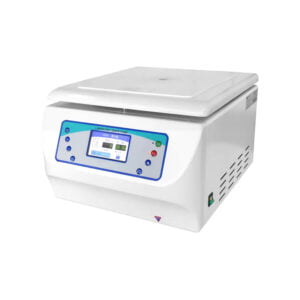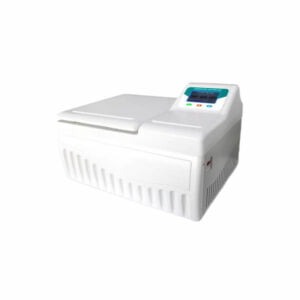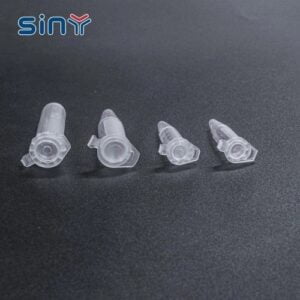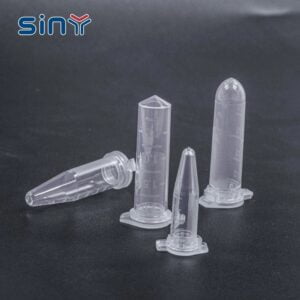

| Specification | Description |
|---|---|
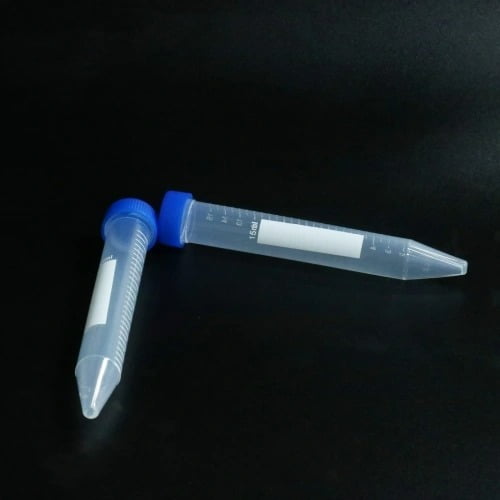
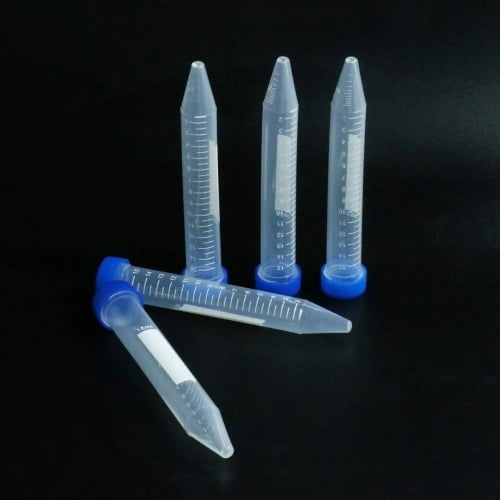
| Product Name | Disposable Screw Cap Centrifuge Tube |
| Product Category | Laboratory Centrifuge Consumables |
| Product Type | Centrifuge Tube |
| Closure Type | Screw Cap |
| Usage | Disposable |
| Intended Use | Laboratory Sample Processing and Centrifugation |
Reliable sample handling starts with choosing the right laboratory container. From routine sample preparation to centrifugal separation, laboratories need tubes that fit their equipment, accommodate their samples, and support consistent handling procedures. The closure design also matters because technicians frequently move, label, and process samples throughout the working day.
Siny Medical offers Disposable Screw Cap Centrifuge Tubes for clinical laboratories, research facilities, diagnostic centers, and laboratory consumable distributors. These tubes combine a centrifuge tube body with a threaded cap, providing a practical container format for appropriate laboratory sample processing.
Screw Cap Centrifuge Tubes use a threaded closure that personnel tighten by rotating the cap onto the tube. Unlike snap-cap designs, which close through a pressing action, screw caps engage matching threads between the cap and tube body. This distinction can influence handling preferences, closure procedures, and compatibility with laboratory workflows.
However, a screw cap does not automatically make a tube leakproof, aerosol-tight, or suitable for high-speed centrifugation. Those characteristics depend on the complete tube-and-cap construction and its documented operating limits.
For laboratories and distributors, the right purchasing decision involves several factors: sample volume, centrifuge compatibility, required centrifugal force, chemical resistance, and closure requirements. Understanding these considerations helps buyers choose a suitable disposable tube without relying on appearance alone.
The defining characteristic of this product is its threaded closure. However, the tube’s overall suitability depends on how the cap, tube body, and laboratory equipment work together.
A screw cap uses matching threads to connect the cap to the tube body. Users typically tighten the cap by rotating it until they achieve the closure specified by the manufacturer.
This mechanism differs from a snap-cap design, which uses a pressing action to engage its closure.
For example, technicians who prefer a rotating closure may find screw-cap tubes suitable for certain sample preparation procedures.
In addition, threaded caps can provide a defined closing action when users follow the product instructions.
However, over-tightening may damage some closures, while insufficient tightening may compromise containment. Therefore, personnel should use the correct closing method.
Disposable centrifuge tubes support laboratory workflows that use a fresh container for each designated application.
This approach can simplify consumable management and reduce the need for tube reuse procedures.
However, disposable does not automatically mean sterile, nuclease-free, pyrogen-free, or suitable for every biological application.
Those properties require separate product-specific information.
Therefore, buyers should match the tube’s documented characteristics to the intended laboratory procedure.
Laboratories regularly transfer samples between preparation areas, centrifuges, and analytical equipment.
A suitable screw-cap tube can support these activities by providing a container with a threaded closure.
For example, technicians may prepare and identify samples before placing them into compatible centrifuge equipment.
However, the cap must remain properly secured according to the operating instructions.
In addition, personnel should avoid touching the inner surfaces of the tube and cap when contamination control is important.
The cap and tube body function as a combined assembly.
Their thread dimensions and closure geometry must match.
Therefore, laboratories should use the cap intended for the selected tube rather than assume that caps from different products are interchangeable.
Even when two caps appear similar, differences in thread design or sealing surfaces may affect closure performance.
For this reason, purchasing teams should evaluate the complete product rather than treat the cap as a universal accessory.
Centrifuge tubes must fit the intended rotor or adapter.
However, physical fit alone does not establish operating compatibility.
The tube’s shape, dimensions, support arrangement, and permitted centrifugal force all matter.
In addition, the cap must be suitable for the planned centrifugation procedure.
Therefore, buyers should review the tube-and-rotor combination before introducing a new product into laboratory use.
Laboratories process samples containing different buffers, reagents, and biological materials.
Tube materials may respond differently to these substances.
For example, certain chemicals can affect the strength or dimensional stability of some plastics.
Consequently, buyers should identify the reagents used in their workflow and compare them with the actual tube material.
Temperature and contact duration may also affect compatibility.
Laboratories use centrifuge tubes for sample preparation and separation across a range of scientific and diagnostic activities. The appropriate tube depends on the procedure, equipment, and sample characteristics.
Clinical laboratories use centrifugation in selected diagnostic sample preparation procedures.
Suitable tubes help contain samples during processing in compatible equipment.
For example, a laboratory may use a centrifuge tube during an established separation procedure.
However, technicians must follow the validated method and select the correct container.
A disposable screw-cap centrifuge tube should not automatically replace a dedicated blood collection tube or other specialized specimen container.
Molecular biology workflows often involve sample preparation, reagent handling, and centrifugal separation.
Depending on the procedure, technicians may process nucleic acids, proteins, or other biological materials.
A suitable screw-cap tube can support these activities when its material and operating limits match the protocol.
However, applications requiring special contamination-control properties must use products with the appropriate documented specifications.
Biochemistry laboratories use centrifugation to clarify solutions, separate precipitates, and prepare materials for analysis.
The required tube depends on the sample volume, reagent chemistry, and centrifugal force.
In addition, technicians may need to consider temperature control during processing.
Therefore, laboratories should evaluate the tube’s actual material and performance specifications before selecting it for a particular procedure.
Cell biology laboratories use centrifugation for various sample processing tasks.
For example, certain procedures collect or separate cellular material.
However, the appropriate centrifugal force depends on the cells and experimental objective.
A suitable tube must support the selected conditions without exceeding its operating limits.
In addition, technicians should consider whether the sample requires special handling or containment measures.
Educational and research laboratories use disposable centrifuge tubes for practical training and experimental work.
A consistent tube format can help laboratories organize routine consumable use.
However, personnel still need training in centrifuge operation, balancing, and sample handling.
Furthermore, laboratories should clearly distinguish tubes intended for different operating conditions.
Laboratory distributors supply centrifuge tubes to hospitals, research institutions, and diagnostic facilities.
Their customers may use different equipment and sample preparation procedures.
Therefore, distributors should understand the intended application before selecting a product.
Clear information about the tube’s closure, dimensions, material, and operating limits helps customers make informed purchasing decisions.
Closure design is one of the most noticeable differences between laboratory centrifuge tubes.
Two common formats are screw-cap and snap-cap tubes.
Both can support laboratory sample handling when the finished product meets the relevant requirements. However, their opening and closing mechanisms differ.
Screw-cap tubes use a threaded closure.
Personnel rotate the cap to engage the threads and close the tube.
This format may suit workflows that prefer a rotating closure and a separate cap.
However, the closure’s containment performance depends on its construction and correct use.
A threaded cap does not automatically provide superior leak resistance.
Snap-cap tubes use a closure that engages when personnel press the cap into position.
Depending on the design, the cap may remain attached to the tube body.
This format can be convenient for workflows that involve frequent opening and closing.
However, snap-cap tubes vary in closure strength, operating limits, and containment performance.
Therefore, buyers should evaluate the finished product rather than judge performance solely by closure type.
| Feature | Screw Cap Centrifuge Tubes | Snap Cap Centrifuge Tubes |
|---|---|---|
| Closure Mechanism | Threaded, Rotating Cap | Press-to-Close Cap |
| Opening Method | Unscrewing the Cap | Releasing the Snap Closure |
| Handling Preference | Rotating Closure | Press-and-Release Closure |
| Cap Configuration | Threaded Cap | Often Hinged or Attached, Depending on Design |
| Leak Resistance | Product-Specific | Product-Specific |
| Centrifugation Limits | Product-Specific | Product-Specific |
| Main Buying Consideration | Threaded Closure and Workflow Compatibility | Opening Convenience and Workflow Compatibility |
Neither closure type is universally better.
Instead, laboratories should select a tube according to their sample requirements, equipment, and operating procedures.
Choosing a suitable centrifuge tube involves more than selecting a closure design.
Purchasing teams should evaluate the complete tube-and-cap assembly, laboratory equipment, and sample processing requirements.
First, identify the volume of material that the laboratory needs to process.
The tube must provide sufficient capacity for the intended sample.
However, nominal capacity and permitted working volume are not always identical.
For example, some centrifugation procedures require minimum or maximum filling levels.
Therefore, buyers should follow the applicable product and equipment instructions rather than assume every tube can be filled to its nominal capacity.
Next, identify the centrifuge model and rotor configuration.
Different rotors accommodate different tube dimensions and shapes.
Some applications also require adapters or support inserts.
Therefore, purchasing teams should check the tube’s external dimensions and the rotor manufacturer’s instructions.
A tube that fits into a rotor cavity may still be unsuitable for operation at the selected speed.
Relative centrifugal force, or RCF, describes the centrifugal acceleration acting on a sample.
Manufacturers commonly express it as multiples of gravity, such as × g.
The permitted operating force depends on the tube’s construction and the relevant equipment conditions.
Therefore, buyers should compare the laboratory’s required RCF with the tube’s documented operating limit.
They should also consider the rotor and adapter limits.
The lowest applicable operating limit governs the complete assembly.
RPM measures rotational speed, while RCF describes the force experienced by the sample.
The two values are related, but they are not interchangeable.
RCF depends on both rotational speed and rotor radius.
For example, two centrifuges operating at the same RPM may generate different centrifugal forces.
Therefore, laboratories should use the correct rotor information when interpreting centrifugation protocols.
The tube’s maximum permitted RCF should remain a primary selection factor.
The threaded closure should suit the laboratory’s handling procedure.
Buyers should consider how technicians open, close, and handle the tubes.
In addition, they should review whether the cap requires a particular tightening method.
However, a threaded closure does not automatically provide leakproof or aerosol-tight containment.
Applications with specific containment requirements need appropriate supporting performance information.
Tube material can influence chemical resistance, temperature suitability, and mechanical performance.
For example, some reagents may affect certain plastics.
Therefore, laboratories should identify the sample composition and any reagents used during processing.
They should then compare these conditions with the actual tube material and its documented compatibility.
Different laboratory procedures have different contamination-control requirements.
Some applications may require sterile consumables, while others require particular molecular biology performance characteristics.
However, disposable centrifuge tubes do not automatically provide these properties.
Therefore, buyers should identify the required product characteristics before placing an order.
Hospitals, laboratories, and distributors often purchase centrifuge tubes regularly.
Purchasing teams can estimate demand by reviewing sample processing volume and laboratory workload.
In addition, they should consider storage space, internal distribution, and equipment compatibility.
For distributors, a clear purchasing specification can reduce ordering errors and support consistent repeat supply.
Correct handling helps laboratories maintain consistent centrifugation procedures.
Before use, inspect the tube and cap for visible damage.
Next, verify that the tube material suits the sample and that the intended operating conditions fall within the documented limits.
Fill the tube according to the relevant procedure.
Then, close the screw cap using the manufacturer’s recommended method.
Avoid cross-threading or applying excessive force.
Before centrifugation, confirm that the tube fits the intended rotor or adapter.
Balance the centrifuge load according to the equipment manufacturer’s instructions.
In addition, do not exceed the lowest operating limit among the tube, cap, rotor, adapter, and centrifuge.
After centrifugation, allow the rotor to stop completely before opening the equipment.
If a tube breaks or leaks, follow the laboratory’s spill response and decontamination procedures.
Finally, dispose of used single-use tubes according to the applicable laboratory waste procedures.
Store unused tubes in their original packaging in a clean, dry location.
Protect the tube bodies and caps from physical damage.
In addition, follow the manufacturer’s labeled storage instructions.
Laboratories should keep different tube sizes and closure types clearly identified to reduce selection errors.
They are laboratory centrifuge tubes with threaded caps that close through a rotating action.
They support appropriate laboratory sample preparation, handling, and centrifugation procedures.
Not automatically. Leakproof performance depends on the complete tube-and-cap design and its documented specifications.
Screw caps use threaded closures, while snap caps use press-to-close mechanisms.
Only when the finished tube-and-cap assembly has an appropriate documented operating limit and is compatible with the centrifuge.
Disposable does not automatically mean sterile. Sterility depends on the product’s actual manufacturing and packaging specifications.
They may support suitable molecular biology procedures when the tube’s material, cleanliness characteristics, and operating limits meet the protocol.
Suitability depends on the product’s documented temperature range and intended use.
Products intended for single use should not be reused.
Follow the centrifuge manufacturer’s balancing instructions and use compatible tubes, rotors, and adapters.
Distributors should review the required capacity, closure design, material, maximum RCF, rotor compatibility, intended application, and purchasing volume.
Siny Medical supplies screw cap centrifuge tubes and other laboratory consumables for clinical laboratories, research facilities, diagnostic centers, and medical distributors. Our disposable threaded-cap centrifuge tube product supports buyers seeking suitable sample containers for compatible laboratory processing workflows. Explore our laboratory consumable range or contact Siny Medical to discuss available tube specifications, closure requirements, equipment compatibility, and bulk purchasing needs.
Copyright © 2026 | Ningbo Siny Medical Technology Co., Ltd