| Item | Specification |
|---|---|
| Product Name | Disposable Low Adsorption Pipette Tips |
| Product Design | Low Adsorption |
| Intended Use | Single Use |
| Primary Function | Liquid Aspiration and Dispensing |
| Surface Function | Reduced Binding of Sample Components |
| Application | Laboratory Liquid Handling |
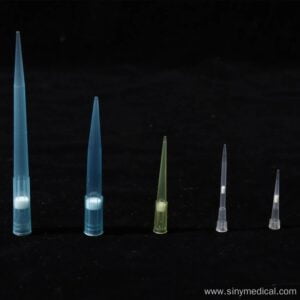
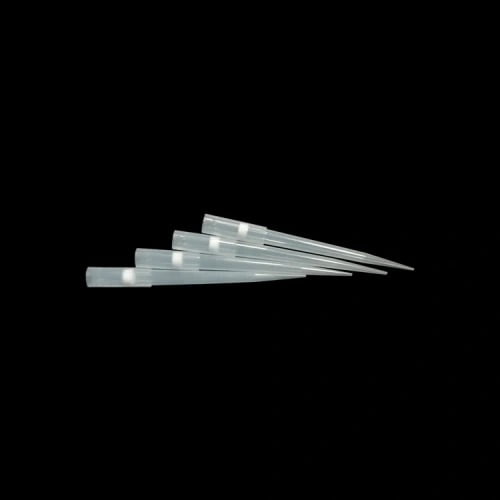
Siny Medical Disposable Low Adsorption Pipette Tips are single-use laboratory consumables designed to reduce unwanted binding of sample components to the inner tip surface. They support liquid handling procedures where sample recovery, clean handling, and consistent transfer practices are important.
During pipetting, certain molecules can interact with the surface of a conventional plastic tip. Proteins, peptides, and other sample components may remain attached to the tip after the liquid has been dispensed. This effect can be significant when laboratories work with dilute solutions or limited sample quantities.
Our disposable low-adsorption tips combine a surface designed to reduce sample binding with a single-use format. This combination is relevant to laboratory workflows that require fresh tips between samples and careful handling of sensitive materials.
At Siny Medical, we supply laboratory consumables for sample preparation, reagent transfer, and research applications. This product focuses on two practical requirements: reducing unwanted surface interactions and supporting single-use liquid handling procedures.
A pipette tip forms the temporary liquid-contact pathway between a pipetting instrument and the sample being transferred.
During aspiration, liquid enters the tip and contacts its internal surface. During dispensing, most of the liquid leaves the tip, but some sample components may remain associated with the wall.
Low-adsorption tip designs aim to reduce these interactions.
Adsorption occurs when molecules accumulate on the surface of a material.
In laboratory pipetting, adsorption can result from several types of molecular interaction. Hydrophobic interactions, electrostatic attraction, and other surface-related effects may contribute to binding.
The amount of adsorption depends on the sample and the contact conditions.
For example, a protein solution may behave differently from a simple aqueous buffer. Protein structure, concentration, pH, and buffer composition can all influence how strongly molecules interact with a surface.
Contact time also matters. A sample held inside a tip for an extended period may behave differently from one transferred immediately.
Low-adsorption construction aims to reduce this source of sample loss. However, its effectiveness depends on the substances being handled.
The internal surface of a pipette tip plays an important role in sample handling.
Different surface characteristics can affect how readily molecules bind during liquid contact.
A low-adsorption design seeks to limit unwanted interactions between the sample and the tip wall.
This can be useful when the transferred material contains sensitive components or when sample quantities are limited.
However, low adsorption does not mean that every molecule will remain in the liquid phase. Performance must be assessed using relevant sample materials and defined test conditions.
These describe different aspects of pipette tip performance.
Low adsorption concerns molecular binding to the tip surface. Low retention concerns the amount of liquid remaining inside the tip after dispensing.
A tip can release most of the liquid while still retaining some sample molecules on its surface.
Similarly, a tip with reduced molecular adsorption may still leave visible droplets after dispensing.
| Characteristic | Low Adsorption | Low Retention |
|---|---|---|
| Main Objective | Reduce molecular binding | Reduce residual liquid |
| Primary Interaction | Sample molecules and tip surface | Liquid wetting and adhesion |
| Typical Evaluation | Recovery of selected sample components | Liquid remaining after dispensing |
| Main Consideration | Sample composition and surface chemistry | Liquid properties and dispensing behavior |
| Limitation | Does not guarantee zero adsorption | Does not guarantee zero residue |
The low-adsorption feature of this product should therefore be considered separately from liquid retention performance.
Disposable pipette tips are intended for one use before disposal.
This design allows laboratories to use a fresh liquid-contact component when changing samples or following procedures that require tip replacement.
Single-use handling is particularly relevant in workflows where contamination and sample carryover need to be controlled.
Sample carryover occurs when material from one transfer enters a subsequent sample or reagent.
This may happen through residual liquid, contamination of the pipette, or inappropriate reuse of liquid-contact components.
Using a fresh disposable tip between samples helps reduce carryover associated with the previously used tip.
However, single-use tips do not eliminate every contamination pathway. Laboratory procedures must also address the pipetting instrument, work surfaces, containers, and handling technique.
Disposable tips support laboratory practices that separate different samples and reagents.
For example, molecular biology workflows may require tip changes between reaction components, while analytical methods may require fresh tips when moving between standards and samples.
These procedures help limit unintended transfer of material.
The low-adsorption surface addresses a different concern: sample components binding to the tip during the intended transfer.
Together, single-use handling and low-adsorption design address different aspects of laboratory liquid handling.
Disposable and sterile are separate product characteristics.
A disposable tip is intended for one use. A sterile tip has undergone an appropriate sterilization process and is supplied with a suitable sterile barrier.
The term disposable does not establish sterility.
Likewise, a low-adsorption designation does not prove that a tip is free from DNase, RNase, endotoxins, or other specified contaminants.
These properties require separate product information and supporting evidence.
Low-adsorption pipette tips are relevant to laboratory procedures where unwanted binding of sample components may affect recovery or downstream analysis.
The actual benefit depends on the sample, transfer volume, and method.
Proteins and peptides may interact with plastic surfaces during sample preparation.
Some proteins have a greater tendency to bind to certain materials, particularly under specific buffer or concentration conditions.
When sample quantities are limited, adsorption can reduce the amount of material available for subsequent analysis.
Low-adsorption tips may help limit this loss under suitable conditions.
However, performance varies between proteins. A tip that reduces adsorption of one protein may not produce the same result with another.
Molecular biology laboratories routinely transfer enzymes, nucleic acids, buffers, and other reaction components.
Some procedures involve small quantities of material or samples that require careful handling.
Low-adsorption tips may be useful where surface binding has been identified as a relevant concern.
The disposable format also supports workflows that require fresh tips between samples or reaction components.
However, low adsorption does not establish PCR cleanliness or freedom from specific nucleases. Those requirements must be considered independently.
Analytical methods may involve transferring standards, diluted samples, and reagents before measurement.
Unwanted adsorption can become important when the analyte concentration is low or when the material interacts strongly with the tip surface.
A suitable low-adsorption tip may help reduce sample loss during preparation.
Nevertheless, analytical compatibility depends on the sample chemistry and method conditions.
The tip material must also be appropriate for any solvents or reagents used in the procedure.
Biochemical assays often involve repeated transfers of prepared solutions.
Some assay components may be sensitive to concentration changes or surface interactions.
Low-adsorption tips can be considered when sample binding may affect the intended transfer.
The single-use format supports appropriate separation between samples and reagents.
However, tip selection should reflect the actual assay requirements rather than the low-adsorption designation alone.
Routine research laboratories handle a wide range of liquids.
Not every sample requires specialized surface characteristics. For many ordinary solutions, conventional pipette tips may provide suitable performance.
Low-adsorption tips are more relevant when the sample contains components prone to surface binding or when material recovery is particularly important.
Their use should be matched to the procedure and the selected pipetting instrument.
Both low-adsorption and conventional disposable pipette tips perform the same basic task: transferring liquids through a compatible pipetting instrument.
The primary difference is the intended interaction between the sample and the internal tip surface.
Conventional tips may allow certain molecules to bind to their surfaces during pipetting.
Low-adsorption designs aim to reduce this interaction.
The difference may be especially relevant for dilute proteins, peptides, or other surface-sensitive substances.
However, the degree of improvement depends on the sample and the test method.
Low adsorption should not be interpreted as a universal guarantee of higher recovery for every liquid.
Both tip types must fit the intended pipette correctly.
A suitable mounting interface supports an appropriate seal during aspiration and dispensing.
Poor tip fit can affect liquid transfer regardless of surface properties.
Similarly, both types require suitable pipetting technique, correct instrument settings, and appropriate sample handling.
| Feature | Low Adsorption Disposable Tips | Standard Disposable Tips |
|---|---|---|
| Main Function | Liquid aspiration and dispensing | Liquid aspiration and dispensing |
| Surface Characteristic | Designed to reduce sample adsorption | Conventional surface properties |
| Intended Use | Single Use | Single Use |
| Typical Consideration | Surface-sensitive samples | Routine compatible transfers |
| Performance Evaluation | Sample binding and recovery | General liquid handling performance |
| Important Limitation | No guarantee of zero adsorption | No inherent low-adsorption claim |
The appropriate choice depends on the sample and the laboratory procedure.
Low-adsorption performance is important, but it is only one aspect of a pipette tip’s suitability.
The complete liquid handling process also depends on instrument compatibility, liquid properties, and correct operation.
A pipette tip must attach securely to the intended pipette.
The mounting interface should provide an appropriate seal during aspiration and dispensing.
If the tip does not fit correctly, air leakage may affect the pressure conditions used for liquid transfer.
Tips with similar appearances are not necessarily interchangeable between pipette models.
Therefore, compatibility must be established for the intended instrument.
The liquid-contact surface must be suitable for the sample being transferred.
Different reagents can interact with polymers in different ways.
Some solvents may affect the material, while certain biological molecules may adsorb to the surface.
Low-adsorption performance does not establish universal chemical compatibility.
The selected tip should meet the requirements of the actual laboratory method.
Low-adsorption performance can be evaluated by measuring the recovery of selected sample components after contact with the tip.
Testing must define the sample, concentration, contact conditions, and measurement method.
Results obtained with one protein or reagent may not predict performance with another.
Any numerical adsorption reduction or recovery claim should therefore be supported by product-specific data.
Without those data, the appropriate description is that the tip is designed to reduce unwanted surface binding.
Pipetting technique can influence sample recovery.
Aspiration speed, dispensing speed, transfer volume, and the time the liquid remains inside the tip may affect the result.
For sensitive samples, consistent handling can help reduce variation between transfers.
Pre-wetting may be useful in some pipetting methods, but it should be applied only when appropriate for the sample and procedure.
Low-adsorption construction does not replace validated laboratory technique.
A low-adsorption pipette tip does not necessarily contain an aerosol filter.
Filtered tips include an additional barrier between the liquid and the pipetting instrument.
That feature is separate from surface adsorption performance.
Likewise, low adsorption does not establish sterile status or freedom from specified contaminants.
These characteristics must be verified independently when required by the laboratory method.
Proper handling helps maintain the intended condition of disposable low-adsorption pipette tips.
Before use, confirm that the selected tip is compatible with the pipette and suitable for the required transfer volume.
Inspect the tip for visible damage or contamination. Avoid touching the dispensing opening or internal liquid-contact surfaces.
Attach the tip securely according to the pipette instructions. Excessive force should be avoided because it may damage the mounting interface.
During aspiration, use a suitable immersion depth and controlled pipetting speed.
Avoid introducing air bubbles or drawing liquid beyond the intended working region of the tip.
During dispensing, follow the instrument instructions and laboratory procedure.
When working with sensitive samples, maintain consistent handling conditions to limit unnecessary variation.
Replace the tip between samples or reagents when required by the procedure. Do not reuse a disposable tip.
After use, discard the tip through the appropriate laboratory waste stream.
Store unused products in their original packaging under suitable conditions. Protect them from dust, physical damage, and environmental contamination.
They are single-use pipette tips designed to reduce unwanted binding of sample components to the inner tip surface during laboratory liquid handling.
Their main purpose is to reduce sample loss associated with surface adsorption. The actual benefit depends on the sample and operating conditions.
No. Low adsorption concerns molecular binding, while low retention concerns residual liquid after dispensing.
Using fresh tips between samples helps reduce carryover associated with previously used liquid-contact components.
They may help reduce protein binding under suitable conditions. Recovery depends on the protein, buffer, concentration, and method.
They may be suitable for compatible molecular biology procedures. Any required nuclease-free or other cleanliness characteristics must be verified separately.
No. Single-use status does not establish sterility.
Not necessarily. Filter configuration is separate from low-adsorption performance.
No. Sample loss may also result from liquid residue, handling technique, or other factors.
No. The mounting interface must match the intended pipette model.
Siny Medical supplies disposable low adsorption pipette tips for laboratory applications where sample recovery and single-use liquid handling are important. Our laboratory consumables support protein research, molecular biology, analytical preparation, and routine sample transfer. Explore our pipette tip products or contact Siny Medical to discuss available specifications, instrument compatibility, and product supply requirements.
Copyright © 2026 | Ningbo Siny Medical Technology Co., Ltd