| Specification | Details |
|---|---|
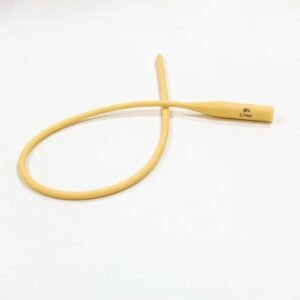
| Product Name | Disposable 2-Way Latex Foley Catheter for Pediatric or Adult |
| Product Type | Indwelling Urinary Catheter |
| Material | Latex |
| Configuration | 2-Way |
| Functional Channels | Urine Drainage, Balloon Inflation |
| Intended Patient Group | Pediatric and Adult |
| Intended Use | Single Use |
The Disposable 2-Way Latex Foley Catheter for Pediatric or Adult is an indwelling urinary catheter designed for bladder drainage in pediatric and adult patients. It features a flexible latex-based body, a drainage channel, and a separate channel for balloon inflation.
This two-way design allows urine to flow into a connected collection bag while the retention balloon helps keep the catheter in position. However, pediatric and adult patients have different anatomical and clinical needs. Therefore, healthcare professionals must select an appropriate catheter size, length, and balloon configuration for each patient.
Siny Medical supplies disposable two-way latex Foley catheters for hospitals, healthcare facilities, and medical distributors. These devices are intended for single use in clinical situations where indwelling urinary drainage is necessary.
The catheter includes two separate channels:
This configuration supports continuous urinary drainage without a dedicated irrigation channel.
The catheter uses a latex-based material that provides flexibility during urinary catheterization.
However, latex may cause allergic reactions in susceptible patients. For this reason, healthcare professionals should check for latex sensitivity before selecting the device.
A balloon near the catheter tip helps maintain its position inside the bladder after correct insertion.
Balloon capacity varies by catheter model and patient requirements. Therefore, clinicians must follow the selected product’s inflation instructions rather than assuming a standard balloon volume.
This product category covers urinary catheterization needs in pediatric and adult patients.
However, a catheter intended for an adult may not be appropriate for a child. Catheter diameter, length, and balloon specifications must match the patient’s anatomy and clinical requirements.
The catheter is intended for single use. Healthcare facilities should not reuse or reprocess it unless the device labeling specifically permits such practices.
After removal, staff should dispose of the catheter according to applicable medical waste procedures.
Two-way Foley catheters support bladder drainage in selected pediatric and adult clinical situations.
Urinary retention occurs when a patient cannot empty the bladder adequately.
Healthcare professionals may use an indwelling urinary catheter to provide continuous drainage when clinically indicated. However, the need for catheterization should be assessed individually.
Some surgical procedures require temporary urinary catheterization.
For example, clinicians may use a two-way Foley catheter during selected operations or postoperative recovery periods. The decision depends on the procedure, expected duration, and patient’s condition.
Accurate urine output measurement may be necessary in certain clinical situations.
An indwelling Foley catheter allows urine to drain into a collection system for monitoring. However, healthcare professionals should avoid unnecessary catheterization when other methods are appropriate.
Children may require urinary catheterization for selected medical or surgical indications.
In these cases, clinicians must consider the child’s age, anatomy, catheter diameter, and balloon specifications. Pediatric catheterization also requires appropriate training and careful handling.
Adult patients may require indwelling drainage for urinary retention, perioperative management, or other clinically indicated situations.
However, clinicians should reassess the need for catheterization regularly and remove the device when it is no longer necessary.
Although pediatric and adult Foley catheters share the same basic drainage principle, their selection requirements differ.
Foley catheter diameter is expressed in French (Fr) units.
Pediatric patients generally require smaller catheter diameters than adults. However, the correct size depends on anatomy, age, clinical condition, and the intended procedure.
A larger catheter is not automatically better because unnecessary diameter may increase the risk of urethral trauma.
Catheter length must accommodate the patient’s urethral anatomy and allow correct placement in the bladder.
Children and adults may require different catheter lengths. In addition, male and female anatomy can affect the required catheter configuration.
Therefore, healthcare professionals should confirm the selected model’s dimensions before use.
Pediatric and adult Foley catheters may use different retention balloon capacities.
However, balloon volume should never be determined from patient age or catheter diameter alone. Clinicians must follow the specific catheter’s instructions.
Pediatric urinary catheterization requires particular attention to anatomy and tissue sensitivity.
Healthcare professionals should use an appropriate technique and avoid unnecessary force during insertion.
| Feature | Pediatric Foley Catheter | Adult Foley Catheter |
|---|---|---|
| Patient Group | Children | Adults |
| Catheter Diameter | Generally smaller | Selected according to adult anatomy and clinical needs |
| Catheter Length | Appropriate for pediatric anatomy | Appropriate for adult anatomy |
| Balloon Capacity | Model-specific | Model-specific |
| Main Function | Urinary drainage | Urinary drainage |
| Selection Basis | Age, anatomy, clinical indication | Anatomy, clinical indication, drainage requirements |
This comparison explains general selection principles. Actual catheter specifications depend on the selected product model.
Hospitals and medical distributors should consider patient needs, catheter compatibility, and product specifications before purchasing.
First, determine whether the catheter is intended for pediatric or adult urinary care.
Different patients may require different catheter diameters, lengths, and balloon configurations.
Catheter diameter is measured in French units.
Clinicians should select a size that provides adequate drainage while minimizing unnecessary urethral irritation. The correct choice depends on the patient’s anatomy and clinical condition.
The retention balloon helps keep the catheter in place.
Before use, healthcare professionals must verify the balloon capacity and recommended inflation medium. They should never assume these details from the catheter’s French size.
Because this catheter contains latex, it is not suitable for patients with known latex allergy.
Healthcare facilities should consider verified latex-free alternatives when latex avoidance is necessary.
Confirm that the catheter connects to the intended urine collection bag.
A compatible drainage system supports correct setup and ongoing urine collection.
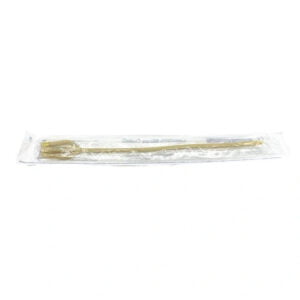
Before ordering, buyers should verify the selected catheter’s material, size, balloon specifications, sterile status, packaging, and instructions for use.
These checks help healthcare facilities choose appropriate products for pediatric and adult patients.
It provides continuous urinary drainage through a two-channel design. Clinicians may use it for urinary retention, perioperative care, or urine output monitoring when clinically indicated.
Yes. Two-way Foley catheters are available for pediatric and adult applications. However, healthcare professionals must select a suitable size and configuration for each patient.
The main differences involve catheter diameter, length, and balloon specifications. These characteristics must match the patient’s anatomy and clinical needs.
One channel allows urine drainage, while the second provides access for retention balloon inflation and deflation.
No. Latex-containing catheters should be avoided in patients with known latex allergy. A suitable latex-free alternative should be selected.
A standard two-way Foley catheter does not have a dedicated irrigation channel. When continuous irrigation and drainage are required together, clinicians generally select a suitable three-way catheter.
The appropriate duration depends on the selected product’s instructions and the patient’s clinical condition. Single-use labeling does not automatically mean that the catheter must be removed after one day.
Hospitals should confirm catheter diameter, length, balloon specifications, material, sterile status, packaging, and compatibility with their drainage systems.
Siny Medical supplies urinary catheters and medical consumables for hospitals, healthcare facilities, and medical distributors. Our Disposable 2-Way Latex Foley Catheter for Pediatric or Adult supports urinary drainage across different patient groups when clinicians select the appropriate configuration. Contact Siny Medical to discuss available catheter options, product specifications, and quotation details.
Copyright © 2026 | Ningbo Siny Medical Technology Co., Ltd