| Specification | Description |
|---|---|
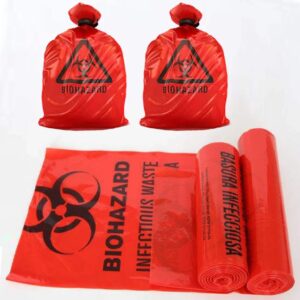
| Product Name | Biohazard Infection Garbage Bag |
| Product Category | Biohazard Waste Collection Bags |
| Product Type | Disposable Waste Bag |
| Main Function | Collection and Containment of Appropriate Infectious Waste |
| Primary Applications | Hospitals, Clinics, Medical Laboratories and Healthcare Facilities |
| Target Buyers | Healthcare Institutions, Laboratory Supply Distributors and Medical Waste Management Providers |
Healthcare facilities handle potentially infectious materials during patient care, laboratory testing, and medical procedures. Proper waste segregation helps staff reduce unnecessary exposure and maintain organized disposal workflows. Siny Medical Biohazard Infection Garbage Bag provides a disposable collection option for appropriate healthcare waste streams that require designated handling.
Infectious Waste Bags support the collection of suitable contaminated materials in hospitals, clinics, laboratories, and other healthcare environments. When staff use the correct bag within an established waste management system, they can separate designated infectious waste from ordinary refuse and support safer handling.
Unlike general-purpose garbage bags, products intended for infectious waste collection must match the facility’s waste classification and disposal requirements. Buyers should consider the intended contents, bag construction, collection container, and procedures for closing and transferring used bags.
However, not every item generated in a healthcare setting qualifies as infectious waste. Waste classification depends on the material, contamination risk, and applicable local rules. Likewise, a biohazard bag does not automatically provide puncture resistance, liquid-tight containment, or compatibility with steam autoclave processing.
For hospitals and medical distributors, choosing suitable collection products is an important part of daily waste management. Clear product identification, appropriate bag dimensions, and consistent handling procedures can help support reliable operations.
A suitable infectious waste collection bag should support designated waste segregation and practical handling within a healthcare facility. Its effectiveness depends on the product design and the way personnel use it.
Healthcare facilities may generate waste that requires special handling because of its potential biological hazards.
Dedicated collection bags can help personnel separate suitable infectious waste from general refuse at the point of generation.
For example, staff may place appropriate contaminated disposable materials into designated collection containers according to their facility’s procedures.
However, personnel must assess the waste category before disposal. A bag labeled for biohazard use does not make every type of hazardous material suitable for collection in a flexible bag.
Effective segregation begins where the waste is generated.
By placing suitable collection containers near relevant work areas, facilities can make correct disposal more convenient for staff.
In addition, consistent bag identification can help personnel distinguish different waste streams.
Some waste management systems use colors or hazard markings for this purpose. However, identification requirements vary by jurisdiction.
Therefore, buyers should confirm the applicable local requirements rather than assume that one color or symbol applies everywhere.
A disposable infectious waste bag provides flexible containment for appropriate materials.
Its performance depends on the finished bag’s material, seams, dimensions, and overall construction.
A suitable bag should accommodate its intended contents during routine collection and transfer.
Nevertheless, flexible waste bags have limitations. Sharp objects, excessive weight, and unsuitable contents can damage the bag.
For this reason, facilities should avoid overfilling and select collection products according to the expected waste characteristics.
Infectious waste bags often work together with designated rigid bins or other collection containers.
An appropriately sized bag should fit the container without excessive stretching or loose material.
The container can also support the bag during routine use.
However, the entire collection arrangement must match the intended waste stream.
For example, a flexible bag inside an ordinary bin does not replace a properly designed sharps container.
Disposable bags allow staff to collect suitable waste without reusing the same bag.
Once the bag reaches the facility’s approved filling limit, personnel can close and transfer it according to established procedures.
This supports a consistent collection workflow.
However, the bag itself does not disinfect, sterilize, or neutralize the contents.
Facilities must still arrange appropriate treatment and final disposal.
Appropriate waste collection forms one part of a broader infection prevention program.
Dedicated bags can help reduce unnecessary mixing of designated infectious waste with general refuse.
However, safe handling also requires staff training, suitable protective equipment, and correct disposal procedures.
Therefore, facilities should treat bag selection as one component of their overall waste management system rather than a standalone infection control measure.
Infectious waste collection needs vary across healthcare environments. Consequently, facilities should select products according to the materials they generate and the procedures they follow.
Hospitals generate different waste streams during examinations, treatments, and routine patient care.
Some materials may require infectious waste handling, while others belong in ordinary refuse streams.
Suitable biohazard collection bags can support designated disposal points within patient care areas.
For example, staff may use appropriate containers in treatment rooms where contaminated disposable materials arise.
However, hospitals should not classify all patient-related waste as infectious without considering the applicable requirements.
Certain patient care areas require particularly careful waste handling.
When staff manage materials associated with known or suspected infectious hazards, designated collection systems may form part of the facility’s infection prevention procedures.
Suitable infectious waste bags can support these systems.
In addition, clear placement and identification can help personnel follow established segregation practices.
Nevertheless, the facility must determine the correct collection method according to the actual hazard and relevant protocols.
Medical laboratories may generate contaminated disposable materials during testing and sample handling.
Appropriate collection bags can support designated laboratory waste streams.
However, laboratory waste may also contain chemicals, sharps, or other hazards that require different containment.
For this reason, staff should identify the contents before selecting a disposal method.
Laboratory personnel must follow their institutional biosafety and waste management procedures.
Outpatient clinics generate waste through consultations, examinations, and minor procedures.
Some materials may require designated infectious waste collection.
Suitable disposable bags can help staff maintain organized collection points.
Furthermore, consistent bag selection can simplify daily replenishment and internal supply management.
Clinics should still distinguish between ordinary waste and materials that require special handling.
Diagnostic facilities handle various samples and disposable supplies.
As a result, waste management needs may differ between departments.
Appropriate biohazard bags can support the collection of suitable contaminated materials.
However, the presence of biological samples does not mean every discarded item belongs in the same waste stream.
Facilities should apply their established classification and disposal procedures.
Medical waste service providers may collect designated waste from hospitals, clinics, and laboratories.
Consistent bag specifications can support collection and transfer operations.
In addition, clear waste identification may help service providers organize different collection streams.
However, transport requirements can involve secondary containment and other controls.
A flexible waste bag alone may not satisfy every transport or disposal requirement.
Healthcare buyers sometimes use the terms medical waste bag and infectious waste bag interchangeably. However, the intended waste category is an important distinction.
Not all healthcare waste presents the same biological hazard.
Infectious waste bags support the collection of suitable materials that a facility classifies as infectious under its applicable requirements.
Their role is to help maintain separation between designated infectious waste and other waste streams.
However, their actual construction and identification features depend on the selected product.
Buyers should not assume that every infectious waste bag has identical specifications.
General medical waste bags may serve broader collection needs within healthcare facilities.
Depending on local classification rules, some medical waste may be noninfectious and suitable for ordinary disposal pathways.
Other materials require specialized handling.
Therefore, the correct bag depends on the waste category rather than the fact that a hospital generated it.
| Feature | Infectious Waste Bags | General Medical Waste Bags |
|---|---|---|
| Main Purpose | Collection of Designated Infectious Waste | Collection of Appropriate Healthcare Waste |
| Waste Classification | Focus on Infectious Waste Streams | Depends on the Specific Waste Category |
| Typical Users | Hospitals, Laboratories and Infection Control Areas | Hospitals, Clinics and Healthcare Facilities |
| Identification | According to Product and Local Requirements | According to Product and Local Requirements |
| Sharps Disposal | Not a Substitute for Sharps Containers | Not a Substitute for Sharps Containers |
| Autoclave Compatibility | Only If Specifically Intended for Autoclaving | Only If Specifically Intended for Autoclaving |
| Main Purchasing Factor | Infectious Waste Handling Requirements | Intended Waste Stream and Collection Needs |
The most important difference is the waste stream the facility intends to collect.
Therefore, buyers should review the relevant classification requirements before comparing product specifications.
Hospitals, laboratories, and medical distributors should evaluate infectious waste bags according to the intended contents, collection process, and local waste management requirements.
First, determine which materials the facility will collect.
For example, contaminated disposable materials may require different handling from ordinary packaging waste.
Chemical waste, pharmaceutical waste, and sharps may also follow separate procedures.
Therefore, buyers should confirm the correct classification before choosing a collection bag.
Bag dimensions should match the collection container and expected waste volume.
A bag that is too small may stretch excessively during installation or filling.
Conversely, an oversized bag may create unnecessary loose material and complicate handling.
Buyers should compare the bag dimensions with the collection bin and consider the facility’s replacement frequency.
Bag integrity matters during collection and transfer.
The material, film construction, and seams influence how the bag handles its intended load.
For example, heavy or irregularly shaped contents may place additional stress on the bag.
However, thicker material alone does not guarantee resistance to tearing or puncturing.
Buyers should evaluate the complete product construction and its intended use.
Healthcare waste identification systems vary between regions.
Some facilities use specific colors, symbols, or labels to distinguish waste categories.
As a result, buyers should review local requirements and institutional procedures before selecting the product configuration.
Clear identification supports correct segregation, but staff must also understand the waste classification system.
Facilities need an appropriate method for closing and transferring used waste bags.
The correct procedure depends on the bag design, contents, and local requirements.
Staff should avoid overfilling or compressing the contents by hand.
In addition, they should not reopen a used bag unnecessarily.
Where required, personnel should use suitable secondary containment during internal transfer or transport.
An infectious waste bag is not automatically an autoclavable bag.
Standard collection bags may serve waste handling processes that do not involve high-temperature steam.
In contrast, autoclavable products must suit the specified processing conditions.
Therefore, buyers should confirm whether the intended workflow includes autoclaving.
They should never assume that a general biohazard bag can withstand 121°C or 135°C processing.
Healthcare facilities often need a consistent supply of waste bags across multiple departments.
Purchasing teams should estimate demand based on collection points, replacement frequency, and waste volume.
They should also consider storage, internal distribution, and product identification.
For medical distributors, clear specifications and consistent packaging can help support repeat purchasing.
Correct handling helps reduce bag damage, spills, and unnecessary exposure to potentially infectious materials.
Before use, inspect the bag for visible defects.
Next, place it in a suitable collection container according to the facility’s procedures.
Ensure that the intended contents match the designated waste stream.
Do not place loose needles, blades, or other sharps into flexible waste bags. Instead, use an appropriate puncture-resistant sharps container.
Avoid overfilling the bag or pressing down on its contents.
When the bag reaches the facility’s designated filling limit, personnel should close it using the approved method.
During collection and transfer, staff should use appropriate protective equipment and follow established infection prevention practices.
If the bag tears or leaks, personnel should follow the facility’s spill response and containment procedures.
Finally, transfer the waste through the appropriate treatment or disposal pathway.
Keep unused infectious waste bags in their original packaging.
Store them in a clean, dry location away from sharp objects and conditions that could damage the material.
In addition, follow the manufacturer’s labeled storage instructions.
Facilities should clearly distinguish infectious waste bags from ordinary refuse bags and autoclavable products to reduce selection errors.
They are collection bags intended for designated waste streams that require infectious waste handling under applicable requirements.
The terms often overlap. However, buyers should confirm the actual product’s intended use and the relevant waste classification rules.
Suitable contents depend on local requirements and facility procedures. Staff should classify the waste before choosing a collection product.
No. Color requirements vary between jurisdictions and facilities.
Flexible infectious waste bags should not replace puncture-resistant sharps containers. Loose needles require appropriate sharps disposal.
Not necessarily. Containment performance depends on the bag construction and intended contents. Buyers should verify the actual product’s capabilities.
Facilities should follow their waste segregation procedures. Mixing ordinary refuse with designated infectious waste can increase handling and disposal costs.
Only when the manufacturer specifically identifies the finished product as suitable for the relevant autoclave conditions.
They should follow the product instructions and their facility’s approved waste handling procedures.
Disposable infectious waste bags are intended for single use and should not be reused after waste collection.
They should evaluate the intended waste category, product construction, dimensions, identification requirements, packaging, and customer purchasing needs.
Siny Medical supplies infectious waste bags and disposable healthcare consumables for hospitals, clinics, laboratories, medical waste management providers, and distributors. Our biohazard waste collection products support buyers seeking practical solutions for appropriate infectious waste handling workflows. Explore our medical waste bag range or contact Siny Medical to discuss available product configurations, dimensions, packaging arrangements, and bulk purchasing requirements.
Copyright © 2026 | Ningbo Siny Medical Technology Co., Ltd