
| Specification | Details |
|---|---|
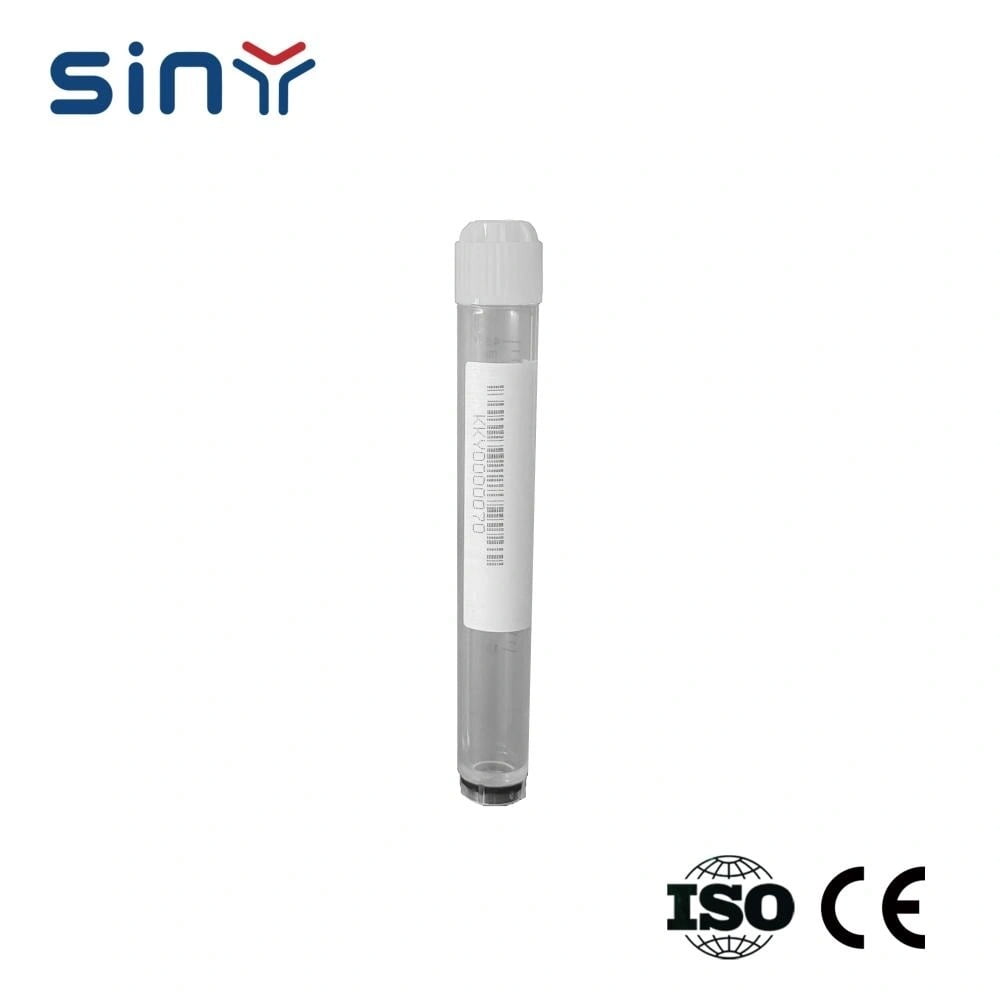
| Product Name | 2D Cryogenic Tubes Freezing Tubes Cryotubes |
| Product Type | 2D Cryogenic Storage Tube |
| Material | Polypropylene (PP) |
| Capacity | 1ml, 1.8ml, 5ml |
| Identification | 2D Barcode |
| Closure | Screw Cap |
| Sealing Component | Silicone O-Ring |
| Temperature Range | −196°C to 121°C |
| Sterility | Non-Sterile |
| OEM/ODM | Available |
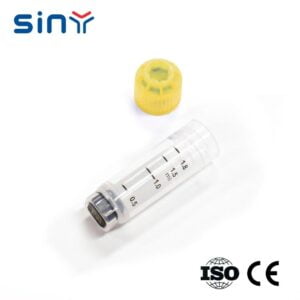
Siny Medical supplies 2D Cryogenic Tubes Freezing Tubes Cryotubes for biological sample preparation, freezing, and laboratory storage. Made from polypropylene (PP), these cryogenic tubes combine practical screw cap closures with 2D barcode identification to support efficient sample handling.
Our 2D cryogenic tubes are available in 1ml, 1.8ml, and 5ml capacities. These options allow laboratories to select suitable containers for different specimen volumes. In addition, the barcode identification system helps technicians organize samples during preparation, freezing, storage, and retrieval.
The product range features internal and external screw cap designs, with silicone O-ring sealing components to support closure performance. The listed temperature range is -196°C to 121°C, making the tubes suitable for compatible low-temperature preservation procedures, including appropriately validated liquid nitrogen vapor-phase storage.
Cryogenic tubes are essential consumables in research laboratories, biotechnology facilities, hospitals, and biobanks. They provide individual containers for biological specimens and help researchers maintain organized sample collections.
As a laboratory consumables supplier, Siny Medical provides practical cryotube solutions for institutional buyers and international distributors. We support laboratory procurement through product selection, bulk supply, and OEM/ODM services.
Our cryogenic freezing tubes are made from polypropylene, a widely used material for laboratory consumables.
PP offers lightweight construction and useful resistance to many common laboratory chemicals. These properties make it a practical material for biological sample preparation and storage.
Suitable polypropylene formulations can also perform under ultra-low-temperature conditions.
For laboratories processing large numbers of specimens, lightweight cryogenic containers support convenient handling and organized storage.
The complete tube assembly, including its cap and sealing components, determines compatibility with the intended preservation procedure.
Siny Medical offers cryogenic tubes in three listed capacities: 1ml, 1.8ml, and 5ml.
The 1ml format is useful for small-volume specimen aliquots. Researchers can divide limited biological preparations into individual portions for future experiments.
The 1.8ml format provides additional space for common laboratory sample preparation procedures.
Meanwhile, the 5ml format accommodates larger biological preparations.
These options help laboratories select suitable containers according to specimen volume and storage requirements.
The recommended working volume should follow the selected vial configuration and preservation protocol.
The cryotubes incorporate a 2D barcode system for sample identification.
The listed identification arrangement includes a bottom 2D code, a tube-body barcode, and a numerical identifier.
These elements correspond to the same container and support individual sample identification.
With compatible scanning equipment, laboratory personnel can associate each tube with its specimen record.
This reduces dependence on handwritten identification and supports more consistent sample organization.
The product range describes internal and external screw cap configurations.
An external-thread cryotube has threads positioned outside the tube opening. This arrangement helps reduce accidental contact between specimens and threaded surfaces during routine handling.
An internal-thread cryotube uses threads positioned inside the opening.
Both designs provide practical closure options for compatible freezing and storage procedures.
The appropriate configuration depends on laboratory handling preferences, storage equipment, and containment requirements.
The cryogenic tube range includes silicone O-ring sealing components.
An O-ring supports the sealing interface between the screw cap and tube body.
This helps maintain the intended closure performance during compatible sample handling and storage.
The complete closure design determines containment performance under specific operating conditions.
Therefore, laboratories should select a suitable configuration according to their preservation procedures.
Our listed cryogenic tubes have a temperature range of -196°C to 121°C.
They are intended for compatible low-temperature biological sample preservation applications.
These may include ultra-low-temperature freezers and suitable liquid nitrogen vapor-phase storage systems.
Such environments are commonly used in cell research, microbiology, and biological sample banking.
Direct immersion in liquid nitrogen requires specific validation of the complete vial assembly.
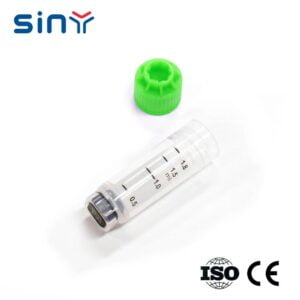
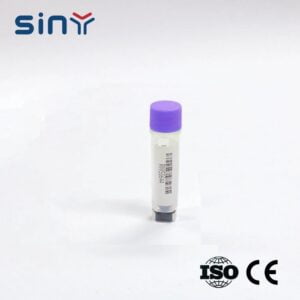
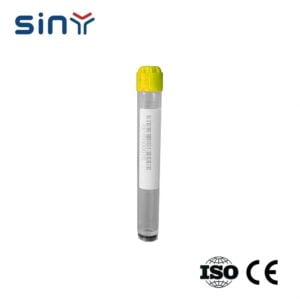
The product range lists seven cap colors: red, yellow, blue, green, white, purple, and orange.
Different colors can help laboratories organize samples by research project, specimen category, or preparation group.
For example, technicians may assign different colors to separate experimental batches.
Color coding provides a useful visual reference, while the barcode system supports individual specimen identification.
The listed product configuration is non-sterile.
It provides a practical option for laboratory procedures that do not require sterile sample containers.
For aseptic workflows, laboratories should select products with verified sterile status.
Biological sample aliquoting is one of the most common applications of cryogenic tubes.
Researchers divide prepared specimens into separate portions before freezing or storage.
This approach helps laboratories organize materials for different experiments and reduces repeated handling of larger preparations.
The available 1ml, 1.8ml, and 5ml capacities accommodate different sample quantities.
Barcode identification also helps associate individual tubes with their laboratory records.
Cell research laboratories often preserve prepared cell suspensions for future experiments.
Cryogenic tubes provide containers for compatible cell preparations during freezing and storage.
Smaller capacities are useful for individual aliquots, while larger tubes provide additional space for selected preparations.
In addition, barcoded containers help researchers distinguish cell lines, experimental groups, and preparation batches.
Successful cell preservation also depends on suitable cryoprotectants, freezing procedures, storage conditions, and thawing methods.
Microbiology laboratories maintain collections of compatible microbial preparations.
Cryogenic tubes help organize these materials under appropriate storage conditions.
For example, researchers may prepare individual tubes for different strains or experimental groups.
The barcode system supports specimen identification and recordkeeping.
Meanwhile, screw cap closures provide convenient access during routine preparation and retrieval.
Biotechnology facilities process biological materials across different research activities.
These may include cell-based experiments, biological sample preparation, and specimen preservation.
Our cryogenic freezing tubes provide practical containers for compatible laboratory materials.
The available capacity options allow technicians to select a suitable format for each procedure.
Barcode identification also supports organized handling when laboratories manage multiple experiments.
Biobanks often maintain large collections of biological specimens.
Individual cryogenic tubes help separate samples and support organized storage.
A barcode identifier can be associated with the specimen type, preparation date, and storage location.
This helps personnel locate the correct sample during retrieval.
However, effective inventory management also requires suitable storage systems and accurate laboratory records.
Research projects may require biological samples to remain available for future analysis.
Cryogenic storage can help preserve suitable materials under controlled conditions.
An organized archive combines appropriate containers, temperature monitoring, identification procedures, and inventory records.
Cryogenic tubes support this process by providing individual storage containers for prepared specimens.
Capacity is an important factor when selecting cryogenic tubes.
Different research procedures require different sample quantities.
Smaller containers are useful for individual aliquots, while larger formats accommodate greater volumes.
| Capacity | Typical Selection Purpose | Laboratory Consideration |
|---|---|---|
| 1ml | Small sample aliquots | Limited specimen quantities |
| 1.8ml | Routine small-volume preservation | General aliquot preparation |
| 5ml | Larger biological preparations | Additional sample capacity |
These applications are general selection guidance rather than fixed limits.
Laboratories should consider their required working volume and freezing procedure before choosing a capacity.
The screw cap design affects how technicians handle samples.
External-thread cryotubes have threads outside the opening. This helps reduce direct contact between specimens and threaded surfaces during routine handling.
Internal-thread cryotubes have threads inside the opening and use a different cap engagement structure.
Neither design is universally superior.
The appropriate choice depends on the complete closure assembly and intended laboratory procedure.
Barcoded cryotubes provide an integrated method for identifying individual containers.
Standard non-barcoded tubes rely on separately applied labels or other identification methods.
| Feature | 2D Barcoded Cryotube | Non-Barcoded Cryotube |
|---|---|---|
| Sample Identification | Integrated machine-readable code | Separate identification method |
| Electronic Records | Supports compatible scanning systems | Depends on labeling system |
| Inventory Organization | Barcode-assisted | Label-based or other methods |
| Sample Storage | Compatible cryogenic procedures | Depends on selected model |
| Main Selection Factor | Storage with digital identification | General sample containment |
For laboratories processing many specimens, barcode identification can reduce manual transcription and support organized records.
However, scanner compatibility and accurate data management remain essential.
Storage temperature is another important selection factor.
The listed product range has a temperature range of -196°C to 121°C.
Laboratories should select a cryotube that matches the intended storage equipment and freezing protocol.
For liquid nitrogen applications, vapor-phase storage and direct liquid-phase immersion must be considered separately.
A temperature rating alone does not establish suitability for direct immersion.
A suitable identification system helps laboratories maintain accurate specimen records.
Our listed cryotube range includes linked bottom, tube-body, and numerical identifiers.
These provide different ways to identify individual containers.
In addition, cap colors may help technicians organize research groups or specimen categories.
For reliable traceability, laboratories should combine these features with consistent labeling and inventory procedures.
Start by reviewing the specimens and procedures involved.
Common applications include biological sample aliquoting, cell research, microbiology, and biobanking.
Each workflow may require different storage volumes and closure configurations.
Understanding the intended application helps buyers select suitable consumables.
Siny Medical lists 1ml, 1.8ml, and 5ml capacities.
Smaller formats support individual aliquots, while larger formats provide additional space.
Buyers should consider the specimen volume, required headspace, and preservation protocol.
The product range includes a bottom 2D code, tube-body barcode, and numerical identifier.
These features support specimen identification and recordkeeping.
Laboratories should evaluate barcode readability and compatibility with their scanning equipment.
This is especially important when using automated identification systems.
Internal and external screw cap configurations offer different handling arrangements.
The selected cap should match the laboratory’s preparation and storage procedures.
Buyers should also consider the complete sealing design and containment requirements.
The listed temperature range is -196°C to 121°C.
Laboratories should evaluate their intended freezer or cryogenic storage system.
The selected tube must be suitable for the storage procedure.
Direct liquid nitrogen immersion requires specific validation.
The listed cryogenic tubes are non-sterile.
They are suitable for laboratory procedures that do not require sterile containers.
For aseptic applications, buyers should select appropriately specified sterile products.
Cryogenic tubes are regularly consumed in many research facilities.
Purchasing teams should estimate demand according to specimen processing volumes and storage requirements.
For distributors, clear capacity options and consistent product identification also support inventory planning.
Laboratory procurement involves product selection, purchasing quantities, and supply arrangements.
Siny Medical supports institutional buyers and international distributors with cryogenic consumables and OEM/ODM services.
Our product range helps customers source practical freezing tubes for different laboratory requirements.
They are used for biological sample freezing, storage, and identification. Common applications include cell preservation, microbiology research, and specimen banking.
Siny Medical lists 1ml, 1.8ml, and 5ml capacity options for this product range.
The listed cryotubes are made from polypropylene (PP).
A 2D barcode provides a machine-readable identifier that laboratories can associate with a specimen record using compatible scanning equipment.
The product range describes both internal and external screw cap configurations. The appropriate option depends on the selected model and laboratory procedure.
The listed temperature range is -196°C to 121°C. The tubes are intended for compatible cryogenic storage applications, including suitable liquid nitrogen vapor-phase workflows. Direct immersion requires specific validation.
The listed product is supplied non-sterile.
Yes. Siny Medical supplies cryogenic laboratory consumables to institutional buyers and international distributors and supports OEM/ODM procurement discussions.
Siny Medical supplies 2D Cryogenic Tubes Freezing Tubes Cryotubes for research laboratories, biotechnology facilities, hospitals, biobanks, and international distributors. Our polypropylene cryotubes combine multiple capacity options, practical screw cap designs, and barcode identification to support biological sample preparation and preservation. Contact Siny Medical to discuss available configurations, OEM/ODM requirements, bulk orders, and quotation details.
Copyright © 2026 | Ningbo Siny Medical Technology Co., Ltd