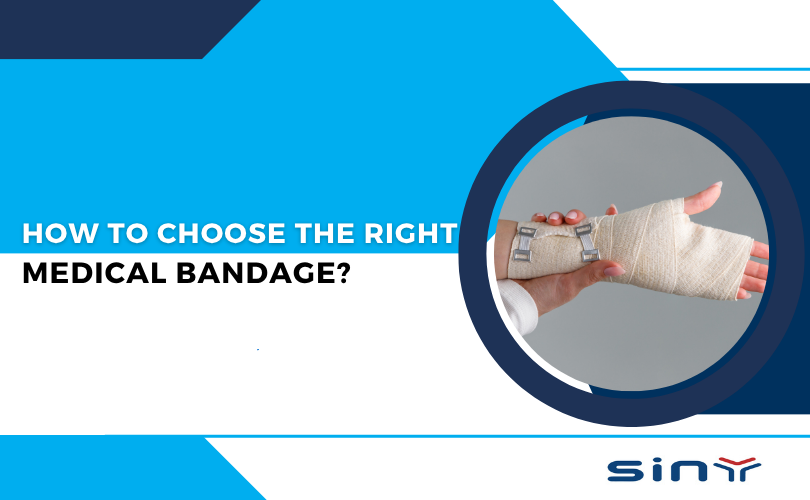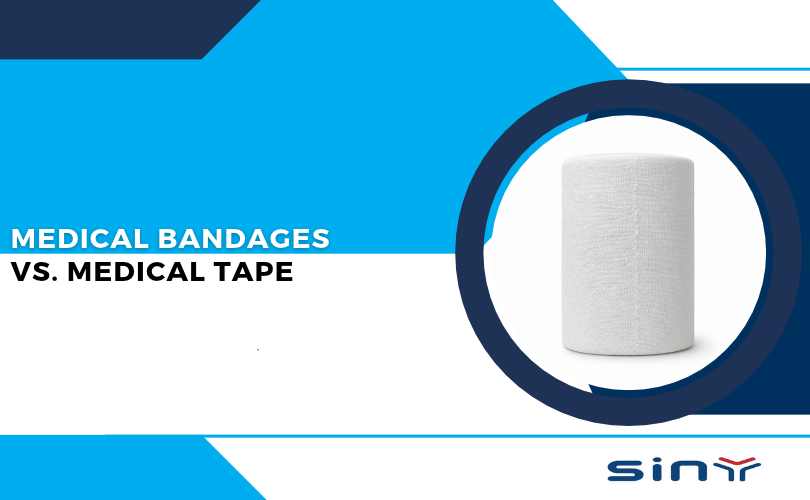
If you’re weighing medical bandages vs. medical tape for a supply order, start with how the dressing needs to stay in place. A roller bandage wraps around an area to hold a dressing or provide support. Medical tape fastens a dressing at selected points or holds the loose end of a wrap. Tape may be enough for a small pad on a flat area. A bulky pad on a limb may be easier to secure with a wrap.
For clinics, distributors, and first aid kit suppliers, the practical question is which jobs the order needs to cover. A lightweight tape can handle many routine dressing changes. A conforming wrap gives staff another way to retain pads where space for adhesive is limited.
Medical Bandages vs. Medical Tape at a Glance
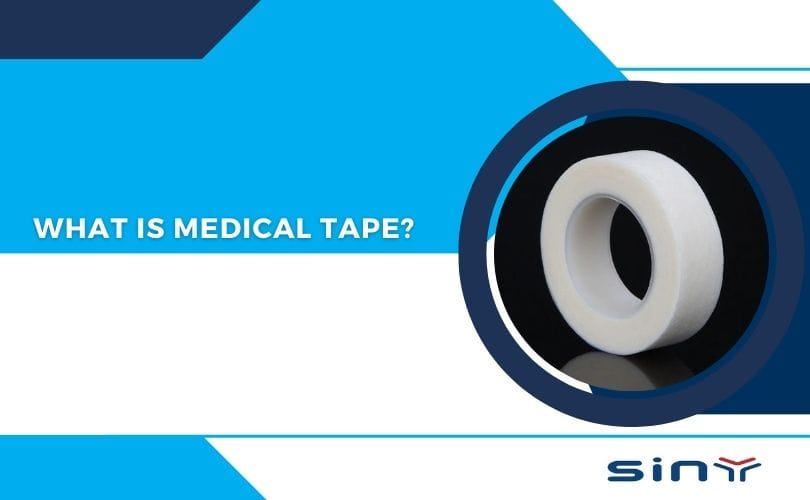
A primary dressing covers the wound itself. A bandage or a strip of tape can hold it in place. An adhesive bandage with a built-in pad is also called a sticking plaster in some markets. A roll of medical adhesive tape, also called surgical tape, generally comes without a pad.
| What you need to do | A format to consider | What to check before ordering |
|---|---|---|
| Hold a small dressing on a relatively flat area | Medical fixation tape | Check that the tape grips the dressing and has enough intact skin around the pad for adhesion. |
| Hold a bulky dressing on a limb | A conforming roller bandage | Check the width, how closely it follows the limb, and how the wrap fastens. |
| Keep the dressing in place while avoiding adhesive on the surrounding skin | A cohesive wrap or a tubular retention bandage | Check the intended use, fit, and whether the design relies on overlap or a sized sleeve. |
| Provide support or apply compression under a care protocol | A bandage designed for that purpose | Check the intended level of support or compression and the application instructions. |
| Cover a minor cut with one ready-to-use item | An adhesive bandage with a pad | Check the pad size and any sterility requirement for the kit. |
When writing a purchase specification, pair the format with its purpose. For example, “conforming roller bandage for dressing retention” tells a supplier what the roll needs to do. “Paper fixation tape for routine dressing changes” identifies the backing as well as the job.

When Medical Bandages Make Sense
When a dressing needs wrap-around retention
A gauze roller or conforming bandage can hold a dressing against a curved area such as a forearm or lower leg. A thick pad can make it hard for tape to lie flat across the edge. In that case, a wrap can hold the pad against the limb. Choose a roll wide enough to cover the intended area and long enough to fasten securely.
A cohesive bandage grips overlapping layers of itself. This gives staff a wrap they can fasten without a separate strip of tape on the surrounding skin. A tubular retention bandage offers a sleeve-style option for sites that suit its shape and size. Confirm the stated use before ordering because some tubular products are designed for compression.
When the area needs support or compression
For limb or joint support, evaluate elastic bandages, including elastic crepe designs. The fabric, degree of stretch, and application all affect how the wrap behaves. As a result, two rolls with the same dimensions can feel quite different in use.
For prescribed compression, start with the care team’s requirements. Ask for the specified bandage system and its application instructions. Terms such as “stretch” and “self-adhering” describe how a roll handles. The product’s intended use tells you whether it belongs on a compression order.
If you are comparing wrap formats for your order, browse the Siny Medical bandage range.
When Medical Tape Makes Sense
When the dressing needs targeted fixation
Medical tape works well when a dressing needs only a few points of fixation. For example, staff can use short strips to secure the edges of a small pad when intact skin surrounds it. Depending on the tape, staff can tear or cut strips to suit different dressing sizes.
Choose the backing and adhesive together. Paper-style and microporous nonwoven tapes are common options for lightweight dressings. Catalog terms can overlap, so check the stated backing material when a quote says “paper tape.” Transparent, perforated polyethylene (PE) tape lets staff see the skin beneath the strip. Our export catalog includes both transparent PE tape and microporous nonwoven tape.
If the job calls for a sturdier backing, compare cloth tapes, including silk-like woven options. Check the actual backing material if a supplier describes it as “silk.” If gentle removal is a priority, consider a soft silicone adhesive that still holds the dressing securely. Rolls with the same backing can differ in how they grip, tear, and release.
When moisture or movement changes the job
A tape may hold well on a flat surface and lift sooner near a joint that bends. Moisture at the edges can also affect the hold. If the tape will be exposed to water, check its stated water resistance and conditions of use. When the job requires a waterproof seal, assess the complete dressing system.
For orders that serve several departments, list the usual dressing sizes and application sites. You can then see whether one tape covers most jobs and where a second option adds something specific, such as easier removal during frequent dressing changes.
For more detail on backing types and fixation uses, see our medical tape guide.

When to Use a Bandage and Tape Together
A plain roller bandage can hold a gauze pad against a forearm. A short strip of tape can then fasten the loose end of the roll. When ordering the two together, test the tape on the actual bandage fabric. A tape that grips skin well may behave differently on a textured wrap.
If a roll has its own closure, such as a supplied clip, factor that into your tape estimate. A clinic can track tape used on dressing edges separately from strips used to fasten wraps. That helps buyers see which widths staff use most often and how frequently they need to restock them.
Medical Bandages vs. Medical Tape for Bulk Orders
Write a specification for each use
Start with the dressings, application sites, or kit layouts the products will serve. For a wrap, record the type, width, roll length, fastening method, and any stretch requirement. Ask whether an elastic roll’s quoted length refers to the relaxed or stretched state. For tape, record the backing, adhesive type if specified, width, and roll length. Include the surface the adhesive needs to grip, such as a dressing border or bandage fabric.
Next, ask for the label and product information for the quoted item. Confirm the pack format, units per box, and any sterility requirement. If your policies restrict natural rubber latex, request the manufacturer’s declaration for the exact product. Keep the declaration with the purchase specification so receiving staff can match it to the item code.
For an OEM order, include any custom roll widths or private-label packaging requirements in the quote request. Confirm which options are available for the specific item before approving the sample.
Compare samples with the supplies you already use
Use the dressings and wrap materials your teams normally stock. In a bench check, look at three things when comparing tape samples.
- Handling. Does the tape tear or cut cleanly at the lengths staff typically use?
- Grip. Does the strip hold on the actual dressing border or bandage fabric?
- Edge lift. Does the dressing edge stay down when you flex the test setup?
For wraps, see how smoothly the roll feeds and how well it follows the shape of the test area. Then check how easily you can secure the end. If the team needs to compare adhesion to skin or ease of removal, use your facility’s product evaluation process.
Finally, compare the cost of each setup. A shorter roll may cost less upfront and cover fewer dressing changes. A wrap that needs a separate fastener also changes what you pack or reorder. Compare equivalent dimensions, units per case, and estimated applications per roll. For repeat orders, save the approved item code and pack quantity with the specification. That gives the warehouse a way to match new shipments to the sample you accepted.
Frequently Asked Questions
Can medical tape replace a bandage?
Tape can hold a light dressing when enough intact skin is available for fixation. Choose a wrap when the dressing needs to be held around a limb. If the care plan calls for support or compression, select a bandage intended for that purpose.
Is a cohesive bandage the same as medical adhesive tape?
A cohesive wrap fastens when one layer overlaps the next. Medical adhesive tape secures to intact skin or a compatible material, depending on the product. If a listing says “self-adhesive,” confirm which surface it is designed to grip before placing the order.
Is paper tape or silicone tape better for frequent dressing changes?
Paper tape may suit lightweight dressings that need frequent changes. Soft silicone tape may be worth evaluating when gentle removal is particularly important. Compare samples according to the required wear time, the condition of the skin, and the weight of the dressing.
Are medical bandages and tape sterile?
Check the label for the exact item you plan to order. If the procedure or kit calls for an individually packed sterile unit, specify that on the purchase order. When the pad and fastener come separately, verify the sterility status of each component you need.
Should a first aid kit include both bandages and tape?
Both can be useful if the kit includes separate pads of different sizes and needs a way to secure them on flat areas and around limbs. Tape fastens pad edges, and a roller bandage holds a pad around a limb. An adhesive bandage with a built-in pad is a separate item for minor cuts. List each by function when setting pack quantities.
Which roll widths should buyers order?
Start with your common dressing sizes and application sites. A wider tape gives more surface for fixation when there is room for it. A narrower tape may fit small pads more neatly. For bandages, match the width to the area that needs wrapping and the thickness of the pad.
Can standard dressing tape secure a catheter or drain?
Use the securement method specified in the device instructions and the facility’s protocol. If a dedicated securement product is specified, list it separately on the order.
Choose the Fixation Method Before You Order
Stock tape for local fixation and select bandage formats for the areas you need to wrap or support. If you’re sourcing for a clinic, distributor, or first aid kit, share the intended uses, roll sizes, and estimated order volume when you contact the Siny Medical team.