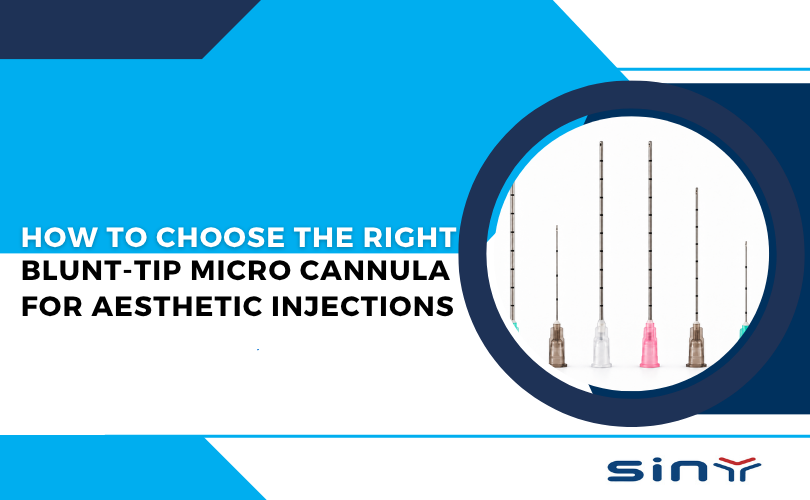
Choosing the right Blunt-Tip Micro Cannula can make a noticeable difference in how an aesthetic injection procedure is planned and performed. Gauge, length, treatment area, filler viscosity, flexibility and tip design all influence product flow, reach and handling. This is why one cannula size cannot cover every aesthetic application.
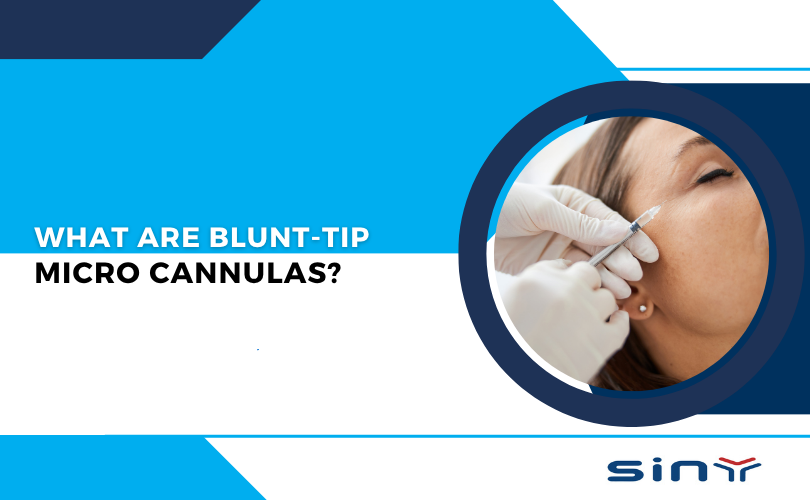
A blunt microcannula uses a smooth, rounded tip rather than the cutting bevel of a conventional hypodermic needle. After an entry point is created, the cannula can be guided laterally through the selected tissue plane, allowing injectable material to be distributed along a treatment path.
For practitioners, selecting the right size means balancing reach with control. For clinics, distributors and other professional buyers, it also means understanding which specifications are commonly used for different applications.
This guide focuses on those practical selection factors, starting with treatment needs and then moving into gauge, length, flexibility and overall product quality.
How to Choose a Blunt-Tip Micro Cannula: Start with the Procedure
Before looking at individual sizes, consider where the cannula will be used and what it needs to deliver.
Aesthetic procedures can involve very different injection patterns. Some require highly localized placement, while others involve distributing material across a wider treatment area. Likewise, a low-viscosity injectable does not create the same flow requirements as a thicker filler.
Start with four basic questions:
- What anatomical area will be treated?
- What type of injectable material will be used?
- How far does the cannula need to travel from the entry point?
- Does the technique require localized placement or broader product distribution?
These questions help narrow the choice before comparing individual specifications.
For example, broader facial contouring may benefit from greater reach, while a smaller treatment area may call for a shorter working distance and more localized control. Filler viscosity can also influence the appropriate cannula diameter.
Once the application is clear, gauge and length become the two most practical specifications to compare.
Choosing Blunt-Tip Micro Cannula Gauge and Length
Microcannula specifications are usually expressed using gauge (G) and length (mm). Understanding both measurements is essential when comparing different options.
Large Diameter: 18G–22G
With cannulas, a lower gauge number means a larger diameter.
The 18G–22G range represents the larger end of commonly available aesthetic microcannulas. Larger internal pathways can accommodate thicker materials more easily and provide different shaft characteristics from finer cannulas.
These sizes may be considered for applications involving thicker injectable materials, fat transfer, deeper placement or broader contouring areas such as the cheeks and jawline.
Medium Diameter: 23G–25G
The 23G–25G range provides a middle ground between product flow and handling control.
This range is commonly associated with medium-density injectable materials and facial areas such as the cheeks, midface and nasolabial region.
For buyers building a general aesthetic cannula range, medium-diameter options are particularly relevant because they can cover a broad range of injection applications.
Fine Diameter: 26G–30G
The 26G–30G range consists of finer microcannulas.
These smaller-diameter options are commonly associated with thinner injectable materials and more delicate or localized treatment areas, including the periocular and perioral regions.
However, a higher gauge does not automatically mean a better cannula. Diameter should always match the injectable material and intended technique.
Short, Medium and Long Microcannulas
Length determines how far a practitioner can reach beneath the skin from the original entry point.
Short cannulas, around 25–38 mm, are commonly selected for smaller treatment areas where extensive reach is unnecessary. The lips, perioral area and other localized treatment paths are typical examples.
Medium-length cannulas, around 38–50 mm, provide more reach while maintaining manageable control. They are frequently used around the midface, nasolabial area and under-eye region.
Long cannulas, around 50–70 mm, provide greater reach from a single entry point. They may be useful for cheeks, jawline and broader facial contouring where the treatment path extends across a larger area.
Longer is not automatically better. Extra length only becomes useful when the treatment path requires it.
Blunt-Tip Micro Cannula Size Selection by Treatment Area
Once gauge and length are understood, the next step is to combine them according to the intended treatment area.
The following chart provides a practical overview of commonly used size ranges for aesthetic applications.
| Treatment Area | Common Gauge Range | Common Length Range | Main Selection Consideration |
|---|---|---|---|
| Under-Eye / Tear Trough | 25G–27G | 38–50 mm | Controlled movement in a delicate treatment area |
| Lips / Perioral Area | 27G–30G | 25–38 mm | Shorter reach and localized control |
| Cheeks / Midface | 22G–25G | 50–70 mm | Product flow and broader treatment reach |
| Chin / Jawline | 22G–25G | 50–70 mm | Greater reach for structural contouring |
| Nasolabial Area | 23G–25G | 38–50 mm | Balance between reach and control |
These ranges provide a useful starting point rather than replacing professional judgment. The actual choice still depends on filler viscosity, injection depth, anatomy and technique.
Why Filler Viscosity Matters
Cannula size should also match the material passing through it.
A thicker injectable generally requires more consideration of the internal pathway and injection resistance. Choosing an excessively fine cannula for a highly viscous material can make product delivery more difficult.
By comparison, thinner materials may be compatible with finer cannulas when the procedure requires them.
This is why gauge should never be selected by treatment area alone. Treatment location tells you where the device needs to work, while filler viscosity helps determine how the material needs to move through it.
Do Not Forget Cannula Flexibility
Gauge and length are easy to compare because they appear directly in product specifications. Flexibility is less obvious, but it also affects handling.
A flexible shaft and a firmer shaft can provide different tactile feedback and directional control as the cannula moves through tissue. Practitioner preference, injection depth and treatment technique all influence which characteristics are more suitable.
For professional buyers, this means two cannulas with the same gauge and length should not automatically be treated as identical products.
Pilot Needle, Tip Design and Cannula Quality
Size is only one part of choosing a Blunt-Tip Micro Cannula. The entry system, blunt tip, side port and overall manufacturing consistency also affect how the product performs.
Pilot Needle, Introducer Needle and Puncture Needle
Because the distal end of a microcannula is blunt, it is generally not intended to create the initial skin puncture.
Instead, a sharp Pilot Needle is used to create an entry point before the cannula is inserted. The same device may also be called an Introducer Needle or Puncture Needle.
The entry opening should be suitable for the cannula being used. For buyers comparing aesthetic injection systems, cannula and introducer compatibility should therefore be considered together.
Blunt Tip and Side-Port Design
The rounded tip is one of the defining characteristics of an aesthetic microcannula.
Instead of delivering material through a sharp terminal bevel, the injectable exits through an opening positioned near the distal end. This allows the cannula to deliver material while moving along the selected treatment path.
Tip finishing matters as well. A smooth surface and consistently formed tip can influence how the cannula moves through tissue.
The side opening should also be properly formed so product delivery remains predictable.
Manufacturing Consistency
Professional buyers often focus first on gauge and length because they are easy to compare. However, manufacturing consistency becomes equally important when products are purchased in volume.
Cannulas with the same stated dimensions can still differ in shaft finish, flexibility, tip formation and connection quality.
A useful sourcing evaluation should therefore consider:
- Gauge and length availability
- Shaft consistency and flexibility
- Smooth blunt-tip finishing
- Side-port formation
- Connection stability
- Pilot needle compatibility
- Packaging and sterility requirements
- Batch-to-batch consistency
This broader approach is especially important for distributors and clinics that need repeatable product performance rather than a single sample that looks acceptable.
Blunt-Tip Micro Cannula vs. Sharp Needle: Which Should You Choose?
Microcannulas and sharp needles serve different purposes in aesthetic injection procedures.
A sharp needle creates its own entry point and provides direct access to a specific location. This can make it useful for highly localized placement.
A blunt cannula generally requires a pilot needle first. Once inside the selected tissue plane, however, it can travel laterally and cover a broader treatment path.
| Selection Factor | Blunt-Tip Micro Cannula | Sharp Needle |
|---|---|---|
| Tip design | Rounded, blunt tip | Sharp cutting bevel |
| Skin entry | Usually requires a pilot needle | Direct puncture |
| Broader treatment path | Often suitable | May require additional punctures |
| Highly localized placement | Technique-dependent | Often useful |
| Lateral movement | Designed for movement along a tissue plane | More direct placement |
| Linear / fanning technique | Commonly used | Technique-dependent |
| Entry points | May cover a broader area from fewer entry points | Multiple punctures may be required |
Neither device is automatically the correct choice for every procedure.
In fact, practitioners may use both during the same treatment. A sharp needle can provide localized placement, while a cannula can be used when broader access or lateral distribution is required.
A blunt tip may reduce direct penetration of some structures compared with a sharp bevel, but it does not eliminate vascular or other injection-related risks. Anatomical knowledge, injection depth, technique and practitioner experience remain essential.
Common Microcannula Selection Mistakes
One common mistake is simply choosing the finest cannula available. A higher gauge number does not automatically make a device more appropriate for the procedure.
Another mistake is focusing on length alone. A long cannula may reduce the need for additional entry points in a broad treatment area, but unnecessary length can make a localized procedure more difficult to control.
Other issues include mismatching the cannula with filler viscosity, ignoring flexibility, and comparing products only by price without considering tip quality or manufacturing consistency.
A better selection process is straightforward: match the gauge to the material, match the length to the treatment path, and then evaluate handling and product quality.
FAQ About Choosing a Blunt-Tip Micro Cannula
What size blunt-tip micro cannula should I choose?
Start with the treatment area and injectable material. Common aesthetic microcannulas range from approximately 18G to 30G and 25 mm to 70 mm. Larger diameters may be considered for thicker materials, while finer options are commonly used for thinner materials and more delicate treatment areas.
What gauge microcannula is commonly used for the cheeks?
The 22G–25G range is commonly associated with cheek and midface applications. The final choice depends on filler viscosity, treatment depth and injection technique.
What size microcannula is commonly used for the tear trough?
A common range is approximately 25G–27G with a length of 38–50 mm. The exact choice depends on the entry point, treatment plane, injectable material and practitioner technique.
What size microcannula is commonly used for lips?
Fine, shorter cannulas are commonly selected for the lip and perioral region. A typical range is approximately 27G–30G and 25–38 mm.
Does a blunt microcannula need a pilot needle?
Generally, yes. Because the cannula has a blunt tip, a sharp Pilot Needle, Introducer Needle or Puncture Needle is normally used to create the initial skin entry point.
Is a smaller gauge number a thinner cannula?
No. Gauge works in reverse. A lower gauge number indicates a larger diameter, so a 22G cannula is larger than a 27G cannula.
Is a longer microcannula better?
Not necessarily. Longer cannulas provide greater reach, which can be useful for broader treatment areas. Shorter cannulas may provide more practical control for localized treatment paths. Length should match the intended application.
What should distributors consider when sourcing aesthetic microcannulas?
Gauge and length range are important, but buyers should also evaluate flexibility, tip finishing, side-port consistency, connection stability, pilot needle compatibility, packaging, sterility requirements and manufacturing consistency.
Selecting the right microcannula becomes much easier when gauge, length, treatment area and injectable material are considered together. For clinics, distributors and medical supply companies looking for professional aesthetic injection consumables, visit Siny Medical to explore our Blunt-Tip Micro Cannula products or contact us to discuss available specifications, purchasing requirements and customization options.